Despite the current geopolitical tensions, Intel has announced plans to expand its semiconductor packaging and testing facility in Chengdu, China. The California-based company intends to invest approximately $300 million (around €280 million) to upgrade the plant, according to the Chengdu local planning authority. This move highlights Intel's ongoing commitment to its operations in China, even as the company receives substantial subsidies in the U.S. for domestic chip production.
Intel wants to protect itself in all areas.
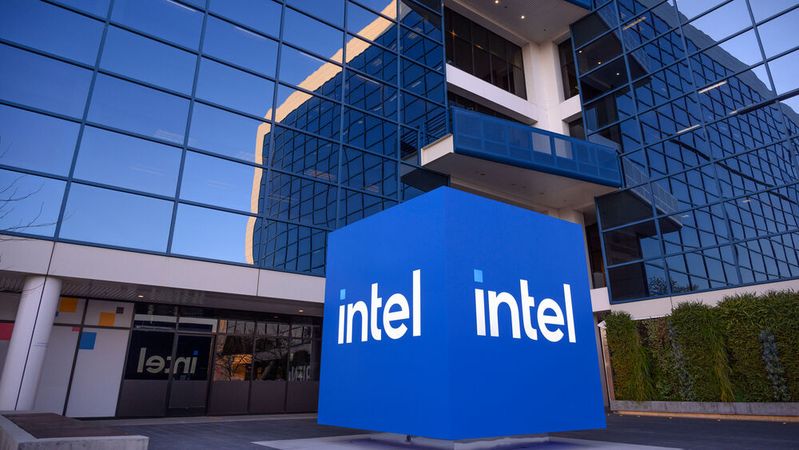
(Image: Intel Corporation)
Intel's decision to invest $300 million in expanding its semiconductor packaging and testing facility in Chengdu, China, has caught many by surprise, especially amid escalating tensions in the global technology and semiconductor industries. This move comes at a time when the U.S. government is actively trying to limit China's technological growth and secure semiconductor production within its borders. Washington's efforts to bring chip manufacturing back to the U.S. are exemplified by the significant subsidies Intel has already received for domestic production.
Given the political context, the reaction of both the current and incoming U.S. administrations to Intel’s investment decision is uncertain. Intel's commitment to its operations in China—despite receiving U.S. government support for onshore production—raises important questions about the balance between maintaining international operations and responding to domestic pressures. This strategic choice will likely be scrutinized closely as the U.S. continues its attempts to strengthen its semiconductor sector while restricting China's technological advancements.
Security investigation for Intel chips
On the other side of the hardening fronts, in the People's Republic of China, Intel also recently faced headwinds. In mid-October, the government-affiliated Cybersecurity Association of China (CSAC) publicly called for a security investigation into Intel chips in China. The American company's products had vulnerabilities and could contain "secret backdoors", the CSAC wrote on its social media channels.
This warning shot to Intel did not come from a government agency, but only from an industry association close to the government. However, the CSAC is close to the powerful Cyberspace Administration of China (CAC), which can initiate such investigations against foreign chip manufacturers and has done so in the past.
Despite all this—or perhaps precisely because of it—a substantial expansion of capacities for testing and packaging server chips is now planned at the existing Intel plant in Chengdu. Provided, of course, that the announcement from Chengdu is confirmed and not prevented at the last minute by political intervention.
Intel's main aim is to expand its capacities in the server chip segment for the Chinese market. The expansion of data centers is booming in China and has just received a significant boost when the central government in Beijing declared big data, data centers and artificial intelligence to be part of the "new high-quality productive forces". These areas are now to receive special support as part of the digitalization of the Chinese economy.
Support for the local supply chain
The testing and packaging plant in Chengdu is already one of the three largest plants of its kind operated by Intel worldwide. Half of all chips for mobile devices that Intel sells worldwide are tested and packaged there. But now the server market in China and globally is also to be better served. The USD 300 million will flow into the local Intel subsidiary "Intel Products (Chengdu)" and should primarily serve "the needs of Chinese customers for highly efficient, customized packaging solutions", according to the Chinese-language report from the capital of Sichuan province.
Intel hopes to "improve the efficiency of its local supply chains, support for Chinese customers and its response time", the announcement continued. At the same time, a new customer service center is to be built in which Chinese companies can be offered "one-stop" solutions for their digitalization.
Despite the tensions between Washington and Beijing, China is still Intel's largest sales market globally. According to the company's financial reports, the Americans generated 27 percent of their total turnover in China last year. In its home market of the USA, the figure is 26 percent. If Intel now wants to expand in the server market, this is also taking place against the backdrop of increasingly fierce competition in this segment. In the third quarter of this year, Intel's competitor AMD generated more sales in the data center segment than the long-standing market leader Intel for the first time. Although Intel still sells more server chips than AMD worldwide, AMD was able to generate better margins.
Dance at all parties
Subsequent investments to strengthen the China business and defend it against competitors would therefore not be surprising in normal times on this scale. However, with the "chip war" against China that began under the first Trump presidency, which has been further intensified under President Biden, and now with a second Trump presidency just around the corner, these are anything but "normal times" for the global semiconductor industry.
Intel's strategy can be described as an attempt to keep both sides happy. Under the "Chips and Science Act", which attempts to bring semiconductor production back home, Intel received USD 8.5 billion in subsidies and a further USD 11 billion in loans as recently as March of this year. However, this was in return for the promise to build new chip plants in the USA.
Date: 08.12.2025
Naturally, we always handle your personal data responsibly. Any personal data we receive from you is processed in accordance with applicable data protection legislation. For detailed information please see our privacy policy.
Consent to the use of data for promotional purposes
I hereby consent to Vogel Communications Group GmbH & Co. KG, Max-Planck-Str. 7-9, 97082 Würzburg including any affiliated companies according to §§ 15 et seq. AktG (hereafter: Vogel Communications Group) using my e-mail address to send editorial newsletters. A list of all affiliated companies can be found here
Newsletter content may include all products and services of any companies mentioned above, including for example specialist journals and books, events and fairs as well as event-related products and services, print and digital media offers and services such as additional (editorial) newsletters, raffles, lead campaigns, market research both online and offline, specialist webportals and e-learning offers. In case my personal telephone number has also been collected, it may be used for offers of aforementioned products, for services of the companies mentioned above, and market research purposes.
Additionally, my consent also includes the processing of my email address and telephone number for data matching for marketing purposes with select advertising partners such as LinkedIn, Google, and Meta. For this, Vogel Communications Group may transmit said data in hashed form to the advertising partners who then use said data to determine whether I am also a member of the mentioned advertising partner portals. Vogel Communications Group uses this feature for the purposes of re-targeting (up-selling, cross-selling, and customer loyalty), generating so-called look-alike audiences for acquisition of new customers, and as basis for exclusion for on-going advertising campaigns. Further information can be found in section “data matching for marketing purposes”.
In case I access protected data on Internet portals of Vogel Communications Group including any affiliated companies according to §§ 15 et seq. AktG, I need to provide further data in order to register for the access to such content. In return for this free access to editorial content, my data may be used in accordance with this consent for the purposes stated here. This does not apply to data matching for marketing purposes.
Right of revocation
I understand that I can revoke my consent at will. My revocation does not change the lawfulness of data processing that was conducted based on my consent leading up to my revocation. One option to declare my revocation is to use the contact form found at https://contact.vogel.de. In case I no longer wish to receive certain newsletters, I have subscribed to, I can also click on the unsubscribe link included at the end of a newsletter. Further information regarding my right of revocation and the implementation of it as well as the consequences of my revocation can be found in the data protection declaration, section editorial newsletter.
On the other hand, investing in China is the best protection against becoming a victim of Chinese retaliation. The communist cadres in Beijing look favorably on investment in their domestic high-tech industry. They explicitly encourage this and roll out the red carpet for American CEOs such as Intel boss Pat Gelsinger and Tesla CEO Elon Musk when they land in Beijing. Anyone who wants to continue to be successful in the Chinese market, despite all the geopolitical risks, also needs the goodwill of the technocratic party leaders in Beijing. (sb)



:quality(80)/p7i.vogel.de/wcms/dd/08/dd086510d9ae7b50181f6070e4463b44/0129363730v1.jpeg "Typical application for ionizing devices: Wrapping films. (Picture: ©Adobe Stock/SMC)")
:quality(80)/p7i.vogel.de/wcms/35/57/3557c819943c53acec41a0ccba87da4f/0130049064v1.jpeg "Researchers at the Fraunhofer IWU in Chemnitz have long known that many typical sheet metal parts can be manufactured more cost-effectively using hollow embossing rollers. Now there is news to report ... (Image:Fraunhofer IWU)")
:quality(80)/p7i.vogel.de/wcms/59/02/590246e3b3f415c65edbee377c14ca77/26-06-pi-fraunhofer-iws-41450-direktplattieren-pic-01-7771x4369v1v1.jpeg "The Fraunhofer IWS has developed the new \"direct laser cladding\" process, which creates a functional layer directly on the base body by applying a strip-shaped metal to rotationally symmetrical components in a spiral and bonding it locally by laser. (Image:Christoph Wilsnack/Fraunhofer IWS)")
:quality(80)/p7i.vogel.de/wcms/73/60/73608418789b1d9c393f5e2fa974eda2/0130209906v1.jpeg "The robots of the X6 generation from b+m enable very high painting quality and are also particularly compact and easy to maintain. (Image:Beckhoff)")
:quality(80)/p7i.vogel.de/wcms/78/e9/78e9188c25a8a94e67c34c9bf8ffe495/visual-agile-20robots-20and-20google-20deepmind-20partner-20to-20bring-20intelligence-20to-20robotics-2500x1406v1v1.jpeg "Together, the partners are developing adaptable, intelligent robots for a wide range of applications (Image:Agile Robots SE)")
:quality(80)/p7i.vogel.de/wcms/e7/66/e7669ecf0260ae8fc54c214e34e4902a/0130316817v1.jpeg "Siemens and Palo Alto Networks offer tested cybersecurity solution for industrial 5G. (Image:Siemens)")
:quality(80)/p7i.vogel.de/wcms/9f/55/9f55324832c4f426958031375124d9de/siemens-20ubtech-20hmnd-1920x1079v1v1.png "Ready for the factory floor: While Ubtech is planning mass production, Siemens is already testing humanoids in real factory applications in Erlangen. (Image:Siemens)")
:quality(80)/p7i.vogel.de/wcms/11/36/113695ed260e29c8c2d9d39dc5f9d869/0130213768v1.jpeg "AI can work cheaply in China and deliver the results rapidly all over the world. (Image:Dall-E / AI-generated)")
:quality(80)/p7i.vogel.de/wcms/62/5f/625f41e87ebfef156a98c8e6393e32fd/0130211654v1.jpeg "Axial flux motors have some advantages over radial flux motor—but their production is currently still expensive. (Image:RWTH Aachen University)")
:quality(80)/p7i.vogel.de/wcms/77/9b/779b0685d010dfe45c9c2cb1cfecd467/0128886425v1.jpeg "The BlueEye is the first \"real\" hyperspectral camera for the UV range and covers the wavelength range from 220 to 380nm. (Image:Inno-spec GmbH)")
:quality(80)/p7i.vogel.de/wcms/e4/51/e451d52ce0182fb0aaa46a5774f832ef/26-04-pi-fraunhofer-iws-21160-bioslide-pic-01-4128x2321v1v1.jpeg "With the BioSlide research project, the Fraunhofer IWS is investigating how sliding systems can be designed to be more sustainable and energy-efficient. New materials can be tested in a particularly application-oriented manner on this plain bearing test stand. (Image:Fraunhofer IWS)")
![Thanks to advanced 3D printing technology, a more efficient use of resources should contribute to lower-emission aviation—this is the goal of ['skai]-lab. (Image:Oleksandr Pashchenko - stock.adobe.com / AI-generated)](https://cdn1.vogel.de/nghHNSbySccfOjG3n1qCA-FVOjQ=/288x162/smart/filters:format(jpg):quality(80)/p7i.vogel.de/wcms/62/64/626424c97a16e69f871bf216c9629c2a/adobestock-1927043193--c2-a9-20oleksandr-20pashchenko-20-e2-80-93-20stock-adobe-com-ki-generiertv1v1.jpeg "Thanks to advanced 3D printing technology, a more efficient use of resources should contribute to lower-emission aviation—this is the goal of ['skai]-lab. (Image:Oleksandr Pashchenko - stock.adobe.com / AI-generated)")
:quality(80)/p7i.vogel.de/wcms/c3/c4/c3c4ce270b083eeac55654148611f064/0130237945v1.jpeg "China is not giving up on hydrogen, but is intensifying its efforts. (Image:freely licensed from Pixabay)")
:quality(80)/p7i.vogel.de/wcms/4e/c0/4ec0bd19390b169edfa23677373dcdf1/0130260089v1.jpeg "Renewable fuels can supply European road traffic, according to a study. (Image:Aral)")
:quality(80)/p7i.vogel.de/wcms/6f/c9/6fc9050301d745cad25585c6780f8f51/0130197341v1.jpeg "Production facilities are a worthwhile target and are therefore at risk. (Image:ABB Robotics)")
:quality(80)/p7i.vogel.de/wcms/b6/62/b662adc2cec8227d8172509bbfb6ee42/25c0207-107-4961x2789v1v1.jpeg "The GLB is the second model based on Mercedes' new MMA platform. Apparently, Geely's platform is better and cheaper, which is why the two companies are negotiating a partnership. (Image:Mercedes-Benz)")
:quality(80)/p7i.vogel.de/wcms/4d/dd/4dddf438e91f394c04a095dbfd109d1c/0130236430v1.jpeg "Measurement modules: The 720301 module in combination with the SL2000 enables RMS and power calculations, among other things. (Image:Yokogawa)")
:quality(80)/p7i.vogel.de/wcms/61/fc/61fcf95f5cca15494ad18343901ae585/0130317237v1.jpeg "With the AGI CPU, Arm says it is taking a \"historic step\": With the processor aimed at AI in data centers, the company is presenting itself for the first time as a provider of its own chips, not just as a pure IP licensor. (Image:Arm)")
:quality(80)/p7i.vogel.de/wcms/82/90/8290dfe3595b6c6b33726ae8b76172c7/0130319587v1.jpeg "The concept image illustrates how the pattern of tiny protrusions and depressions created on the substrate (MgO, bottom) controls the arrangement of atoms in the superconducting material (YBCO, top). At the interface between the two layers, an electronic structure enables superconductivity to occur at higher temperatures than previously possible. (Image:Chalmers University of Technology / Riccardo Arpaia)")
:fill(fff,0)/images.vogel.de/vogelonline/companyimg/76800/76895/65.jpg "FAULHABER_120mm.jpg ()")
:fill(fff,0)/p7i.vogel.de/companies/67/eb/67eba621ef6ea/logo2.png "logo2 (Wuxi InfiMotion)")
:quality(80)/p7i.vogel.de/wcms/59/1b/591b012a19370e91081361e4d20a22ef/0120430997v1.jpeg "The strategy of withdrawing from China and investing in locations in India instead has been pursued for some time. (Image:IBM)")
:quality(80)/p7i.vogel.de/wcms/3c/94/3c946ca3193c9d81d501e3a4270a6e3f/0120075097v1.jpeg "While China, with the start of HBM2 serial production, appears to have overcome a significant hurdle on the path to independence from American and South Korean suppliers, there remains an initial technological deficit compared to the West and its allies. (Image:freely licensed)")
:quality(80)/p7i.vogel.de/wcms/d5/e2/d5e22c63ba60d609d973da20984f6828/0126218335v1.jpeg "The long-term impact of state-led initiatives to promote high-tech industries is continually demonstrated in China. (Symbolic image) (Image:Dall-E / AI-generated)")
:quality(80)/p7i.vogel.de/wcms/0b/9b/0b9b8b3adce7884d20b74abc1d6bfa90/0126467542v1.jpeg "The Cheongju campus of SK Hynix. The memory manufacturer is investing the equivalent of $13 billion in expanding its high-end chip packaging facilities in South Korea. The new plants are expected to begin operations by the end of 2027. (Image:SK Hynix)")