Actuators are crucial for executing human-like movements. However, their use in humanoid robots poses specific system requirements. Five factors are decisive for motor selection.
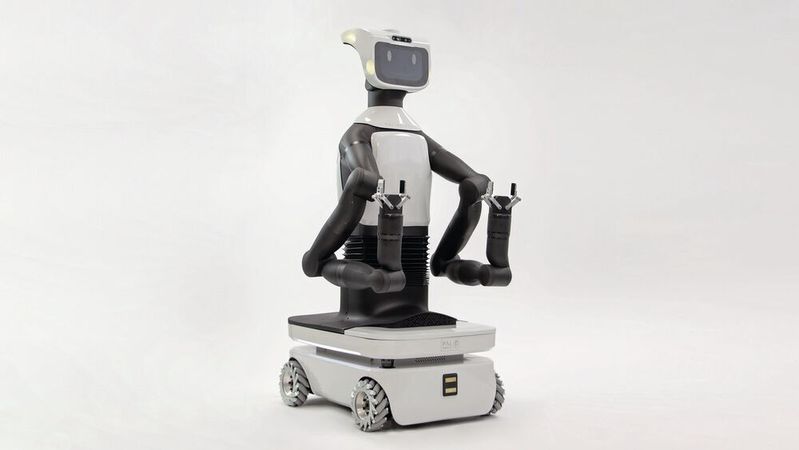
Tiago Pro is a mobile manipulator from PAL Robotics. By combining perception, navigation, manipulation, and human-robot interaction, it can be adapted to the respective requirements.
Humanoid robots, with their imitation of humans, represent the next evolutionary stage in robotics and exert a special fascination. The race for the first series-production-ready humanoid robot is one of the most exciting trending topics in the tech world. A market analysis by the management consultancy Horváth from March 2024 predicts that the first human-like robots could be mass-produced for industrial use as early as 2025.
When it comes to hardware, so-called actuators are crucial for executing human-like movements. They function as the equivalent of human joints and muscles: drive technology components that enable movements in a system—whether rotational or linear.
Actuators consist of a combination of gears, motors, sensors, ball bearings, and encoders. The more degrees of freedom required, the more actuators are needed. Currently, humanoid robots under development are capable of realizing between 16 and 60 degrees of freedom.
Humanoid movements can be controlled by electric, hydraulic, or pneumatic drive systems. The prevailing practice is to use a specific actuator in each joint, consisting of a gearbox, torque motor, encoder, and motor control. Torque motors are highly pole, electric servo motors with high torque and relatively low speeds. Below are the system requirements that are crucial for motor selection in a humanoid robot.
1. It's All About Torque Density
The torque density of an electric motor is a measure of how much torque the motor can generate per unit volume or weight. It is a crucial factor for the performance and compactness of a motor, particularly important for applications where weight is critical—such as in robotics. The total weight of a humanoid robot is significantly determined by the weight of its joints. The lighter the motors in the joints, the lower the total weight. This, in turn, results in a longer battery life, which allows for a higher payload and thus an overall higher dynamics of the robot.
TQ motors are particularly torque-dense compared to other motors, meaning they can achieve double the torque at the same size or the same torque at half the size. TQ achieves this through a unique winding technology that maximizes the copper fill factor compared to conventionally wound electric motors. TQ is currently the only motor developer on the market that fully exploits the physical possibilities thanks to certain manufacturing steps: it is not possible to fit more copper in the respective motor size. Thus, TQ motors have the highest copper fill factor on the market.
The compact design of the drive enables efficient space utilization and weight reduction, lowers the center of gravity of the robot, and improves stability. Robots with a compact design navigate tight spaces and maintain balance when maneuvering through crowds. An additional advantage of the motors is their large hollow shaft, which is very important for routing cable harnesses internally and achieving a clean robot design.
2. The Precision of the Motors Determines the Correct Positioning of the Robot
For the robot to perform controlled, smooth, and versatile movements, the precision of the motor is extremely important. The more precise the drive, the more direct the connection between the robot's movement and the "visual process," consisting of sensor and camera technology. Each joint point is defined by three-dimensional vectors. For the highest possible precision, it is very important that the motors, especially in the sum of several joint points, always assume the "correct" position. Otherwise, even minimal deviations in individual joints, such as the hip, knee, and ankle, may accumulate into significant misalignments. The precision of an electric motor increases with the so-called number of pole pairs, which is a crucial factor for the motor's behavior, as it has a direct impact on control, positioning, and regulation of the motor.
Date: 08.12.2025
Naturally, we always handle your personal data responsibly. Any personal data we receive from you is processed in accordance with applicable data protection legislation. For detailed information please see our privacy policy.
Consent to the use of data for promotional purposes
I hereby consent to Vogel Communications Group GmbH & Co. KG, Max-Planck-Str. 7-9, 97082 Würzburg including any affiliated companies according to §§ 15 et seq. AktG (hereafter: Vogel Communications Group) using my e-mail address to send editorial newsletters. A list of all affiliated companies can be found here
Newsletter content may include all products and services of any companies mentioned above, including for example specialist journals and books, events and fairs as well as event-related products and services, print and digital media offers and services such as additional (editorial) newsletters, raffles, lead campaigns, market research both online and offline, specialist webportals and e-learning offers. In case my personal telephone number has also been collected, it may be used for offers of aforementioned products, for services of the companies mentioned above, and market research purposes.
Additionally, my consent also includes the processing of my email address and telephone number for data matching for marketing purposes with select advertising partners such as LinkedIn, Google, and Meta. For this, Vogel Communications Group may transmit said data in hashed form to the advertising partners who then use said data to determine whether I am also a member of the mentioned advertising partner portals. Vogel Communications Group uses this feature for the purposes of re-targeting (up-selling, cross-selling, and customer loyalty), generating so-called look-alike audiences for acquisition of new customers, and as basis for exclusion for on-going advertising campaigns. Further information can be found in section “data matching for marketing purposes”.
In case I access protected data on Internet portals of Vogel Communications Group including any affiliated companies according to §§ 15 et seq. AktG, I need to provide further data in order to register for the access to such content. In return for this free access to editorial content, my data may be used in accordance with this consent for the purposes stated here. This does not apply to data matching for marketing purposes.
Right of revocation
I understand that I can revoke my consent at will. My revocation does not change the lawfulness of data processing that was conducted based on my consent leading up to my revocation. One option to declare my revocation is to use the contact form found at https://contact.vogel.de. In case I no longer wish to receive certain newsletters, I have subscribed to, I can also click on the unsubscribe link included at the end of a newsletter. Further information regarding my right of revocation and the implementation of it as well as the consequences of my revocation can be found in the data protection declaration, section editorial newsletter.
In designing their frameless servo motors, the TQ Group places special emphasis on achieving a high number of pole pairs. TQ electric motors offer very precise position and torque control over a wide range of conditions, from low speed and high torque to high speed and low torque. This is crucial for the natural, fluid movements expected from humanoid robots.
3. Reaction Time and Dynamics Make the Difference in Flexibility
The motor must be able to react or be controlled accordingly to any change in the environment (e.g., a robot steps into an unforeseen hole or the ground gives way). For a humanoid robot to respond flexibly and quickly to changes in the environment like a human, excellent dynamic control and drivability as well as a fast response time are crucial.
How does an electric actuator achieve this high reaction time and dynamics? To react in real-time, very high torques are needed for a short period to, for example, quickly anticipate and adjust the foot movement to the hole in the ground. This torque is then multiplied for a brief moment. This is referred to as the overload capacity of a servo motor and as peak torque, meaning the maximum torque a motor can generate in the short term. The peak torque of TQ motors is approximately three times higher than their nominal torque, or the constant value that can be reached in the long term. Specifically, TQ motors achieve peak torque in the double-digit Newton meter range (Nm) and thus have a market-leading overload capability.
4. Efficiency and Energy Consumption Determine the Operating Duration
Efficiency, that is, how much power is lost over the battery life, determines how long a battery-operated humanoid robot can work. The principle is: the highest efficiency, due to low copper losses, extends battery life. Copper losses describe the losses caused by the electrical resistance of the windings in a motor. They are released in the form of heat and are one of the main sources of loss in electrical machines. Motors with high power loss consume a lot of electricity, which shortens battery life and thus limits working time.
This means that the efficiency factor plays a much more important role in a mobile, humanoid robot than in a collaborative robot (Cobot) that is connected to the power grid. For the practical use of humanoid robots, high efficiency is crucial for their continuous operation. The TQ torque motors have an efficiency of 90% or higher and achieve particularly low copper losses in watts.
5. Robustness and Reliability Contribute to Functionality
The robustness and reliability of the motors are also important factors for applications in humanoid robotics. Especially during the testing phase, falls occur frequently. A robust, maintenance-free design ensures that the joints remain intact and functional despite the learning curve. Drives face the greatest challenges in space. Even with temperature fluctuations from -40°F to 257°F, they must function reliably here. On the ISS (International Space Station), an ILM motor from TQ was used, among other things, in the arm of the robot Rokviss and performed precise tasks in zero gravity—over five years and hundreds of tests, always reliably and with the highest performance.
In industrial application scenarios as well, such as in a production or warehouse hall, it can happen that a humanoid robot, which has to lift heavy loads, drops objects or is subjected to sudden impacts. The robustness of the robot's joints protects it from damage and ensures continuous and reliable operation even under demanding conditions.
Standard Motors or Customized Solution?
Robot manufacturers also face the question of whether to choose a motor manufacturer that supplies standard components or to opt for a custom solution. At TQ, customers receive a selection of standard sizes that can be tailored to the specific application if desired. The advantage of TQ's frameless servo kits is that they are modifiable in diameter and their so-called stack length, allowing their performance and dimensions to be tailored to the specific application. Especially for quantities of more than a few hundred units per year, a custom solution can be the best option. It allows for complete control over design, materials, and the manufacturing process.
Hardware is Hard
The saying "Hardware is hard" aptly applies to the development and production of robot joints and the necessary components. This is because the core competence of some humanoid robotics manufacturers is more likely to be found in the areas of artificial intelligence and software, while experience in the industrialization of robots and development of mechatronics is sometimes lacking. Additionally, the development and production of such a complex system, like a robot joint, are often underestimated. TQ is one of the few providers in Germany that can industrialize complete robots and has already proven it.
Against this background, it can make sense to rely on the technology leaders in their respective fields. TQ often develops entire motor-gear units for mobile applications. This is a decisive advantage that helps save valuable time in the current race for the first mass-produced humanoid robot.



:quality(80)/p7i.vogel.de/wcms/17/b8/17b8af0cb725e0e1d3e8d72458bab260/siemens-meet-at-the-machinev1.jpeg "“Meet at the Machine” is Siemens’ new initiative, which aims to bring together machine builders, software, and automation technologies to accelerate innovation in the machine tool industry and help manufacturers become productive more quickly. (Source: Siemens)")
:quality(80)/p7i.vogel.de/wcms/8e/7e/8e7e0cda4c68699bcc48283a38739769/0133316747v1.jpeg "A little-known hidden champion! When people think of laser cutting, the first thing that comes to mind is the power of the laser beam—and it is impressive to see the sparks flying. But Air Liquide—an exhibitor at Euroblech, by the way—wants to make it clear that the process gas is also key to success. (Image:AI-generated)")
:quality(80)/p7i.vogel.de/wcms/20/fa/20fa35e0af203c3464f7e7fdbb57a685/0133281172v1.jpeg "Since 2003, Etzinger AG has been developing and manufacturing high-quality coffee grinders, pepper mills, and grinding mechanisms for professional and home use. (Image:Etzinger)")
:quality(80)/p7i.vogel.de/wcms/69/91/6991413943488b4a2f6fde9dcd88c5b0/0133256686v1.jpeg "The CMA-patented pendulum mount can compensate for radial tolerances of up to one millimeter. (Image:Schwiening)")
:quality(80)/p7i.vogel.de/wcms/38/79/38799bfbbccd938b64c67068cfa68780/0133329362v1.jpeg "What exactly enables machines to act on their own? (Image:Shutterstock)")
:quality(80)/p7i.vogel.de/wcms/1b/9f/1b9fc9f113fc66212e2c0e17a3edaf9f/org-blobs-user-response-file-output-f317796f-57b7-483f-9403-5d9ac8a816f5-plugin-output-call-kdigtepb7be7us8xvbota0mh-1672x940v1.png "According to Barclays data, Europe leads the global trade in actuator components. With a 34 percent share, the region ranks ahead of China, which has a 26.3 percent share. (Source: Statista | CC BY-ND 4.0, AI-generated)")
:quality(80)/p7i.vogel.de/wcms/f5/4c/f54c9fc59ccb0604ab9219188469a45f/image1v1.jpeg "Christopher Savoia, Global Head of the UR+ Ecosystem at Universal Robots, presents the new SP7 Smart Panel on a UR17g-1300 robot during the unveiling of Gen 7—UR’s 7th-generation robot platform—at IMTS in Chicago on September 14, 2026. (Image:Image: Teradyne Robotics)")
:quality(80)/p7i.vogel.de/wcms/bd/4e/bd4ef09ab0f84932ea76ca0330ffe789/0133329802v1.jpeg "The robotics boom and its consequences: According to a study, a significant portion of value creation occurs in the electronics industry. (Image:Fraunhofer IPA)")
:quality(80)/p7i.vogel.de/wcms/87/87/87870cf2b30aaef7b8a06212a4ef2c14/0133403885v1.jpeg "A digital twin and a real component demonstrate how closely simulation and manufacturing are converging. Stampack Xpress 2026.1 virtually models forming behavior and supports the validation of process and tool design. (Image:Stampack)")
:quality(80)/p7i.vogel.de/wcms/59/2a/592a7f2d0964e9e6846cae331f5daa3a/0133266065v1.jpeg "Perforated metal sheets are particularly well-suited for balcony railings, as they combine stability, privacy, and design versatility. (Image:Ripo Factory)")
:quality(80)/p7i.vogel.de/wcms/45/64/45642ff0fe0a6bec251b77739131d83b/abb-ferrari-hypersail-16-9-three-quarter-front-viewv1.jpeg "The Ferrari Hypersail is a 100-foot monohull wing-in-plane yacht powered entirely by renewable energy. (Source: ABB / Ferrari Hypersail)")
:quality(80)/p7i.vogel.de/wcms/3e/0e/3e0e3ea22e48410ceada53b02ffccb59/0133358454v1.jpeg "BYD top executive Stella Li plans to offer megawatt flash charging for commercial vehicles as well. (Image:VDA/IAA Transportation 2026)")
:quality(80)/p7i.vogel.de/wcms/e2/7d/e27de60472809cc58ac0d321066c9679/l1051833v1.jpeg "Geely has acquired a stake of just over 26 percent in Renault do Brasil. Geely models for the South American market are now also being produced at the Ayrton Senna plant in São José dos Pinhais. (Image:Renault)")
:quality(80)/p7i.vogel.de/wcms/1e/c1/1ec1495eb283200f4b7cb55de0c4dff7/20260917-110436643v1.jpeg "Ceremonial launch of Mercedes-Benz GLA production in Rastatt; among those in attendance was plant manager Marco Zwick (second from the right). (Source: Thomas Günnel – Automotive Industry)")
:quality(80)/p7i.vogel.de/wcms/76/f3/76f310eed0caebc79ff91195c29de08d/visual-siwa-treatment-optimizerv1.jpeg "A Mireo train from Siemens Mobility was used in the “Automated Train” project for a fully automated delivery and return trip on the open rail network. (Source: Siemens Mobility)")
:quality(80)/p7i.vogel.de/wcms/4c/53/4c534208d09a9b1ce597938715e7fc19/0133288763v1.jpeg "Logic Folding: In its latest Kirin 9050 Pro, Huawei uses hybrid bonding to distribute the computing units across two silicon layers in order to increase the effective transistor density without resorting to finer manufacturing processes. (Image:Huawei)")
:quality(80)/p7i.vogel.de/wcms/56/d1/56d131e0b5bd05ef47411e92ad740cb4/0133351029v1.jpeg "Researchers at DTU have developed a nanolaser in a semiconductor membrane. The structure concentrates charge carriers and the light field into a small area (shaded in blue). If data is transmitted on microchips using light instead of electrical signals, transmission speeds can be increased and energy losses reduced. (Image:Yi Yu, DTU)")
:quality(80)/p7i.vogel.de/wcms/5e/55/5e55101ddc6338f755fcf3244db1367f/0133331863v1.jpeg "For data center projects, it is becoming increasingly important to also obtain the consent of the affected community. (Image:Dall-E / AI-generated)")
:quality(80)/p7i.vogel.de/wcms/8d/f9/8df95d3f58408673986b3d643e6b63ba/0133252773v1.jpeg "TXC targets high-speed optical links in AI data centers with 312.5 MHz oscillators, among other solutions. As data rates increase, requirements for jitter and frequency stability become more demanding as well. (Bild: TXC)")
:fill(fff,0)/images.vogel.de/vogelonline/companyimg/76800/76895/65.jpg "FAULHABER_120mm.jpg ()")
:fill(fff,0)/p7i.vogel.de/companies/69/88/69882c428938e/tmts2026-ticec-banner-en-2000px.png "tmts2026-ticec-banner-en-2000px (https://www.tmts.tw/en)")
:quality(80)/p7i.vogel.de/wcms/b4/4f/b44f30ce68dcf5b50721e8fb2aa72377/0122008281v1.jpeg "Tiago Pro is a mobile manipulator from PAL Robotics. By combining perception, navigation, manipulation, and human-robot interaction, it can be adapted to the respective requirements.(Image: © PAL Robotics)")
:quality(80)/p7i.vogel.de/wcms/65/41/65412a8281671d0268e1074635a82f9e/0122007788v1.jpeg "Manufacturing of TQ motors...(Image: © TQ-Group)")
:quality(80)/p7i.vogel.de/wcms/30/cf/30cf0627a71825c64811c9abdba8f574/0122007785v1.jpeg "The motors are adaptable in diameter and stack height.(Image: © TQ-Group)")
:quality(80)/p7i.vogel.de/wcms/cb/54/cb5464ac31e83cb9a1a4b25398c60a1e/0122007791v1.jpeg "... at the Inning location.(Image: © TQ-Group)")
:quality(80)/p7i.vogel.de/wcms/62/93/62934fd6900b930a0db9493be3d931ba/0127310246v1.jpeg "Servomotors without housings can be used very efficiently in confined spaces. (Image:TQ-Robotics)")
:quality(80)/p7i.vogel.de/wcms/cb/e2/cbe264cd5842f25f264e6fa75c0fefd8/0131628144v1v1.jpeg "Humanoid robotics places high demands on compact actuator designs: motor control, power electronics, sensors, and edge AI must work together efficiently in a confined space. (Image:Texas Instruments (edited))")