An innovative ion pump should make it possible to extract lithium from thermal brine in Germany in an environmentally friendly way. Geothermal sources in the Upper Rhine Rift Valley would be used.
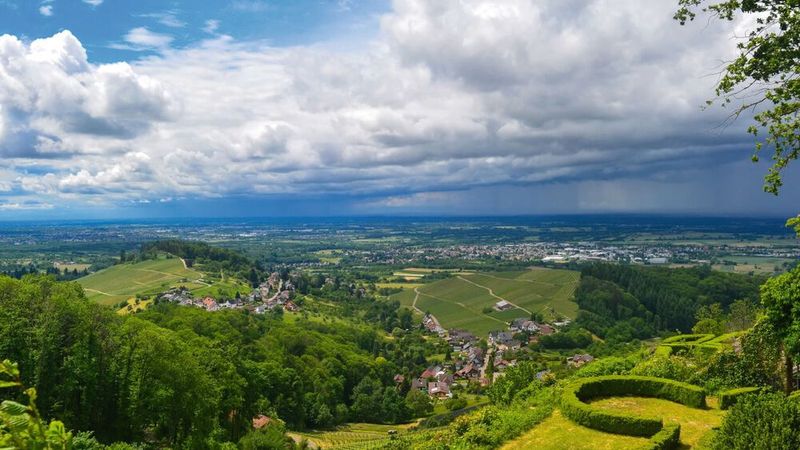
The new extraction technology is to be used in the Upper Rhine Graben, where lithium could be extracted from thermal brine.
(Image: Ilhan Balta - stock.adobe.com)
Experts agree: no energy transition without lithium. Demand for this key raw material is likely to increase six-fold by 2030. However, Germany and Europe are heavily dependent on imports from Australia, South America and China. Lithium extraction from geothermal sources in the Upper Rhine Graben, one of the most promising regions for this technology, offers a climate-friendly alternative. This offers the opportunity to strengthen Germany's energy independence and significantly reduce environmental pollution.
Status quo of lithium extraction
Conventional lithium mining from hard rock or salt lakes causes considerable CO₂ emissions, requires large quantities of water and causes considerable damage to the environment. Mining from salt lakes is particularly problematic in South America, where water consumption in already arid regions has serious consequences for the environment and local communities. Transporting the mined lithium halfway around the world also contributes to the carbon footprint.
On the other hand, geothermal lithium extraction offers a sustainable and regional alternative. This involves extracting lithium-containing thermal water from great depths (three to five kilometers), extracting the lithium and returning the brine - without destroying the landscape or lowering the groundwater level.
The "Thermion" project: sustainable lithium extraction
The German Federal Ministry for Economic Affairs and Climate Protection is therefore funding the "Thermion" project. Several partners from science and industry are working on a technology for environmentally friendly lithium extraction from geothermal sources, under the leadership of the Fraunhofer Institute for Solar Energy Systems ISE: a specially developed ion pump extracts lithium directly from the thermal brine in a highly selective manner, which is then returned to the natural cycle almost unchanged. This conserves water resources and avoids unwanted chemical residues. A key advantage is the integration into existing geothermal plants that already supply electricity and heat - a dual use that can significantly increase economic efficiency and profitability.
The aim of the project is the scientific evaluation of the lithium deposits in the Upper Rhine Graben and the development of an efficient and sustainable extraction technology. The ion pump (EIP) operates directly in the thermal circuit at 15 to 20 bar and 70 °C. Targeted pre-treatment minimizes deposits and comprehensive geohydrological investigations are intended to ensure long-term economic viability. A demonstrator is intended to illustrate the entire process - from brine extraction to extraction and return - in a practical manner.
In the long term, other raw materials such as cesium, rubidium and cobalt could also be extracted in addition to lithium. The three-year project is being funded with 2.6 million euros and could set a milestone for the sustainable supply of raw materials in Germany.
Challenges and opportunities for Germany as a business location
The lithium resources in the Upper Rhine Graben could reduce Germany's dependence on imports and strengthen European battery production at the same time. This would not only support Germany as a business location, but also make an important contribution to the EU's strategic supply of raw materials.
However, in order to fully exploit this potential, technological developments are required to enable competitive lithium prices. Faster approval procedures for geothermal projects are also needed so that the technology can be scaled up quickly. The Geothermal Acceleration Act discussed by the traffic light government is a positive first step in this regard and should be passed by the new federal government as soon as possible.
A decisive factor is social acceptance, which should be promoted through transparent communication and close involvement of the population. Only if these aspects are taken into account can geothermal lithium extraction become a viable pillar of the sustainable supply of raw materials in Germany.
The future of lithium production in Germany
With innovative technological developments such as those envisaged in the Thermion project, Germany can become a pioneer in sustainable lithium production. The combination of renewable energy generation and raw material extraction creates a win-win situation for the economy, the environment and society. (dm)
Date: 08.12.2025
Naturally, we always handle your personal data responsibly. Any personal data we receive from you is processed in accordance with applicable data protection legislation. For detailed information please see our privacy policy.
Consent to the use of data for promotional purposes
I hereby consent to Vogel Communications Group GmbH & Co. KG, Max-Planck-Str. 7-9, 97082 Würzburg including any affiliated companies according to §§ 15 et seq. AktG (hereafter: Vogel Communications Group) using my e-mail address to send editorial newsletters. A list of all affiliated companies can be found here
Newsletter content may include all products and services of any companies mentioned above, including for example specialist journals and books, events and fairs as well as event-related products and services, print and digital media offers and services such as additional (editorial) newsletters, raffles, lead campaigns, market research both online and offline, specialist webportals and e-learning offers. In case my personal telephone number has also been collected, it may be used for offers of aforementioned products, for services of the companies mentioned above, and market research purposes.
Additionally, my consent also includes the processing of my email address and telephone number for data matching for marketing purposes with select advertising partners such as LinkedIn, Google, and Meta. For this, Vogel Communications Group may transmit said data in hashed form to the advertising partners who then use said data to determine whether I am also a member of the mentioned advertising partner portals. Vogel Communications Group uses this feature for the purposes of re-targeting (up-selling, cross-selling, and customer loyalty), generating so-called look-alike audiences for acquisition of new customers, and as basis for exclusion for on-going advertising campaigns. Further information can be found in section “data matching for marketing purposes”.
In case I access protected data on Internet portals of Vogel Communications Group including any affiliated companies according to §§ 15 et seq. AktG, I need to provide further data in order to register for the access to such content. In return for this free access to editorial content, my data may be used in accordance with this consent for the purposes stated here. This does not apply to data matching for marketing purposes.
Right of revocation
I understand that I can revoke my consent at will. My revocation does not change the lawfulness of data processing that was conducted based on my consent leading up to my revocation. One option to declare my revocation is to use the contact form found at https://contact.vogel.de. In case I no longer wish to receive certain newsletters, I have subscribed to, I can also click on the unsubscribe link included at the end of a newsletter. Further information regarding my right of revocation and the implementation of it as well as the consequences of my revocation can be found in the data protection declaration, section editorial newsletter.



:quality(80)/p7i.vogel.de/wcms/23/99/23992bf2dcdc432c9b7209c34a4a7c48/0129733089v1.jpeg "Stork relies on the modular Neoswiss turning system from Iscar to shorten the set-up times for its sliding headstock lathes and work more productively. (Image:Iscar)")
:quality(80)/p7i.vogel.de/wcms/7d/e2/7de2923434b2f1a78ba5482d8d335269/0113143253v1.jpeg "In our China Market Insider we regularly provide you with relevant information directly from China. (Image:© Eisenhans - stock.adobe.com)")
:quality(80)/p7i.vogel.de/wcms/9d/2b/9d2b802f800e5caf17b2831e74228cd3/screenshot-202026-03-03-20103822-609x343v1v1.png "Visual comparison: on the left, a clean, burr-free cut edge; on the right, typical burr formation with oxidation discoloration. This illustrates how strongly parameter control and gas management influence the quality of the result. (CO₂ laser, oxygen cutting gas, sheet thickness approx. 15 mm). (Image:Picture: Rime)")
:quality(80)/p7i.vogel.de/wcms/dd/08/dd086510d9ae7b50181f6070e4463b44/0129363730v1.jpeg "Typical application for ionizing devices: Wrapping films. (Picture: ©Adobe Stock/SMC)")
:quality(80)/p7i.vogel.de/wcms/b7/36/b736dfebc16c42d6901d0d0e1f390493/3d-druck-20factory-20--20ki-20generiert-1920x1079v1.png "(Source: AI-generated)")
:quality(80)/p7i.vogel.de/wcms/79/b2/79b21aad663f4a7bd4472afc1c1afc62/0130433994v1.jpeg "Mission Joyride: The free-flying robot (shown here in the rendering) will relieve the ISS crew of logistics tasks from 2027 with its two mechanical arms. (Image:Icarus Robotics)")
:quality(80)/p7i.vogel.de/wcms/6b/45/6b4546fa6ebf305c3660326909363f32/0130437089v1.jpeg "Industrial AI in action: Rockwell Automation presents practical solutions for self-controlling production systems at the Hannover Messe. (Image:Rainer Jensen, Deutsche Messe)")
:quality(80)/p7i.vogel.de/wcms/78/e9/78e9188c25a8a94e67c34c9bf8ffe495/visual-agile-20robots-20and-20google-20deepmind-20partner-20to-20bring-20intelligence-20to-20robotics-2500x1406v1v1.jpeg "Together, the partners are developing adaptable, intelligent robots for a wide range of applications (Image:Agile Robots SE)")
:quality(80)/p7i.vogel.de/wcms/59/a2/59a2b11f0aa1b700eff02addd5de8703/adobestock-1788280853--c2-a9-20satria-20-e2-80-93-20stock-adobe-com-5081x2860v1v1.jpeg "Quantum computers require extreme cooling to temperatures close to absolute zero in order to keep qubits stable. (Image:satria - stock.adobe.com)")
:quality(80)/p7i.vogel.de/wcms/62/5f/625f41e87ebfef156a98c8e6393e32fd/0130211654v1.jpeg "Axial flux motors have some advantages over radial flux motor—but their production is currently still expensive. (Image:RWTH Aachen University)")
:quality(80)/p7i.vogel.de/wcms/f6/ae/f6aec4f6241b36ed5e3a990ac9176b42/0130429460v1.jpeg "Verne, Pony.ai and Uber want to launch a robotaxi service in Europe. (Image:Verne)")
:quality(80)/p7i.vogel.de/wcms/d7/88/d788699f2974708a332baa4e7a62fa9e/0130438967v1.jpeg "Skoda is withdrawing from China. The brand has produced well over three million vehicles there. (Image:Skoda car)")
:quality(80)/p7i.vogel.de/wcms/b0/43/b043b86899837532aad62d63368a917a/0130371361v1.jpeg "Skoda leaves the chinese market.
(Image:Skoda)")
:quality(80)/p7i.vogel.de/wcms/c3/c4/c3c4ce270b083eeac55654148611f064/0130237945v1.jpeg "China is not giving up on hydrogen, but is intensifying its efforts. (Image:freely licensed from Pixabay)")
:quality(80)/p7i.vogel.de/wcms/10/6c/106cd22de5f68a0f74639d654827228c/0130345302v1.jpeg "Made in India: According to the India Electronics and Semiconductor Association (IESA), the country should be able to produce between 75 and 80 million chips by the beginning of 2027, once the plants currently under construction become operational. (Image:Pixabay (Montage: Sebastian Gerstl))")
:quality(80)/p7i.vogel.de/wcms/a5/ed/a5ed6fda029d362732a293d6b19d74c4/0130444216v1.jpeg "Thirteen executives from the Chinese chip industry have drawn up a plan to achieve an 80% self-sufficiency rate for semiconductors by 2030. (Image:Maxim_Kazmin - stock.adobe.com)")
:quality(80)/p7i.vogel.de/wcms/31/a6/31a646018b34d8e0a44bfc8bf17837f6/0130361632v1.jpeg "For many companies, PFAS are considered indispensable in electronics production. (Image:freely licensed)")
:quality(80)/p7i.vogel.de/wcms/4d/dd/4dddf438e91f394c04a095dbfd109d1c/0130236430v1.jpeg "Measurement modules: The 720301 module in combination with the SL2000 enables RMS and power calculations, among other things. (Image:Yokogawa)")
:fill(fff,0)/images.vogel.de/vogelonline/companyimg/76800/76895/65.jpg "FAULHABER_120mm.jpg ()")
:fill(fff,0)/p7i.vogel.de/companies/69/88/69882c428938e/tmts2026-ticec-banner-en-2000px.png "tmts2026-ticec-banner-en-2000px (https://www.tmts.tw/en)")
:quality(80)/p7i.vogel.de/wcms/df/a7/dfa71baccf5b3ba1a2d5ff7a8d1f2671/0119592217v1.jpeg "Lithium is an important raw material for mobile battery technology - and a scarce commodity. (Image:A. Bramsiepe / KIT)")
:quality(80)/p7i.vogel.de/wcms/21/cf/21cff7db3f556c7ba436818f1405a7e4/0125205350v1.jpeg "Lithium is currently produced most in Australia, Chile, and China. (Image:Dall-E / AI-generated)")