


:quality(80)/p7i.vogel.de/wcms/66/8f/668fb85f23216f218cf3522b7ffb24a6/0130855591v1.jpeg "View inside the laser welding system. Left in the picture: a linear axis with two guides, the one on the right with integrated IMScompact position measuring system. (Image:RMA)")
:quality(80)/p7i.vogel.de/wcms/ed/8b/ed8b365dc82b2bdbe2efddca4089c79a/0130059646v1.jpeg "High-feed milling cutter in engagement and when reaching the maximum radial cutting depth. (Image:Walter)")
:quality(80)/p7i.vogel.de/wcms/a0/db/a0dbbf658663393c67520575f3a0e6b4/0131325829v1.jpeg "This is an example of a 3D-printed metal part that can be purchased via the Unionfab platform. The Shanghai-based service provider has now expanded its additive manufacturing capabilities ... (Image:Unionfab)")
:quality(80)/p7i.vogel.de/wcms/fc/a2/fca2d9c7102f10159c10b810e0042395/0131356689v1.jpeg "The Bosch Group has to reinvent itself in many areas. This costs money and, unfortunately, many jobs. To justify these measures, the management also refers to the values that founder Robert Bosch once established for himself ... (Image:Bosch)")
:quality(80)/p7i.vogel.de/wcms/f3/8f/f38faf493aab4e05033cc999f1d00a16/dtm-founders-1280x719v1.png "Martin Schilling is a European tech ecosystem leader, entrepreneur, and startup operator known for scaling tech companies and supporting deep tech founders. (Source: DTM)")
:quality(80)/p7i.vogel.de/wcms/0a/22/0a22ee2682ff6c6907f78c6fb7e65667/0131215395v1.jpeg "The use of robots in day-to-day care is being tested and further developed in pilot projects such as this House of Generations. (Picture:APA-Images / dpa / Waltraud Grubitzsch)")
:quality(80)/p7i.vogel.de/wcms/0a/2c/0a2c8c41b29b1dfe6c1b4ec65a4be595/0131290447v1.jpeg "Quantum computing threatens most current encryption algorithms. (Picture: ©Jori - stock.adobe.com)")
:quality(80)/p7i.vogel.de/wcms/b0/e1/b0e1cb7972aec0ad967bb087948cde16/0131361412v1.jpeg "Google has enjoyed great success with its AI chip Tensor. Now a new idea has brought the company together with the financial investor Blackstone. For many billions of dollars, the company now wants to build data centers that use the Tensor ... (Image:Google)")
:quality(80)/p7i.vogel.de/wcms/7d/b1/7db122e6de5f617d1342bb329eacf69d/adobestock-791450621--c2-a9-20imageflow-20-e2-80-93-20stock-adobe-com-5250x2952v1v1.jpeg "As the number of electric cars increases, so does the demand for lithium-ion batteries and the need for battery recycling technologies (symbolic image) (Image:ImageFlow - stock.adobe.com)")
:quality(80)/p7i.vogel.de/wcms/fc/b6/fcb6e8e646ca2cf11d6fc3d06479dbf5/2026-05-delo-building-photo-2400x1350v1v1.jpeg "Aerial view of the Delo site in Windach including the \"Forum\" and new laboratory building construction projects. (Image:Delo)")
:quality(80)/p7i.vogel.de/wcms/d4/65/d465ab0293db9125763560c71d900c73/adobestock-179817344--c2-a9-20industrieblick-20-e2-80-93-20stock-adobe-com-7611x4279v1v1.jpeg "The global kerosene market is around 100 billion gallons per year. How much influence the alternative aviation fuel could have on this remains to be seen over the next few years. (Image:industrieblick - stock.adobe.com)")
:quality(80)/p7i.vogel.de/wcms/78/10/7810cea1046df8ccf33db854c1bc73ae/img02-dual-monitor-setupv1.jpeg "The requirements for industrial automation solutions are changing rapidly. Systems are becoming more individualized, project lead times shorter - and international standards more complex. (Source: WSCAD)")
:quality(80)/p7i.vogel.de/wcms/1b/cd/1bcd23447de40ef118adfac23c35858f/0123523831v1.jpeg "Ford plants in Cologne-Niehl (Germany) (Image:Ford)")
:quality(80)/p7i.vogel.de/wcms/93/6c/936c08b80da1f39f7cb6038b6328cd67/0131368219v2v1.jpeg "BMW unveiled the Vision Alpina in the garden of the Villa d'Este on Lake Como (Image:SP-X/Mario Hommen)")
:quality(80)/p7i.vogel.de/wcms/b9/aa/b9aaea2caf16e6dc354c06c6ad00a918/0131354665v1.jpeg "The new 100/1000BASE-T1 single-pair Ethernet PHYs from Microchip combine MACsec security, time-critical networking and functional safety. (Image:Microchip)")
:quality(80)/p7i.vogel.de/wcms/fc/a6/fca67934a356cdcaff233b44371f94a9/0131346154v1.jpeg "In order to make its e-car production more independent, Xiaomi will manufacture batteries and electric motors itself in future. The subsidiary Beijing Xiaomi Jingxu Technology has been founded for this purpose. (Image:Xiaomi)")
:quality(80)/p7i.vogel.de/wcms/4f/ef/4fefaa65bb3cf4165e759a280fbc49dd/0131368512v1.jpeg "Crescendo platform from Empower Semiconductor for \"Vertical Power Delivery\" (VPD). According to the news agency Bloomberg and Reuters, Analog Devices is interested in acquiring the manufacturer of power management chips for AI loads in data centers. (Image:Empower Semiconductor)")
:quality(80)/p7i.vogel.de/wcms/e9/72/e972c95b4a060cbd5e07bd2bc7e0a754/0131341947v1.jpeg "Strategic partnership: IONOS and Q.ANT want to work together on photonic computing in the future. (Image:Q.ANT)")
:quality(80)/p7i.vogel.de/wcms/e4/e6/e4e6ed55884470a59a94670bb96ce0ab/0131354452v1.jpeg "Intelligent, networked kitchen appliances such as this French door fridge from Samsung still have a chance on the German market—but not in China. (Image:Samsung)")
:quality(80)/p7i.vogel.de/wcms/40/b2/40b206348d8ee5dc2034ebded5099740/0131355751v1.jpeg "The program is intended to provide simplified access to modern EDA (Electronic Design Automation) software for smaller companies, start-ups and research institutions. (Image:Siemens EDA)")
:fill(fff,0)/images.vogel.de/vogelonline/companyimg/76800/76895/65.jpg "FAULHABER_120mm.jpg ()")
:fill(fff,0)/p7i.vogel.de/companies/69/88/69882c428938e/tmts2026-ticec-banner-en-2000px.png "tmts2026-ticec-banner-en-2000px (https://www.tmts.tw/en)")
:fill(fff,0)/p7i.vogel.de/companies/69/de/69de1b7403b0d/simtos-logo.jpeg "simtos-logo (SIMTOS)")
:quality(80):fill(efefef,0)/p7i.vogel.de/wcms/67/ae/67ae0b9ac31f8/elatec-wp-universal-reader.png "Elatec WP Universal Reader")
Date: 08.12.2025
Naturally, we always handle your personal data responsibly. Any personal data we receive from you is processed in accordance with applicable data protection legislation. For detailed information please see our privacy policy.
Consent to the use of data for promotional purposes
I hereby consent to Vogel Communications Group GmbH & Co. KG, Max-Planck-Str. 7-9, 97082 Würzburg including any affiliated companies according to §§ 15 et seq. AktG (hereafter: Vogel Communications Group) using my e-mail address to send editorial newsletters. A list of all affiliated companies can be found here
Newsletter content may include all products and services of any companies mentioned above, including for example specialist journals and books, events and fairs as well as event-related products and services, print and digital media offers and services such as additional (editorial) newsletters, raffles, lead campaigns, market research both online and offline, specialist webportals and e-learning offers. In case my personal telephone number has also been collected, it may be used for offers of aforementioned products, for services of the companies mentioned above, and market research purposes.
Additionally, my consent also includes the processing of my email address and telephone number for data matching for marketing purposes with select advertising partners such as LinkedIn, Google, and Meta. For this, Vogel Communications Group may transmit said data in hashed form to the advertising partners who then use said data to determine whether I am also a member of the mentioned advertising partner portals. Vogel Communications Group uses this feature for the purposes of re-targeting (up-selling, cross-selling, and customer loyalty), generating so-called look-alike audiences for acquisition of new customers, and as basis for exclusion for on-going advertising campaigns. Further information can be found in section “data matching for marketing purposes”.
In case I access protected data on Internet portals of Vogel Communications Group including any affiliated companies according to §§ 15 et seq. AktG, I need to provide further data in order to register for the access to such content. In return for this free access to editorial content, my data may be used in accordance with this consent for the purposes stated here. This does not apply to data matching for marketing purposes.
Right of revocation
I understand that I can revoke my consent at will. My revocation does not change the lawfulness of data processing that was conducted based on my consent leading up to my revocation. One option to declare my revocation is to use the contact form found at https://contact.vogel.de. In case I no longer wish to receive certain newsletters, I have subscribed to, I can also click on the unsubscribe link included at the end of a newsletter. Further information regarding my right of revocation and the implementation of it as well as the consequences of my revocation can be found in the data protection declaration, section editorial newsletter.
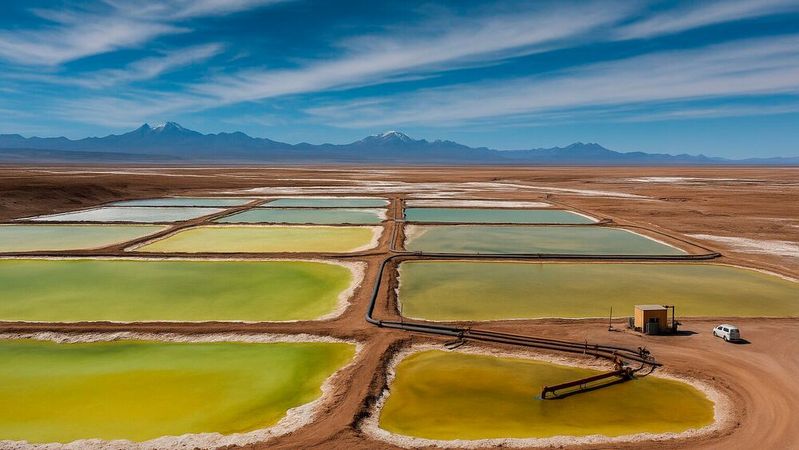
:quality(80)/p7i.vogel.de/wcms/df/a7/dfa71baccf5b3ba1a2d5ff7a8d1f2671/0119592217v1.jpeg "Lithium is an important raw material for mobile battery technology - and a scarce commodity. (Image:A. Bramsiepe / KIT)")
:quality(80)/p7i.vogel.de/wcms/3a/05/3a05714c444f0bae9bb40856c506cdbe/0125744778v1.jpeg "The way the recycling of e-car batteries currently works in Europe is hardly profitable. (Image:Dall-E / AI-generated)")