SteelChina Uses Innovative "Super Steel" in the Construction of a Fusion Reactor
From
Henrik Bork | Translated by AI
5 min Reading Time
A new "super steel" is currently being used in China as the casing for the superconducting magnetic coils in the construction of the BEST fusion reactor. Read here about the outstanding properties of "CHSN01".
Most fusion facilities on Earth are of the Tokamak type, including the experimental reactor BEST in Hefei.
Chinese media celebrate the new material as "super steel." Indeed, "CHSN01" possesses a number of properties whose simultaneous existence in one alloy was recently described by international experts as "absolutely impossible."
500 Tons of Steel for Fusion Reactor
Around 500 tons of the new steel are currently being used in the construction of the BEST fusion reactor in China's Hefei province. They form the straight segments of the casing for the superconducting magnetic coils, the heart of the "artificial sun."
Whatever is used there must also function near absolute zero (-269 °C) and simultaneously withstand enormous magnetic forces. It was precisely these requirements that other materials had consistently reached their limits with until now.
Energy from Nuclear Fusion by 2027
BEST, the "Burning Plasma Experiment Superconducting Tokamak," is an experimental reactor that, according to the will of the Chinese government, aims to be the first reactor on Earth to deliver energy from nuclear fusion. The plans in Beijing foresee the first plasma being generated by 2027.
If the project succeeds, it would not only be a scientific revolution but also have the potential to solve humanity's energy problems and fundamentally alter the geopolitical power dynamics on this planet.
High-Strength Low-Temperature Steel
The name for the new steel, CHSN01, is explained in Chinese media reports as an abbreviation for "China High-Strength Low-Temperature Steel No. 1."
CHSN01 has been certified to withstand magnetic fields of 20 Tesla and a combined electromagnetic stress of 1.3 gigapascals, while allowing for an elongation of about 30 percent before breaking.
Equally important is that it retains these properties even after 60,000 on-and-off cycles, thus over the entire intended lifespan of BEST.
12-Year Thriller of Materials Science
The use of the new super steel was preceded by a 12-year thriller of materials science, which the researchers involved recently described in an article in the scientific journal "Applied Science."
In 2011, engineers at the international fusion project ITER in France discovered a problem. A low-temperature steel pipe used for the magnetic conductor had suddenly lost significant ductility at the required extreme cold.
At that time, China had not yet become a target of U.S. and European hostilities, and scientists from the People's Republic were involved in the ITER project. A team led by materials scientist Li Laifeng from the Technical Institute of Physics and Chemistry (TIPC) of the Chinese Academy of Sciences recognized the importance of finding a new material that is both particularly cold-resistant and more resilient to strong magnetic fields.
In Search of a Better Alloy
The 316LN steel used in France was designed for the 11.8 Tesla magnetic field intended for ITER. However, Li knew that there were already plans in China to build their own nuclear fusion reactors, and that even stronger magnetic fields might be needed in the future. He set out with his team to search for a better alloy for a ductile low-temperature steel.
Initially, the researchers focused on a nitrogen-alloyed steel called N50, which demonstrated significantly higher strength than 316LN. However, N50 did not exhibit the required resilience when exposed to strong magnetic fields.
Then the composition of N50 was further optimized. By simultaneously controlling the carbon and nitrogen content and adding a small amount of vanadium, a better steel was expected to be developed.
2017 Achieved Promising Material Properties
In 2017, Li presented his initial results at a professional conference in the USA—and was met with nothing but ridicule. Some of the gathered experts from around the world described the pursued technical approach as "absolutely impossible."
In the same year, the team achieved an initial breakthrough in its laboratory in Beijing. With the vanadium addition and a further optimized nitrogen-carbon ratio, they achieved promising material properties.
Make the New Alloy Practical as Quickly as Possible
In 2018, Li received an assignment from the Ministry of Science in Beijing for a research project with the stated goal of making the newly developed alloy practical as quickly as possible.
By the end of 2019, the team was able to produce an initial test batch of steel that withstood a yield strength of 1,500 megapascals (MPa), about 500 MPa more than 316LN in France. A fingernail-sized piece of the new steel could have supported the weight of 15 elephants.
Date: 08.12.2025
Naturally, we always handle your personal data responsibly. Any personal data we receive from you is processed in accordance with applicable data protection legislation. For detailed information please see our privacy policy.
Consent to the use of data for promotional purposes
I hereby consent to Vogel Communications Group GmbH & Co. KG, Max-Planck-Str. 7-9, 97082 Würzburg including any affiliated companies according to §§ 15 et seq. AktG (hereafter: Vogel Communications Group) using my e-mail address to send editorial newsletters. A list of all affiliated companies can be found here
Newsletter content may include all products and services of any companies mentioned above, including for example specialist journals and books, events and fairs as well as event-related products and services, print and digital media offers and services such as additional (editorial) newsletters, raffles, lead campaigns, market research both online and offline, specialist webportals and e-learning offers. In case my personal telephone number has also been collected, it may be used for offers of aforementioned products, for services of the companies mentioned above, and market research purposes.
Additionally, my consent also includes the processing of my email address and telephone number for data matching for marketing purposes with select advertising partners such as LinkedIn, Google, and Meta. For this, Vogel Communications Group may transmit said data in hashed form to the advertising partners who then use said data to determine whether I am also a member of the mentioned advertising partner portals. Vogel Communications Group uses this feature for the purposes of re-targeting (up-selling, cross-selling, and customer loyalty), generating so-called look-alike audiences for acquisition of new customers, and as basis for exclusion for on-going advertising campaigns. Further information can be found in section “data matching for marketing purposes”.
In case I access protected data on Internet portals of Vogel Communications Group including any affiliated companies according to §§ 15 et seq. AktG, I need to provide further data in order to register for the access to such content. In return for this free access to editorial content, my data may be used in accordance with this consent for the purposes stated here. This does not apply to data matching for marketing purposes.
Right of revocation
I understand that I can revoke my consent at will. My revocation does not change the lawfulness of data processing that was conducted based on my consent leading up to my revocation. One option to declare my revocation is to use the contact form found at https://contact.vogel.de. In case I no longer wish to receive certain newsletters, I have subscribed to, I can also click on the unsubscribe link included at the end of a newsletter. Further information regarding my right of revocation and the implementation of it as well as the consequences of my revocation can be found in the data protection declaration, section editorial newsletter.
Pioneer of Superconductivity Joins the Project
In 2020, the project received prominent support. Renowned physicist Zhao Zhongxian, a pioneer of superconductivity, joined the group. He had long emphasized the key role of materials in such projects and wanted to help advance their development.
The Chinese Institute of Plasma Physics defined the required performance values. A yield strength of 1,500 MPa and over 25% elongation at liquid helium temperatures were demanded.
To meet these requirements, China pooled the forces of research and industry at the end of 2021. At the suggestion of Zhao Zhongxian and other experts, a "High-Strength Steel Alliance" was formed, consisting of four research institutes and 13 companies—from the steel giant CISRI to specialized forges.
Li Laifeng took over the leadership. Major Chinese steel manufacturers invested significant money to ensure the new alloy could be produced in the required volumes.
A New Innovation Ecosystem Is Emerging in China
What becomes evident here is a distinctive feature of the newly emerging innovation ecosystem in the People's Republic of China. They do not necessarily possess better expertise than experts abroad. However, the very complete supply chains available in China across nearly all industries, combined with the consistent interdisciplinary integration of knowledge from research institutes and universities, often geographically concentrated in a "Science and Technology Cluster," are increasingly transforming "inventions" into groundbreaking "innovations" as practically applicable advancements at a rapid pace.
In August 2023, the team announced that the new steel met all requirements and was ready for use in China's next fusion reactor.
Reactor in Final Assembly Since 2025
Since May 1 of this year, the final assembly of the compact Tokamak reactor BEST has officially begun in Hefei. It is set to be completed by 2027 and then generate electricity from nuclear fusion for the first time.
Of the approximately 6,000 tons of components in this experimental reactor, only about 500 tons, primarily the straight segments of the magnetic conductor casings, are made from the new steel. But if all goes well, they could prove critical to the success of the entire reactor project.
The story shows that major energy technologies depend primarily on advances in materials science.
Comment from the Technology Portal "Interesting Engineering"
Steel Significantly Better Than Previously Known Steel Types
CHSN01 is a significant improvement over all previously known steel types for this specific application. The new steel remains elastic and ductile even at 20 Tesla and combined electromagnetic stresses of up to 1.3 GPa. In laboratory tests, it demonstrated about 40 percent more strength than 316LN at 4.2 K without becoming brittle.
There is now hope that this will also prove true in practice. If so, China would have built a more compact reactor with BEST—about one-third the volume of ITER—that, for the first time, enables a positive energy output (Q > 1).
"The story shows that major energy technologies depend primarily on advances in materials science," states a commentary from the technology portal "Interesting Engineering." Chinese researchers have just provided the "missing keystone" that makes ultra-strong magnetic coils possible in the first place, writes the specialist portal.



:quality(80)/p7i.vogel.de/wcms/a0/47/a04725ef9bd09fb6c9341a1bea1b5d93/0130443083v1.jpeg "Here, a type of plastic pallet is produced by thermoforming (vacuum forming or deep drawing) at the corresponding division of New England Plastics in the USA. This division, which specializes in so-called liners, is now part of Ringmetall ... (Image:New England Plastics)")
:quality(80)/p7i.vogel.de/wcms/23/99/23992bf2dcdc432c9b7209c34a4a7c48/0129733089v1.jpeg "Stork relies on the modular Neoswiss turning system from Iscar to shorten the set-up times for its sliding headstock lathes and work more productively. (Image:Iscar)")
:quality(80)/p7i.vogel.de/wcms/7d/e2/7de2923434b2f1a78ba5482d8d335269/0113143253v1.jpeg "In our China Market Insider we regularly provide you with relevant information directly from China. (Image:© Eisenhans - stock.adobe.com)")
:quality(80)/p7i.vogel.de/wcms/9d/2b/9d2b802f800e5caf17b2831e74228cd3/screenshot-202026-03-03-20103822-609x343v1v1.png "Visual comparison: on the left, a clean, burr-free cut edge; on the right, typical burr formation with oxidation discoloration. This illustrates how strongly parameter control and gas management influence the quality of the result. (CO₂ laser, oxygen cutting gas, sheet thickness approx. 15 mm). (Image:Picture: Rime)")
:quality(80)/p7i.vogel.de/wcms/b7/36/b736dfebc16c42d6901d0d0e1f390493/3d-druck-20factory-20--20ki-20generiert-1920x1079v1.png "(Source: AI-generated)")
:quality(80)/p7i.vogel.de/wcms/79/b2/79b21aad663f4a7bd4472afc1c1afc62/0130433994v1.jpeg "Mission Joyride: The free-flying robot (shown here in the rendering) will relieve the ISS crew of logistics tasks from 2027 with its two mechanical arms. (Image:Icarus Robotics)")
:quality(80)/p7i.vogel.de/wcms/6b/45/6b4546fa6ebf305c3660326909363f32/0130437089v1.jpeg "Industrial AI in action: Rockwell Automation presents practical solutions for self-controlling production systems at the Hannover Messe. (Image:Rainer Jensen, Deutsche Messe)")
:quality(80)/p7i.vogel.de/wcms/78/e9/78e9188c25a8a94e67c34c9bf8ffe495/visual-agile-20robots-20and-20google-20deepmind-20partner-20to-20bring-20intelligence-20to-20robotics-2500x1406v1v1.jpeg "Together, the partners are developing adaptable, intelligent robots for a wide range of applications (Image:Agile Robots SE)")
:quality(80)/p7i.vogel.de/wcms/59/a2/59a2b11f0aa1b700eff02addd5de8703/adobestock-1788280853--c2-a9-20satria-20-e2-80-93-20stock-adobe-com-5081x2860v1v1.jpeg "Quantum computers require extreme cooling to temperatures close to absolute zero in order to keep qubits stable. (Image:satria - stock.adobe.com)")
:quality(80)/p7i.vogel.de/wcms/49/38/493876a248943456b7e4a6db6edfc454/0130230765v1.jpeg "Safe and reliable in aircraft construction: light-curing adhesive bond combined with universal fastening elements. (Source: Delo)")
:quality(80)/p7i.vogel.de/wcms/b5/c7/b5c749d16c8a2e789c1469c2c8c1c387/0130452780v1.jpeg "Volvo Trucks completes road tests with its new hydrogen-powered trucks. (Image:Volvo Trucks)")
:quality(80)/p7i.vogel.de/wcms/ba/69/ba6975f417a85147084f38dc2cd209e2/0130451386v1.jpeg "Together with Nvidia, Hyundai wants to develop an architecture that will be used for level 4 robotaxis (image) as well as for level 2 customer vehicles. (Image:Hyundai)")
:quality(80)/p7i.vogel.de/wcms/93/4d/934de334b47abaa526c78cba1417d7af/0130343495v1.jpeg "The new SU7 is available in three price categories, \"Standard\", \"Pro\" and \"Max\" (Image:Xiaomi)")
:quality(80)/p7i.vogel.de/wcms/df/a0/dfa048434bb94f1b7d030e346b25b3ae/0130373541v1.jpeg "From August, BMW will be producing the i3 at its main plant in Munich - which the car manufacturer has extensively rebuilt for this purpose. (Image:Rainer Haeckl)")
:quality(80)/p7i.vogel.de/wcms/ee/09/ee09acbd6dc896df25affaa9e871e6e5/0130440053v1.jpeg "IMS chip module for simple system integration into an ion mobility spectrometer. (Image:Fraunhofer IPMS)")
:quality(80)/p7i.vogel.de/wcms/10/6c/106cd22de5f68a0f74639d654827228c/0130345302v1.jpeg "Made in India: According to the India Electronics and Semiconductor Association (IESA), the country should be able to produce between 75 and 80 million chips by the beginning of 2027, once the plants currently under construction become operational. (Image:Pixabay (Montage: Sebastian Gerstl))")
:quality(80)/p7i.vogel.de/wcms/a5/ed/a5ed6fda029d362732a293d6b19d74c4/0130444216v1.jpeg "Thirteen executives from the Chinese chip industry have drawn up a plan to achieve an 80% self-sufficiency rate for semiconductors by 2030. (Image:Maxim_Kazmin - stock.adobe.com)")
:quality(80)/p7i.vogel.de/wcms/31/a6/31a646018b34d8e0a44bfc8bf17837f6/0130361632v1.jpeg "For many companies, PFAS are considered indispensable in electronics production. (Image:freely licensed)")
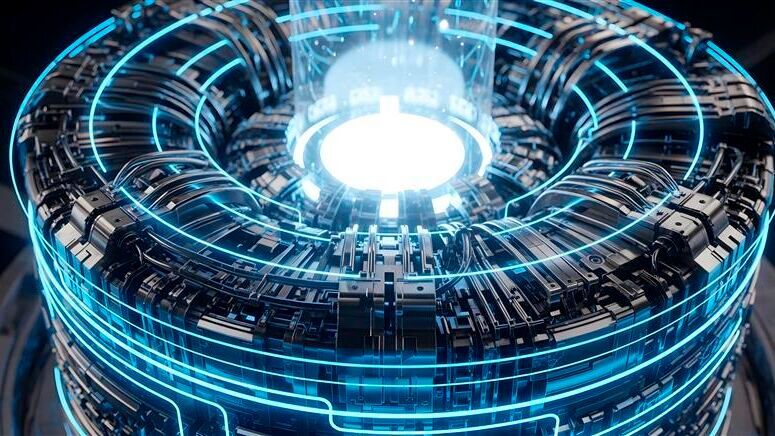
:quality(80)/p7i.vogel.de/wcms/b5/34/b534e64b2db218cdb5ad938898cbed56/0130044810v1.jpeg "The magnet of the torus-shaped tokamak reactor will generate magnetic pulses lasting up to 500 seconds and heat the enclosed plasma to a temperature of 150 million degrees. (Image:Iter)")
:quality(80)/p7i.vogel.de/wcms/59/a2/59a2b11f0aa1b700eff02addd5de8703/adobestock-1788280853--c2-a9-20satria-20-e2-80-93-20stock-adobe-com-5081x2860v1v1.jpeg "Quantum computers require extreme cooling to temperatures close to absolute zero in order to keep qubits stable. (Image:satria - stock.adobe.com)")