Endress+Hauser was one of the test users who were able to test Horn's new Supermini in field trials. The result was not only reduced secondary times but also increased tool life.
The M-fork is used in level indicators.
(Image: Horn/Sauermann)
Horn provided the Endress+Hauser team with six Superminis featuring specific geometries for the tests. The selection of customers for the field trials was based on certain requirements. "We know our users and their machining challenges. The choice quickly fell on Endress+Hauser," explains Horn application technician Stefan Minder. In the machining production at Endress+Hauser, the team primarily machines materials such as 1.4404 (X2CrNiMo17-12-2), 1.4435 (X2CrNiMo18-14-3), and Hastelloy (2.4819, NiMo16Cr15W).
The materials to be processed offer numerous advantages for use in measurement technology, such as corrosion resistance or acid resistance. However, for economical machining, these materials require a great deal of expertise from the users, particularly in series production with high quantities. Specifically, when boring small diameters, the issue of long tangled chips arises, which wrap around the tool like a bundle during use. This severely compromises process reliability and, in the worst case, leads to tool breakage. At Endress+Hauser, during the automated production of M-forks, a stop had to be programmed after every fifth part to manually remove the chips from the tool. Furthermore, the tangled chips disrupted measurement processes and the gripping operations of the robot in the machining cell.
Gallery
From Tangled Chips to Short and Curly Chips
Previously, a Supermini without chip breaker geometry was used here. "The problem with long chips can only be solved with a chip breaker geometry. No matter the quality of the tool, this problem always exists," said Minder. After just the first trial with the new Supermini featuring geometry, the team at Endress+Hauser was thrilled.
Our problems were literally solved with the first push of a button. The chips from internal boring were no longer tangled but short and curly.
Hakan Oda, responsible for tool technology in machining at Endress+Hauser
The team kept the cutting parameters the same as with the previous tool. Overall, Minder and the team at Endress+Hauser tested the tools for four weeks on various machines and components. In all processes, the tool demonstrated its potential.
We would have liked to order more tools immediately, but we had to wait for the official market launch.
Hakan Oda, responsible for tool technology in machining at Endress+Hauser
"We worked intensively on the development of the new Supermini for over four years," said Horn CEO Matthias Rommel at the press conference during the presentation of the new tool in June 2024. In the case of long tangled chips, a chip breaker geometry can provide a solution. It guides and shapes the chip, causing it to break. Until now, specially laser-cut or ground chip breaker geometries have been used for this purpose. However, this came with a corresponding cost factor for the cutting insert.
Horn has successfully developed a universal boring tool with sintered chip breaker geometry with the new Supermini type 105. The tool provides high process reliability in use due to excellent chip control. The cutting edge geometry extends far into the corner radius of the cutting insert, ensuring effective chip control even with small depths of cut. The geometry can be universally applied to various material groups and is suitable for internal turning, face turning, copy turning, and reverse turning.
In addition to the geometry, Horn also optimized the cutting insert blank with higher rigidity and an even more stable cutting edge area. Furthermore, the cooling supply was revised. The new cutting insert is compatible with numerous holders of type 105. Horn offers the cutting inserts in three lengths (15, 20, and 25 millimeters; approx. 0.6, 0.8 and 1 inches) and in grade IG35 as standard. The corner radius is 0.2 millimeters. The tool is suitable for use starting from a diameter of 6 millimeters (approx. 0.2 inches). The wide range of applications for the cutting inserts is also reflected in their cost-effectiveness. The cost of the new Supermini is in a similar range to that of the standard cutting insert without geometry.
Suitable Clamping Holders
For the clamping holders, users can choose from a wide variety of options to find the right solution for their machining needs. These include round shank holders, square shank holders, interface clamping holders, as well as adjustable clamping holders for different machine manufacturers. Horn offers four different solutions for clamping the cutting insert: the classic screw clamping with a ball pressure screw, clamping via a face clamping element, as well as clamping via a lifting element. Additionally, for confined spaces, Horn provides a slim clamping system with clamping through a locknut.
In the fully automated production of M-forks, Endress+Hauser uses a holder with a polygon shank and a face clamping element. The M-forks play an important role in the measuring instruments. They are installed in level measurement devices and resemble a tuning fork. During operation, the forks vibrate at a specific frequency. When the level in a tank rises and the forks are submerged in the liquid, the density of the medium changes the vibration frequency. This allows the sensor to detect the reached fill level.
Date: 08.12.2025
Naturally, we always handle your personal data responsibly. Any personal data we receive from you is processed in accordance with applicable data protection legislation. For detailed information please see our privacy policy.
Consent to the use of data for promotional purposes
I hereby consent to Vogel Communications Group GmbH & Co. KG, Max-Planck-Str. 7-9, 97082 Würzburg including any affiliated companies according to §§ 15 et seq. AktG (hereafter: Vogel Communications Group) using my e-mail address to send editorial newsletters. A list of all affiliated companies can be found here
Newsletter content may include all products and services of any companies mentioned above, including for example specialist journals and books, events and fairs as well as event-related products and services, print and digital media offers and services such as additional (editorial) newsletters, raffles, lead campaigns, market research both online and offline, specialist webportals and e-learning offers. In case my personal telephone number has also been collected, it may be used for offers of aforementioned products, for services of the companies mentioned above, and market research purposes.
Additionally, my consent also includes the processing of my email address and telephone number for data matching for marketing purposes with select advertising partners such as LinkedIn, Google, and Meta. For this, Vogel Communications Group may transmit said data in hashed form to the advertising partners who then use said data to determine whether I am also a member of the mentioned advertising partner portals. Vogel Communications Group uses this feature for the purposes of re-targeting (up-selling, cross-selling, and customer loyalty), generating so-called look-alike audiences for acquisition of new customers, and as basis for exclusion for on-going advertising campaigns. Further information can be found in section “data matching for marketing purposes”.
In case I access protected data on Internet portals of Vogel Communications Group including any affiliated companies according to §§ 15 et seq. AktG, I need to provide further data in order to register for the access to such content. In return for this free access to editorial content, my data may be used in accordance with this consent for the purposes stated here. This does not apply to data matching for marketing purposes.
Right of revocation
I understand that I can revoke my consent at will. My revocation does not change the lawfulness of data processing that was conducted based on my consent leading up to my revocation. One option to declare my revocation is to use the contact form found at https://contact.vogel.de. In case I no longer wish to receive certain newsletters, I have subscribed to, I can also click on the unsubscribe link included at the end of a newsletter. Further information regarding my right of revocation and the implementation of it as well as the consequences of my revocation can be found in the data protection declaration, section editorial newsletter.
Endress+Hauser is a globally leading provider of measurement instruments, services, and solutions for industrial process engineering. The company offers process solutions for flow, level, pressure, and temperature measurement, analytical measurements, as well as data recording and digital communication, thereby optimizing processes in terms of economic efficiency, safety, and environmental impact. Endress+Hauser's customers operate in various industries such as chemicals, energy and power plants, raw materials, metals and mining, food, life sciences, oil and gas, as well as water/wastewater.
The collaboration between Endress+Hauser and Horn has existed for decades.
The new tool has once again shown us why we rely on Horn's tools in our production. In addition to high process reliability, we were able to reduce secondary times and also increase the tool's service life.
Hakan Oda, responsible for tool technology in machining at Endress+Hauser
5 Key Tips for Selecting Your Next Laser Cutting Machine
Facing rising demands and labor shortages, manufacturers must choose smarter laser systems. This guide helps you make informed decisions for flatbed and tube cutters—balancing cost, capacity, and future automation needs. Learn more about:
(Image: aai)
How to size your laser cutter for current and future production needs
Choosing the appropriate laser power for your material mix and thickness
Key differences between entry-level and high-performance cutting systems
When to consider tube laser cutting and how to evaluate its ROI
Why automation readiness is essential for operational efficiency in 2025



:quality(80)/p7i.vogel.de/wcms/35/57/3557c819943c53acec41a0ccba87da4f/0130049064v1.jpeg "Researchers at the Fraunhofer IWU in Chemnitz have long known that many typical sheet metal parts can be manufactured more cost-effectively using hollow embossing rollers. Now there is news to report ... (Image:Fraunhofer IWU)")
:quality(80)/p7i.vogel.de/wcms/77/9b/779b0685d010dfe45c9c2cb1cfecd467/0128886425v1.jpeg "The BlueEye is the first \"real\" hyperspectral camera for the UV range and covers the wavelength range from 220 to 380nm. (Image:Inno-spec GmbH)")
:quality(80)/p7i.vogel.de/wcms/73/60/73608418789b1d9c393f5e2fa974eda2/0130209906v1.jpeg "The robots of the X6 generation from b+m enable very high painting quality and are also particularly compact and easy to maintain. (Image:Beckhoff)")
:quality(80)/p7i.vogel.de/wcms/82/90/8290dfe3595b6c6b33726ae8b76172c7/0130319587v1.jpeg "The concept image illustrates how the pattern of tiny protrusions and depressions created on the substrate (MgO, bottom) controls the arrangement of atoms in the superconducting material (YBCO, top). At the interface between the two layers, an electronic structure enables superconductivity to occur at higher temperatures than previously possible. (Image:Chalmers University of Technology / Riccardo Arpaia)")
:quality(80)/p7i.vogel.de/wcms/dd/08/dd086510d9ae7b50181f6070e4463b44/0129363730v1.jpeg "Typical application for ionizing devices: Wrapping films. (Picture: ©Adobe Stock/SMC)")
:quality(80)/p7i.vogel.de/wcms/78/e9/78e9188c25a8a94e67c34c9bf8ffe495/visual-agile-20robots-20and-20google-20deepmind-20partner-20to-20bring-20intelligence-20to-20robotics-2500x1406v1v1.jpeg "Together, the partners are developing adaptable, intelligent robots for a wide range of applications (Image:Agile Robots SE)")
:quality(80)/p7i.vogel.de/wcms/e7/66/e7669ecf0260ae8fc54c214e34e4902a/0130316817v1.jpeg "Siemens and Palo Alto Networks offer tested cybersecurity solution for industrial 5G. (Image:Siemens)")
:quality(80)/p7i.vogel.de/wcms/9f/55/9f55324832c4f426958031375124d9de/siemens-20ubtech-20hmnd-1920x1079v1v1.png "Ready for the factory floor: While Ubtech is planning mass production, Siemens is already testing humanoids in real factory applications in Erlangen. (Image:Siemens)")
:quality(80)/p7i.vogel.de/wcms/59/02/590246e3b3f415c65edbee377c14ca77/26-06-pi-fraunhofer-iws-41450-direktplattieren-pic-01-7771x4369v1v1.jpeg "The Fraunhofer IWS has developed the new \"direct laser cladding\" process, which creates a functional layer directly on the base body by applying a strip-shaped metal to rotationally symmetrical components in a spiral and bonding it locally by laser. (Image:Christoph Wilsnack/Fraunhofer IWS)")
:quality(80)/p7i.vogel.de/wcms/e4/51/e451d52ce0182fb0aaa46a5774f832ef/26-04-pi-fraunhofer-iws-21160-bioslide-pic-01-4128x2321v1v1.jpeg "With the BioSlide research project, the Fraunhofer IWS is investigating how sliding systems can be designed to be more sustainable and energy-efficient. New materials can be tested in a particularly application-oriented manner on this plain bearing test stand. (Image:Fraunhofer IWS)")
![Thanks to advanced 3D printing technology, a more efficient use of resources should contribute to lower-emission aviation—this is the goal of ['skai]-lab. (Image:Oleksandr Pashchenko - stock.adobe.com / AI-generated)](https://cdn1.vogel.de/nghHNSbySccfOjG3n1qCA-FVOjQ=/288x162/smart/filters:format(jpg):quality(80)/p7i.vogel.de/wcms/62/64/626424c97a16e69f871bf216c9629c2a/adobestock-1927043193--c2-a9-20oleksandr-20pashchenko-20-e2-80-93-20stock-adobe-com-ki-generiertv1v1.jpeg "Thanks to advanced 3D printing technology, a more efficient use of resources should contribute to lower-emission aviation—this is the goal of ['skai]-lab. (Image:Oleksandr Pashchenko - stock.adobe.com / AI-generated)")
:quality(80)/p7i.vogel.de/wcms/78/28/7828775af76773458b4d1409ceb1cf0c/368945-20dam-20imagery-digital-transformation-pc-1920x1079v1v1.jpeg "Complex development projects with high regulatory requirements, such as in the aerospace industry, benefit in particular from the Intelligent Product Lifecycle. (Image:PTC)")
:quality(80)/p7i.vogel.de/wcms/c1/79/c179ce9acd000e7cf48318e03e3fe4da/0130333964v1.jpeg "Magna is expanding its hybrid portfolio with the DHD REX, a dedicated hybrid drive for REEVs. (Image:Magna)")
:quality(80)/p7i.vogel.de/wcms/62/5f/625f41e87ebfef156a98c8e6393e32fd/0130211654v1.jpeg "Axial flux motors have some advantages over radial flux motor—but their production is currently still expensive. (Image:RWTH Aachen University)")
:quality(80)/p7i.vogel.de/wcms/80/c2/80c2ea3fbe2df808a263d99adad93f66/0130160344v1.jpeg "Francois Provost has been CEO of Renault since summer 2025. (Image:Renault)")
:quality(80)/p7i.vogel.de/wcms/8d/f8/8df87aa10e28419e1869acb641b4c4dd/0130324805v1.jpeg "With the Affela 1 in the Signature Edition, the Sony Honda Mobility joint project was to be launched in a few months' time. (Image:SHM)")
:quality(80)/p7i.vogel.de/wcms/4d/dd/4dddf438e91f394c04a095dbfd109d1c/0130236430v1.jpeg "Measurement modules: The 720301 module in combination with the SL2000 enables RMS and power calculations, among other things. (Image:Yokogawa)")
:quality(80)/p7i.vogel.de/wcms/61/fc/61fcf95f5cca15494ad18343901ae585/0130317237v1.jpeg "With the AGI CPU, Arm says it is taking a \"historic step\": With the processor aimed at AI in data centers, the company is presenting itself for the first time as a provider of its own chips, not just as a pure IP licensor. (Image:Arm)")
:quality(80)/p7i.vogel.de/wcms/11/36/113695ed260e29c8c2d9d39dc5f9d869/0130213768v1.jpeg "AI can work cheaply in China and deliver the results rapidly all over the world. (Image:Dall-E / AI-generated)")
:quality(80)/p7i.vogel.de/wcms/22/08/22085b4997a696887dd5a712a30b262b/0130211045v1.jpeg "Imec has announced that the world's most advanced high numerical aperture (High NA) EUV lithography system, the ASML EXE:5200, has arrived at its 300mm cleanroom in Leuven. (Image:Imec)")
:fill(fff,0)/images.vogel.de/vogelonline/companyimg/76800/76895/65.jpg "FAULHABER_120mm.jpg ()")
:fill(fff,0)/p7i.vogel.de/companies/67/eb/67eba621ef6ea/logo2.png "logo2 (Wuxi InfiMotion)")
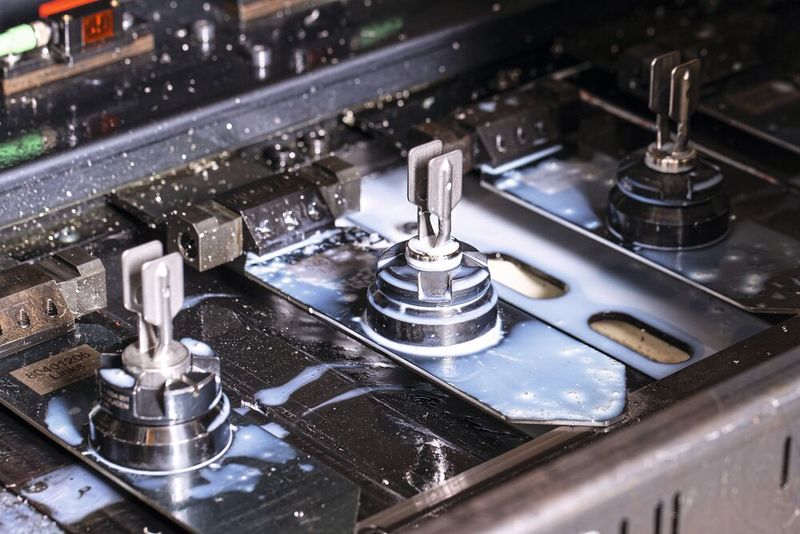
:quality(80)/p7i.vogel.de/wcms/84/76/84767cdb855c716503b0e140cc0d6808/0125948319v1.jpeg "The chip tangles limited fully automated production and led to regular stops.(Image: Horn/Sauermann)")
:quality(80)/p7i.vogel.de/wcms/35/f1/35f19757082ad7c4b4ef404e4324bf07/0125948049v1.jpeg "The new Supermini variant with sintered geometry solved the chip issues.(Image: Horn/Sauermann)")
:quality(80)/p7i.vogel.de/wcms/56/25/56255c39000d692545702737bb28e6c5/0125948322v1.jpeg "A successful collaboration: Stefan Minder and Hakan Oda.(Image: Horn/Sauermann)")
:quality(80)/p7i.vogel.de/wcms/b8/98/b8989bee0ff885849d502066ba70dc60/0125948290v1.jpeg "The M-fork is used in level indicators.(Image: Horn/Sauermann)")
:quality(80):fill(efefef,0)/p7i.vogel.de/wcms/67/ac/67acb931a438c/elatec-wp-gmp.png "Elatec WP GMP")
:quality(80)/p7i.vogel.de/wcms/3c/63/3c638914e2a9609cba95a835ca346692/0124883810v1.jpeg "Adapted cutting geometries provide a high level of process reliability when machining lead-free materials. (Image:Horn/Sauermann)")
:quality(80)/p7i.vogel.de/wcms/d6/8e/d68ef2feb221883f28f9e55f39baed08/0124337731v1.jpeg "Sandvik Coromant expands CoroCut 2 with the new and updated -GL and -CR geometries. (Image:Sandvik Coromant)")