


:quality(80)/p7i.vogel.de/wcms/e7/2d/e72daf34b34495fbd4436b9bd29cc854/0131165612v1.jpeg "Donald keeps the world on tenterhooks! After all, the US President has suffered his second legal defeat over his tariff strategies. He has also extended the deadline for his latest announcements until the beginning of July. Meanwhile, the EU is negotiating how it should react ... (Image:AP)")
:quality(80)/p7i.vogel.de/wcms/b7/3e/b73e4abb821fbcef14bc24df426c0062/0131165798v1.jpeg "Better than using hydrofluoric acid! Here, a glass blank is processed with picosecond pulses using a USP laser to give it micro- or nanostructures. This works precisely and, above all, is more environmentally friendly than with conventional methods. But there's more ... (Image:Fraunhofer IPT)")
:quality(80)/p7i.vogel.de/wcms/ad/17/ad170d33176b28534ae903fda8bb2ce4/0130651888v1.jpeg "According to Fronius, manual MIG/MAG welding simply cannot be dispensed with, even if the process continues to be automated. How about using welding systems that combine solid craftsmanship with modern support technology? (Image:Fronius)")
:quality(80)/p7i.vogel.de/wcms/9b/cf/9bcf43857ff151866d28f8888e0eda17/0131146046v1.jpeg "What you can see here are various components that are found in beverage bottling plants, but which wear out again and again due to the constant stresses and strains. In order to save costs, Morsan now relies on its own 3D printing with Lehvoss materials to procure spare parts. (Image:Morsan)")
:quality(80)/p7i.vogel.de/wcms/72/54/7254c0031573057a049e5879cba0de85/0130912407v1.jpeg "The serial interface still has its legitimacy in the age of Industry 4.0: it is still used, for example, to connect peripheral devices such as scanners. (Picture: ©Guy - stock.adobe.com)")
:quality(80)/p7i.vogel.de/wcms/c1/70/c170fd5c52c08ceb4bc2b58eb94ea95f/newsimage421365-2048x1151v1v1.jpeg "Diving robot from TU Bergakademie Freiberg before its first dive at the Malter dam (Image:Andreas Hiekel/TUBAF)")
:quality(80)/p7i.vogel.de/wcms/5d/0d/5d0d8676fd82a1a94afe763f7f0600a0/0130214448v1.jpeg "In pharmaceutical and biotechnological production, manual labor is undesirable for reasons of hygiene and safety. (Image:Adobe Stock/angellodeco)")
:quality(80)/p7i.vogel.de/wcms/12/f3/12f38d566c2473fc0df9211b0f140c60/0130026531v1.jpeg "Acting out everyday situations is intended to prepare for similar situations. (Image:HCC - TU Graz)")
:quality(80)/p7i.vogel.de/wcms/3a/08/3a08d5a0623b4d32294e8108d639f237/nivalon-20medical-20-1626x914v1v1.png "EvoFlex implant from Nivalon Medical consists of a bone-like ZTA ceramic that is precisely adapted to the anatomy of each patient. (Image:Nivalon)")
:quality(80)/p7i.vogel.de/wcms/55/93/55936485100842cd9e83fa3ec053e9c1/2-995x560v1v1.png "The research team at the Technical University of Munich measures and controls the tendon forces on the robot. The aim of the research project is to develop new control concepts. (Image:TU Munich)")
:quality(80)/p7i.vogel.de/wcms/c2/df/c2df275b52afda5130ec90662fc767af/adobestock-1858604981--c2-a9-20vladyslav-20andrukhiv-20-e2-80-93-20stock-adobe-com-ki-generiertv1.jpeg "Artificial sun on earth: Start-ups in China are working to accelerate the development of the virtually inexhaustible energy source of nuclear fusion with AI. (Source: © Vladyslav Andrukhiv - stock.adobe.com/AI-generated)")
:quality(80)/p7i.vogel.de/wcms/80/5c/805c31ab52ed4e39222b5bf82b135e03/0131052307v1.jpeg "The brain remains untouched: The electrode mat (Laplace electrode) placed under the skin stimulates the cortex with electrical pulses through the skull. (Image:Precisis)")
:quality(80)/p7i.vogel.de/wcms/4f/7b/4f7bbe1f4e8d939d923e7cc4ae92e9df/0131157100v1.jpeg "Yanni von Roy-Jiang, pictured in her Webasto days, has taken over purchasing at Mercedes-Benz. She is now exerting massive pressure on the suppliers with a letter. (Image:Webasto)")
:quality(80)/p7i.vogel.de/wcms/cd/c4/cdc4f646f0c1e71e5788f4054dff870b/0131136593v1.jpeg "Highly integrated inverter with a power density of 500 kW/l, optimized for maximum power density (Image:Fraunhofer IZM / Volker Mai)")
:quality(80)/p7i.vogel.de/wcms/77/4f/774f215a5fdd4d688f9f14fcc246470c/0131065816v1.jpeg "Pirelli and Univrses want to use cyber-tyre technology to analyze road conditions. (Image:PIRELLI GERMANY)")
:quality(80)/p7i.vogel.de/wcms/4e/a3/4ea3c3704bca640b86cf668745688812/0130570612v1.jpeg "VW is developing a new E/E architecture for its future Chinese models. Experts say that the technology in this area is developing faster than the organizations. (Image:Volkswagen AG)")
:quality(80)/p7i.vogel.de/wcms/22/35/2235aeefad964df8b6480beddec5b58c/0131086898v1.jpeg "The Eigenblue team with the eigenScan (from left to right): Ata Keşfeden, Shiyue Liu, Qiao Qiao, Johannes Zimmerer, Raphael Joppi and Tizian Unkauf. (Image:Eigenblue GmbH)")
:quality(80)/p7i.vogel.de/wcms/0b/a0/0ba05fb723da711a306a511fac9705b4/0131080817v1.jpeg "trategy for the industry of tomorrow: Delta EMEA President Dalip Sharma and Head of Automation Michael Mayer-Rosa explain how AI and decentralized energy networks will make companies more resilient. (Image:Manuel Christa)")
:quality(80)/p7i.vogel.de/wcms/3f/94/3f9454f1b06cd27e64855fce6bd1afa2/0131089404v1.jpeg "Visible difference at peak brightness: The comparison at the SID 2026 shows Samsung's new Flex Chroma Pixel OLED in direct comparison. Thanks to the new PSF emitter materials, the color saturation (96% BT.2020) is maintained even at extreme luminance levels without the colors washing out. (Image:Samsung Display)")
:quality(80)/p7i.vogel.de/wcms/0b/50/0b50d1a8f9918b41167997eb8fe5665b/0131078602v1.jpeg "The AI Hub from Nordson Intelligence (N-Intelligence): Users can take control of their inspection process thanks to an intuitive user interface and advanced AI features. (Image:Nordson)")
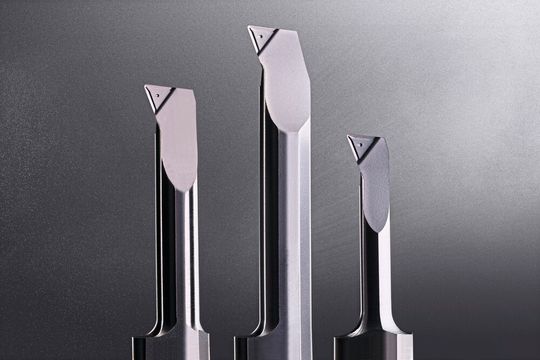
:quality(80)/p7i.vogel.de/wcms/50/56/50564568b7ae2ab33a8a665d75545971/0124725721v1.jpeg "Paul Horn GmbH has also developed a chip breaker geometry for the Mini tool system types 108, 111, and 114.(Image: Horn/Sauermann)")
:quality(80)/p7i.vogel.de/wcms/2d/7a/2d7aa832c63825f4e059fc9721e6599a/0124725718v1.jpeg "Horn has succeeded in developing a universal boring tool with sintered chip breaker geometry with the new Supermini type 105.(Image: Horn/Sauermann)")
:quality(80)/p7i.vogel.de/wcms/19/e2/19e233f71e3c485e7c4da32307804b70/0124725715v1.jpeg "Adapted cutting geometries provide a high level of process reliability when machining lead-free materials.(Image: Horn/Sauermann)")
:quality(80):fill(efefef,0)/p7i.vogel.de/wcms/67/ad/67adf92d254d2/elatec-wp-smart-factory.png "Elatec WP Smart Factory")
Date: 08.12.2025
Naturally, we always handle your personal data responsibly. Any personal data we receive from you is processed in accordance with applicable data protection legislation. For detailed information please see our privacy policy.
Consent to the use of data for promotional purposes
I hereby consent to Vogel Communications Group GmbH & Co. KG, Max-Planck-Str. 7-9, 97082 Würzburg including any affiliated companies according to §§ 15 et seq. AktG (hereafter: Vogel Communications Group) using my e-mail address to send editorial newsletters. A list of all affiliated companies can be found here
Newsletter content may include all products and services of any companies mentioned above, including for example specialist journals and books, events and fairs as well as event-related products and services, print and digital media offers and services such as additional (editorial) newsletters, raffles, lead campaigns, market research both online and offline, specialist webportals and e-learning offers. In case my personal telephone number has also been collected, it may be used for offers of aforementioned products, for services of the companies mentioned above, and market research purposes.
Additionally, my consent also includes the processing of my email address and telephone number for data matching for marketing purposes with select advertising partners such as LinkedIn, Google, and Meta. For this, Vogel Communications Group may transmit said data in hashed form to the advertising partners who then use said data to determine whether I am also a member of the mentioned advertising partner portals. Vogel Communications Group uses this feature for the purposes of re-targeting (up-selling, cross-selling, and customer loyalty), generating so-called look-alike audiences for acquisition of new customers, and as basis for exclusion for on-going advertising campaigns. Further information can be found in section “data matching for marketing purposes”.
In case I access protected data on Internet portals of Vogel Communications Group including any affiliated companies according to §§ 15 et seq. AktG, I need to provide further data in order to register for the access to such content. In return for this free access to editorial content, my data may be used in accordance with this consent for the purposes stated here. This does not apply to data matching for marketing purposes.
Right of revocation
I understand that I can revoke my consent at will. My revocation does not change the lawfulness of data processing that was conducted based on my consent leading up to my revocation. One option to declare my revocation is to use the contact form found at https://contact.vogel.de. In case I no longer wish to receive certain newsletters, I have subscribed to, I can also click on the unsubscribe link included at the end of a newsletter. Further information regarding my right of revocation and the implementation of it as well as the consequences of my revocation can be found in the data protection declaration, section editorial newsletter.
:quality(80)/p7i.vogel.de/wcms/b0/da/b0dad2d4b95f63c6dc0881efe2a4c9d4/0125948278v1.jpeg "The M-fork is used in level indicators. (Image:Horn/Sauermann)")
:quality(80)/p7i.vogel.de/wcms/5e/8b/5e8b6036f9a88acf8cf2c5ce2282b73b/0128231963v1.jpeg "Tests showed that standard tools from Iscar, such as the Logiq6Turn, work excellently in lead-free material. (Image:Iscar)")