Tesla's new car sales are experiencing a steep decline. There are now sound technical and portfolio reasons to prefer another brand when buying an electric car.
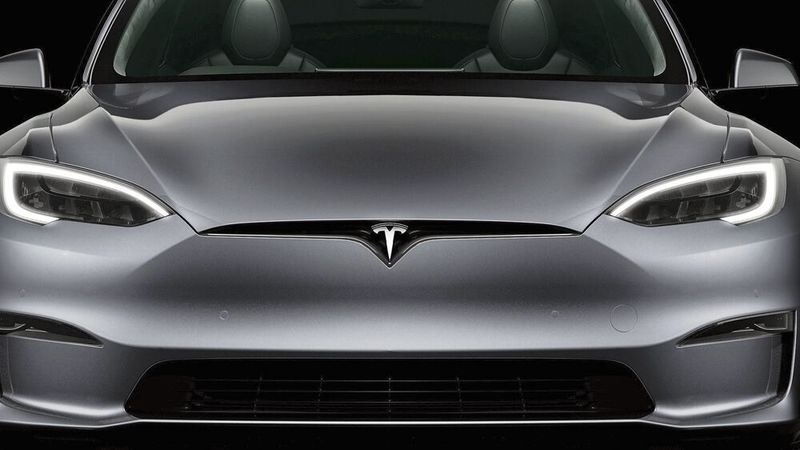
The Tesla Model S: Once a coveted model, it is rarely bought anymore. But the core Model Y is also reaching fewer and fewer customers.
(Image: Tesla)
There were times when they celebrated him like a messiah: When a shy Tesla CEO Elon Musk presented the Model X in Los Angeles in 2012, the fans reacted like at a rock concert, and the cheers knew hardly any bounds.
Thirteen years later, the 53-year-old has become more rhetorically adept and has matured into the perfect show star, but his fans have changed. Because when the now richest man in the world stands on stage today, he embodies the grand, sometimes very questionable pose; but in the audience are no longer the electrified fan-boys of the mobility revolution, rather the die-hard Trump voters, and the focus is no longer on cars, electromobility, or the climate, but on the big picture of politics in America and the rest of the world.
Already with the Twitter acquisition and his handling of opinion and truth, Musk has alienated many Tesla fans. And with his engagement first for Trump and then for the European right-wing, up to Alice Weidel and her AfD, he alienates even more customers. As a result, the internet is full of protest reactions, and online shops are overflowing with stickers like "I bought this car before Elon went crazy," with which drivers distance themselves from the company chief.
"Elon Musk has long since become a problem for the brand," judges e-mobility expert Stefan Möller from the car rental company Nextmove, and he anticipates a sales decline, especially in Germany. Especially as the first consequences are already visible: Corporate fleets like the drugstore chain Rossmann or the energy provider Badenova are publicly parting with their Teslas.
Steep decline in the registration statistics
The current figures speak volumes. In the full year of 2024, Tesla sales in Germany plummeted by 41 percent. The free fall continued in January with a decrease of 59.5 percent. The market share is now only 0.6 percent. The brand is far from the Corona times when the manufacturer was able to deliver and the market share seemed to be marching towards 3 percent.
Tesla also experienced a setback across Europe. According to data from the consulting firm Jato, the Dacia Sandero has replaced the Tesla Model Y as Europe's best-selling car. New registrations of the Model Y fell by 17 percent—Tesla sold a total of 35,000 fewer units in Europe than a year earlier. This was a decline of 10 percent in an overall slightly growing market.
All this comes at a time when things at Tesla are already anything but smooth: The latest quarterly results have disappointed analysts. The highly polarizing, initially extremely coveted Cybertruck with its angular stainless steel body is now stagnant and can only be sold with large discounts. Meanwhile, the competition has become stronger than ever. Currently, it's mainly the Chinese: BYD is hot on Tesla's heels in global electric registrations, and hardly a quarter goes by without a new challenger like the Xpeng G6 or the Hyptec HT entering the race against Model S, X, 3, or Y, scoring more points in one discipline or another than the original.
And the Germans aren't even fully participating yet. For a long time, in Stuttgart, Wolfsburg, or Munich, they stood dumbfounded and paralyzed in shock instead of taking on Elon Musk. But that is also changing now: The VW Group has provided a solid response to the affordable variants of the Model 3 with the ID 7, and with the duo of Audi Q6 and Porsche Macan on the new PPE platform, the Lower Saxons are skimming the cream in the Model Y segment.
More and more competitors are launching
And when Mercedes-Benz launches the new CLA as the first e-model of the next generation at the end of the year and BMW starts with the "Neue Klasse," it will become a bit more uncomfortable for Elon Musk. With new platforms, new battery technology, and for the first time with their own innovative software architecture, Stuttgart and Munich aim to beat the former world champion at his own game.
Tesla currently has much bigger problems than the trials and tribulations of its boss, also judges Jan Burgard from the strategy consultancy Berylls by Alix Partners. Although the expert admits that a politically active CEO polarizes and thus also scares off potential customers, and especially in Germany, this could lead to boycott actions. "But experience shows that such things are rarely long-lasting." And when large fleets like Sixt decommission their Teslas, it's not just about soft factors like image, but also very real problems with parts availability and service.
Tesla is now at a point where more intensive care for the company is needed than Musk can provide with his many interests and engagements. Just as he has installed Gwynne Shotwell as the actual decision-maker at SpaceX, someone would also need to take charge of the day-to-day business and, above all, the strategy at Tesla: It once aimed for 20 million cars a year, with autonomous driving as the all-important factor.
Date: 08.12.2025
Naturally, we always handle your personal data responsibly. Any personal data we receive from you is processed in accordance with applicable data protection legislation. For detailed information please see our privacy policy.
Consent to the use of data for promotional purposes
I hereby consent to Vogel Communications Group GmbH & Co. KG, Max-Planck-Str. 7-9, 97082 Würzburg including any affiliated companies according to §§ 15 et seq. AktG (hereafter: Vogel Communications Group) using my e-mail address to send editorial newsletters. A list of all affiliated companies can be found here
Newsletter content may include all products and services of any companies mentioned above, including for example specialist journals and books, events and fairs as well as event-related products and services, print and digital media offers and services such as additional (editorial) newsletters, raffles, lead campaigns, market research both online and offline, specialist webportals and e-learning offers. In case my personal telephone number has also been collected, it may be used for offers of aforementioned products, for services of the companies mentioned above, and market research purposes.
Additionally, my consent also includes the processing of my email address and telephone number for data matching for marketing purposes with select advertising partners such as LinkedIn, Google, and Meta. For this, Vogel Communications Group may transmit said data in hashed form to the advertising partners who then use said data to determine whether I am also a member of the mentioned advertising partner portals. Vogel Communications Group uses this feature for the purposes of re-targeting (up-selling, cross-selling, and customer loyalty), generating so-called look-alike audiences for acquisition of new customers, and as basis for exclusion for on-going advertising campaigns. Further information can be found in section “data matching for marketing purposes”.
In case I access protected data on Internet portals of Vogel Communications Group including any affiliated companies according to §§ 15 et seq. AktG, I need to provide further data in order to register for the access to such content. In return for this free access to editorial content, my data may be used in accordance with this consent for the purposes stated here. This does not apply to data matching for marketing purposes.
Right of revocation
I understand that I can revoke my consent at will. My revocation does not change the lawfulness of data processing that was conducted based on my consent leading up to my revocation. One option to declare my revocation is to use the contact form found at https://contact.vogel.de. In case I no longer wish to receive certain newsletters, I have subscribed to, I can also click on the unsubscribe link included at the end of a newsletter. Further information regarding my right of revocation and the implementation of it as well as the consequences of my revocation can be found in the data protection declaration, section editorial newsletter.
Autonomous driving is a bet on the future
This is because autonomous cars are supposed to bring in money for the Tesla owner when they don't need their car and make it available to a ride service. "However, if you remove autonomous driving because it doesn't seem to be progressing well, a Tesla is simply an electric vehicle that has to compete," says Burgard. "And today, in many vehicle functions, the competition is much further ahead, including in autonomous driving."
The competition changes everything for Tesla: "Without competition, Musk could still compete with an aging portfolio. But suddenly, in many comparisons, Teslas now literally look old." And the facelift for the Model Y can hardly be seen as a breakthrough: Instead, it reminds Burgard more of a fresh iPhone with old technology and a few new gimmicks. "Only, unlike Apple, Tesla does not have a 20 percent global market share."
A budget model is still missing
If Tesla still wants to achieve the target of 20 million cars at some point, the corresponding offering must come, and that can only lead to an affordable model. Since the competition doesn't have much to offer there either, a car under 25,000 (26.205 USD) or better yet under 20,000 euros (20.964 USD)could still carry the brand for a while, Burgard is convinced. Especially if Tesla also gets its other issues under control, bringing its digital services up to date, improving its aftersales business and parts availability, and reorienting itself in autonomous driving. "And if the CEO gets his public image back under control."
There's a lot to do, summarizes Burgard, fearing that a full-time CEO is needed for it. "Even Elon Musk can't do that on the side." Previously, the Tesla CEO worked so long and even slept in the factory until the problems were solved. "But that's no longer feasible today."



:quality(80)/p7i.vogel.de/wcms/37/9f/379f62914fcef347331e271270e3f755/ad1i8940-4368x2456v1.jpeg "(Source: SIMTOS)")
:quality(80)/p7i.vogel.de/wcms/a4/3c/a43c87e306c4b61c9afc01beec500296/-bcm8149-3936x2213v1.jpeg "(Source: TMBA)")
:quality(80)/p7i.vogel.de/wcms/10/11/1011a37522d84917f003e58d93b5aa58/0129426354v1.jpeg "Producing hydrogen where the raw material is available in vast quantities: In the sea! Researchers at Bremerhaven University of Applied Sciences now want to get this off the ground. They believe that offshore hydrogen production is more favorable than on land ... (Picture: ©Shawn Hempel - stock.adobe.com)")
:quality(80)/p7i.vogel.de/wcms/68/4b/684b0fdf046c2ce50f85f2962e4a5c4e/0128861342v1.jpeg "Consistent pricing is a prerequisite for success in the retrofit business. (Picture: ©bakhtiarzein - stock.adobe.com)")
:quality(80)/p7i.vogel.de/wcms/ec/78/ec78a17c244d3aed1f27b95af980c490/0129438580v1.jpeg "According to the Microsoft study, 29 percent of employees use AI agents without the approval of their IT department or superiors. (Picture: ©immimagery - stock.adobe.com)")
:quality(80)/p7i.vogel.de/wcms/8a/1e/8a1e6f65e2a0233007e1308a0bc42891/org-blobs-user-response-file-output-3964257d-ad39-4188-854f-cb9f073d1d06-plugin-output-call-xpdfkdgybtu3axwxtgikmroc-1536x864v1.png "(Source: AI-generated)")
:quality(80)/p7i.vogel.de/wcms/f8/f1/f8f13c6a36ecc58af66cdcd16733b262/pexels-googledeepmind-17485706-1920x1079v1.jpeg "(Source: Google DeepMind)")
:quality(80)/p7i.vogel.de/wcms/c5/c2/c5c2fbe38a551a5ac9e8201aa3044e95/0129369094v1.jpeg "The big tech companies are outbidding each other with triple-digit billion investments in AI development. (Picture: ©Shuo - stock.adobe.com)")
:quality(80)/p7i.vogel.de/wcms/a7/34/a73475e9638e032c32288f53006abab7/newsimage417867-2665x1500v1v1.jpeg "Combination of a model from a scanning electron microscope image (left) with a section of the underlying crystal structure of a studied MXene with precisely controlled surface terminations. (Image:B. Schröder/HZDR)")
:quality(80)/p7i.vogel.de/wcms/d2/1a/d21a9b3e1333f306ffd6421e84f9e3d0/semiconductor-20image-20courtesy-20of-20gelest-3000x1688v1.jpeg "In a new collaboration, IBM will test the performance of Gelest precursor materials for dry resist EUV lithography, generating results that aim to guide Gelest on materials research and speed innovation toward smaller devices. (Source: Gelest)")
:quality(80)/p7i.vogel.de/wcms/f5/c6/f5c6cefa374d48138dc702821d41c7c6/greenspeed-visual-home-1500x843v1v1.jpeg "The EU Green Speed project is laying the foundations for cleaner and more competitive production of lithium-ion batteries in Europe. (Image:greenSPEED Consortium / VIRTUAL VEHICLE)")
:quality(80)/p7i.vogel.de/wcms/ba/d0/bad011e604599660b5b2cdd50eb44755/stefanie-arnold-152236-4500x2530v1v1.jpeg "Materials researcher Stefanie Arnold wants to make energy storage more environmentally friendly with the help of hollow carbon spheres. (Image:Saarland University)")
:quality(80)/p7i.vogel.de/wcms/e7/01/e701127d385ceffd0f86b3294f2a3c6d/0129354681v1.jpeg "Parking towers can be a space-saving solution, as the Munich-based company VePa Vertical Parking shows. The start-up has implemented an automated paternoster parking system in Munich's Werksviertel district. (Image:SEW-Eurodrive)")
:quality(80)/p7i.vogel.de/wcms/04/5c/045cb66bca1a642c56fc405ab96213dd/0129353500v1.jpeg "CATL's new sodium-ion battery is to be used in future car models of various Changan brands. They underwent rigorous testing in Yakeshi. (Image:Changan)")
:quality(80)/p7i.vogel.de/wcms/ce/ce/cecefd66fe6478ab996f9e975779b9e0/0129426378v1.jpeg "Electrifying losses! Ford, like so many other car companies, has miscalculated its electric car strategy. Now the US car manufacturer has to accept losses in the 2-digit billion range and is therefore setting a new course ... (Image:Ford)")
:quality(80)/p7i.vogel.de/wcms/89/e2/89e2226e826f23fb666222b66c737531/0129393966v1.jpeg "Chinese car manufacturers and suppliers want to produce small batches of brake-by-wire systems this year. (Image:Chery)")
:quality(80)/p7i.vogel.de/wcms/72/e8/72e82e7be7eb9c7f3fe6e7bd6442b95d/0129427931v1.jpeg "Strategic: EPC licenses eGaN technology to Renesas (Image:freely licensed)")
:quality(80)/p7i.vogel.de/wcms/7b/73/7b736ec0a4a0f7298b65edadc633bb97/0129365186v1.jpeg "Old form factor, new technologies: Ahmed Shihab, Chief Product Officer at Western Digital, shows the physical drive, which is designed to hold up to 140 TB, at Innovation Day. (Image:Western Digital)")
:quality(80)/p7i.vogel.de/wcms/de/30/de30109024cc88d5a9f546a881542789/0129416855v1.jpeg "Starting signal for sub-2nm innovation made in Europe: The Belgian research institute Imec has announced the launch of the European NanoIC pilot line with a clean room expansion of 2000 square meters. (Image:imec)")
:quality(80)/p7i.vogel.de/wcms/02/50/02507ce2e6225bb6816c8805bd98da71/0129407664v1.jpeg "Thanks to a new type of sensor, hydrogen can also be reliably detected in humid environments. (Image:freely licensed)")
:fill(fff,0)/p7i.vogel.de/companies/67/eb/67eba621ef6ea/logo2.png "logo2 (Wuxi InfiMotion)")
:quality(80)/p7i.vogel.de/wcms/b7/b5/b7b5214cea126d4dbe13439822a0a14c/0122549788v1.jpeg "Still relevant? Auto analyst Jürgen Pieper expects that a significant portion of Tesla customers will turn away from the electric car maker because of Elon Musk. (Image:Grimm / »kfz-betrieb«)")
:quality(80)/p7i.vogel.de/wcms/62/9e/629eeb446a1e2e3aca08284d6734adb2/0124318597v1.jpeg "Tesla CEO Elon Musk wants to reduce his political activities. (Image:Tesla)")
:quality(80)/p7i.vogel.de/wcms/7a/59/7a5980ac9e575f57759a3596d960fbf5/0124942677v1.jpeg "The electric vehicle market is picking up again. Volkswagen (pictured is the planned affordable \"ID.Every1\") and BYD from China are particularly benefiting from this. Tesla, on the other hand, appears outdated... (Image:Volkswagen)")