Elon Musk's star in Washington is waning. At the same time, Tesla is selling fewer cars. Once again, the tech billionaire promises millions of self-driving Teslas. However, skeptics have doubts.
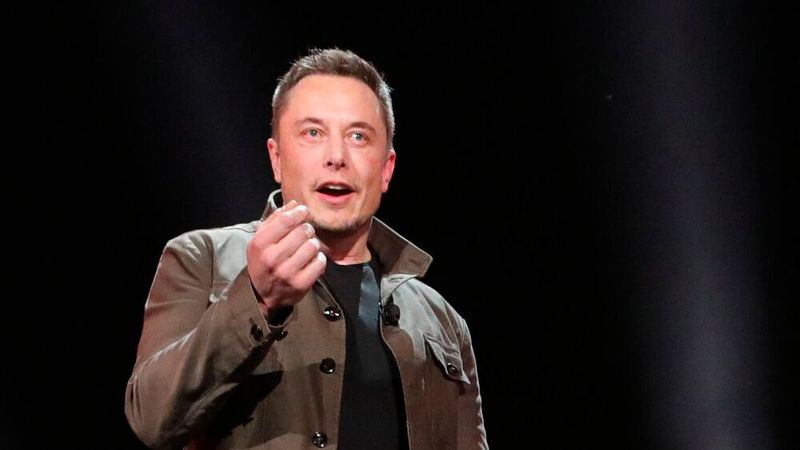
Tesla CEO Elon Musk wants to reduce his political activities.
(Image: Tesla)
Tech billionaire Elon Musk initiates the withdrawal from Washington. Starting in May, he will spend "significantly" less time as President Donald Trump's cost-cutter in the government apparatus, said the Tesla CEO. Instead, he will again focus more on the interests of the electric car manufacturer. Tesla had previously reported a decline in revenue and a profit slump for the past quarter.
However, Musk does not want to completely leave the orbit of the US president. He plans to continue dealing with government tasks one to two days a week – at least as long as Trump wants it. The political activities and right-wing positions made Musk less popular—and this affected Tesla.
Analyst Dan Ives of Wedbush Securities, who has long been very optimistic about Tesla's future, estimates that the damage to the brand from Musk's actions could permanently reduce Tesla demand by 15 to 20 percent. In a survey by the US business channel CNBC, around 50 percent expressed a negative view of Musk—and more than 47 percent had a negative attitude towards Tesla. In the first quarter, Tesla's deliveries fell by 13 percent.
Profit Slump of 71 Percent
Tesla's revenues fell by nine percent year-over-year to just over 19 billion US dollars. Profit slumped by 71 percent to just over 400 million dollars. Tesla thus missed analysts' expectations.
The company also confirmed that production of more affordable model variants is set to begin in the first half of 2025. However, it became clear that they will look similar to current vehicles like the Model Y and Model 3.
Fewer Cars Delivered
The results are not surprising: Tesla's deliveries fell by 13 percent in the first quarter to below 340,000 vehicles. It is difficult to determine how much individual reasons contributed to the decline. In addition to the controversies surrounding Musk, one factor is likely the transition to a renewed generation of the best-selling Model Y.
Tesla retooled the production lines at the beginning of the year, pausing manufacturing for a few weeks. At the same time, there was less incentive for potential buyers to purchase a vehicle from the previous Y variant.
Tesla Engages in Tax Avoidance
Recently, Der Standard (austrian daily newspaper) reported on the financial conduct of the manufacturer. According to the report, Tesla has registered a factory in the Netherlands. However, no cars are produced there; instead, orders are assigned to the subsidiary in Grünheide (Germany). Through this model, Tesla reportedly pays low taxes in the Netherlands and no levies in Germany.
At the end of December 2024, Tesla founded a foundation based in Switzerland, Der Standard further reports. On New Year's Eve, the Dutch operating companies were transferred to the foundation.
Millions of Self-Driving Teslas?
However, Musk announces that self-driving cars will secure Tesla's future. At the end of June, a robotaxi service is set to launch in Austin, Texas. Initially, ten to twenty vehicles of the compact SUV Model Y will be used for this purpose—the production of a Tesla robotaxi without a steering wheel and pedals is only announced for the year 2026. In case of problems, Tesla plans to resort to remote control.
Musk's position is that many Tesla vehicles already have everything necessary on board to be a self-driving car. The function for autonomous driving is planned to be unlocked for private individuals in several US cities this year. Then, one will be able to be driven to the destination while asleep, he said. Musk had already projected this by 2017 within two years.
In mid-April, Electrek reported that, contrary to announcements, the hardware in approximately four million Tesla vehicles is not suitable for highly automated driving. According to the report, this concerns customers who purchased the "Full-Self Driving" software package. Therefore, the company would need to replace the control unit for assistance systems (called HW3) in the affected vehicles or compensate their owners. It is estimated to involve about half a million units.
Skepticism in the Industry
Industry experts and competitors have expressed significant doubts about Musk's promises of self-driving cars for years. One reason is Musk's insistence on achieving this solely with cameras and AI software, without the more expensive laser sensors (Lidar) that rivals like Google's sister company Waymo rely on. While Musk's approach is significantly cheaper, critics warn that cameras alone may not provide sufficient safety.
Date: 08.12.2025
Naturally, we always handle your personal data responsibly. Any personal data we receive from you is processed in accordance with applicable data protection legislation. For detailed information please see our privacy policy.
Consent to the use of data for promotional purposes
I hereby consent to Vogel Communications Group GmbH & Co. KG, Max-Planck-Str. 7-9, 97082 Würzburg including any affiliated companies according to §§ 15 et seq. AktG (hereafter: Vogel Communications Group) using my e-mail address to send editorial newsletters. A list of all affiliated companies can be found here
Newsletter content may include all products and services of any companies mentioned above, including for example specialist journals and books, events and fairs as well as event-related products and services, print and digital media offers and services such as additional (editorial) newsletters, raffles, lead campaigns, market research both online and offline, specialist webportals and e-learning offers. In case my personal telephone number has also been collected, it may be used for offers of aforementioned products, for services of the companies mentioned above, and market research purposes.
Additionally, my consent also includes the processing of my email address and telephone number for data matching for marketing purposes with select advertising partners such as LinkedIn, Google, and Meta. For this, Vogel Communications Group may transmit said data in hashed form to the advertising partners who then use said data to determine whether I am also a member of the mentioned advertising partner portals. Vogel Communications Group uses this feature for the purposes of re-targeting (up-selling, cross-selling, and customer loyalty), generating so-called look-alike audiences for acquisition of new customers, and as basis for exclusion for on-going advertising campaigns. Further information can be found in section “data matching for marketing purposes”.
In case I access protected data on Internet portals of Vogel Communications Group including any affiliated companies according to §§ 15 et seq. AktG, I need to provide further data in order to register for the access to such content. In return for this free access to editorial content, my data may be used in accordance with this consent for the purposes stated here. This does not apply to data matching for marketing purposes.
Right of revocation
I understand that I can revoke my consent at will. My revocation does not change the lawfulness of data processing that was conducted based on my consent leading up to my revocation. One option to declare my revocation is to use the contact form found at https://contact.vogel.de. In case I no longer wish to receive certain newsletters, I have subscribed to, I can also click on the unsubscribe link included at the end of a newsletter. Further information regarding my right of revocation and the implementation of it as well as the consequences of my revocation can be found in the data protection declaration, section editorial newsletter.
Other manufacturers categorically reject sending autonomous cars on the road with only cameras. BMW's development board member Frank Weber recently dismissed this: "For us, it's absolutely clear that this is not possible." He argued that a camera would not recognize a pallet lying on the roadway in front of the car, during the CES tech fair in January.
Musk Keeps a Loophole Open
The dilemma for Waymo: the company's driverless robotaxis are successfully operating in several cities, but the high costs of the vehicles mean that it is more challenging to make money with them. Musk claimed that the price advantage would soon secure Tesla a market share of more than 90 percent in the robotaxi market. He explicitly denied that bright sunlight could blind the cameras.
At the same time, the Tesla CEO restricted that the big autonomy plans could still be blocked by the "regulatory situation." U.S. transportation authorities have not hesitated in the past to suspend permits for self-driving cars in case of problems.
Clock for Musk in Washington was Ticking Anyway
Musk went to Washington formally as a "special government employee." This status can only be held for a maximum of 130 days, so his time in the US capital should actually end in May anyway. On the other hand, the duration can be extended if he is active part-time.
Musk's position in the Trump environment already appeared weakened in recent weeks, especially after he threw his weight into the election campaign for an important judge post in the state of Wisconsin—and the Republican candidate he supported lost.
Secure and Compliant Authentication in Laboratories



:quality(80)/p7i.vogel.de/wcms/dd/08/dd086510d9ae7b50181f6070e4463b44/0129363730v1.jpeg "Typical application for ionizing devices: Wrapping films. (Picture: ©Adobe Stock/SMC)")
:quality(80)/p7i.vogel.de/wcms/35/57/3557c819943c53acec41a0ccba87da4f/0130049064v1.jpeg "Researchers at the Fraunhofer IWU in Chemnitz have long known that many typical sheet metal parts can be manufactured more cost-effectively using hollow embossing rollers. Now there is news to report ... (Image:Fraunhofer IWU)")
:quality(80)/p7i.vogel.de/wcms/59/02/590246e3b3f415c65edbee377c14ca77/26-06-pi-fraunhofer-iws-41450-direktplattieren-pic-01-7771x4369v1v1.jpeg "The Fraunhofer IWS has developed the new \"direct laser cladding\" process, which creates a functional layer directly on the base body by applying a strip-shaped metal to rotationally symmetrical components in a spiral and bonding it locally by laser. (Image:Christoph Wilsnack/Fraunhofer IWS)")
:quality(80)/p7i.vogel.de/wcms/73/60/73608418789b1d9c393f5e2fa974eda2/0130209906v1.jpeg "The robots of the X6 generation from b+m enable very high painting quality and are also particularly compact and easy to maintain. (Image:Beckhoff)")
:quality(80)/p7i.vogel.de/wcms/78/e9/78e9188c25a8a94e67c34c9bf8ffe495/visual-agile-20robots-20and-20google-20deepmind-20partner-20to-20bring-20intelligence-20to-20robotics-2500x1406v1v1.jpeg "Together, the partners are developing adaptable, intelligent robots for a wide range of applications (Image:Agile Robots SE)")
:quality(80)/p7i.vogel.de/wcms/e7/66/e7669ecf0260ae8fc54c214e34e4902a/0130316817v1.jpeg "Siemens and Palo Alto Networks offer tested cybersecurity solution for industrial 5G. (Image:Siemens)")
:quality(80)/p7i.vogel.de/wcms/9f/55/9f55324832c4f426958031375124d9de/siemens-20ubtech-20hmnd-1920x1079v1v1.png "Ready for the factory floor: While Ubtech is planning mass production, Siemens is already testing humanoids in real factory applications in Erlangen. (Image:Siemens)")
:quality(80)/p7i.vogel.de/wcms/11/36/113695ed260e29c8c2d9d39dc5f9d869/0130213768v1.jpeg "AI can work cheaply in China and deliver the results rapidly all over the world. (Image:Dall-E / AI-generated)")
:quality(80)/p7i.vogel.de/wcms/62/5f/625f41e87ebfef156a98c8e6393e32fd/0130211654v1.jpeg "Axial flux motors have some advantages over radial flux motor—but their production is currently still expensive. (Image:RWTH Aachen University)")
:quality(80)/p7i.vogel.de/wcms/77/9b/779b0685d010dfe45c9c2cb1cfecd467/0128886425v1.jpeg "The BlueEye is the first \"real\" hyperspectral camera for the UV range and covers the wavelength range from 220 to 380nm. (Image:Inno-spec GmbH)")
:quality(80)/p7i.vogel.de/wcms/e4/51/e451d52ce0182fb0aaa46a5774f832ef/26-04-pi-fraunhofer-iws-21160-bioslide-pic-01-4128x2321v1v1.jpeg "With the BioSlide research project, the Fraunhofer IWS is investigating how sliding systems can be designed to be more sustainable and energy-efficient. New materials can be tested in a particularly application-oriented manner on this plain bearing test stand. (Image:Fraunhofer IWS)")
![Thanks to advanced 3D printing technology, a more efficient use of resources should contribute to lower-emission aviation—this is the goal of ['skai]-lab. (Image:Oleksandr Pashchenko - stock.adobe.com / AI-generated)](https://cdn1.vogel.de/nghHNSbySccfOjG3n1qCA-FVOjQ=/288x162/smart/filters:format(jpg):quality(80)/p7i.vogel.de/wcms/62/64/626424c97a16e69f871bf216c9629c2a/adobestock-1927043193--c2-a9-20oleksandr-20pashchenko-20-e2-80-93-20stock-adobe-com-ki-generiertv1v1.jpeg "Thanks to advanced 3D printing technology, a more efficient use of resources should contribute to lower-emission aviation—this is the goal of ['skai]-lab. (Image:Oleksandr Pashchenko - stock.adobe.com / AI-generated)")
:quality(80)/p7i.vogel.de/wcms/c3/c4/c3c4ce270b083eeac55654148611f064/0130237945v1.jpeg "China is not giving up on hydrogen, but is intensifying its efforts. (Image:freely licensed from Pixabay)")
:quality(80)/p7i.vogel.de/wcms/4e/c0/4ec0bd19390b169edfa23677373dcdf1/0130260089v1.jpeg "Renewable fuels can supply European road traffic, according to a study. (Image:Aral)")
:quality(80)/p7i.vogel.de/wcms/6f/c9/6fc9050301d745cad25585c6780f8f51/0130197341v1.jpeg "Production facilities are a worthwhile target and are therefore at risk. (Image:ABB Robotics)")
:quality(80)/p7i.vogel.de/wcms/b6/62/b662adc2cec8227d8172509bbfb6ee42/25c0207-107-4961x2789v1v1.jpeg "The GLB is the second model based on Mercedes' new MMA platform. Apparently, Geely's platform is better and cheaper, which is why the two companies are negotiating a partnership. (Image:Mercedes-Benz)")
:quality(80)/p7i.vogel.de/wcms/4d/dd/4dddf438e91f394c04a095dbfd109d1c/0130236430v1.jpeg "Measurement modules: The 720301 module in combination with the SL2000 enables RMS and power calculations, among other things. (Image:Yokogawa)")
:quality(80)/p7i.vogel.de/wcms/61/fc/61fcf95f5cca15494ad18343901ae585/0130317237v1.jpeg "With the AGI CPU, Arm says it is taking a \"historic step\": With the processor aimed at AI in data centers, the company is presenting itself for the first time as a provider of its own chips, not just as a pure IP licensor. (Image:Arm)")
:quality(80)/p7i.vogel.de/wcms/82/90/8290dfe3595b6c6b33726ae8b76172c7/0130319587v1.jpeg "The concept image illustrates how the pattern of tiny protrusions and depressions created on the substrate (MgO, bottom) controls the arrangement of atoms in the superconducting material (YBCO, top). At the interface between the two layers, an electronic structure enables superconductivity to occur at higher temperatures than previously possible. (Image:Chalmers University of Technology / Riccardo Arpaia)")
:fill(fff,0)/images.vogel.de/vogelonline/companyimg/76800/76895/65.jpg "FAULHABER_120mm.jpg ()")
:fill(fff,0)/p7i.vogel.de/companies/67/eb/67eba621ef6ea/logo2.png "logo2 (Wuxi InfiMotion)")
:quality(80):fill(efefef,0)/p7i.vogel.de/wcms/67/ac/67acb931a438c/elatec-wp-gmp.png "Elatec WP GMP")
:quality(80)/p7i.vogel.de/wcms/bc/ac/bcacc78faa43cf2f5e0be418d5a90a92/0124396803v1.jpeg "As early as February, Waymo reached a record milestone in terms of trips with its robotaxi. (Image:Waymo)")
:quality(80)/p7i.vogel.de/wcms/3b/c9/3bc9f9120d76dc112c8739f1de1b9120/0124825503v1.jpeg "Elon Musk claims the leadership role at Tesla—even five years from now. (Image:F. Rump)")