


:quality(80)/p7i.vogel.de/wcms/51/1b/511b420dbcc296aec09e3bffb051b8a8/0133581587v1.jpeg "The cables connect numerous machine components—often in confined spaces. (Image:Helu)")
:quality(80)/p7i.vogel.de/wcms/b5/67/b5676f3bfb36251ed31f9a0cccf650b6/0133167827v1.jpeg "Thanks to JumboFlex Generation 2, employees can effortlessly move wheelchairs weighing as much as 40 kilograms. (Image:Lard)")
:quality(80)/p7i.vogel.de/wcms/5e/c6/5ec615b7a51440f668259f2af9158cb9/0132654694v1.jpeg "Strategic Partnerships in Industry: As buyers and restructuring partners, Chinese investors are increasingly helping to preserve jobs in Germany. (Image: ©Anatolii Rymarchuk - stock.adobe.com)")
:quality(80)/p7i.vogel.de/wcms/eb/2b/eb2bd1b8487afe577b37363cd02f16ff/0113143253v1.jpeg "In our China Market Insider, we regularly provide you with relevant information straight from China. (Image:© Eisenhans - stock.adobe.com)")
:quality(80)/p7i.vogel.de/wcms/c7/05/c70542511e0824ee491f7b55e21fa429/0133598424v1.jpeg "In logistics, AI is often implemented only on a case-by-case basis; data is stored in separate systems, and inventory levels, status values, and priorities are not defined consistently. (Image: ©m-project - stock.adobe.com)")
:quality(80)/p7i.vogel.de/wcms/3a/9c/3a9c1fd546e1f041b86bb1d03cf39101/0133610524v1.jpeg "The Mason W-01 combines industrial-grade humanoid hardware, Physical AI-based perception, and autonomous task planning. (Image:Nova X Robotics)")
:quality(80)/p7i.vogel.de/wcms/d0/74/d074ae5d5d705b841b63107b20f9d8c2/699711-xpeng-iron-01-79661c-original-1788864313v1.png "(Source: XPeng Motors (Germany) GmbH)")
:quality(80)/p7i.vogel.de/wcms/60/ef/60ef4f07e4829b2c2929befc0f353c58/0133511729v1.jpeg "Humanoid robots can match human performance in certain tasks. (Image:Gemini / AI-generated)")
:quality(80)/p7i.vogel.de/wcms/3d/ff/3dff5e51c24b30c8dc37c1d024887157/0133602931v1.jpeg "Just a few years ago, SpaceX specialists were working on the world’s largest rocket—the Starship. Now, Elon Musk’s company has reached a milestone during a test flight: Earth’s orbit! But there was also a downside... (Image: SpaceX)")
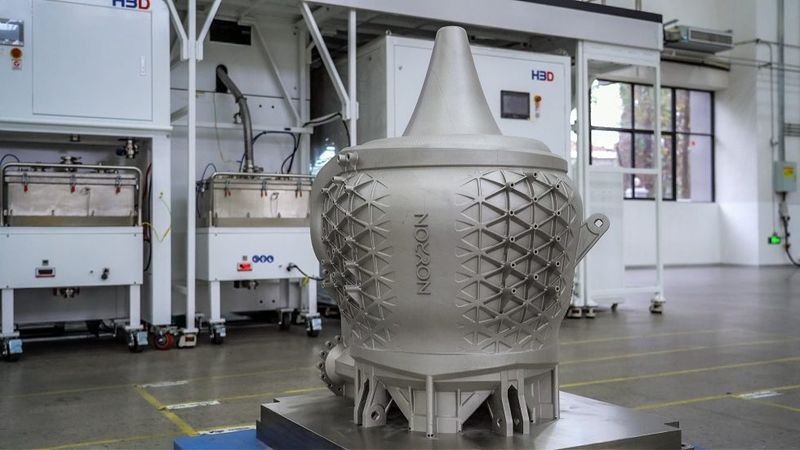
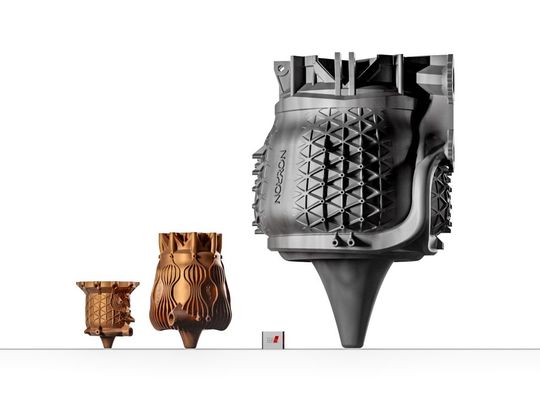
:quality(80)/p7i.vogel.de/wcms/55/06/5506709cc56afcc7301c9d3319e19114/2026-03-08-aerospike-09-980x551v1.jpeg "The engine was developed using Noyron, the computer-aided design model for the LEAP 71. Noyron uses fundamental physical principles, engineering logic, and manufacturing specifications to design independently, without human intervention. (Source: LEAP 71)")
:quality(80)/p7i.vogel.de/wcms/b6/1f/b61f4081bab96d308e87eebaeb756c4f/pm4526-1v1.jpeg "Call for Innovative Ideas: The 2027 Manus Award will once again recognize unique projects featuring lubrication-free polymer plain bearings. (Source: Igus SE & Co. KG)")
:quality(80)/p7i.vogel.de/wcms/c0/52/c052f405eb55fc3d08c4837e77206fc0/adobestock-2021845957--aucartstudio-stock-adobe-com-ki-generiertv1.jpeg "An innovation from China to combat extreme summer heat: A novel coating lowers temperatures. (Source: © AucArtStudio – stock.adobe.com_AI-generated)")
:quality(80)/p7i.vogel.de/wcms/fc/be/fcbe4fcc65f3f972323d69796fd88d27/0133603683v1.jpeg "For those who don't know: Volkswagen has a subsidiary called Powerco that manufactures batteries for electric cars. The Chinese battery expert Gotion has been supporting this effort for some time. Now the two companies plan to significantly expand their collaboration in Europe for mutual benefit ... (Image: Volkswagen)")
:quality(80)/p7i.vogel.de/wcms/42/95/4295a1b01f6fa1f696ffff89cd542737/0133563161v1.jpeg "At its plant in Zaragoza, Spain, Stellantis draws energy from a hybrid energy portfolio. Solar and wind power are expected to cover about 80 percent of the plant’s local electricity needs. (Image:Stellantis)")
:quality(80)/p7i.vogel.de/wcms/3e/2f/3e2f1ec6c4e1a24eac32957acebd0901/0133601693v1.jpeg "From the boule (bottom) to the wafer to the chip (on top of the boule). Transistors are used as switches in power electronics. (Image:Bosch)")
:quality(80)/p7i.vogel.de/wcms/8f/99/8f9956e7dce99d1b28c27fb1c30ea236/04-dsc-2230v1.jpeg "Bosch is cutting jobs in Nuremberg. (Source: Bosch)")
:quality(80)/p7i.vogel.de/wcms/f6/9f/f69f7aad844f2f2c369ee012505f3e37/0133630806v1.jpeg "Even though prices for DRAM and NAND memory remain high due to strong demand and limited capacity, the market appears to be showing the first signs of a slowing boom. Consequently, investors are becoming increasingly skeptical about how much longer the AI boom can sustain the ongoing upward trend in the memory market. (Image:Dall-E / AI-generated)")
:quality(80)/p7i.vogel.de/wcms/c0/e9/c0e91df681b13f3a8f37badeae0a32b3/0133619268v1.jpeg "AMD CEO Lisa Hsu (left) and World Labs founder Dr. Fei-Fei Li (right) at the signing of the letter of intent. AMD plans to acquire World Labs, a startup specializing in AI “world models,” for $8.2 billion. (Image:World Labs)")
:quality(80)/p7i.vogel.de/wcms/ed/b1/edb1335d07debd3de7ae5a2fb74b571a/0133546658v1.jpeg "Securing digital infrastructure is not just about technical risks, but increasingly also about origin, supply chains, and political requirements. (Image:Dall-E / AI-generated)")
:quality(80)/p7i.vogel.de/wcms/22/f0/22f07d1635c733a29049fff5b1b8ccc8/0133601916v1.jpeg "AI models from various providers have been causing quite a stir lately because they’ve done things they weren’t supposed to—or so they say! Now, in light of recent incidents, the company “OpenAI” has decided against releasing a new AI model... (Image: AI-generated)")
:fill(fff,0)/images.vogel.de/vogelonline/companyimg/76800/76895/65.jpg "FAULHABER_120mm.jpg ()")
:fill(fff,0)/p7i.vogel.de/companies/69/88/69882c428938e/tmts2026-ticec-banner-en-2000px.png "tmts2026-ticec-banner-en-2000px (https://www.tmts.tw/en)")
:fill(fff,0)/p7i.vogel.de/companies/69/de/69de1b7403b0d/simtos-logo.jpeg "simtos-logo (SIMTOS)")
:quality(80):fill(efefef,0)/p7i.vogel.de/wcms/67/af/67af6d7f2d755/skz-whitepaper-mission-additive-manufacturing-coverbild.png "SKZ Whitepaper_Mission Additive Manufacturing_Coverbild")
Date: 08.12.2025
Naturally, we always handle your personal data responsibly. Any personal data we receive from you is processed in accordance with applicable data protection legislation. For detailed information please see our privacy policy.
Consent to the use of data for promotional purposes
I hereby consent to Vogel Communications Group GmbH & Co. KG, Max-Planck-Str. 7-9, 97082 Würzburg including any affiliated companies according to §§ 15 et seq. AktG (hereafter: Vogel Communications Group) using my e-mail address to send editorial newsletters. A list of all affiliated companies can be found here
Newsletter content may include all products and services of any companies mentioned above, including for example specialist journals and books, events and fairs as well as event-related products and services, print and digital media offers and services such as additional (editorial) newsletters, raffles, lead campaigns, market research both online and offline, specialist webportals and e-learning offers. In case my personal telephone number has also been collected, it may be used for offers of aforementioned products, for services of the companies mentioned above, and market research purposes.
Additionally, my consent also includes the processing of my email address and telephone number for data matching for marketing purposes with select advertising partners such as LinkedIn, Google, and Meta. For this, Vogel Communications Group may transmit said data in hashed form to the advertising partners who then use said data to determine whether I am also a member of the mentioned advertising partner portals. Vogel Communications Group uses this feature for the purposes of re-targeting (up-selling, cross-selling, and customer loyalty), generating so-called look-alike audiences for acquisition of new customers, and as basis for exclusion for on-going advertising campaigns. Further information can be found in section “data matching for marketing purposes”.
In case I access protected data on Internet portals of Vogel Communications Group including any affiliated companies according to §§ 15 et seq. AktG, I need to provide further data in order to register for the access to such content. In return for this free access to editorial content, my data may be used in accordance with this consent for the purposes stated here. This does not apply to data matching for marketing purposes.
Right of revocation
I understand that I can revoke my consent at will. My revocation does not change the lawfulness of data processing that was conducted based on my consent leading up to my revocation. One option to declare my revocation is to use the contact form found at https://contact.vogel.de. In case I no longer wish to receive certain newsletters, I have subscribed to, I can also click on the unsubscribe link included at the end of a newsletter. Further information regarding my right of revocation and the implementation of it as well as the consequences of my revocation can be found in the data protection declaration, section editorial newsletter.
:quality(80)/p7i.vogel.de/wcms/8c/01/8c01ce149dfea446cada9fc5bfb4f924/0128179719v1.jpeg "Nikon SLM Solutions printed the component using Inconel 718, an aerospace nickel alloy specifically designed to withstand the immense thermal loads and pressures of a full-flow staged combustion cycle (FFSC). (Image:Nikon SLM)")
:quality(80)/p7i.vogel.de/wcms/a7/a8/a7a819c16ffa7c748bb102461b80311f/cwi098-20--20image-20one-4093x2304v1v1.jpeg "Printed windings can take on almost any geometry. Conductors can be shaped and positioned in such a way that electromagnetic properties, thermal behaviour and mechanical stability are optimized at the same time. (Image:Cwieme)")