If only a small amount of information is relevant for FEM models with countless degrees of freedom, small reduced order models can save time. In this way, Wago has developed a tool with which customers can evaluate connectors themselves using thermoelectric simulations.
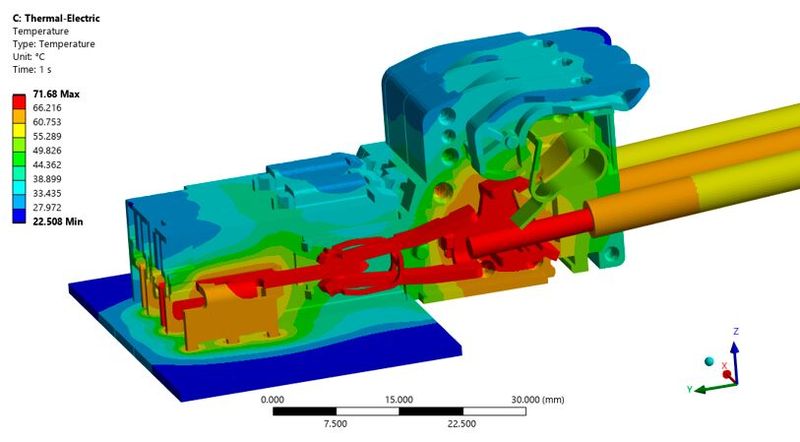
3D FEM models are detailed, large and computationally intensive. Thanks to ROM and the support of Cadfem, Wago has succeeded in setting up an e-shop for thermal simulation.
(Image: WAGO)
If only a little information is relevant for 3D FEM models with 1 million degrees of freedom, they can be exported in small Reduced Order Models (ROM). This saves a lot of time. An example from Wago shows how this works in Ansys—with benefits for many parties involved: both simulation engineers and sales at Wago are relieved because customers evaluate their connectors themselves using thermo-electrical simulations. The tool can be found on the product detail page of the relevant PCB connection technology in the Wago e-shop, where it is initially available for a selection of PCB terminal blocks and connectors.
We had the challenge that our small simulation department had to deal increasingly with inquiries from customers and colleagues from sales and product management in addition to product development.
Wilhelm Rust
"We were faced with the challenge that our small simulation department had to deal increasingly with inquiries from customers and colleagues from sales and product management in addition to product development," says Wilhelm Rust, simulation engineer at Wago, describing the trigger for the project. This is because internal Simulation-as-a-Service services are also based on large 3D FEM models and are correspondingly computationally intensive. A processing time of two weeks was not uncommon.
Three Steps from the Calculation to the E-Shop
The simulation team knew where to start: with the model sizes. Because it also knew which very similar issues many customers have, a reduced model with the customer-relevant electro-thermal properties is now exported from every finished 3D FEM model. This can easily be used for the thermo-electrical evaluation of connectors and terminals—by the product manager, technical support or the customer themselves. Existing simulation knowledge is thus used elsewhere in the product life cycle: at the interface to the individual customer application.
The Wago team thought one step further: the model was further automated, trained and integrated online in the e-shop. Today, customers can now check the suitability of the components completely autonomously, 24/7 and with just a few clicks.
As easy and intuitive as the Ansys models can be used online today, their path from the calculation department to the e-shop was a rocky one. Wago broke new ground with the project, both internally and in the industry. "We started out exploratively," says Wilhelm Rust, describing the approach, "we didn't really know at the beginning how everything would work."
Automated from 3D FEM Model to 1D ROM
For the simulation specialists, the main issue was how to export a suitable reduced model from the 3D FEM model. In an exchange with Cadfem, the special software "Model Reduction inside Ansys", including training, instruction and support, emerged as the solution that would help Wago. This is because Model Reduction inside Ansys ("MORiA") is particularly suitable for thermal, mechanical and thermomechanical issues:
The solution, which was developed by Cadfem in cooperation with the Steinbeis Transferzentrum Niedersachsen, uses the highly efficient Krylov-based model order reduction in conjunction with a reduction approach from electrical engineering, which uses the inputs and outputs of the system and takes up their relationship, the transfer function.
With MORiA, the usual 1 million degrees of freedom of thermomechanical, thermoelectric or piezoelectric models in Ansys Mechanical can be automatically reduced to the decisive 100 and used in system simulations.
The user retains full control over the reduction via an APDL workflow.
Since ROM models do not allow any conclusions to be drawn about the original complete models, there are no restrictions with regard to IP and data protection issues.
Full Concentration on Thermal Heating
Thanks to the workflow developed with Cadfem, the software now has a firm place in the development process for connectors and terminals at Wago. "The final export of the parameters relevant to the customer to a 1D-ROM allows us to share the results of our work with customers directly and with little effort," says Wilhelm Rust. The thermal heating of the electrical connectors and PCB terminals is important for Wago customers. It must be below defined limit values under the specific dynamic load profiles acting in their systems, i.e. current and ambient temperature, and this in the smallest possible installation space. Consequently, the respective ROM contains the decisive information for this.
An Intuitive Solution With Ansys Twin-Builder And Machine Learning
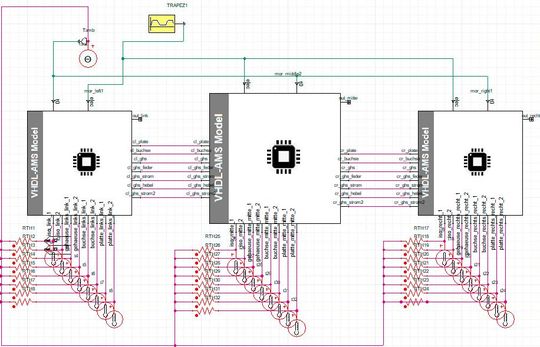
Reduced order model of the thermoelectric properties that are crucial for connectivity.
(Image: WAGO)
With Ansys Twin-Builder, the ROM is implemented in an overall context, i.e. a large number of dynamic load profiles are simulated in a short time. This means that many different current flows and changing ambient temperatures can already be considered manually.
It is even more convenient for customers if they can check the suitability of Wago products quickly and independently at any time. "All the more so," says Wilhelm Rust, "because these are components that don't play the main role in electrical systems. If you want to configure a wallbox or an inverter, you don't want to spend ages dealing with the conductor connection".
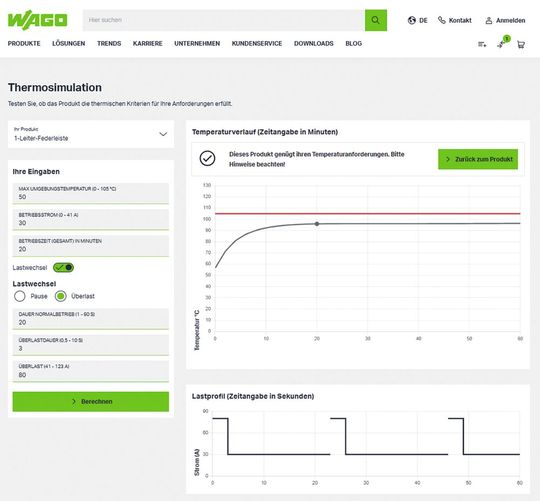
The models were trained using machine learning so that they can also be used by customers online in the e-shop to evaluate and identify suitable products. Wago started with 10 products. "We were able to generate a total of 20,000 data sets for these products in different variants. This is a very good basis for training the neural network, from which we have already been able to extract further variants," says Wilhelm Rust, explaining this supposedly final step.
Further Challenges for Implementation in the E-Shop
The picture shows a simulation in the Wago e-shop.
(Image: WAGO)
"Supposedly", because even with the trained models, they were not quite there yet. Wilhelm Rust: "If you have developed and trained the machine learning model for online use at great expense, it must of course also be made available. This means that IT has to check the whole thing and integrate it into their systems. And then comes the website: Design, data maintenance—as an engineer, you underestimate all of this."
Date: 08.12.2025
Naturally, we always handle your personal data responsibly. Any personal data we receive from you is processed in accordance with applicable data protection legislation. For detailed information please see our privacy policy.
Consent to the use of data for promotional purposes
I hereby consent to Vogel Communications Group GmbH & Co. KG, Max-Planck-Str. 7-9, 97082 Würzburg including any affiliated companies according to §§ 15 et seq. AktG (hereafter: Vogel Communications Group) using my e-mail address to send editorial newsletters. A list of all affiliated companies can be found here
Newsletter content may include all products and services of any companies mentioned above, including for example specialist journals and books, events and fairs as well as event-related products and services, print and digital media offers and services such as additional (editorial) newsletters, raffles, lead campaigns, market research both online and offline, specialist webportals and e-learning offers. In case my personal telephone number has also been collected, it may be used for offers of aforementioned products, for services of the companies mentioned above, and market research purposes.
Additionally, my consent also includes the processing of my email address and telephone number for data matching for marketing purposes with select advertising partners such as LinkedIn, Google, and Meta. For this, Vogel Communications Group may transmit said data in hashed form to the advertising partners who then use said data to determine whether I am also a member of the mentioned advertising partner portals. Vogel Communications Group uses this feature for the purposes of re-targeting (up-selling, cross-selling, and customer loyalty), generating so-called look-alike audiences for acquisition of new customers, and as basis for exclusion for on-going advertising campaigns. Further information can be found in section “data matching for marketing purposes”.
In case I access protected data on Internet portals of Vogel Communications Group including any affiliated companies according to §§ 15 et seq. AktG, I need to provide further data in order to register for the access to such content. In return for this free access to editorial content, my data may be used in accordance with this consent for the purposes stated here. This does not apply to data matching for marketing purposes.
Right of revocation
I understand that I can revoke my consent at will. My revocation does not change the lawfulness of data processing that was conducted based on my consent leading up to my revocation. One option to declare my revocation is to use the contact form found at https://contact.vogel.de. In case I no longer wish to receive certain newsletters, I have subscribed to, I can also click on the unsubscribe link included at the end of a newsletter. Further information regarding my right of revocation and the implementation of it as well as the consequences of my revocation can be found in the data protection declaration, section editorial newsletter.
In spring 2025, the portal finally went live with the 10 products from the first phase. More will follow quickly, as Wago now has a functioning workflow. Wago thus has a unique selling point in the industry and is looking forward to the response from the market.
It now has to be integrated into our customers' planning processes. They were used to data sheets, but we are very optimistic that the new option, which was ultimately initiated by us simulation engineers and also takes a lot of pressure off us, will become established.



:quality(80)/p7i.vogel.de/wcms/40/c5/40c5051cebdb10fdee9a283303434d9d/0129881741v1.jpeg "3D-printed tools and other components contribute to energy-saving, precise processes. (Image:Gerhard Schubert GmbH)")
:quality(80)/p7i.vogel.de/wcms/e5/fa/e5fa9fa2e3b44ee1894fdf95bbe828fe/0129904146v1.jpeg "Airports and other critical infrastructure in Europe are to be better protected against drones. (Picture: ©assetseller - stock.adobe.com)")
:quality(80)/p7i.vogel.de/wcms/ae/bd/aebda515c684825e97579175874ea6bd/0129920231v1.jpeg "Hensoldt, a sensor specialist for critical defense applications among other things, now has a strategic milestone ahead of it. The company is planning to acquire Nedinsco, an optronics company from Venlo in the Netherlands. Here's what's to come ... (Image:Hensoldt)")
:quality(80)/p7i.vogel.de/wcms/c3/6f/c36f031df46d22615d941d077d32313c/0129800025v1.jpeg "The laser-assisted process is intended to make wafer cutting significantly more productive. (Image:Trumpf)")
:quality(80)/p7i.vogel.de/wcms/e8/dc/e8dc27a8d9fba8fbd081987400bf6848/0127426198v1.jpeg "3D FEM models are detailed, large and computationally intensive. Thanks to ROM and the support of Cadfem, Wago has succeeded in setting up an e-shop for thermal simulation. (Image:WAGO)")
:quality(80)/p7i.vogel.de/wcms/9c/ac/9cac6246660e746c5a3989399ac4d250/0128561645v1.jpeg "Artificial intelligence can drive efficiency in smart factories through centralized data management and predictive maintenance. (Picture: ©Fardived - stock.adobe.com)")
:quality(80)/p7i.vogel.de/wcms/6b/e2/6be235b5ad8a442ccd9d164b0b300d8b/0129763992v1.jpeg "As early as 2020, the Zimmer Group announced that it would convert its production to be sustainably CO2-neutral. (Image:Zimmer Group)")
:quality(80)/p7i.vogel.de/wcms/d4/ba/d4bab9481e66f8570f40eb8ef2a90198/0129795613v1.jpeg "A camera inspection during removal ensures that the components are placed correctly in the KLTs. (Image:Yaskawa Europe)")
:quality(80)/p7i.vogel.de/wcms/76/81/7681b6450512b2cce1e453cd3d732543/0129479309v1.jpeg "Symbolic image: Model-based design combines virtual system models with real machines and systems in order to simulate, validate and coordinate functions, control and software early on in the development process. (Image:Dall-E / AI-generated)")
:quality(80)/p7i.vogel.de/wcms/5c/0f/5c0fee074c4b6c8e8c0993f3217c2f5a/0129773718v1.jpeg "The General Fusion demonstration reactor. (Image:General Fusion)")
:quality(80)/p7i.vogel.de/wcms/b5/5e/b55ed9355e0395ec0caf111d6af6b494/adobestock-495980372--c2-a9-20natali-mis-20-e2-80-93-20stock-adobe-com-6720x3778v1v1.jpeg "Which engineering skills will be in vogue in 2026? (Image:natali_mis - stock.adobe.com)")
:quality(80)/p7i.vogel.de/wcms/bf/a5/bfa5d882e93f159ce93e933742272b00/nord-vibn-cmyk-2196x1235v1v1.jpeg "With digital twins for virtual commissioning, Nord supports customers in ensuring that systems are available more quickly, even with complex drive systems. (Image:Nord Drivesystems)")
:quality(80)/p7i.vogel.de/wcms/e4/01/e40186c9a7d04cbecb20fab20ff79094/0129886097v1.jpeg "Skoda has inaugurated a new battery plant in Mlada Boleslav to meet rising demand, but also to reduce battery costs by 30 percent. (Image:Skoda)")
:quality(80)/p7i.vogel.de/wcms/74/7b/747b6bc4d758c5dd4b5c24a763ae493d/0129897614v1.jpeg "Huawei Intelligent Automotive Solutions has presented a lidar with a resolution of 896 lines. (Image:HIMA via ChinaEVHome)")
:quality(80)/p7i.vogel.de/wcms/ba/b7/bab7bfd052f35da3c39388508faa350e/0129851977v1.jpeg "The third generation of the Mazda CX-5 scores above all with its inner values. (Image:Mauritz - VCG)")
:quality(80)/p7i.vogel.de/wcms/81/24/8124e33f53ec73fa99374f407cc11b61/0129727992-541x304v1v1.jpeg "The development of control elements and HMI systems for commercial vehicles can lead to interactions. (Image:Preh / AI-generated)")
:quality(80)/p7i.vogel.de/wcms/8b/46/8b46730ba87a86f16d696f043cf0e3d1/0129887022v1.jpeg "Linyi Yunchuan's S2000 platform has risen to a height of two kilometers and fed the energy generated into the grid. (Image:Linyi Yunchuan)")
:quality(80)/p7i.vogel.de/wcms/92/f8/92f8bf81914500bcda78f63dab8da720/0129926751v1.jpeg "Only recently, the US government allowed high-end chips for AI such as Nvidia's H200 series (pictured) to be exported to China under certain conditions. But now the tax is being pulled back all the harder: An eDraft envisages tighter controls on the export of hardware for AI technologies worldwide. Even allies would be affected. (Image:Nvidia)")
:quality(80)/p7i.vogel.de/wcms/84/cc/84cc506003388ecffaab464677c7afa6/0129843694v1.jpeg "Launched last year, ASML's TWINSCAN XT:260 is an i-line scanner with a throughput of 270 wafers per hour. With a focus on the increased demands of AI chips, ASML wants to shift its focus away from pure front-end tools for chip production in the next ten to fifteen years with packaging and bonding technologies. (Image:ASML)")
:quality(80)/p7i.vogel.de/wcms/8f/48/8f48b0ed0d6c5c4f299b1310a7b577e9/0129830738v1.jpeg "Data centers in orbit are indeed dreams of the future, while data centers under water are already being tested. (Image:Dall-E / AI-generated)")
:fill(fff,0)/p7i.vogel.de/companies/67/eb/67eba621ef6ea/logo2.png "logo2 (Wuxi InfiMotion)")
:quality(80):fill(efefef,0)/p7i.vogel.de/wcms/67/09/67094781dd403/dossier-additive-manufacturing.png "Dossier Additive Manufacturing")
:quality(80)/p7i.vogel.de/wcms/3d/47/3d477c7a3990157ffb8a2894ea8f6dc5/0127426206v1.jpeg "For metallic valve bodies, such as those manufactured by Gemü in the thousands, proof of structural strength is required. (Image:GEMÜ)")
:quality(80)/p7i.vogel.de/wcms/69/56/6956c63d9c30f544eeb25dc23e7a51ed/0125826333v1.jpeg "Efficient connection technology: Weidmüller has integrated the SNAP IN technology into the Klippon Connect terminal blocks, the RockStar heavy-duty connectors, the Omnimate connectors, and the Push Pull Power connectors. (Image:Weidmüller)")