More and more people feel dazzled by vehicle headlights. Is this just an illusion, or is new technology contributing to it?
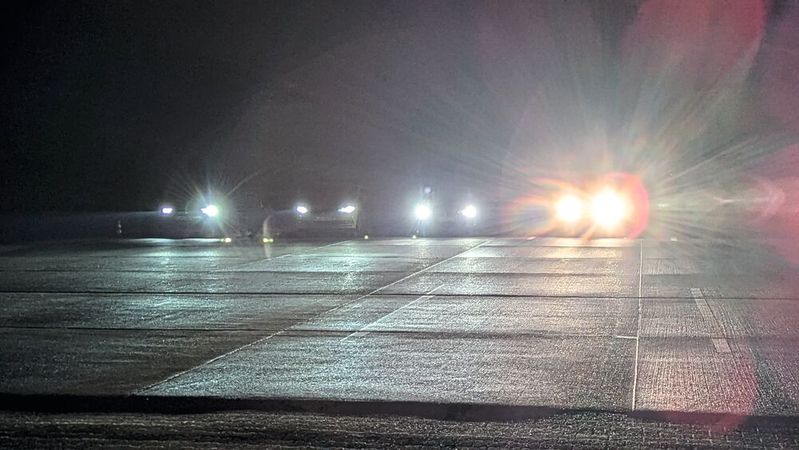
At the first ADAC glare symposium, experts illustrated and analyzed the topic of glare under real conditions.
(Image: Dominsky – VCG)
More and more people increasingly feel dazzled by the headlights of oncoming vehicles in the dark. So many and so often, in fact, that Europe's largest automobile club felt compelled to dedicate an entire international symposium to the topic of glare.
The background for this was a prior Europe-wide survey among drivers and road users. According to the survey, over 70 percent of German drivers sometimes or regularly feel dazzled. Interestingly, 32 percent of respondents under the age of 35 feel almost always or regularly dazzled, whereas this figure drops to just under 23 percent for those over 50. The survey thus debunks the notion that glare is primarily a problem for older drivers—the opposite is true.
"Bright As Daylight"
The culprit is quickly identified: for years, the number of vehicles using LED technology to produce their headlights instead of traditional halogen or now outdated xenon technology has been rising. As Osram advertisers once phrased it, they are "bright as daylight." While this is delightful for those behind the wheel, it is equally annoying for those facing such an "LED dazzler" coming from the opposite direction.
Many now demonize the technology of light-emitting diodes, just as gas discharge lamps were about three decades ago. Is this comparison valid—and especially the conclusion that the then-new technology objectively did not cause any more glare? In other words: Are the alleged causes of glare the same, or are there different ones?
Glare Has Many Causes
These and many other questions were answered by numerous experts during the 1st ADAC Glare Symposium: ranging from the function of the human eye, the role of glare as a cause of traffic accidents, and methods for measuring glare, to the dependencies on the size and luminance of an LED light source and the influence of road surfaces and the level of dirt on headlight covers.
The fact that a large organization like ADAC, together with automobile clubs from other countries, felt compelled to hold such a symposium demonstrates the extent of the problem by now. "The number of complaints about 'light cannons' and doubts about the legality of these 'intolerable, novel light sources' has increased massively in recent years," stated Burkard Boettcher, technical advisor for vehicle technology at the ADAC Technology Center in Landsberg, Germany.
A Gap in the Law Promotes Glare
To examine the objective validity of these subjective impressions, it is necessary to "shed light" on the changes in lighting technology, especially in comparison to xenon technology. For instance, the light temperature of LED lights has changed. While it is a warm 2,700 Kelvin with halogen lights, it is already a cooler 4,000 Kelvin with xenon and 6,000 Kelvin with LED. Similarly, the light color spectrum has changed—it has become even bluer.
Additionally, automated lighting functions such as low beam or high beam strain the eyes of oncoming drivers; for instance, adaptive high-beam systems that switch in nanoseconds—but often only after seconds, or not at all.
Higher Luminance Can Promote Glare
One of the main reasons for glare from LED headlights, alongside light intensity, is the luminance. It is often significantly higher than that of xenon lights and continues to rise. This is because the headlights or light-emitting surfaces of modern vehicles are becoming increasingly smaller. The culprit is essentially a regulatory gap, as the UNECE regulations responsible for the approval of vehicle lights simply do not define or regulate luminance.
They only do so in terms of luminous intensity, meaning the absolute amount of light without reference to the size of the light source. However, the human eye perceives using luminance, which is why the size of the light source affects its impact on the retina.
Smaller Areas With More Direct Light
Another significant difference: With xenon headlights, the oncoming eye never looks directly into the source, as the light produced by the burner is distributed by a reflector and then passes through a lens system—similarly with later halogen systems. In contrast, with LED lens systems, people often look directly into tiny fields of extremely bright LED chips.
What further strains the human eye: It often has to register multiple different light fields, as LED headlights are often composed of several such fields.
Light Distribution of Sedans And SUVs
But there is another factor contributing to increased glare—particularly with regard to "dazzling" LED lights: the vehicle type. This means that while the distance from the center of the headlights to the road, as determined by TU Darmstadt (Germany), averages just under 27 inches for sedans and up to the lower edge of the windshield around 33 inches, the former is significantly above 35 inches for SUVs.
Date: 08.12.2025
Naturally, we always handle your personal data responsibly. Any personal data we receive from you is processed in accordance with applicable data protection legislation. For detailed information please see our privacy policy.
Consent to the use of data for promotional purposes
I hereby consent to Vogel Communications Group GmbH & Co. KG, Max-Planck-Str. 7-9, 97082 Würzburg including any affiliated companies according to §§ 15 et seq. AktG (hereafter: Vogel Communications Group) using my e-mail address to send editorial newsletters. A list of all affiliated companies can be found here
Newsletter content may include all products and services of any companies mentioned above, including for example specialist journals and books, events and fairs as well as event-related products and services, print and digital media offers and services such as additional (editorial) newsletters, raffles, lead campaigns, market research both online and offline, specialist webportals and e-learning offers. In case my personal telephone number has also been collected, it may be used for offers of aforementioned products, for services of the companies mentioned above, and market research purposes.
Additionally, my consent also includes the processing of my email address and telephone number for data matching for marketing purposes with select advertising partners such as LinkedIn, Google, and Meta. For this, Vogel Communications Group may transmit said data in hashed form to the advertising partners who then use said data to determine whether I am also a member of the mentioned advertising partner portals. Vogel Communications Group uses this feature for the purposes of re-targeting (up-selling, cross-selling, and customer loyalty), generating so-called look-alike audiences for acquisition of new customers, and as basis for exclusion for on-going advertising campaigns. Further information can be found in section “data matching for marketing purposes”.
In case I access protected data on Internet portals of Vogel Communications Group including any affiliated companies according to §§ 15 et seq. AktG, I need to provide further data in order to register for the access to such content. In return for this free access to editorial content, my data may be used in accordance with this consent for the purposes stated here. This does not apply to data matching for marketing purposes.
Right of revocation
I understand that I can revoke my consent at will. My revocation does not change the lawfulness of data processing that was conducted based on my consent leading up to my revocation. One option to declare my revocation is to use the contact form found at https://contact.vogel.de. In case I no longer wish to receive certain newsletters, I have subscribed to, I can also click on the unsubscribe link included at the end of a newsletter. Further information regarding my right of revocation and the implementation of it as well as the consequences of my revocation can be found in the data protection declaration, section editorial newsletter.
In other words: An SUV headlight shines directly onto the upper body/head of an oncoming sedan driver. Thus, this vehicle category not only negatively impacts the accident safety of other road users but also increases glare.
Glare Source: Dirt on Headlights
What drivers of all vehicles can directly influence, however, is an entirely different source of glare: the one caused by dirt on the headlights. How strongly this causes or promotes dangerous light scattering was demonstrated in experiments by Tran Quoc Khanh, also from TU Darmstadt (Germany), back in 2017.
Thus, dirty headlight covers of an oncoming vehicle at a distance of five meters increase the light intensity by a factor of six to seven.
This is What Experts Demand for Vehicle Lighting
And so, the various wishes and demands raised by the speakers at the Glare Symposium towards legislation come as no surprise. One measure is as understandable as it is simple to implement: narrowing the permissible tolerance range for headlight adjustment. Henrik Liers from the Traffic Accident Research at TU Dresden (Germany) called for a tightening from ±0.5 percent to ±0.25 percent. "This would reduce the number of vehicles with headlights set too high from 25 percent to 8.9 percent," explains Liers.
Tomasz Targosinski from the Motor Transport Institute in Warsaw, Poland, outlined several understandable demands to the UNECE with regard to vehicle manufacturers. Among others:
The separation of "real" and "decorative" lamp elements, for which different requirements should apply.
Lighting regulations should include detailed requirements that can be checked during the main inspection.
Limit values for measurements should be clearly defined and enable an objective assessment of all light control functions, including the actual alignment and leveling.
Glare should be verifiable during traffic controls.
This is how glare occurs in the eye
Glare is caused by light scattering in the eye. So-called "total glare" is triggered by excessive light exposure, the absolute brightness. This means: when it becomes too bright for the pupil, it contracts, and the visual pigments in the so-called rods and cones split—within limits. If the lux, i.e., the luminous intensity and thus the amount of light on a certain area, becomes too much, the curtain drops on our optic nerve—it can no longer adapt. Visual perception in the rest of the field of view is restricted due to the lack of adaptation.
Glare is perceived as "white" but can also be caused by monochromatic light, for example by red LED taillights.
Workshops And Headlight Adjustment
The topic of "correct headlight adjustment" is correspondingly more important today than ever before. That is why Michael Hamm from TU Darmstadt rightly referred to his institute's 2016 study. It found that only one-tenth of all headlights were correctly adjusted according to UNECE standards straight from the factory.
Additionally: When headlights are later inspected and adjusted in practice, for example during service or the main inspection, many responsible parties fail to properly condition the vehicle, says Hamm.
A load of 880 pounds in vehicles without or with defective automatic leveling completely reverses the dip of the low beam: from -1 percent to +1 percent, resulting in full glare. The same applies to the fuel tank. A correctly adjusted low beam with an empty tank deteriorates by an average of up to 1.75 percent when the tank is full—unless it is automatically or manually corrected by the driver. And this brings us to the human error factor—even outside the vehicle.
A test conducted by TU Darmstadt involving eleven workshops assigned the task "check and, if necessary, adjust headlight alignment" revealed some concerning findings: Only three workshops were able to correctly adjust two misaligned headlights, six failed, and two did not even touch the headlights.



:quality(80)/p7i.vogel.de/wcms/93/33/93337b12f88eb2c776c80d4f9e49d323/0129247650v1.jpeg "Isolated IoT data becomes connected real-time personalization. (Image: ©PB Studio Photo - stock.adobe.com)")
:quality(80)/p7i.vogel.de/wcms/8e/fa/8efad6aa006fcf624d07c645b774d8ce/screenshot-202026-01-21-20113324-764x430v1v1.png "The system processes heavy sheets weighing up to 200 kg fully automatically, without programming or teaching. (Image:Teqram)")
:quality(80)/p7i.vogel.de/wcms/0c/58/0c587c8221ae96052b5dcc0f40eb3dcd/0128880879v1.jpeg "A chip surfer with a solid carbide head is used for finishing in the third operation. (Image:Ingersoll)")
:quality(80)/p7i.vogel.de/wcms/a2/9b/a29bb02b3f1e34962e28579dccfbbc49/0129266114v1.jpeg "Bevel gears on workpiece carriers in the rotary indexing conveyor of the VSC 400 DDS - the pick-up spindle removes the workpiece precisely and reproducibly for hard machining at EWS. (Image:Emag)")
:quality(80)/p7i.vogel.de/wcms/4d/74/4d745446555110ca9797db1eabb7c9d3/0129551585v1.jpeg "Jochen Gemeinhardt is responsible for NTT Data's AI business in the DACH region as Head of Production & Supply Chain and Head of Industry Line Global Business. (Image:NTT Data)")
:quality(80)/p7i.vogel.de/wcms/7a/c8/7ac81c41bab1cc98fbe7b20c95644c6c/0129575667v1.jpeg "For the live gala show celebrating the New Year festival, Unitree rehearsed an impressive performance with its robots. (Image:Unitree/YouTube)")
:quality(80)/p7i.vogel.de/wcms/a3/0c/a30c4c3a36910e92d6082fde37261730/0129555015v1.jpeg "From command recipient to decision-maker: thanks to Agentic AI, robots no longer just stubbornly execute pre-programmed scripts. Instead, they analyze visual data in real time and decide autonomously on the next process step (Image:Nano Banana / AI-generated)")
:quality(80)/p7i.vogel.de/wcms/60/00/6000deb595c3e6b2dd0bfe508aa71653/newsimage418166-5084x2861v1v1.jpeg "The robot-guided friction stir welding gun \"Steppwelder\" in use on a conventional 6-axis industrial robot. (Image:Image: Dominik Walz, MPA, University of Stuttgart)")
:quality(80)/p7i.vogel.de/wcms/48/38/4838074eab3f29ec319797fb63881b18/adobestock-693942839--c2-a9-20wirot-20-e2-80-93-20stock-adobe-com-3389x1907v1v1.jpeg "Leaves or bird droppings can cause hotspots on solar modules and reduce performance. (Image:Wirot stock.adobe.com.)")
:quality(80)/p7i.vogel.de/wcms/3f/7f/3f7f9f45ebccd4751d41106866314aea/newsimage418028-2772x1559v1v1.jpeg "Live in the ice channel—detailed recordings in real time make the smallest mistakes and thus time losses in the luge run visible. (Image:Mittweida University of Applied Sciences)")
:quality(80)/p7i.vogel.de/wcms/05/b7/05b7c58dcf5a7fc900348d1c30f7c116/0129540459v1.jpeg "Researchers from Stuttgart have investigated whether the \"technology\" behind hairy elephant trunks, which function as a sensitive gripping system, can also be used in robotics. (Image:Zoo Magic)")
:quality(80)/p7i.vogel.de/wcms/6b/6f/6b6fff754fedf05375e5255460743297/0129197850v1.jpeg "A new core-shell design for anodes aims to reduce storage losses during the first charge cycle of sodium-ion batteries. (Image:BAM)")
:quality(80)/p7i.vogel.de/wcms/37/23/372374e00db2f1803ae5cde2f00aff31/0129599814v1.jpeg "The new Euro 7 standard sets requirements for the wear of service brakes. These can be met with some technical methods. (Image:Aumovio)")
:quality(80)/p7i.vogel.de/wcms/0c/1d/0c1da1d70af62238b11e22b102bd256d/0129108406v1.jpeg "At the first ADAC glare symposium, experts illustrated and analyzed the topic of glare under real conditions. (Image:Dominsky – VCG)")
:quality(80)/p7i.vogel.de/wcms/95/00/95009ae2972690e3fdab0dc701e202c3/0129621847v1.jpeg "Last year, Airbus's revenue increased by six percent to 81 billion US dollars. (Image:Airbus SAS 2024)")
:quality(80)/p7i.vogel.de/wcms/ae/cf/aecf874a057676aa69b3b5e4c7b52411/0129609464v1.jpeg "Glass storage in action: Microsoft has stored map data from the Flight Simulator on this piece of glass. (Image:Microsoft Research)")
:quality(80)/p7i.vogel.de/wcms/2c/8d/2c8da4b72e35ded278178929afb94d55/0129561713v1.jpeg "Change in direction: The shift away from PFAS in semiconductor manufacturing and the move toward sustainable chip production is demonstrated by the trilateral collaboration between Fraunhofer ENAS, the Paul Scherrer Institute PSI, and Memsstar Limited, which rely on the environmentally friendly Gas-MacEtch technology. (Image:andreyarmyagov/Canva)")
:quality(80)/p7i.vogel.de/wcms/a3/df/a3df18dc04ecd4cffbf933b32018facb/0129644484v1.jpeg "Acquisition complete: Finnish Incap has finalized the takeover of EMS manufacturer Lacon. (Image:Gerd Altmann from Pixabay)")
:quality(80)/p7i.vogel.de/wcms/41/85/41855b7e5c57936c33039a7e785462c9/0129633555v1.jpeg "A chip processing method developed by MIT could help cryptographic processes keep data secure by allowing two chips within the same system to authenticate each other using a common fingerprint. (Image:freely licensed)")
:fill(fff,0)/images.vogel.de/vogelonline/companyimg/76800/76895/65.jpg "FAULHABER_120mm.jpg ()")
:fill(fff,0)/p7i.vogel.de/companies/67/eb/67eba621ef6ea/logo2.png "logo2 (Wuxi InfiMotion)")
:quality(80)/p7i.vogel.de/wcms/86/9d/869d1744bc2e4bf19fb8118e46b44e7b/0129108412v1.jpeg "Dirty headlights create an extreme amount of glare; red area above the light-dark boundary.(Image: TU Darmstadt)")
:quality(80)/p7i.vogel.de/wcms/23/a2/23a249e434b003c4abd7e4b3512f5f60/0129108099v1.jpeg "Traffic accident research at TU Dresden has determined the glare illumination intensity of different headlights. The result: LED headlights cause significant glare, especially on wet roads.(Image: VUFO GmbH)")
:quality(80)/p7i.vogel.de/wcms/d7/51/d751b915e384b204ea9c3019546192ac/0129108415v1.jpeg "In its new test center in Penzing, Bavaria, the ADAC practically demonstrated different lighting technologies.(Image: Dominsky – VCG)")
:quality(80)/p7i.vogel.de/wcms/de/25/de25cf78b4e6d58e5bffe24956814e81/0129108410v1.jpeg "With impressive effort, for example, the traffic accident research at TU Dresden investigates the dangers of glare. Therefore, it calls for stricter adjustment tolerances in headlight alignment.(Image: Dominsky – VCG)")
:quality(80):fill(efefef,0)/p7i.vogel.de/wcms/68/a7/68a7075266a4a/shining-wp-titelbild-396054.png "Shining WP Titelbild 396054")
:quality(80)/p7i.vogel.de/wcms/45/36/45361c4897a74ead6831d2672d8ad823/0125926163v1.jpeg "Defined color values with RGB LEDs: A free tool allows PWM values to be determined to display specific color values with ICLEDs. (Image:freely licensed)")
:quality(80)/p7i.vogel.de/wcms/cf/86/cf86e0ece519c1eefa125e53fe9bf6b2/0127222048v1.jpeg "While light functions in today's vehicles are mostly provided directly in control units in or on the headlight, they will be consolidated in a central vehicle computer in the future. (Image:ZKW Group)")