USB-C standardizes device connectors, which primarily benefits the end user. However, it has become more challenging for developers. Special chips help to reduce the effort required for discrete protective circuits.
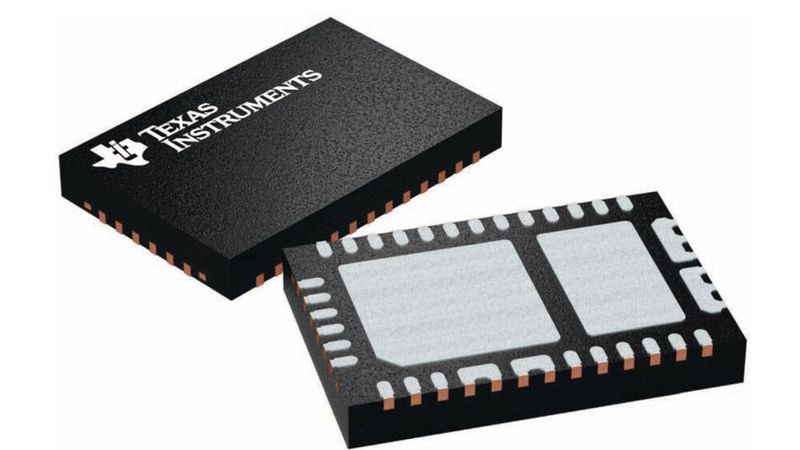
Image 3: The TPS25750 from TI is one of many highly integrated USB Type-C solutions with PD functionality.
(Image: Mouser Electronics)
With the increasing prevalence of wearable electronics in both the industrial and consumer sectors, the number of connectors has also risen. This led to the creation of multiple USB standards along with proprietary connectors from manufacturers, all serving similar functions but lacking compatibility with each other. Behind the scenes, there have been efforts by the European Union and some industry leaders to transition to a single unified solution to address this issue. This move aims to enhance user experience, reduce costs, and decrease environmental waste by minimizing the proliferation of incompatible charging and data transfer cables.
Many believe that USB-C (Universal Serial Bus Type C) is the first comprehensive solution for device connectors, regardless of whether it's for smartphones, tablets, laptops, consumer electronics, speakers, or toothbrushes. USB-C is the ideal solution for all designs that require a connection for data transfer, standard or fast charging, or alternative modes such as audio and video output. Its versatility and uniformity are helping to streamline how devices interact, significantly enhancing user convenience and reducing the need for multiple different types of cables and connectors.
Gallery
While the end user has been liberated from the complicated tangle of different cables and connectors, this has somewhat complicated the design process. For developers already familiar with USB-C, as well as those transitioning to this standard, it is crucial that they have access to a broad range of solutions that simplify the development process and accelerate system integration. These solutions must also meet the requirements for power supply, data rates, and alternative modes specific to their designs. Effective tools and resources are necessary to ensure developers can implement USB-C functionality efficiently while optimizing performance and compliance with industry standards.
Standardization of connectors
As electronic devices became smaller and more powerful, there was a need for more power (for faster charging) and higher data throughput. This prompted the USB Implementers Forum to create the USB-C standard, which meets these requirements for current devices.
USB-C refers to the mechanical design of the connector, with the data communication defined in standards like USB 3.x and USB 4.0, as well as protocols such as Thunderbolt. The USB-C connector is 60% smaller than previous USB-A versions; despite this smaller size, it offers more conductors as well as higher voltage and current ratings, and improved bandwidth.
USB-C introduced a symmetrical design, which, unlike previous USB generations, ensures correct connection in both orientations, making it foolproof and preventing damage from improper insertion. Additionally, the connectors have been tested for up to 10,000 connection cycles, which significantly extends their lifespan compared to USB-A connectors. Thanks to this durability, these connectors can be used for longer periods, drastically reducing the number of cables disposed of in landfills. This contributes not only to better user experience but also to environmental sustainability by minimizing electronic waste.
USB-C Power Delivery (PD) and alternate modes
USB Power Delivery (USB PD) significantly enhances the USB interface by enabling the simultaneous transmission of power and data over the same cable. Like other standards, USB PD has evolved over time. In 2021, version 3.1 was announced, which increased the available power from 100 watts to 240 watts. At the same time, new voltages of 28V, 36V, and 48V were introduced in addition to the 5V, 9V, 15V, and 20V available in previous versions. This improvement allows for broader application possibilities, supporting more power-intensive devices through a universal port, enhancing the functionality and user convenience of devices ranging from smartphones to laptops and more.
Another important change with this version was the bidirectional power transfer, allowing energy to be shared within a USB system to cover short-term demand peaks. For example, a device powered by a USB hub can return power to the hub when a hard drive draws a lot of power during startup.
This higher power capability allows more devices to benefit from USB PD, including large laptops with a power consumption of more than 100 W. A mains-powered monitor can now power the laptop and receive video data simultaneously through the same USB cable.
USB-C is not limited to data that conforms to the USB protocol. With USB-C Alt Mode, other protocols, including DisplayPort, can also be transmitted over a USB-C connection. This allows video sources such as computers and Blu-ray disc players to be connected to compatible displays, such as TVs, monitors, and projectors. Similarly, the Thunderbolt interface can be operated with Alt Mode over a USB interface. This versatility makes USB-C a powerful universal connector that not only simplifies device connectivity but also enhances the capability of devices to interact with a wide range of peripherals, thereby reducing the need for multiple different types of connections and cables.
Date: 08.12.2025
Naturally, we always handle your personal data responsibly. Any personal data we receive from you is processed in accordance with applicable data protection legislation. For detailed information please see our privacy policy.
Consent to the use of data for promotional purposes
I hereby consent to Vogel Communications Group GmbH & Co. KG, Max-Planck-Str. 7-9, 97082 Würzburg including any affiliated companies according to §§ 15 et seq. AktG (hereafter: Vogel Communications Group) using my e-mail address to send editorial newsletters. A list of all affiliated companies can be found here
Newsletter content may include all products and services of any companies mentioned above, including for example specialist journals and books, events and fairs as well as event-related products and services, print and digital media offers and services such as additional (editorial) newsletters, raffles, lead campaigns, market research both online and offline, specialist webportals and e-learning offers. In case my personal telephone number has also been collected, it may be used for offers of aforementioned products, for services of the companies mentioned above, and market research purposes.
Additionally, my consent also includes the processing of my email address and telephone number for data matching for marketing purposes with select advertising partners such as LinkedIn, Google, and Meta. For this, Vogel Communications Group may transmit said data in hashed form to the advertising partners who then use said data to determine whether I am also a member of the mentioned advertising partner portals. Vogel Communications Group uses this feature for the purposes of re-targeting (up-selling, cross-selling, and customer loyalty), generating so-called look-alike audiences for acquisition of new customers, and as basis for exclusion for on-going advertising campaigns. Further information can be found in section “data matching for marketing purposes”.
In case I access protected data on Internet portals of Vogel Communications Group including any affiliated companies according to §§ 15 et seq. AktG, I need to provide further data in order to register for the access to such content. In return for this free access to editorial content, my data may be used in accordance with this consent for the purposes stated here. This does not apply to data matching for marketing purposes.
Right of revocation
I understand that I can revoke my consent at will. My revocation does not change the lawfulness of data processing that was conducted based on my consent leading up to my revocation. One option to declare my revocation is to use the contact form found at https://contact.vogel.de. In case I no longer wish to receive certain newsletters, I have subscribed to, I can also click on the unsubscribe link included at the end of a newsletter. Further information regarding my right of revocation and the implementation of it as well as the consequences of my revocation can be found in the data protection declaration, section editorial newsletter.
Not all USB-C ports offer USB-C DisplayPort functionality, as the connector is identical and the port does not need to be marked as such. The difference lies in the chipset used in the device(s). Therefore, checking the technical specifications is the only way to ensure the range of functions.
USB-C is a highly versatile interface capable of operating at high data rates. The connector can be plugged in either direction, supports power delivery up to 240 W, and can serve as a host for other high-speed protocols. While this multifunctionality offers significant benefits to users, including simplified connection options, faster data transfer, and comprehensive power management, it also presents several challenges for developers. Developers need to ensure that USB-C devices are compatible with a broad range of protocols and standards, handle high power throughput safely, and maintain data integrity at high speeds. These require careful design considerations, such as robust circuit protection, efficient power management, advanced signal integrity analysis, and thorough testing to prevent issues like overheating, electromagnetic interference, and physical connector wear and tear. Additionally, developers must keep up with the evolving standards and ensure interoperability among different devices and brands, posing continuous learning and adaptation challenges. Striking a balance between leveraging advancing technology and maintaining user safety and device reliability is critical in optimizing USB-C's capabilities for consumer satisfaction and trust.
Due to the smaller size of the USB-C connector, there can be challenges with housing design, and the 0.5 mm pitch increases the risk of short circuits compared to the 2.5 mm pitch used in USB Type-A connectors. Additionally, while the widespread use of a single physical interface allows users to connect countless devices with varying hardware, software, and system voltages, it also raises the possibility of making connections with incompatible power supplies. This potential for incorrect connections can lead to various issues, including device damage, reduced functionality, or safety hazards. To mitigate these risks, it is crucial for manufacturers to implement robust design standards and provide clear guidelines and compatibility information to users. Implementing intelligent chipsets within the connectors that can identify and approve compatible power sources before allowing power transfer can also help in minimizing risks. Furthermore, widespread education and consistent standards across devices can assist in ensuring that users correctly use USB-C connections, enhancing the overall user experience and safety.
Developers overcome these challenges by combining various discrete circuits to protect the ports. However, this method is time-consuming and increases the space required on the board as well as the complexity of the system.
The USB-C Chips
Texas Instruments (TI) offers a comprehensive product range for USB Type-C that covers additional features such as USB PD and Alt Mode. Thanks to the numerous options and available highly integrated component types, developers can quickly and easily implement feature-rich products that comply with the latest USB standards.
The USB Type-C & PD Controller TPS25750 offers fully managed power paths with robust protection for a comprehensive USB-C PD solution. Protection features include back current, overvoltage, undervoltage, inrush current, and slew rate control. The CC pins are tolerant up to 26 V to protect against non-compliant components.
The highly integrated TPS25750 also includes a circuit for controlling external charger ICs via I2C, thus simplifying the development process. As it is a completely standalone solution, neither an external microcontroller nor firmware development is required to implement a fully functional USB-C solution.
For more demanding applications, the Dual Port USB-C & PD Controller TPS65994AE provides cable plug and orientation detection for two USB Type-C ports upon cable connection. This component also supports USB DisplayPort over Alt Mode, meaning once the cable detection and USB PD negotiation are completed, the controller prepares the power path and configures the Alt Mode settings for external multiplexers. This functionality is particularly important for applications that require seamless switching between data transmission and display output, such as docking stations, laptops, and mobile devices that need to connect to external displays or other peripherals without compromising power delivery or data integrity. The integration of such features in a single controller not only simplifies the design and reduces the component count in the final product but also enhances the user experience by offering flexible connectivity options. The ability to handle multiple functions efficiently makes the TPS65994AE a critical component in the development of modern consumer electronics that capitalize on the versatility of USB-C.
The TPS65994 offers two 5 V, 3 A, 29 mΩ sourcing switches with adjustable current limiting. For applications with higher power requirements, the USB Type-C & PD Controller TPS65988DK includes two bidirectional 5 V–20 V, 5 A switches with current limiting up to 10 A.
For all USB-C PD (Power Delivery) solutions, the web-based graphical user interface (GUI) provides essential information about the requirements of the applications through clear block diagrams and simple multiple-choice questions. Based on this, the GUI creates a configuration image for the specific application, thereby reducing the complexity often associated with alternative USB-PD solutions. This user-friendly GUI approach allows engineers and developers to streamline the configuration process, making it more accessible and less time-consuming. It removes the need for extensive manual coding and simplifies the setup, enabling users to efficiently match the USB-C functionality with their specific needs without deep expertise in USB-C specifications. This ensures a quicker and more accurate deployment of features like power management, data transfer protocols, and alternate modes, which are critical for optimizing usability and functionality in devices employing USB-C.
The USB-C solutions portfolio also includes peripheral components like the PD and Charging Evaluation Module (EVM) USB-PD-CHG-EVM-01. This is used for evaluating the TPS25750 and BQ25792 components. The BQ25792 is an integrated buck-boost converter for electrically charging 1- to 4-cell Li-ion and Li-polymer batteries with an input range of 3.6 V to 24 V.
Many other components from this product range are also helpful for the development of USB-C applications, such as the TVS2200 Flat-Clamp surge protection device, which is used to suppress transient surges on USB lines.
Conclusion: USB technology has significantly evolved, and with the latest USB Type-C, it offers a straightforward, unified connection with significant additional functionality, including Power Delivery (PD) and Alternate Mode (Alt Mode). Due to the technical requirements and EU legislation, USB-C is becoming the de facto standard for connectivity and power delivery capabilities across a wide range of consumer and industrial applications. This shift not only simplifies the user experience by reducing cable clutter but also enhances the capabilities of devices, ultimately driving innovation in numerous technological sectors. USB-C’s versatility and robust feature set position it as a pivotal element in the future of electronic device design and functionality.
Texas Instruments offers a comprehensive range of highly integrated controllers with features and functions that meet the needs of the most demanding applications, as well as peripheral components for battery management and voltage spike suppression. Whether you are an experienced USB developer or just starting out in this field, TI's support ecosystem assists you in a smooth development process.
*Mark Patrick is the Director of Technical Content for EMEA at Mouser Electronics.
This article was first published on our sister website www.ELEKTRONIKPRAXIS.de (German language)



:quality(80)/p7i.vogel.de/wcms/72/a0/72a0ffc94f0929c8b193b4bc40638d72/0129755066v1.jpeg "Tens of billions less! After Ford and General Motors, Stellantis is now also feeling the painful consequences of Donald Trump's decision to change its electric car strategy ... (Image:Stellantis)")
:quality(80)/p7i.vogel.de/wcms/7f/fd/7ffd32863352c40f562f4245e4766e61/0129745849v1.jpeg "After US President Donald Trump once again resorted to his favorite weapon, tariffs, concerns rose in the EU that the so-called tariff deal could become invalid. But it looks as if the sea remains relatively calm ... (Image:F. Schneidler)")
:quality(80)/p7i.vogel.de/wcms/53/69/5369bed136061188d873441dfefd6d6e/0129245111v1.jpeg "The company revised the factory layout even though construction work had already begun. (Image:Efeso Management Consultants)")
:quality(80)/p7i.vogel.de/wcms/d2/d7/d2d79e3fb84663cb7e918c88f123989b/0129733908v1.jpeg "Mineral decision! This is how lithium is mined. There is a lot of it in Chile, Australia, Bolivia and also in Zimbabwe. However, the latter country has now announced that the export of all minerals, including lithium concentrate, will be stopped. Read more about the reasons here ... (Image:Largbatt)")
:quality(80)/p7i.vogel.de/wcms/d9/bd/d9bd1bfa7d02f586e092f06c61ee3d9a/0129464423v1.jpeg "This is what the Black Soldier Fly (BSF) looks like. The first impression is of a common two-winged insect. But appearances are deceptive, because its larvae are true protein reactors, whose industriousness is now to be exploited for food ... (Image:Fly Friends)")
:quality(80)/p7i.vogel.de/wcms/13/4d/134dee0c2b8af6b4f28937ca5b586e0d/0129499541v1.jpeg "The industry now needs to build a flexible, powerful and sovereign infrastructure that can exploit the full potential of artificial intelligence while guaranteeing control over data and processes. (Picture: ©Gorodenkoff - stock.adobe.com)")
:quality(80)/p7i.vogel.de/wcms/c6/71/c671ce338f12be49d39d1b04b40a54f7/0129697443v1.jpeg "Claas is working on making its combine harvesters fit for refurbishment. (Image:Claas)")
:quality(80)/p7i.vogel.de/wcms/f2/4b/f24b8f1c3070e7f13e4f0ffd7854e75a/0129653538v1.jpeg "The production of the BMW iX3 is to be taken as far as possible in terms of sustainability. This is also ensured by the climate-friendly Blueprint recycled steel from Thyssenkrupp Steel ... (Image:BMW)")
:quality(80)/p7i.vogel.de/wcms/f5/7e/f57ef535ee35e7b3b7ff15a8a63cef10/eds-keyvisual-8000x4496v1.jpeg "(Source: European Defence Supply)")
:quality(80)/p7i.vogel.de/wcms/af/a3/afa312176d956068af20491957eef642/newsimage418262-3100x1745v1v1.jpeg "The autonomous shuttle of the Aula AI project during a demonstration of sensor data with artificial fog. (Image:University of Magdeburg)")
:quality(80)/p7i.vogel.de/wcms/84/2d/842d51915fa4fe69c72da5cc4ba52ed1/newsimage418103-3408x1917v1v1.jpeg "3 Printing can also be sustainable—if recyclable ink is used. (Image:Hereon/Steffen Niemann)")
:quality(80)/p7i.vogel.de/wcms/b0/78/b078e07634ffd4d5ee6b73af42cc7c55/newsimage418259-1000x563v1v1.jpeg "Magnesium during forming. (Image:TU Bergakademie Freiberg)")
:quality(80)/p7i.vogel.de/wcms/c7/5e/c75e5942cd1d7e6bce973391af6dafe8/0129757614v1.jpeg "Pony.ai is cooperating with Moore Threads to bring Level 4 autonomous driving to the roads in China more quickly. (Image:Pony.ai)")
:quality(80)/p7i.vogel.de/wcms/a8/9f/a89ff7a3e28a19c03a22fd16cf3404b4/0129761837v1.jpeg "KD and Hitachi High-Tech have concluded a distribution agreement. (Image:KD)")
:quality(80)/p7i.vogel.de/wcms/29/b5/29b536a22d9b5ac80387b02620cce554/20260212-sue-60-6000x3372v1v1.jpeg "The People Mover at its world premiere. The large polycarbonate windshield is clearly visible. One of several materials contributed by Covestro. (Image:UE | STUDIOS)")
:quality(80)/p7i.vogel.de/wcms/a0/3e/a03e71cec3a956df095607a0b176a7b0/0129584071v1.jpeg "Andreas Mindt will be Head of Design at the Volkswagen Group from March. (Image:Volkswagen AG)")
:quality(80)/p7i.vogel.de/wcms/eb/4e/eb4e449562174ec95a5b3d30fb0137a2/0129648135v1.jpeg "The III-V germanium PV module with an efficiency of 34.2% is currently the most efficient solar module in the world. (Image:Jacob Forster)")
:quality(80)/p7i.vogel.de/wcms/92/c2/92c23fd5d95286c8c8c634314f6b22f8/0129722027v1.jpeg "The Meta Group has signed a five-year contract for GPU and CPU deliveries to expand its AI capacities. The agreement covers the delivery of up to 6 gigawatts of GPU computing power with a total value of around USD 60 billion. (Image:freely licensed)")
:quality(80)/p7i.vogel.de/wcms/01/77/017742db7d5eb5964c297bb8917df701/0129696639v1.jpeg "Mini-STX K3921-N: The motherboard masters Intel's Core i3 and N-Series processors and can connect multiple monitors with Full HD. (Image:Kontron)")
:quality(80)/p7i.vogel.de/wcms/17/21/1721b98b7580a86c7790f607395878a1/0129697493v1.jpeg "Universal: Motors are used everywhere. (Image:Microchip Technology)")
:fill(fff,0)/p7i.vogel.de/companies/67/eb/67eba621ef6ea/logo2.png "logo2 (Wuxi InfiMotion)")
:quality(80)/p7i.vogel.de/wcms/70/79/70793db2d2ef7aa33ce45bf7a49b4612/0120502361v1.jpeg "Image 3: The TPS25750 from TI is one of many highly integrated USB Type-C solutions with PD functionality.(Image: Mouser Electronics)")
:quality(80)/p7i.vogel.de/wcms/ac/cc/accc95a3a3152f2ec332766a0da2ee2e/0120502358v1.jpeg "Image 2: The USB-C connector contains significantly more conductors than previous generations.(Image: Texas Instruments)")
:quality(80)/p7i.vogel.de/wcms/21/65/21656bdf0bb414a3c8eff60bed5d8ec6/0120502355v1.jpeg "Image 1: The USB standard has evolved over time to meet the changing requirements of users and devices.(Image: Texas Instruments)")
:quality(80)/p7i.vogel.de/wcms/0e/68/0e68fc823e3f18031765a70aa4fe4148/0120502364v1.jpeg "Image 4: With the TPS65994, developers can easily create dual USB Type-C solutions.(Image: Mouser Electronics)")
:quality(80)/p7i.vogel.de/wcms/ab/e9/abe9da01f02db1651d56da5da5cbef9a/0127889253v1.jpeg "Current wallboxes offer an appealing design with compact construction and high functionality. (Image:Phoenix Contact)")
:quality(80)/p7i.vogel.de/wcms/12/9e/129ede0c137c8f3dc992f9c027cf9010/0127059327v1.jpeg "Convincing overall solution: Murrelektronik's modular and manufacturer-independent, fully pluggable machine vision installation solutions bring signals, data and power into the direct machine environment. (Image:Murrelektronik)")