The world of robotics is currently experiencing a silent revolution. Although it is taking place in China, it is hardly making headlines. Yet this quiet disruption has begun to transform the manufacturing industry.
We are talking about the rise of small and medium-sized manufacturers of industrial robots in the People's Republic, a type of "Hidden Champions" from China. Their success is enabling a new wave of automation, which in turn is driving the country's manufacturing industry and its exports.
When Masayoshi Son and his Softbank acquire ABB's robotics business for 5.4 billion dollars, this news spreads around the globe within minutes. Rightly so, because until recently, the "Big Four" – ABB from Switzerland, Fanuc and Yaskawa Electric from Japan, and Kuka from Germany, now under Chinese ownership – had strongly dominated the global market for industrial robots.
But who knows companies with names like Chengdu CRP, Link-Touch, Ti5 Robot, or Beijing X Humanoid? Even Chinese robotics manufacturers like Estun Automation, Inovance, or Evolut are still largely unknown outside the manufacturing industry itself.
All these Chinese manufacturers of robots, components, and software are currently reaching for the golden throne of the "Big Four" with precision arms, unafraid to lift heavy loads and move them aside in a controlled manner—figuratively speaking, but a trend supported by numbers and facts.
China has been the largest market for industrial robots on earth for eleven consecutive years. Last year, 295,000 of them were newly installed in the People's Republic. That was more than half of all new installations worldwide.
What is new is that, for the first time, 55 percent of all newly installed industrial robots in the People's Republic this year came from domestic, Chinese production, according to Mir Databank. They weld the bodies of electric cars together, assist in the production of brooms and ballpoint pens. They paint, assemble, and punch.
The arrival of this army of Chinese robots, cheaper and sometimes not yet as sophisticated as their foreign counterparts, has not just begun. It is accelerating, but since 2017, more than 150,000 new industrial robots have been installed annually in China, bringing this mechanical workforce in the People's Republic to a total of more than two million, according to the International Federation of Robotics (IFR) in Frankfurt.
This historically unprecedented wave of robotics deployment is not only transforming China's manufacturing industry but is also driving the global export growth of cheap goods – despite rising labor costs in rapidly aging China and despite tariff strategists like U.S. President Donald Trump preferring not to buy anything from China at all.
In a wide range of labor-intensive manufacturing segments, China has been able to increase its global export share from 2019 to 2023, according to an analysis by the "Harvard Growth Lab." One example is small industrial products (the aforementioned brooms and ballpoint pens). During these four years, China's export share in this area grew by 9 percentage points to 52.3 percent.
And this is happening despite the fact that a worker in India now earns an average of around 167 euros, significantly less than an average Chinese factory worker in Dongguan, the manufacturing hub in southern China, who earns the equivalent of 626 euros.
"That's quite remarkable," quotes the "Financial Times" Leah Fahy, a China expert at Capital Economics. "Historically, as a country's economic development progresses, labor costs rise, and countries move away from the production of such goods."
A paradigm shift is currently taking place that is gradually overturning an unwritten law of economics. It is no longer automatically true that the production of labor-intensive, cheap industrial goods must move away from countries where birth rates are falling and labor costs are rising rapidly. China is currently proving the opposite.
Date: 08.12.2025
Naturally, we always handle your personal data responsibly. Any personal data we receive from you is processed in accordance with applicable data protection legislation. For detailed information please see our privacy policy.
Consent to the use of data for promotional purposes
I hereby consent to Vogel Communications Group GmbH & Co. KG, Max-Planck-Str. 7-9, 97082 Würzburg including any affiliated companies according to §§ 15 et seq. AktG (hereafter: Vogel Communications Group) using my e-mail address to send editorial newsletters. A list of all affiliated companies can be found here
Newsletter content may include all products and services of any companies mentioned above, including for example specialist journals and books, events and fairs as well as event-related products and services, print and digital media offers and services such as additional (editorial) newsletters, raffles, lead campaigns, market research both online and offline, specialist webportals and e-learning offers. In case my personal telephone number has also been collected, it may be used for offers of aforementioned products, for services of the companies mentioned above, and market research purposes.
Additionally, my consent also includes the processing of my email address and telephone number for data matching for marketing purposes with select advertising partners such as LinkedIn, Google, and Meta. For this, Vogel Communications Group may transmit said data in hashed form to the advertising partners who then use said data to determine whether I am also a member of the mentioned advertising partner portals. Vogel Communications Group uses this feature for the purposes of re-targeting (up-selling, cross-selling, and customer loyalty), generating so-called look-alike audiences for acquisition of new customers, and as basis for exclusion for on-going advertising campaigns. Further information can be found in section “data matching for marketing purposes”.
In case I access protected data on Internet portals of Vogel Communications Group including any affiliated companies according to §§ 15 et seq. AktG, I need to provide further data in order to register for the access to such content. In return for this free access to editorial content, my data may be used in accordance with this consent for the purposes stated here. This does not apply to data matching for marketing purposes.
Right of revocation
I understand that I can revoke my consent at will. My revocation does not change the lawfulness of data processing that was conducted based on my consent leading up to my revocation. One option to declare my revocation is to use the contact form found at https://contact.vogel.de. In case I no longer wish to receive certain newsletters, I have subscribed to, I can also click on the unsubscribe link included at the end of a newsletter. Further information regarding my right of revocation and the implementation of it as well as the consequences of my revocation can be found in the data protection declaration, section editorial newsletter.
This is only possible because China's new Hidden Champions produce industrial robots that often cost only a fraction of what one would pay for a comparable device from Yaskawa, Fanuc, ABB, or Kuka. It's like buying a car. Not everyone needs an Audi A8. Often, something more affordable is enough as long as it gets you to your destination.
An industrial robot from Chengdu CRP, for example, capable of welding steel pipes into the chassis of electric tricycles, costs only about 60 percent of what a comparable robot from the Big Four would cost, as the "Financial Times" has calculated.
The production of such affordable high-tech devices is possible in China, among other reasons, because a complete ecosystem of suppliers has emerged here, unmatched worldwide both in its diversity and the intensity of competition.
A good example of this is miniature motors and six-dimensional force and torque sensors, both core components of humanoid robots – an industry that is also rapidly growing in China. Their precision determines whether a robot hand can grip gently and be useful on the production line or in the warehouse.
The Chinese manufacturer Link Touch (Landian Chukong) produces torque sensors with an accuracy of 1/1000, which is not only leading in China but also in the global market. As the "tactile sense" of industrial robots becomes increasingly important, the demand for such impressive engineering achievements from China is growing.
Consequently, Link Touch has already captured a significant share of this global market with its force control components – 70 percent for six-dimensional force sensors and even 95 percent for torque sensors, as the Chinese edition of the "Financial Times" reports. Link Touch is undoubtedly a Chinese Hidden Champion.
Other Chinese manufacturers specialize in the production of mechatronic modules. These pre-assembled systems simplify the construction of robot arms, which, thanks to their integration with artificial intelligence, are taking the automation of the manufacturing industry to an entirely new level.
Thanks to artificial intelligence, the industrial robotics market is currently experiencing a technological turning point. They are no longer solely used for monotonous routine tasks but, thanks to intelligent decision-making, are increasingly deployed at flexible workstations involving human-robot collaboration.
This trend is also significantly driven by Chinese small and medium-sized enterprises. For example, Ti5 Robot from Shanghai integrates miniature motors and sensors into highly precise joint module systems, which are in high demand among Chinese companies as well as foreign ones like Samsung and Qualcomm. The workforce of Ti5 Robot has grown from 40 to 300 in a short time.
This list of examples could go on for a long time. Increasingly, Chinese robotics manufacturers are not only very innovative and agile in developing remarkably affordable applications for industrial manufacturing. They are also investing more and more in their own research and development and presenting technological world premieres.
An example of this: the company Beijing X Humanoid from Beijing has introduced the world's first platform for embodied intelligence with its product "Huisi Kaiwu," based on the principle of "one brain, multiple capabilities; one brain, multiple machines." Chips and robotics OS are so well integrated that functionality increases while production costs decrease.
In summary, while mega-deals in the world of the "Big Four" still attract the most attention, the many Hidden Champions in China are rather unobtrusively and quietly conquering the new billion-dollar market of "embodied intelligence" with their relatively affordable robotic arms and key modules.
For the global manufacturing industry, this means that the introduction of industrial robots is no longer an option but has definitively become an absolute necessity.



:quality(80)/p7i.vogel.de/wcms/4b/7f/4b7feb398114331dff3d8b6c5e8dc06a/0133877511v1.jpeg "Brandt GmbH designs, manufactures, and services molds and tools for plastic injection molding, metal die casting, and the processing of LSR (liquid silicone rubber). (Image:Brandt)")
:quality(80)/p7i.vogel.de/wcms/db/23/db2332f08461bb166442018b9644b613/0133890143v1.jpeg "The International Monetary Fund (IMF) has revised some of its earlier forecasts for global economic growth upward. Germany, for example, is expected to grow more strongly in 2026 than previously thought. But the IMF has also taken a look at how things are shaping up in the rest of the world... (Image: AI-generated)")
:quality(80)/p7i.vogel.de/wcms/3b/53/3b53eec6903a838b98425d19f21d25ee/0132416085v1.jpeg "Complex progressive dies serve as the basis for stamped and formed parts—such as the copper outer conductors for sensor elements shown here. They are equipped with bending and embossing dies manufactured on the Kern Micro HD. (Image:Quittenbaum, LLC)")
:quality(80)/p7i.vogel.de/wcms/14/43/1443db59695f7eed2a338d16d03a6257/26-09-30-st-ber-ab-hunger-games-bild-1v1.jpeg "For “The Hunger Games: On Stage,” drive systems lift and move grandstand sections with a dynamic load of up to 26 metric tons—each section can accommodate up to 112 spectators. (Source: Troubadour at the Canary Wharf Theatre)")
:quality(80)/p7i.vogel.de/wcms/b7/95/b795d5fb82459f8a526e880f0698dffa/1-maxon-mind-covershot-landscapev1.jpeg "Claude Jaquemet demonstrates the Maxon Mind demo system. (Source: Maxon)")
:quality(80)/p7i.vogel.de/wcms/be/66/be661616d5250d4c3814a25688f3904b/0133917202v1.jpeg "Neuron AI combines 3D vision, touch, hearing, proprioception, and language—along with memory—into a Perception-Language-Action (PLA) model. Robots can grasp objects they cannot see. (Image:Neura)")
:quality(80)/p7i.vogel.de/wcms/c7/12/c712b688dba2262fa3906e3a4c1d2f7d/humanoide-robotikv1.jpeg "“Find a job that the humanoid can actually do, and understand your processes”—that’s the advice robotics expert Sebastian Prinz gives companies so they can benefit from the technology in the long term. (Source: Fraunhofer IEM / Janosch Gruschczyk)")
:quality(80)/p7i.vogel.de/wcms/05/bc/05bcc7390d30da9c23a829f7e96247e3/koch-glserdepalettierung-nahrungsmittelv1.jpeg "Opportunities for automation using robots can be found in all areas of manufacturing, such as in the palletizing of products. (Image:Koch Industrial Systems, LLC)")
:quality(80)/p7i.vogel.de/wcms/96/89/9689197f666e4aa9bc4a1f395c25d3ef/0133739635v1.jpeg "The 2026 Nobel Prize in Medicine laureates: Karl Deisseroth, Peter Hegemann, and Georg Nagel. (Image:Nobel Prize Outreach)")
:quality(80)/p7i.vogel.de/wcms/8a/c8/8ac8eb7fc2b70f4b72771548e2e2e520/epfl-motor-3v1.jpeg "FiberMotor has a diameter of 1 to 3 mm and consists of two concentric hollow fibers. Each fiber is wrapped in tightly insulated copper wire electrodes that are only slightly thicker than a human hair. (Source: EPFL)")
:quality(80)/p7i.vogel.de/wcms/a7/8a/a78a582a42a96aaaff38bd6b8f97a015/vishal-lal-mit-kernuhrv1.jpeg "It's ticking: Researchers have stabilized the first atomic clock. (Source: PTB)")
:quality(80)/p7i.vogel.de/wcms/36/f9/36f96a206fc408c9a632ce849de1f7fa/newsimage428299v1.jpeg "Polystyrene is used in protective packaging for televisions and electronic devices, in decorative moldings and baseboards for interior home construction, and even in Petri dishes. (Source: Hereon/Marcel Schwickerath)")
:quality(80)/p7i.vogel.de/wcms/64/bf/64bf3942deb5fa1fd3488d9f61bad2e9/0133911824v1.jpeg "The return of the \"Duck\" was certainly one of the most exciting topics at the 2026 Paris Motor Show. (Image:sp-x)")
:quality(80)/p7i.vogel.de/wcms/0e/0f/0e0fbf3c457f4b983ff9c2cc20de513c/708953-ef6f61c0616f461c9a42f6a0f403a3f8-c8ba35-original-1791536261v1.jpeg "In early October, Xpeng announced the successful production trial of its G9L model at Magna in Graz. (Image:Xpeng)")
:quality(80)/p7i.vogel.de/wcms/43/45/43457e82fb322b30ee6c3f89778f43a0/0133901965v1.jpeg "At the Smart booth in Paris, a crowd of curious visitors has gathered around the new #2. (Image:SP-X/Mario Hommen)")
:quality(80)/p7i.vogel.de/wcms/67/81/678178f79538639668f442090187ca4d/0133862908v1.jpeg "The electric Ioniq 3 is intended to fill the gap between the small Inster and the Kona Electric. (Image:Hyundai)")
:quality(80)/p7i.vogel.de/wcms/8a/d1/8ad1fd2d80399dd663a55b44b0953707/0133918510v1.jpeg "Multiple wireless standards on a single platform: Qualcomm's Dragonwing FWA Gen 6 Elite combines 5G Advanced, satellite communications, and Wi-Fi 8 with on-device AI processing for wireless broadband connectivity. (Image:Qualcomm)")
:quality(80)/p7i.vogel.de/wcms/8c/27/8c27323a09724f906aacf549d7cdaf3a/0133923995v1.jpeg "Keysight is working with research institutes to simplify the testing of next-generation semiconductor devices. (Image:Keysight)")
:quality(80)/p7i.vogel.de/wcms/78/92/7892504a95318acd1cd009ce614a33ab/0133939086v1.jpeg "Vishay's nine optical sensors combine an infrared emitter with a PIN photodiode. They enable bidirectional data transmission at speeds of up to 6 Mbit/s, for example in battery management systems for electric vehicles. (Image: Vishay)")
:quality(80)/p7i.vogel.de/wcms/50/81/50811ef8ab18d0626aa6d86dac2c46b4/0133922867v1.jpeg "Encapsulation materials are becoming increasingly important in electronics manufacturing. Particularly in highly integrated chip packages, the requirements for reliability, thermomechanical stability, and processability are rising. (Image:Sumitomo Bakelite)")
:fill(fff,0)/images.vogel.de/vogelonline/companyimg/76800/76895/65.jpg "FAULHABER_120mm.jpg ()")
:fill(fff,0)/p7i.vogel.de/companies/69/88/69882c428938e/tmts2026-ticec-banner-en-2000px.png "tmts2026-ticec-banner-en-2000px (https://www.tmts.tw/en)")
:fill(fff,0)/p7i.vogel.de/companies/69/de/69de1b7403b0d/simtos-logo.jpeg "simtos-logo (SIMTOS)")
:quality(80)/p7i.vogel.de/wcms/5d/05/5d05cde4f5003a1d47a2a4ad27834165/0132326493v1.jpeg "With the new PoWa cobot family, ABB Robotics bridges the gap between traditional cobots and conventional industrial robots. (Image:ABB Robotics)")
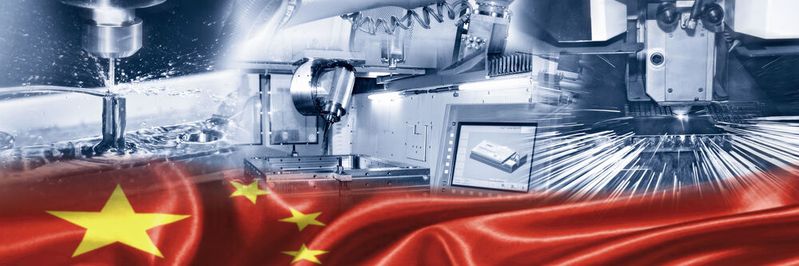
:quality(80)/p7i.vogel.de/wcms/28/7c/287ccc5ac565d6e6041bebb1e3e073f0/0113143253v1.jpeg "In our China Market Insider, we regularly provide you with relevant information directly from China. (Image:© Eisenhans - stock.adobe.com)")