When companies want to speed up production, processes, or product development, 3D printing is no longer a secret tip. However, persistent misconceptions and prejudices about 3D printing still circulate. These are the five most common myths.
A common misconception is that 3D printing only produces weak parts. This component was made from titanium using Direct Metal Laser Sintering.
(Image: Xometry/Bastian Fischer)
High-tech 3D printers are now found in craft businesses as well as in the research departments of corporations. Those who do not want to buy their own printer can use a production platform like Xometry Europe. However, the company has found in customer interactions that despite the growing popularity of this technology, persistent misconceptions and prejudices still prevail. Xometry has identified the five most common myths.
1. "Additive processes can only process plastics."
Customers have Xometry print parts from aluminum, cobalt-chrome, steel, stainless steel, Inconel, or titanium. Among the outputs are dental or orthopedic implants, gas turbines, die casting tools, or spare parts for cars. Alloys are used to give the materials special properties. For example, Al-Si10Mg contains silicon and traces of magnesium and iron in addition to aluminum. This makes the material highly conductive for heat and electricity.
In the aerospace industry, a mixture of chrome, nickel, copper, and steel (stainless steel 17-4PH) is often used for printing. This results in the tensile strength and stiffness demanded in high-tech industries.
2. "3D printing only produces weak parts."
Whether it's toolmaking or medical devices, storage or brackets: Today, what is needed is printed. And these are indeed parts that must withstand high loads. It is not only the selection of the right materials that matters. Design, printing settings, and post-processing also influence the strength of additively manufactured components. Basically, two groups of materials are distinguished: plastics, which are printed using processes such as Fused Deposition Modeling (FDM), Selective Laser Sintering (SLS), Stereolithography (SLA), Carbon Digital Light Synthesis (DLS), Multi Jet Fusion (MJF). And metals, which can be processed with Direct Metal Laser Sintering (DMLS).
For example, those with high thermal requirements might choose CE 221 (cyanate ester). This resin has a glass transition temperature of about 225 degrees Celsius and is therefore thermally stable in the long term. High impact resistance, on the other hand, is promised by polycarbonate (PC), a tough and amorphous material. It is used in medical and industrial products, as well as in electronic components.
Among metals, stainless steel 316L is often used for food and laboratory equipment, heat exchangers, nuts, and bolts. It has excellent corrosion resistance and stability against chlorinated media and non-oxidizing acids. Printed components are no longer considered weak.
3. "Printed parts just don't look nice."
This prejudice about aesthetics completely overlooks the possibilities of post-processing. While smooth surfaces are not always achieved immediately with 3D printing, as layering processes are typically used, some technologies are nevertheless well suited for smooth surfaces: SLA, Polyjet, and Carbon DLS. In these cases, the raw materials usually solidify into a homogeneous surface, often resembling glass, especially with Carbon DLS, where plastics such as polyurethane are used.
In post-processing, techniques such as glass bead blasting, vapour smoothing, tumbling, or grinding and polishing have proven effective. Each technique has its specific properties that come into effect with the respective material.
4. "Only small parts can be printed"
Pistons for sports car engines, a complete radiator grille for SUVs, prostheses, or surgical instruments – some examples of parts that are additively manufactured. For example, in the FDM and SLA processes, printing is done up to a size of about two meters. The corresponding machines cost over a million euros. However, a significantly cheaper average system can already build up to half a meter in size. With technical improvements, the application areas are expanding. Therefore, developers' imagination is increasingly less limited in 3D printing.
5. "We can only produce prototypes with 3D printing."
The production costs for additive manufacturing have dramatically decreased within a few years. It is becoming increasingly viable to replace traditional technologies such as injection molding with 3D printing. As the print quality also continues to improve – as mentioned above – the results of both technologies are becoming comparable. For example, TPU can now be chemically smoothed, which was unthinkable until recently.
Date: 08.12.2025
Naturally, we always handle your personal data responsibly. Any personal data we receive from you is processed in accordance with applicable data protection legislation. For detailed information please see our privacy policy.
Consent to the use of data for promotional purposes
I hereby consent to Vogel Communications Group GmbH & Co. KG, Max-Planck-Str. 7-9, 97082 Würzburg including any affiliated companies according to §§ 15 et seq. AktG (hereafter: Vogel Communications Group) using my e-mail address to send editorial newsletters. A list of all affiliated companies can be found here
Newsletter content may include all products and services of any companies mentioned above, including for example specialist journals and books, events and fairs as well as event-related products and services, print and digital media offers and services such as additional (editorial) newsletters, raffles, lead campaigns, market research both online and offline, specialist webportals and e-learning offers. In case my personal telephone number has also been collected, it may be used for offers of aforementioned products, for services of the companies mentioned above, and market research purposes.
Additionally, my consent also includes the processing of my email address and telephone number for data matching for marketing purposes with select advertising partners such as LinkedIn, Google, and Meta. For this, Vogel Communications Group may transmit said data in hashed form to the advertising partners who then use said data to determine whether I am also a member of the mentioned advertising partner portals. Vogel Communications Group uses this feature for the purposes of re-targeting (up-selling, cross-selling, and customer loyalty), generating so-called look-alike audiences for acquisition of new customers, and as basis for exclusion for on-going advertising campaigns. Further information can be found in section “data matching for marketing purposes”.
In case I access protected data on Internet portals of Vogel Communications Group including any affiliated companies according to §§ 15 et seq. AktG, I need to provide further data in order to register for the access to such content. In return for this free access to editorial content, my data may be used in accordance with this consent for the purposes stated here. This does not apply to data matching for marketing purposes.
Right of revocation
I understand that I can revoke my consent at will. My revocation does not change the lawfulness of data processing that was conducted based on my consent leading up to my revocation. One option to declare my revocation is to use the contact form found at https://contact.vogel.de. In case I no longer wish to receive certain newsletters, I have subscribed to, I can also click on the unsubscribe link included at the end of a newsletter. Further information regarding my right of revocation and the implementation of it as well as the consequences of my revocation can be found in the data protection declaration, section editorial newsletter.
For those planning series production, there's a balancing act: a tool for injection molding can quickly cost tens of thousands of euros. If a change to the component is needed over time, a modification to the expensive tool or even a completely new part may be required. With 3D printing, this step is eliminated: updates to the model are digitally communicated to the printer. Therefore, printing can still be worthwhile even if the unit price for production seems high. What matters are the overall costs – and these may be lower here. 3D printing is also an option for complex constructions. If these are not feasible in casting, redesigning may be necessary. In printing, however, even challenging designs can be realized. (jup)



:quality(80)/p7i.vogel.de/wcms/53/f7/53f7dadbe4d656a3fd4f4077445f29f6/0129828707v1.jpeg "Thanks to its compact design and drilling/unscrewing function, the Fire Birdie is suitable for applications with limited installation space and frequent tool changes. (Image:Marcel Kraibühler)")
:quality(80)/p7i.vogel.de/wcms/da/4d/da4da8d34671dc6bce80e496212de877/0129850788v1.jpeg "Mate-XT Go supports the arms and shoulders during overhead work and repetitive tasks and is designed to significantly reduce muscle strain in everyday working life. (Image:Comau)")
:quality(80)/p7i.vogel.de/wcms/95/97/95976dbaac68b249eb65e74c5aad5300/0129651893v1.jpeg "The C2.0 centric clamps, the S2 fixed jaw clamps and the \"gredoc\" zero-point clamping systems are used for machining the raw parts. Fastening is carried out with width across flats 27. (Image:Gressel)")
:quality(80)/p7i.vogel.de/wcms/57/1b/571b8895efb299d70846bbdbd7af2338/0130043886v1.jpeg "Servo hydraulics independent of the control system: The servo hydraulics software module is integrated directly into the b Maxx 5500 servo drive (pictured: Mehmet Sari, Export Sales Manager at Hürsan Pres (left), Özgür Deniz Demirbaş, Country Manager at Baumüller Turkey) (Image:Baumüller)")
:quality(80)/p7i.vogel.de/wcms/3b/27/3b27f6c5848be73acecb04054bf0a146/0130115209v1.jpeg "Spectroscopic glucose measurement with infrared spectroscopy enables more regular measurements without physical strain. (Image:Endrich)")
:quality(80)/p7i.vogel.de/wcms/3f/cc/3fccb748b0fe16f1f61249d94c72f126/0130149439v1.jpeg "Requirements for integrated power supply systems: Precise AC and DC power supply systems that not only provide energy, but also reliably combine measurement, analysis and system integration. (Image:Schulz Electronic)")
:quality(80)/p7i.vogel.de/wcms/fd/93/fd93e01c16f5a4709278499d981a459c/0130061090v1.jpeg "Revealed: These servo drives are assembled at Aerotech in Fürth. (Image:Aerotech)")
:quality(80)/p7i.vogel.de/wcms/cb/8a/cb8ae7f5205365efce3e7285154fc3cf/0130132198v1.jpeg "Markus Huber (left) and Nicolai Friis from TU Wien know how to make quantum computers multidimensional in order to perform computing operations even better. (Image:TU Vienna / A. Rommel)")
:quality(80)/p7i.vogel.de/wcms/63/21/6321beb732bf7d92640df46d7aa77573/0130125122v1.jpeg "As part of the Carbon Lab Factory Lausitz, a pilot plant for the production of sustainable, cost-effective and competitive carbon fibers will be built at the Guben site. (Image:Fraunhofer IAP / Kristin Stein)")
:quality(80)/p7i.vogel.de/wcms/53/4f/534fe0f168f6ee070ded4a48faca4cef/business-wire-main-image-1103x620v1.jpeg "The new UR AI Trainer, developed by Universal Robots and Scale AI, is the first direct lab-to-factory solution for AI model training.
(Source: Universal Robots)")
:quality(80)/p7i.vogel.de/wcms/08/70/087062e2e1a9b9add5777410dd746ee9/adobestock-1923991605-5607x3156v1v1.jpeg "A new type of tactile sensor, inspired by human skin, even recognizes grains of sand. (Image:Curioso.Photography - stock.adobe.com)")
:quality(80)/p7i.vogel.de/wcms/7f/08/7f087d7013424d123ab7275cd2e3fe55/adobestock-809456218--c2-a9-20degimages-20-e2-80-93-20stock-adobe-com-ki-generiert-4179x2351v1v1.jpeg "The digital upgrading of existing machines conserves resources, saves energy and reduces the need for new production. (Image:Degimages - stock.adobe.com/AI-generated)")
:quality(80)/p7i.vogel.de/wcms/90/db/90db3087d3af0560fcdb4dbc42443ce1/0130157448v1.jpeg "The switch to SDV is the most complex transformation the industry has ever had to master. The end consumer gets a vehicle that gains rather than loses value over its lifetime. (Image:Sonatus)")
:quality(80)/p7i.vogel.de/wcms/73/f0/73f00bb99a23197db05bb584fe78f20f/0130080581v1.jpeg "The \"China Speed\" analysis by Roland Berger shows that the speed of development has only a limited connection with labor costs. (Image:freely licensed at Pexels)")
:quality(80)/p7i.vogel.de/wcms/2f/5b/2f5ba6a150b52c2b8efada560c5cdafe/0130143442v1.jpeg "Automotive suppliers are facing a severe crisis, which is primarily due to a combination of structural change and economic problems. (Image:freely licensed at Pexels)")
:quality(80)/p7i.vogel.de/wcms/22/d0/22d03cd48e992435338b59464c428d41/0129739814v1.jpeg "More electric vehicles on the roads mean a higher demand for electricity - which should ideally be covered by renewable energies. (Image:BMW)")
:quality(80)/p7i.vogel.de/wcms/94/7a/947ac066b98cbcd3470e83ff9da3e25f/0130096114v1.jpeg "The use of amorphous steels in the stator enables a significant reduction in losses and increases the efficiency of modern electric motors in vehicle drives. (Image:Horse Powertrain)")
:quality(80)/p7i.vogel.de/wcms/e5/f1/e5f171d3d7ae021332cc0aeae4d6e299/0130127049v1.jpeg "In collaboration with Shanghai Jiao Tong University, Lenovo has presented a silicon anode battery under the name \"ED1000\" as a proof of concept for mobile workstations. (Image:Lenovo)")
:quality(80)/p7i.vogel.de/wcms/fa/69/fa696e59706b96fff02283dd74cc2398/0130129635v1.jpeg "Samsung Co-CEO Jun Young-hyun wants to respond to the AI-driven boom in demand in the memory market with contracts for up to five years. This should provide more planning security in the traditionally volatile storage business. At the same time, however, this is likely to increase the pressure on customers to secure precise long-term requirements, prices and supply chains. (Image:Samsung)")
:quality(80)/p7i.vogel.de/wcms/31/a8/31a883a47b86634c382923e78fd9a4c9/0130133225v1.jpeg "Figure 1: GMSL-capable point-to-point connection. (Image:ADI)")
:fill(fff,0)/images.vogel.de/vogelonline/companyimg/76800/76895/65.jpg "FAULHABER_120mm.jpg ()")
:fill(fff,0)/p7i.vogel.de/companies/67/eb/67eba621ef6ea/logo2.png "logo2 (Wuxi InfiMotion)")
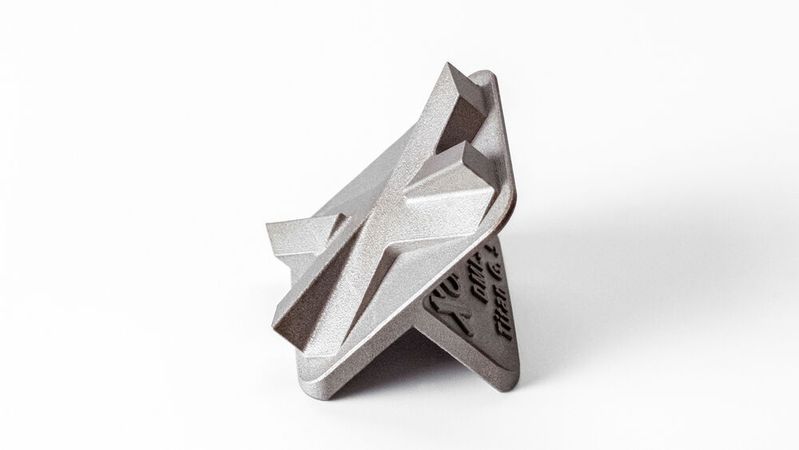
:quality(80)/p7i.vogel.de/wcms/9f/69/9f692aaaf91d6f5a9f9362490092e2b2/0123457919v1.jpeg "The design, choice of material, print settings and post-processing are crucial for particularly stable 3D printed parts. (Image:Xometry)")
:quality(80)/p7i.vogel.de/wcms/6b/5c/6b5cf02ffa718f295c1b0194dce14c1e/0126983566v1.jpeg "Customized plastic hand splint manufactured using a 3D printer. (Image: ©mari1408 - stock.adobe.com)")