


:quality(80)/p7i.vogel.de/wcms/5c/04/5c04e7b6babea87a65710679f0fa0d03/0131756980v1.jpeg "Neura Robotics is a German specialist for humanoid robots (humanoids). Here, co-founder David Reger presents himself with a representative of this artificial species. He has reason to laugh, as the company was recently able to raise over a billion dollars from investors ... (Image:Neura Robotics)")
:quality(80)/p7i.vogel.de/wcms/2c/6d/2c6d7a5269193c22bfb3e1976959626d/0131600867v1.jpeg "A specially developed tool for manufacturing a jaw part has tripled the service life. (Image:HPTec GmbH)")
:quality(80)/p7i.vogel.de/wcms/8d/fd/8dfdceba834d8ac1e9e149e871ac0cef/0131356689v1.jpeg "Bosch is losing ground in its normal business. This is now set to change with a stronger commitment to artificial intelligence and humanoid robotics ... (Image:Bosch)")
:quality(80)/p7i.vogel.de/wcms/15/41/154139dec8c82f53675ae6107f118a52/0131579774v1.jpeg "For the machining of large components, DMG Mori has installed a DMU 200 Gantry with a 4,000-millimeter travel path in the X-axis at ACTech. (Image:DMG Mori)")
:quality(80)/p7i.vogel.de/wcms/6f/cb/6fcb02beff03795745ea15a55cf313c9/adobestock-939092274--c2-a9-20kamonwan-20-e2-80-93-20stock-adobe-com-ki-generiertv1.jpeg "Knowledge at the touch of a button: AI-based assistant systems like the 8D-Assist make expert knowledge accessible. (Source: Kamonwan – stock.adobe.com_AI-generated)")
:quality(80)/p7i.vogel.de/wcms/a1/54/a154402ae8659c12dd65b588055f042a/siemens-intelligence-center-x-2276x1280v1v1.jpeg "By connecting data, models, and workflows on a single, managed foundation, Intelligence Center X aims to enable faster deployment of AI-driven applications and agents. (Image: Siemens)")
:quality(80)/p7i.vogel.de/wcms/3c/50/3c5044bbc963671fd1775b58e553ba53/0131729703v1.jpeg "Too many different variants make handling confusing. A changed component does not only affect one bill of materials but also requires adjustments in inspection plans, documentation, parameterization, and spare parts logic. (Image: ©Radoman Durkovic - stock.adobe.com)")
:quality(80)/p7i.vogel.de/wcms/20/e3/20e37e3c6e65d7e80ee4950b7facfb94/0131675932v1.jpeg "Elon Musk's space company SpaceX can look forward to a second rental agreement for computing power for AI applications. The latest deal will start at the end of the year with none other than Google ... (Image:SpaceX)")
:quality(80)/p7i.vogel.de/wcms/a6/c8/a6c874579764455a53f0193a3c11f03b/newsimage423006-3000x1687v1v1.jpeg "Prof. Hermann Rottengruber and the research associate Dr.-Ing. Braj Bhushan Prasad (from left to right) from the Institute for Engineering of Products and Systems at the University of Magdeburg with a car electric drive. (Image:University of Magdeburg)")
:quality(80)/p7i.vogel.de/wcms/92/5c/925ce6029e4a2ad4708553efa8a4d1d4/0131740259v1.jpeg "This is what the Spectrum rocket from Isar Aerospace in Munich looks like. Although it is still in the testing phase, it is intended to eventually replace SpaceX for satellite transport. There is also a reason to celebrate, as new investor millions are on their way ... (Image:Isar Aerospace)")
:quality(80)/p7i.vogel.de/wcms/28/0e/280e666d448f3e37b4035a044aaaf514/chatgpt-20image-2010--20juni-202026-2c-2009-22-18-1456x819v1.png "Especially small and medium-sized enterprises find it difficult to apply for funding, says Hentschel Funding Consultancy. They also underestimate the modalities that need to be observed to obtain approval. But here you will learn how it's done ... (Image: AI-generated image (OpenAI))")
:quality(80)/p7i.vogel.de/wcms/10/52/10528a21cc61c663c8ada27078ed9c08/0131697322v1.jpeg "The German-French fighter jet will probably remain just a thought forever. Because German Chancellor Friedrich Merz and his French counterpart Emmanuel Macron have decided that it simply won't work with Airbus and Dassault ... (Image: Karambasamba)")
:quality(80)/p7i.vogel.de/wcms/1c/1c/1c1cc6b5e0b3a8dc81b61ec0c91f9f45/20260609-123851826v1.jpeg "Start of production of the axial-flux motor at Mercedes-Benz in Berlin-Marienfelde. Present were, among others, three employees from the Marienfelde plant (left), Michael Schiebe (4th from left), the automaker's head of production; Transport Minister Patrick Schnieder; Ute Bonde, Senator for Mobility, Transport, Climate Protection, and Environment of the State of Berlin; and Markus Keicher, head of the Mercedes plant in Marienfelde. (Source: Thomas Günnel – Automotive Industry)")
:quality(80)/p7i.vogel.de/wcms/84/cd/84cd8bc8d56f9b9c51cbe1430c678f70/24dt123-010v1.jpeg "Daimler Truck delivers several military trucks to the Lithuanian army. (Source: Daimler Truck)")
:quality(80)/p7i.vogel.de/wcms/a1/d7/a1d796f14f510f9cf4ef3443ca0729f5/0131709041v1.jpeg "The new Dodge Charger is set to be distributed in Europe through KW Automotive in the future. (Image: Stellantis/Dodge)")
:quality(80)/p7i.vogel.de/wcms/97/b7/97b77931783689d2cd0d37cf9503fea1/p-etgx-gx-eot-vpk24-1231v1.jpeg "Electric trucks like the MAN eTGX are increasingly in demand in China. (Image: MAN Truck & Bus SE)")
:quality(80)/p7i.vogel.de/wcms/64/72/64725890ef9aa0addc572b790a670f2b/0131737714v1.jpeg "Optical automotive camera from Hinge based on KD's KD7251 for data transmission at 10 Gbit/s (Image:kd)")
:quality(80)/p7i.vogel.de/wcms/e5/b3/e5b3ea26898d0cf6316e218961e92fa0/0131687207v1.jpeg "Global supply chains: Currently, there are shortages of oil, copper, and helium. (Image:Jörg Peter)")
:quality(80)/p7i.vogel.de/wcms/08/3b/083b21d1e0e3f391768620fe93047db8/0131690335v1.jpeg "CXMT aims to raise at least 29.5 billion yuan in the planned IPO. The IPO is more than a financial event: China's largest DRAM manufacturer is expected to strengthen the domestic supply of memory chips as the U.S. further restricts access to key technologies. (Image:CXMT)")
:quality(80)/p7i.vogel.de/wcms/e6/fb/e6fbfdceb3cc554df04a9561397d166f/pexels-markusspiske-9858904-1613x908v1v1.jpeg "The annual report of the German Patent and Trade Mark Office (DPMA) shows a significantly increasing dynamic in patent applications, particularly in battery technology. (Image: Pexels)")
:fill(fff,0)/images.vogel.de/vogelonline/companyimg/76800/76895/65.jpg "FAULHABER_120mm.jpg ()")
:fill(fff,0)/p7i.vogel.de/companies/68/a4/68a47beec75ce/logo-cmyk-de.jpeg "logo-cmyk-de (https://www.datatec.eu/)")
:fill(fff,0)/p7i.vogel.de/companies/69/de/69de1b7403b0d/simtos-logo.jpeg "simtos-logo (SIMTOS)")
:quality(80):fill(efefef,0)/p7i.vogel.de/wcms/67/ac/67acb931a438c/elatec-wp-gmp.png "Elatec WP GMP")
Date: 08.12.2025
Naturally, we always handle your personal data responsibly. Any personal data we receive from you is processed in accordance with applicable data protection legislation. For detailed information please see our privacy policy.
Consent to the use of data for promotional purposes
I hereby consent to Vogel Communications Group GmbH & Co. KG, Max-Planck-Str. 7-9, 97082 Würzburg including any affiliated companies according to §§ 15 et seq. AktG (hereafter: Vogel Communications Group) using my e-mail address to send editorial newsletters. A list of all affiliated companies can be found here
Newsletter content may include all products and services of any companies mentioned above, including for example specialist journals and books, events and fairs as well as event-related products and services, print and digital media offers and services such as additional (editorial) newsletters, raffles, lead campaigns, market research both online and offline, specialist webportals and e-learning offers. In case my personal telephone number has also been collected, it may be used for offers of aforementioned products, for services of the companies mentioned above, and market research purposes.
Additionally, my consent also includes the processing of my email address and telephone number for data matching for marketing purposes with select advertising partners such as LinkedIn, Google, and Meta. For this, Vogel Communications Group may transmit said data in hashed form to the advertising partners who then use said data to determine whether I am also a member of the mentioned advertising partner portals. Vogel Communications Group uses this feature for the purposes of re-targeting (up-selling, cross-selling, and customer loyalty), generating so-called look-alike audiences for acquisition of new customers, and as basis for exclusion for on-going advertising campaigns. Further information can be found in section “data matching for marketing purposes”.
In case I access protected data on Internet portals of Vogel Communications Group including any affiliated companies according to §§ 15 et seq. AktG, I need to provide further data in order to register for the access to such content. In return for this free access to editorial content, my data may be used in accordance with this consent for the purposes stated here. This does not apply to data matching for marketing purposes.
Right of revocation
I understand that I can revoke my consent at will. My revocation does not change the lawfulness of data processing that was conducted based on my consent leading up to my revocation. One option to declare my revocation is to use the contact form found at https://contact.vogel.de. In case I no longer wish to receive certain newsletters, I have subscribed to, I can also click on the unsubscribe link included at the end of a newsletter. Further information regarding my right of revocation and the implementation of it as well as the consequences of my revocation can be found in the data protection declaration, section editorial newsletter.
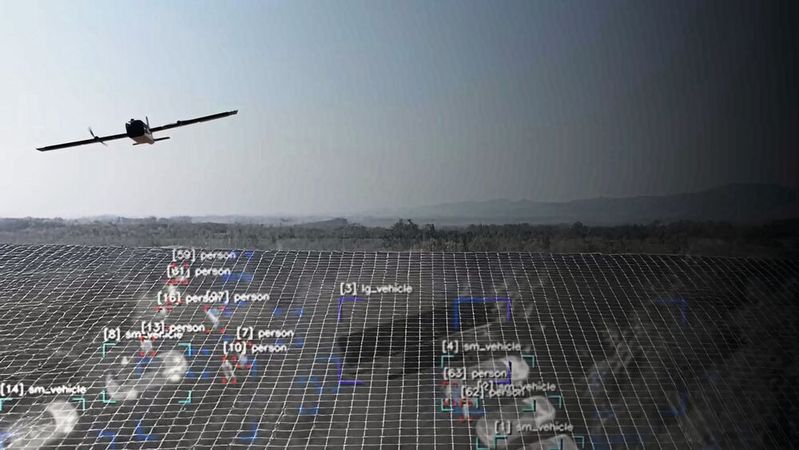
:quality(80)/p7i.vogel.de/wcms/b2/64/b2641254fef5afa15645cefc37089c88/0130021093v1.jpeg "Daimler Truck and Quantum Systems are jointly developing unmanned military vehicles. (Image:Quantum Systems)")
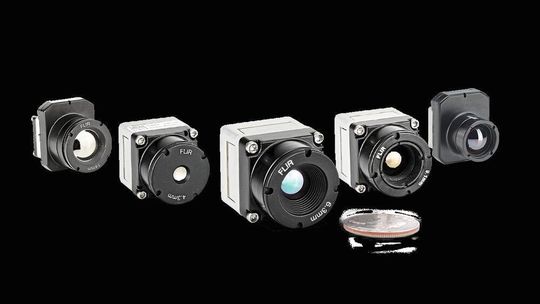
:quality(80)/p7i.vogel.de/wcms/5f/ec/5fec440a07e5c2f59d6cfa1451c29472/0127133869v1.jpeg "Flir MIX was designed from the outset to cover a wide range of advanced applications. (Image:FLIR Systems, a Teledyne company)")