There are some effective tricks for construction parts in 3D printing that require particular stability. Three targeted approaches ensure that 3D parts become even stronger and more resilient - without additional material costs or long printing times.
The design, choice of material, print settings and post-processing are crucial for particularly stable 3D printed parts.
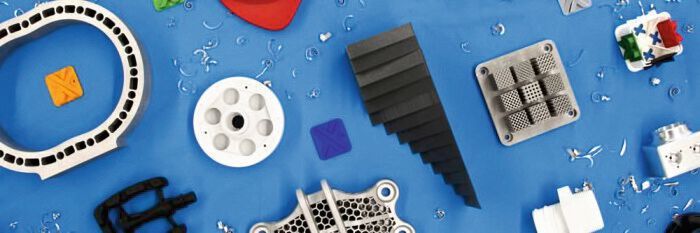
(Image: Xometry)
3D printing generally produces quite stable plastic and metal parts. However, there are applications for which particularly high strength is required.
This property is mainly influenced by design and choice of material. Xometry Europe handles countless production orders in additive technologies every day. From this wealth of experience, we have compiled a list of tricks that can be used to strengthen printed parts. To do this, we turn three adjusting screws: component geometry, printer settings and post-processing.
Gallery
Geometry of the Component
Geometry plays a crucial role in determining the strength of a 3D print. The use of fillets and chamfers increases the mechanical strength of edges, while gussets and ribs provide structural support.
Fillets or chamfers are a stable basis for thinner areas in the 3D part. They prevent the nozzles from knocking sensitive sections out of the print.
Ribs and gussets protrude vertically from a wall or plane as thin extrusions. They serve as support and increase the strength of the part. The thickness of the ribs should be half the wall thickness and spaced at least twice the wall thickness. Large and high ribs should be avoided; use several small ribs instead.
Printer Settings
The 3D printing process must be optimally adjusted to produce stable parts. This applies in particular to the following parameters:
Infill for 3D Printing
Infill is the amount of material inside the outer walls of the 3D part. This technique is often used in the FDM process to increase strength. There are two ways to set the infill: in the infill pattern and in the infill density.
Infill pattern: This is a repeating structure that fills the space within a 3D printed part. The infill is normally not visible from the outside. The many types of infill patterns include: Triangular patterns, rectangular patterns, honeycomb patterns, hexagonal and concentric patterns. The rectangular infill pattern, for example, can result in a 100 percent dense infill. A hexagonal infill pattern, on the other hand, offers the best strength-to-weight ratio, but requires the longest printing time. The tri-hexagonal infill pattern is the strongest infill pattern.
Density of the infill: It is true that 100 percent infill results in a solid and therefore the strongest part. In many cases, however, this represents unnecessary material consumption, which increases weight and costs. A honeycomb pattern is best for infill levels below 50 percent, while linear patterns are best for infill levels above 50 percent. Typical fill densities are between 20 and 25 percent.
Alignment of the Parts
3D-printed parts are strongest in the layers that run parallel to the housing. The molecular bond within a layer is stronger than the bond between the layers. These are the X and Y planes. Although this technique is common in FDM printing, it can also be used in other processes such as SLA and SLS to improve strength. The orientation of the part depends on where the load and printed part will act.
Thickness of the Shell
The thickness of the shell plays an important role in the reinforcement of 3D parts, as a thicker shell makes a part more stable. In FDM, a shell thickness of three to four times the nozzle diameter is best suited for parts that are subject to heavy and sustained stress. Most 3D printing processes use a minimum thickness of only about 1 millimeter as standard. However, a higher thickness improves tensile and impact strength.
Post-Processing of Production Parts
To further increase the strength of the printed parts, you can consider post-processing. The following post-processing steps significantly increase the strength of 3D printed parts:
Glow
Here, a printed part is heated and gradually cooled to relieve the internal stresses and achieve greater strength. Metals and glass can be annealed, but not all polymers. PLA, PET and PA 12, for example, are suitable.
Galvanic Coating
In this process, the printed part is immersed in a solution of water and metal salts. When current flows through the solution, the metal cations form a thin layer around the part. This technique can be used for 3D parts from FDM, SLS, SLA or SCM printers. It gives the part almost identical mechanical properties to metal and is a cost-effective alternative to metal 3D printing.
Date: 08.12.2025
Naturally, we always handle your personal data responsibly. Any personal data we receive from you is processed in accordance with applicable data protection legislation. For detailed information please see our privacy policy.
Consent to the use of data for promotional purposes
I hereby consent to Vogel Communications Group GmbH & Co. KG, Max-Planck-Str. 7-9, 97082 Würzburg including any affiliated companies according to §§ 15 et seq. AktG (hereafter: Vogel Communications Group) using my e-mail address to send editorial newsletters. A list of all affiliated companies can be found here
Newsletter content may include all products and services of any companies mentioned above, including for example specialist journals and books, events and fairs as well as event-related products and services, print and digital media offers and services such as additional (editorial) newsletters, raffles, lead campaigns, market research both online and offline, specialist webportals and e-learning offers. In case my personal telephone number has also been collected, it may be used for offers of aforementioned products, for services of the companies mentioned above, and market research purposes.
Additionally, my consent also includes the processing of my email address and telephone number for data matching for marketing purposes with select advertising partners such as LinkedIn, Google, and Meta. For this, Vogel Communications Group may transmit said data in hashed form to the advertising partners who then use said data to determine whether I am also a member of the mentioned advertising partner portals. Vogel Communications Group uses this feature for the purposes of re-targeting (up-selling, cross-selling, and customer loyalty), generating so-called look-alike audiences for acquisition of new customers, and as basis for exclusion for on-going advertising campaigns. Further information can be found in section “data matching for marketing purposes”.
In case I access protected data on Internet portals of Vogel Communications Group including any affiliated companies according to §§ 15 et seq. AktG, I need to provide further data in order to register for the access to such content. In return for this free access to editorial content, my data may be used in accordance with this consent for the purposes stated here. This does not apply to data matching for marketing purposes.
Right of revocation
I understand that I can revoke my consent at will. My revocation does not change the lawfulness of data processing that was conducted based on my consent leading up to my revocation. One option to declare my revocation is to use the contact form found at https://contact.vogel.de. In case I no longer wish to receive certain newsletters, I have subscribed to, I can also click on the unsubscribe link included at the end of a newsletter. Further information regarding my right of revocation and the implementation of it as well as the consequences of my revocation can be found in the data protection declaration, section editorial newsletter.
Resin Coating
Epoxy resins or polyester resins are used to coat printed parts. Epoxy resin coating is an insoluble surface coating that is applied with epoxy resin paint. This paint contains an epoxy resin and a hardener. The resulting coating is generally more durable and resistant than uncoated parts. However, epoxy coating is unfavorable when extreme geometric accuracy and sharp edges are required for the part. Polyester resins, on the other hand, are thin and can be applied to intricate parts.
The resin starts to harden just five minutes after application and usually takes 24 hours to dry completely. A resin coating can be applied to any part from any printer.
Carbon Fiber Reinforcement
Carbon or glass fibers are also suitable for reinforcement. Carbon fibers have an excellent strength-to-weight ratio and are best suited for parts that are exposed to constant stress. In contrast to carbon, however, glass fibers bend until they break. The fibers can be laminated in two ways:
Short fiber reinforcement: In this method, the fibers are shredded and mixed with the thermoplastic to increase strength and stiffness.
Continuous fiber reinforcement: Here, the fibers must be continuously integrated into the thermoplastic during extrusion and deposition. This requires two nozzles that print simultaneously.
Future-Proof Authentication with Universal RFID Readers



:quality(80)/p7i.vogel.de/wcms/f7/85/f785e961fa2a55ecf4380e1a204c79e3/0129432203v1.jpeg "This is the new Artis 300, which completes the Artis range as the third variant. It stands for TIG DC welding up to 300 amps and is designed as an XT variant for all common voltage levels worldwide. (Image:Fronius)")
:quality(80)/p7i.vogel.de/wcms/e8/1f/e81f2bd61d820a0cf982dd3831f273dd/0129511298v1.jpeg "In China, certain functions in new cars will once again be directly accessible via haptic input—without a screen. (Image:BYD)")
:quality(80)/p7i.vogel.de/wcms/28/7c/287ccc5ac565d6e6041bebb1e3e073f0/0113143253v1.jpeg "In our China Market Insider, we regularly provide you with relevant information directly from China. (Image:© Eisenhans - stock.adobe.com)")
:quality(80)/p7i.vogel.de/wcms/da/b1/dab1af09c1f7fd43c841d8c8c60882d7/0129466462v1.jpeg "The yellow device is an auxiliary tool that Subaru needs in vehicle production. The production of such tools can now be accelerated using the high-speed T25 nozzle from Stratsys in combination with the F770-3D 3D printer. Read more here ... (Image:Subaru)")
:quality(80)/p7i.vogel.de/wcms/99/2e/992e57a54c4ddeaafc113de8e56f2b73/0129501004v1.jpeg "Sereact's AI-based control system can process new and unknown items without prior data collection. (Image:Sereact)")
:quality(80)/p7i.vogel.de/wcms/97/3a/973acc83133c28605f855d750523142e/0129492013v1.jpeg "During the opening, Agile One symbolically pressed the start button. (Image:Deutsche Telekom AG / Cindy Albrecht)")
:quality(80)/p7i.vogel.de/wcms/dd/4e/dd4e6ce73e0e700dcc0f0584813ef47f/0128875162v1.jpeg "Thanks to their high precision, robustness and integration capability, Micro-Epsilon's measurement technology solutions are not only suitable for new systems, but also ideal for retrofit applications. (Image:Micro-Epsilon Messtechnik GmbH & Co. KG)")
:quality(80)/p7i.vogel.de/wcms/17/61/1761a0165c23fe007d0a8e62d2a23121/0129467133v1.jpeg "The partnership between Dassault Systèmes and Nvidia aims to make the industry more effective with the help of AI and digital twins. (Picture: ©DC Studio - stock.adobe.com)")
:quality(80)/p7i.vogel.de/wcms/f8/2d/f82d45c2610205e2c0c188968022890d/more-liftoff-power-first-ariane-6-with-four-boosters-launched-4781x2691v1v1.jpeg "The Ariane 6 can be modularly adapted to any mission—either with two or four boosters and a variable payload fairing length. (Image:ESA-M. Pedoussaut)")
:quality(80)/p7i.vogel.de/wcms/9b/e7/9be7c2ceb897aa2bf1ab4eb2198b8b96/roboter-20hand1-1240x698v1v1.jpeg "What if you could 3D print a soft robot with predictable shape-shifting capabilities already built in? (Image:Picture: Harvard University)")
:quality(80)/p7i.vogel.de/wcms/a7/34/a73475e9638e032c32288f53006abab7/newsimage417867-2665x1500v1v1.jpeg "Combination of a model from a scanning electron microscope image (left) with a section of the underlying crystal structure of a studied MXene with precisely controlled surface terminations. (Image:B. Schröder/HZDR)")
:quality(80)/p7i.vogel.de/wcms/d2/1a/d21a9b3e1333f306ffd6421e84f9e3d0/semiconductor-20image-20courtesy-20of-20gelest-3000x1688v1.jpeg "In a new collaboration, IBM will test the performance of Gelest precursor materials for dry resist EUV lithography, generating results that aim to guide Gelest on materials research and speed innovation toward smaller devices. (Source: Gelest)")
:quality(80)/p7i.vogel.de/wcms/12/ce/12ce3b8d4062d9e433419e9ada594c34/adobestock-1669527454-marewa-4096x2304v1v1.jpeg "Symbol image (Image:Marewa - stock.adobe.com)")
:quality(80)/p7i.vogel.de/wcms/0b/02/0b02abc1524e267ae66ad0609ce08b20/0129482073v1.jpeg "The Haval Jolion Pro competes in the compact SUV segment. (Image:GWM)")
:quality(80)/p7i.vogel.de/wcms/94/81/948196fc18c3feb4ec87165b218b5650/0129493778v1.jpeg "This is the Vector reconnaissance drone from the start-up Quantum Systems from Gilching near Munich. The specialists are so well received by investors that they can now look forward to an injection of 150 million euros to strengthen their position even further. (Image:Quantum Systems)")
:quality(80)/p7i.vogel.de/wcms/b9/47/b9470dd7a30574d74b6d95d26e4e4ee8/0129473060v1.jpeg "UE Studios has presented the Self-Driving Urban E-Shuttle to the public for the first time. (Image:UE Studios)")
:quality(80)/p7i.vogel.de/wcms/36/c8/36c8b329076027abf5def92031e3028e/0129508876v1.jpeg "Microsoft German headquarters in Munich: As part of the Munich Security Conference, 15 international companies along the entire electronics value chain have formed a tech alliance for digital sovereignty and common trust standards under the leadership of Microsoft and Ericsson. (Image:Microsoft)")
:quality(80)/p7i.vogel.de/wcms/d5/6e/d56e97cb8afab17e93794c1cca214228/0129419457v1.jpeg "China is investing heavily in its domestic semiconductor ecosystem. If you want to be part of it, you should know in advance where which cluster is located and which technology it is driving forward. (Image:Dall-E / AI-generated)")
:quality(80)/p7i.vogel.de/wcms/63/33/6333b367f8caefeba2c7af6318313d65/0129408600-667x375v1.jpeg "Christian Nietner is Innovation Center Lead for Quantum Computing at NTT Data DACH (Image:NTT Data)")
:quality(80)/p7i.vogel.de/wcms/05/63/05633ca5deb577945793fd0f553356b3/0129493475v1.jpeg "Lapp continued to invest in production capacities and technologies worldwide in the 2025 financial year. (Image:Lapp)")
:quality(80)/p7i.vogel.de/wcms/45/aa/45aa2b968c91a63e7d14a433e724c019/0120501828v1.jpeg "The tri-hexagonal infill pattern is the strongest infill pattern.(Image: Xometry)")
:quality(80)/p7i.vogel.de/wcms/7f/b0/7fb02aee7d47d9d295f233cf2304801e/0123661955v1.jpeg "Infill is often used in the FDM process to increase strength.(Image: Xometry)")
:quality(80)/p7i.vogel.de/wcms/69/c3/69c3058187ab8e4274e995295c7c37f6/0120501827v1.jpeg "Reinforcement increases the stability of the component.(Image: Xometry)")
:quality(80)/p7i.vogel.de/wcms/d7/c1/d7c17e519033eb5f04ca2ae9df4faa0f/0120501846v1.jpeg "The design, choice of material, print settings and post-processing are crucial for particularly stable 3D printed parts.(Image: Xometry)")
:quality(80):fill(efefef,0)/p7i.vogel.de/wcms/67/ae/67ae0b9ac31f8/elatec-wp-universal-reader.png "Elatec WP Universal Reader")
:quality(80)/p7i.vogel.de/wcms/08/c1/08c17a350becbaa54116ed80fd427c87/0128691590v1.jpeg "Novineer's technology uses GrabCAD toolpath data to simulate part behavior in real applications. (Image:Stratasys)")
:quality(80)/p7i.vogel.de/wcms/7f/a7/7fa7827d8d35d4574745b17b108aaf20/0124929867v1.jpeg "A look into the tool area of an injection molding machine for thermoplastic processing at RKT. The process is ideal for high volumes. However, many also believe that 3D printing will eventually be just as good. Therefore, both processes are examined more closely here. (Image:RKT)")