Experts anticipate that AI agents—AI-based systems capable of making independent decisions—will be an integral part of industrial processes by 2030. Companies that do not view AI agents as isolated solutions but instead integrate them early and firmly into their operations will secure their competitiveness in the long term.
Unlike earlier AI systems, which primarily served as assistance solutions, AI agents independently take on certain tasks.
According to the Deloitte Technology, Media and Telecom Predictions 2025, by 2028 at least 15 percent of decisions in everyday work will be made by AI agents. This outlook shows the enormous potential of agent-based AI for manufacturing and industry. The industry is better suited than others to integrate this technology into everyday work due to its nature. This is because the high complexity of work processes and the dynamic production environment provide ideal conditions for the effective use of AI agents. They can independently evaluate large amounts of data in real-time, reduce errors, and increase production efficiency.
The Benefits of AI Agents for the Industry
AI agents are systems based on artificial intelligence (AI) that are capable of making decisions independently. This allows them to operate without human control or interaction, setting them apart from traditional automation solutions. They make decisions based on a variety of data, which they analyze and evaluate in real-time. They can identify patterns and suggest solutions beyond predefined rules.
While early AI systems mainly served as assistance solutions providing recommendations or analyses, AI agents independently take on certain tasks. The employee's oversight is only needed for final control, while the detailed steps are taken over by the AI. Agent-based AI is thus the natural evolution of traditional AI applications, which no longer just assist humans but actively collaborate with them.
AI Agents in Practice: These are the Use Cases
Generative AI has long been used in the industry for processes such as process optimization. In contrast, agent-based AI could take on an even more comprehensive role in the future and elevate optimization processes to a whole new level. Based on machine data, AI agents independently monitor processes and make subsequent decisions. However, in many production companies, these processes still occur manually: employees detect the disturbance and must identify the source of the error to take appropriate corrective measures. These processes are time-consuming and require specialists.
By using AI agents, these lengthy processes can run much more efficiently. By continuously accessing central sensor data from equipment and machines, AI agents immediately detect deviations from the standard values. This allows them not only to analyze the current status of a machine but also to make predictions about when a failure is likely by evaluating historical data and taking appropriate measures. However, the capabilities of agent-based AI go far beyond mere statistical analyses. While conventional maintenance tools identify warning signals or use statistical models, AI agents can analyze a variety of data sources in real-time, allowing them to recognize patterns indicating future problems.
If entire data networks are made available to AI agents across the entire production, they can analyze inventories, customer orders, or delivery times to avoid bottlenecks, for example, and to seamlessly coordinate the individual steps within the supply chain.
Relieving Humans of Monotonous, Data-Intensive Processes
The goal of using AI agents is to relieve human experts of tedious, monotonous, and data-intensive processes. These processes are particularly error-prone and time-consuming. AI agents remedy this and perform these tasks with greater speed and higher precision than humans. However, this is only possible if large amounts of data can be securely provided to them. Based on this data, AI agents make their action decisions. The larger the data network, the more precisely the artificial intelligence operates.
Through real-time data analysis, the agents also serve as an important control mechanism: Special compliance agents check whether all decisions are traceably recorded, thereby ensuring that all regulatory requirements within the company are met. By meticulously documenting individual actions and decisions, AI agents enable full traceability of processes, which increases transparency in companies.
At the same time, user-friendliness is crucial for the widespread use of these technologies. Platforms like ServiceNow's AI Agent Studio enable companies to design their own AI agents according to the individual needs of each department. This does not require advanced programming skills, as the agents are adapted to specific requirements via chat instructions.
Date: 08.12.2025
Naturally, we always handle your personal data responsibly. Any personal data we receive from you is processed in accordance with applicable data protection legislation. For detailed information please see our privacy policy.
Consent to the use of data for promotional purposes
I hereby consent to Vogel Communications Group GmbH & Co. KG, Max-Planck-Str. 7-9, 97082 Würzburg including any affiliated companies according to §§ 15 et seq. AktG (hereafter: Vogel Communications Group) using my e-mail address to send editorial newsletters. A list of all affiliated companies can be found here
Newsletter content may include all products and services of any companies mentioned above, including for example specialist journals and books, events and fairs as well as event-related products and services, print and digital media offers and services such as additional (editorial) newsletters, raffles, lead campaigns, market research both online and offline, specialist webportals and e-learning offers. In case my personal telephone number has also been collected, it may be used for offers of aforementioned products, for services of the companies mentioned above, and market research purposes.
Additionally, my consent also includes the processing of my email address and telephone number for data matching for marketing purposes with select advertising partners such as LinkedIn, Google, and Meta. For this, Vogel Communications Group may transmit said data in hashed form to the advertising partners who then use said data to determine whether I am also a member of the mentioned advertising partner portals. Vogel Communications Group uses this feature for the purposes of re-targeting (up-selling, cross-selling, and customer loyalty), generating so-called look-alike audiences for acquisition of new customers, and as basis for exclusion for on-going advertising campaigns. Further information can be found in section “data matching for marketing purposes”.
In case I access protected data on Internet portals of Vogel Communications Group including any affiliated companies according to §§ 15 et seq. AktG, I need to provide further data in order to register for the access to such content. In return for this free access to editorial content, my data may be used in accordance with this consent for the purposes stated here. This does not apply to data matching for marketing purposes.
Right of revocation
I understand that I can revoke my consent at will. My revocation does not change the lawfulness of data processing that was conducted based on my consent leading up to my revocation. One option to declare my revocation is to use the contact form found at https://contact.vogel.de. In case I no longer wish to receive certain newsletters, I have subscribed to, I can also click on the unsubscribe link included at the end of a newsletter. Further information regarding my right of revocation and the implementation of it as well as the consequences of my revocation can be found in the data protection declaration, section editorial newsletter.
Between Potential And Practice: Challenges in the Industry
The most important prerequisite for the successful use of AI agents in the industry is the availability of comprehensive data. Companies must ensure that they provide the necessary data strategy and infrastructure.
Additionally, when implementing AI systems, it must be considered that acceptance among the workforce needs to be promoted. Employees should be involved in the restructuring process from the start and supported in dealing with AI agents through workshops and training. Transparency and a clear distribution of tasks between humans and machines are crucial factors.
Regulations such as data protection policies, ethical aspects, and compliance rules must also be considered when integrating AI agents into daily work routines. The decision-making powers of these systems can be individually adjusted and should be regulated, especially in safety-critical areas such as pharmaceuticals and medical technology.
Conclusion
Experts anticipate that AI agents will be an integral part of industrial processes by 2030. This will require the ongoing improvement and development of AI systems. The more precise and faster they work, the greater their benefit to companies, which in turn boosts their acceptance among the workforce. Companies that do not view AI agents as isolated solutions but instead integrate them early and firmly into their operations will secure their competitiveness in the long term. Through intelligently networked systems, resources can be used more effectively, and processes can be managed more intelligently. This enables companies to respond directly to market demands and facilitate an optimal synergy between humans and technology.
About the author
Jürgen Schön
(Image: ServiceNow)
Jürgen Schön has more than 30 years of experience in the manufacturing industry—as a consultant, "technology ambassador," and expert in digital transformation.
Since 2021, he has been working as Senior Director Manufacturing Industry at ServiceNow, responsible for the European go-to-market for digital workflow solutions in the industry.
His passion lies in optimizing business processes along the entire value chain and developing new business models through consistent digital transformation.
With in-depth knowledge of current challenges and trends in the manufacturing industry, he combines strategic foresight with a "hands-on" mentality—particularly in the areas of production and supply chain management. Topics such as AI, Generative AI, and Agentic AI broaden his discussion spectrum.



:quality(80)/p7i.vogel.de/wcms/a0/47/a04725ef9bd09fb6c9341a1bea1b5d93/0130443083v1.jpeg "Here, a type of plastic pallet is produced by thermoforming (vacuum forming or deep drawing) at the corresponding division of New England Plastics in the USA. This division, which specializes in so-called liners, is now part of Ringmetall ... (Image:New England Plastics)")
:quality(80)/p7i.vogel.de/wcms/23/99/23992bf2dcdc432c9b7209c34a4a7c48/0129733089v1.jpeg "Stork relies on the modular Neoswiss turning system from Iscar to shorten the set-up times for its sliding headstock lathes and work more productively. (Image:Iscar)")
:quality(80)/p7i.vogel.de/wcms/7d/e2/7de2923434b2f1a78ba5482d8d335269/0113143253v1.jpeg "In our China Market Insider we regularly provide you with relevant information directly from China. (Image:© Eisenhans - stock.adobe.com)")
:quality(80)/p7i.vogel.de/wcms/9d/2b/9d2b802f800e5caf17b2831e74228cd3/screenshot-202026-03-03-20103822-609x343v1v1.png "Visual comparison: on the left, a clean, burr-free cut edge; on the right, typical burr formation with oxidation discoloration. This illustrates how strongly parameter control and gas management influence the quality of the result. (CO₂ laser, oxygen cutting gas, sheet thickness approx. 15 mm). (Image:Picture: Rime)")
:quality(80)/p7i.vogel.de/wcms/b7/36/b736dfebc16c42d6901d0d0e1f390493/3d-druck-20factory-20--20ki-20generiert-1920x1079v1.png "(Source: AI-generated)")
:quality(80)/p7i.vogel.de/wcms/79/b2/79b21aad663f4a7bd4472afc1c1afc62/0130433994v1.jpeg "Mission Joyride: The free-flying robot (shown here in the rendering) will relieve the ISS crew of logistics tasks from 2027 with its two mechanical arms. (Image:Icarus Robotics)")
:quality(80)/p7i.vogel.de/wcms/6b/45/6b4546fa6ebf305c3660326909363f32/0130437089v1.jpeg "Industrial AI in action: Rockwell Automation presents practical solutions for self-controlling production systems at the Hannover Messe. (Image:Rainer Jensen, Deutsche Messe)")
:quality(80)/p7i.vogel.de/wcms/78/e9/78e9188c25a8a94e67c34c9bf8ffe495/visual-agile-20robots-20and-20google-20deepmind-20partner-20to-20bring-20intelligence-20to-20robotics-2500x1406v1v1.jpeg "Together, the partners are developing adaptable, intelligent robots for a wide range of applications (Image:Agile Robots SE)")
:quality(80)/p7i.vogel.de/wcms/59/a2/59a2b11f0aa1b700eff02addd5de8703/adobestock-1788280853--c2-a9-20satria-20-e2-80-93-20stock-adobe-com-5081x2860v1v1.jpeg "Quantum computers require extreme cooling to temperatures close to absolute zero in order to keep qubits stable. (Image:satria - stock.adobe.com)")
:quality(80)/p7i.vogel.de/wcms/62/5f/625f41e87ebfef156a98c8e6393e32fd/0130211654v1.jpeg "Axial flux motors have some advantages over radial flux motor—but their production is currently still expensive. (Image:RWTH Aachen University)")
:quality(80)/p7i.vogel.de/wcms/b5/c7/b5c749d16c8a2e789c1469c2c8c1c387/0130452780v1.jpeg "Volvo Trucks completes road tests with its new hydrogen-powered trucks. (Image:Volvo Trucks)")
:quality(80)/p7i.vogel.de/wcms/ba/69/ba6975f417a85147084f38dc2cd209e2/0130451386v1.jpeg "Together with Nvidia, Hyundai wants to develop an architecture that will be used for level 4 robotaxis (image) as well as for level 2 customer vehicles. (Image:Hyundai)")
:quality(80)/p7i.vogel.de/wcms/93/4d/934de334b47abaa526c78cba1417d7af/0130343495v1.jpeg "The new SU7 is available in three price categories, \"Standard\", \"Pro\" and \"Max\" (Image:Xiaomi)")
:quality(80)/p7i.vogel.de/wcms/df/a0/dfa048434bb94f1b7d030e346b25b3ae/0130373541v1.jpeg "From August, BMW will be producing the i3 at its main plant in Munich - which the car manufacturer has extensively rebuilt for this purpose. (Image:Rainer Haeckl)")
:quality(80)/p7i.vogel.de/wcms/ee/09/ee09acbd6dc896df25affaa9e871e6e5/0130440053v1.jpeg "IMS chip module for simple system integration into an ion mobility spectrometer. (Image:Fraunhofer IPMS)")
:quality(80)/p7i.vogel.de/wcms/10/6c/106cd22de5f68a0f74639d654827228c/0130345302v1.jpeg "Made in India: According to the India Electronics and Semiconductor Association (IESA), the country should be able to produce between 75 and 80 million chips by the beginning of 2027, once the plants currently under construction become operational. (Image:Pixabay (Montage: Sebastian Gerstl))")
:quality(80)/p7i.vogel.de/wcms/a5/ed/a5ed6fda029d362732a293d6b19d74c4/0130444216v1.jpeg "Thirteen executives from the Chinese chip industry have drawn up a plan to achieve an 80% self-sufficiency rate for semiconductors by 2030. (Image:Maxim_Kazmin - stock.adobe.com)")
:quality(80)/p7i.vogel.de/wcms/31/a6/31a646018b34d8e0a44bfc8bf17837f6/0130361632v1.jpeg "For many companies, PFAS are considered indispensable in electronics production. (Image:freely licensed)")
:fill(fff,0)/images.vogel.de/vogelonline/companyimg/76800/76895/65.jpg "FAULHABER_120mm.jpg ()")
:fill(fff,0)/p7i.vogel.de/companies/69/88/69882c428938e/tmts2026-ticec-banner-en-2000px.png "tmts2026-ticec-banner-en-2000px (https://www.tmts.tw/en)")

:quality(80):fill(efefef,0)/p7i.vogel.de/wcms/67/ad/67adf92d254d2/elatec-wp-smart-factory.png "Elatec WP Smart Factory")
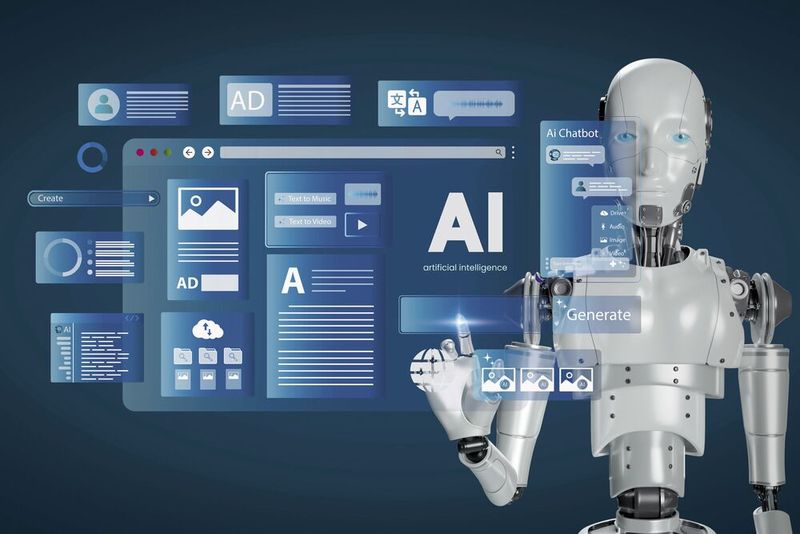
:quality(80)/p7i.vogel.de/wcms/ce/ea/ceea010a5d784648b84e511d5d190fc9/0123829393v1.jpeg "In collaboration, AI agents should be able to take over entire production and maintenance processes for various work steps in the future. (Image:freely licensed)")
:quality(80)/p7i.vogel.de/wcms/9f/59/9f5914e814b92138262a652418a14d7f/0125202214v1.jpeg "Machine learning is a subset of artificial intelligence that enables computer systems to learn from data and experiences and improve independently. (Image: ©WrightStudio - stock.adobe.com)")