With the Pico series, Raspberry Pi launched its microcontroller boards. Raspberry Pi Pico 2 looks similar to its predecessor but offers significantly more thanks to the RP2350 chip, such as alternatively usable RISC-V cores. More details are revealed in this article.
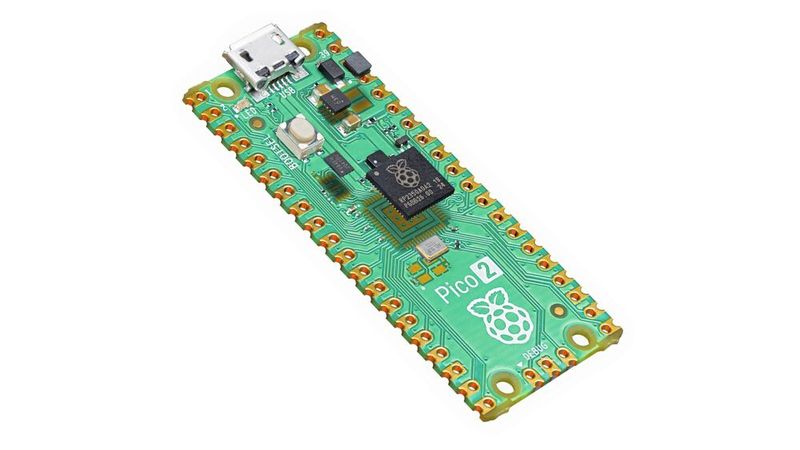
Image 1: The microcontroller board Raspberry Pi Pico 2 is based on the RP2350.
(Image: Raspberry Pi)
The second-generation microcontroller board, Raspberry Pi Pico 2, is based on the RP2350 chip: highlights include two RISC-V cores, two M33 processor cores clocked at 150 megahertz, 4 MB instead of 2 MB of flash memory, new security features, and improved interface capabilities.
For the Pico 2, this means a significant increase in performance and functionality, while maintaining hardware and software compatibility with earlier members of the Pico series. It is mechanically and electrically compatible with the original Pico design. The Pico 2 is available from about 5 euros.
In 2021, the original Raspberry Pi Pico and the RP2040 microcontroller, which is also available solo, were introduced. "In the three and a half years that have passed since then, we have sold nearly four million units of the Pico and its Wireless sibling, the Pico W," said Eben Upton, Chief Executive of Raspberry Pi Trading.
"The RP2040 itself has found a home in countless third-party development boards and in OEM products ranging from pinball tables to synthesizers. However, there were features on our list that didn't make it the first time: on-chip memory, power-saving idle states, packaging options. And there were new features requested by the numerous RP2040 users: faster cores, more RAM, code protection."
RP2350 - More Performance Yet Still Cost-Effective
About two years ago, with the RP1 I/O Controller for the Raspberry Pi 5, the Raspberry Pi chip team began work on the RP2350. This is a much more sophisticated design than the RP2040, featuring:
Two Arm Cortex-M33 cores at 150 MHz, with floating point and DSP support,
520 KB on-chip SRAM in ten simultaneously accessible banks,
a comprehensive security architecture based on Arm TrustZone for Cortex-M, which includes: support for signed booting, 8 KB on-chip antifuse one-time programmable (OTP) memory, SHA-256 acceleration, a true hardware random number generator (TRNG),
an on-chip switch-mode power supply and a low quiescent current LDO,
twelve upgraded PIO state machines,
a new HSTX peripheral for high-speed data transmission,
Support for external QSPI PSRAM.
While the RP2040 has only one QFN56 package option measuring 7 mm x 7 mm, the RP2350 offers a choice: a QFN60 package (RP2350A) measuring 7 mm x 7 mm with 30 GPIOs or a QFN80 package (RP2350B) measuring 10 mm x 10 mm with 48 GPIOs, along with variants of each featuring 2 MB stacked-in-package QSPI flash (RP2354A and RP2354B).
Raspberry Pi has stayed true to its affordable roots: "Although our silicon die now measures an extravagant 5.3 mm², compared to 2.7 mm² for the RP2040, the RP2350A is only intended to be ten cents more expensive, costing about $0.80 in reels of 3,400 units or about $1.10 in single quantities. RP2350B is expected to cost ten cents more than RP2350A, while the RP2354 variants will be just twenty cents more. The RP2350 should be available in large quantities before the end of 2024," said Eben Upton.
Alternatively, RISC-V usable
"Although we have been a member of RISC-V International for many years, we have never had the opportunity to deliver a RISC-V Raspberry Pi product," said Eben Upton. "But now, the RP2350 chip in the Pico 2 can alternatively run RISC-V, thanks to a bonus feature": Luke Wren, Principal Engineer in the Raspberry Pi Chip Team, developed the Hazard3. This consists of two open-hardware Hazard3 RISC-V cores that can be used at boot instead of the Cortex-M33 cores.
"Our boot ROM can even automatically detect the architecture for which a second-stage binary has been created and reboot the chip into the corresponding mode. All functions of the chip, apart from a handful of security features and the double-precision floating-point accelerator, are available in RISC-V mode," says Eben Upton.
Hazard3, published on Github, is a highly optimized three-stage pipeline processor that implements the RV32I instruction set and a large collection of standard extensions to enhance performance and code density. By adding Hazard3 to the RP2350, Raspberry Pi aims to give software developers the opportunity to experiment with the RISC-V architecture in a stable, well-supported environment. Eben Upton recommends that those interested should "look at Luke's historical contributions on Twitter/X, which detail the development process."
Signed boot process in the RP2350
The cornerstone of the RP2350 security model is the signed boot process. When security is enabled, a binary can only be booted if it is signed with a private key, with a hash of the corresponding public key stored in the OTP (One-Time Programmable memory). This prevents an attacker from running arbitrary code, significantly complicating any attempt to extract the contents of the OTP, including the cryptographic keys used to protect the code.
Date: 08.12.2025
Naturally, we always handle your personal data responsibly. Any personal data we receive from you is processed in accordance with applicable data protection legislation. For detailed information please see our privacy policy.
Consent to the use of data for promotional purposes
I hereby consent to Vogel Communications Group GmbH & Co. KG, Max-Planck-Str. 7-9, 97082 Würzburg including any affiliated companies according to §§ 15 et seq. AktG (hereafter: Vogel Communications Group) using my e-mail address to send editorial newsletters. A list of all affiliated companies can be found here
Newsletter content may include all products and services of any companies mentioned above, including for example specialist journals and books, events and fairs as well as event-related products and services, print and digital media offers and services such as additional (editorial) newsletters, raffles, lead campaigns, market research both online and offline, specialist webportals and e-learning offers. In case my personal telephone number has also been collected, it may be used for offers of aforementioned products, for services of the companies mentioned above, and market research purposes.
Additionally, my consent also includes the processing of my email address and telephone number for data matching for marketing purposes with select advertising partners such as LinkedIn, Google, and Meta. For this, Vogel Communications Group may transmit said data in hashed form to the advertising partners who then use said data to determine whether I am also a member of the mentioned advertising partner portals. Vogel Communications Group uses this feature for the purposes of re-targeting (up-selling, cross-selling, and customer loyalty), generating so-called look-alike audiences for acquisition of new customers, and as basis for exclusion for on-going advertising campaigns. Further information can be found in section “data matching for marketing purposes”.
In case I access protected data on Internet portals of Vogel Communications Group including any affiliated companies according to §§ 15 et seq. AktG, I need to provide further data in order to register for the access to such content. In return for this free access to editorial content, my data may be used in accordance with this consent for the purposes stated here. This does not apply to data matching for marketing purposes.
Right of revocation
I understand that I can revoke my consent at will. My revocation does not change the lawfulness of data processing that was conducted based on my consent leading up to my revocation. One option to declare my revocation is to use the contact form found at https://contact.vogel.de. In case I no longer wish to receive certain newsletters, I have subscribed to, I can also click on the unsubscribe link included at the end of a newsletter. Further information regarding my right of revocation and the implementation of it as well as the consequences of my revocation can be found in the data protection declaration, section editorial newsletter.
Collaboration with the Trusted Firmware project and Google
Raspberry Pi has collaborated with the Trusted Firmware project to establish the RP2350 microcontroller as the reference hardware platform for the Trusted Firmware M 2.1.0 Long Term Support Release. TF-M provides a reference implementation for PSA Certified on Arm-v8-M chips, enabling developers to protect devices against common attacks. Additionally, the RP2350 is being tested by a certified, independent laboratory with the goal of achieving PSA Certified Level 2.
There is also a collaboration with Google to bring to market the Pigweed SDK with native support for the Pico 2. Pigweed's middleware libraries have already been shipped in millions of devices, including Google's own Pixel devices and Nest thermostats. The Pigweed SDK simplifies the use of these components in developing projects for the Pico 2.
Additional technical details of the Pico 2
The RP2040 in the Pico 1 has a built-in linear regulator that steps down 3.3 V to 1.1 V for the processor core. The RP2350 features an onboard switching power supply that performs the same task but more efficiently. Nick Francis, ASIC Technical Director at Raspberry Pi, comments: "Raspberry Pi has moved from a regulator to a switcher in the Pico 2 because regulators are inherently less efficient under load."
"We have therefore changed our core power regulator—it is actually a combination unit that includes a small regulator for power-saving modes up to 1 mA, when most of the chip is off and we are waiting for the wake-up. And when we power up the core, we switch to a switching power supply that can deliver up to 200 mA—more than the RP2040, as the chip is larger and therefore has a higher peak current. The switching power supply is more efficient than the regulator used in the RP2040."
Raspberry Pi has added a third PIO (Programmable Input Output) block to the Pico 2, thus including four more state machines, and continues to use the 40-nm process from TSMC. "Maintaining the same process means that we can reuse some of the IP and knowledge that we gathered with the RP2040, as well as with the RP1 (the first in-house chip from Raspberry Pi, used in the Raspberry Pi 5. Therefore, we reused cell libraries, memory, ADC, PLL, and USB PHY from the RP2040."
Wireless Pico 2 expected to be available later in 2024
Raspberry Pi plans to launch a wireless variant, the Pico 2 W, featuring the same 43439 modem from Infineon as in the Pico W, as well as versions of the Pico 2 and Pico 2 W with pre-installed 0.1-inch connectors, all before the end of the year.
Hardware specification of the Pico 2
Form factor: 21 mm x 51 mm,
CPU: Two Arm Cortex-M33 or two RISC-V Hazard3 processors at 150 MHz,



:quality(80)/p7i.vogel.de/wcms/53/f7/53f7dadbe4d656a3fd4f4077445f29f6/0129828707v1.jpeg "Thanks to its compact design and drilling/unscrewing function, the Fire Birdie is suitable for applications with limited installation space and frequent tool changes. (Image:Marcel Kraibühler)")
:quality(80)/p7i.vogel.de/wcms/da/4d/da4da8d34671dc6bce80e496212de877/0129850788v1.jpeg "Mate-XT Go supports the arms and shoulders during overhead work and repetitive tasks and is designed to significantly reduce muscle strain in everyday working life. (Image:Comau)")
:quality(80)/p7i.vogel.de/wcms/95/97/95976dbaac68b249eb65e74c5aad5300/0129651893v1.jpeg "The C2.0 centric clamps, the S2 fixed jaw clamps and the \"gredoc\" zero-point clamping systems are used for machining the raw parts. Fastening is carried out with width across flats 27. (Image:Gressel)")
:quality(80)/p7i.vogel.de/wcms/57/1b/571b8895efb299d70846bbdbd7af2338/0130043886v1.jpeg "Servo hydraulics independent of the control system: The servo hydraulics software module is integrated directly into the b Maxx 5500 servo drive (pictured: Mehmet Sari, Export Sales Manager at Hürsan Pres (left), Özgür Deniz Demirbaş, Country Manager at Baumüller Turkey) (Image:Baumüller)")
:quality(80)/p7i.vogel.de/wcms/3b/27/3b27f6c5848be73acecb04054bf0a146/0130115209v1.jpeg "Spectroscopic glucose measurement with infrared spectroscopy enables more regular measurements without physical strain. (Image:Endrich)")
:quality(80)/p7i.vogel.de/wcms/3f/cc/3fccb748b0fe16f1f61249d94c72f126/0130149439v1.jpeg "Requirements for integrated power supply systems: Precise AC and DC power supply systems that not only provide energy, but also reliably combine measurement, analysis and system integration. (Image:Schulz Electronic)")
:quality(80)/p7i.vogel.de/wcms/fd/93/fd93e01c16f5a4709278499d981a459c/0130061090v1.jpeg "Revealed: These servo drives are assembled at Aerotech in Fürth. (Image:Aerotech)")
:quality(80)/p7i.vogel.de/wcms/cb/8a/cb8ae7f5205365efce3e7285154fc3cf/0130132198v1.jpeg "Markus Huber (left) and Nicolai Friis from TU Wien know how to make quantum computers multidimensional in order to perform computing operations even better. (Image:TU Vienna / A. Rommel)")
:quality(80)/p7i.vogel.de/wcms/63/21/6321beb732bf7d92640df46d7aa77573/0130125122v1.jpeg "As part of the Carbon Lab Factory Lausitz, a pilot plant for the production of sustainable, cost-effective and competitive carbon fibers will be built at the Guben site. (Image:Fraunhofer IAP / Kristin Stein)")
:quality(80)/p7i.vogel.de/wcms/53/4f/534fe0f168f6ee070ded4a48faca4cef/business-wire-main-image-1103x620v1.jpeg "The new UR AI Trainer, developed by Universal Robots and Scale AI, is the first direct lab-to-factory solution for AI model training.
(Source: Universal Robots)")
:quality(80)/p7i.vogel.de/wcms/08/70/087062e2e1a9b9add5777410dd746ee9/adobestock-1923991605-5607x3156v1v1.jpeg "A new type of tactile sensor, inspired by human skin, even recognizes grains of sand. (Image:Curioso.Photography - stock.adobe.com)")
:quality(80)/p7i.vogel.de/wcms/7f/08/7f087d7013424d123ab7275cd2e3fe55/adobestock-809456218--c2-a9-20degimages-20-e2-80-93-20stock-adobe-com-ki-generiert-4179x2351v1v1.jpeg "The digital upgrading of existing machines conserves resources, saves energy and reduces the need for new production. (Image:Degimages - stock.adobe.com/AI-generated)")
:quality(80)/p7i.vogel.de/wcms/90/db/90db3087d3af0560fcdb4dbc42443ce1/0130157448v1.jpeg "The switch to SDV is the most complex transformation the industry has ever had to master. The end consumer gets a vehicle that gains rather than loses value over its lifetime. (Image:Sonatus)")
:quality(80)/p7i.vogel.de/wcms/73/f0/73f00bb99a23197db05bb584fe78f20f/0130080581v1.jpeg "The \"China Speed\" analysis by Roland Berger shows that the speed of development has only a limited connection with labor costs. (Image:freely licensed at Pexels)")
:quality(80)/p7i.vogel.de/wcms/2f/5b/2f5ba6a150b52c2b8efada560c5cdafe/0130143442v1.jpeg "Automotive suppliers are facing a severe crisis, which is primarily due to a combination of structural change and economic problems. (Image:freely licensed at Pexels)")
:quality(80)/p7i.vogel.de/wcms/22/d0/22d03cd48e992435338b59464c428d41/0129739814v1.jpeg "More electric vehicles on the roads mean a higher demand for electricity - which should ideally be covered by renewable energies. (Image:BMW)")
:quality(80)/p7i.vogel.de/wcms/94/7a/947ac066b98cbcd3470e83ff9da3e25f/0130096114v1.jpeg "The use of amorphous steels in the stator enables a significant reduction in losses and increases the efficiency of modern electric motors in vehicle drives. (Image:Horse Powertrain)")
:quality(80)/p7i.vogel.de/wcms/e5/f1/e5f171d3d7ae021332cc0aeae4d6e299/0130127049v1.jpeg "In collaboration with Shanghai Jiao Tong University, Lenovo has presented a silicon anode battery under the name \"ED1000\" as a proof of concept for mobile workstations. (Image:Lenovo)")
:quality(80)/p7i.vogel.de/wcms/fa/69/fa696e59706b96fff02283dd74cc2398/0130129635v1.jpeg "Samsung Co-CEO Jun Young-hyun wants to respond to the AI-driven boom in demand in the memory market with contracts for up to five years. This should provide more planning security in the traditionally volatile storage business. At the same time, however, this is likely to increase the pressure on customers to secure precise long-term requirements, prices and supply chains. (Image:Samsung)")
:quality(80)/p7i.vogel.de/wcms/31/a8/31a883a47b86634c382923e78fd9a4c9/0130133225v1.jpeg "Figure 1: GMSL-capable point-to-point connection. (Image:ADI)")
:fill(fff,0)/images.vogel.de/vogelonline/companyimg/76800/76895/65.jpg "FAULHABER_120mm.jpg ()")
:quality(80)/p7i.vogel.de/wcms/58/a4/58a48c5dd36efaffc79bfee0aa35bdb1/0120785336v1.jpeg "Image 1: The microcontroller board Raspberry Pi Pico 2 is based on the RP2350.(Image: Raspberry Pi)")
:quality(80)/p7i.vogel.de/wcms/f6/09/f6092ffdc1e418ce639aa1d4eb4c1853/0120783299v1.jpeg "Image 6: Google's demo that utilizes the new Pigweed SDK uses Pimoroni's Enviro+ Pack to showcase the capabilities of Pigweed.(Image: Raspberry Pi)")
:quality(80)/p7i.vogel.de/wcms/63/61/636193baabb626257a2b5e56655f5c1e/0120783298v1.jpeg "(Image: Raspberry Pi)")
:quality(80)/p7i.vogel.de/wcms/57/46/57466ed6b32d51abb9fadcc6c037f351/0120783383v1.jpeg "(Image: Raspberry Pi)")
:quality(80)/p7i.vogel.de/wcms/5a/a6/5aa6eb645a60f2919a28373aa660381d/0123998055v1.jpeg "The second generation of Raspberry Pi microcontrollers, the RP2350. (Image:Raspberry Pi)")
:quality(80)/p7i.vogel.de/wcms/2c/d3/2cd367ae84a9f69c651960b3b4d4287d/0127597143v1.jpeg "Shrike-lite: FPGA and a microcontroller for only four US dollars. (Image:Vicharak)")