Quantum computers are regarded as highly complex all-rounders from which no password is safe and which will make our conventional computers superfluous. But what is really behind the huge hype surrounding the tiny quanta?
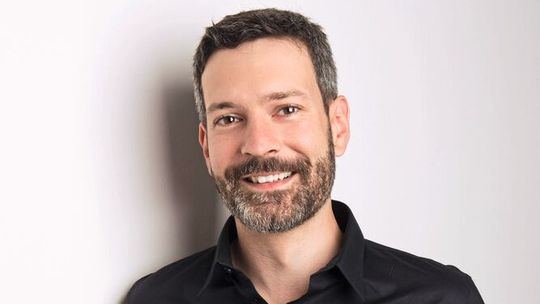
Christian Nietner is Innovation Center Lead for Quantum Computing at NTT Data DACH
(Image: NTT Data)
Quantum computing is a fascinating field. However, because the technology, which is closely interwoven with physics and mathematics, is a closed book for most people, persistent myths, half-truths and false ideas continue to surround the use of the tiny packets of energy on which our universe is built. This means that quanta are no better off than other new technologies before them, with hype ranging from exaggerated expectations to unfounded fears. NTT Data, a provider of AI, digital business and technology services, has fact-checked six of the most common myths:
Myth 1: Quantum Computers Will Completely Replace Conventional Computers
Fact check: No, they complement conventional computers. Quantum computers are specialists for certain mathematical problems, for example in materials research, logistics or financial analysis. For everyday tasks such as word processing or gaming, however, conventional computers remain much more efficient. Similar to graphics cards, quantum computers accelerate special calculations without making the basic computer superfluous. They are therefore not a replacement, but an extension of the digital toolbox. The trick will be to combine quantum computers with conventional data centers in such a way that the strengths of the different systems interact optimally.
Myth 2: Our Passwords Will Soon Be Worthless
Fact check: The problem is not the passwords, but their encryption The fear that quantum computers will soon crack every password is exaggerated. After all, it is not the password itself that is crucial, but the algorithm behind it. Certain encryption methods would indeed be vulnerable if powerful quantum computers were available today. However, a solution already exists in the form of so-called post-quantum cryptography. It also protects data from future quantum attacks and is already being implemented today. Our passwords will therefore remain secure as long as providers modernize their infrastructure in time.
Myth 3: Quantum Computing is Too Complicated to Ever Understand
Fact check: it's complex, but is becoming increasingly accessible Quantum physics in computers sounds futuristic and reminiscent of Star Trek, but follows clear mathematical rules. The difficulty therefore lies less in the understanding itself, but in the technical implementation. Thanks to cloud-based platforms and simplified programming languages, even developers without a physics degree can now experiment with quantum algorithms—from the comfort of their office or even their desk at home, without the need for a laboratory environment. As with traditional computing, layers of abstraction and tools will gradually demystify the technology—until it could one day be as commonplace as artificial intelligence is today.
Myth 4: Quantum Computers Can Calculate Everything at the Same Time
Fact check: Parallelization only works under certain conditions. The quantum physics principle of superposition allows several computing instructions to run simultaneously on a quantum computer. However, this does not mean that they can automatically solve every task in parallel. Only specially designed algorithms make targeted use of this principle.
Randomness plays an aggravating role here: the result of a calculation based on superposition is not always unambiguous, but determined by probabilities. Unlike with classical parallelization, the results cannot therefore be read out directly and reliably, which is an obstacle for some applications. Quantum computers are therefore not faster at everything, but for certain mathematical problems such as risk modeling or cryptography, they exploit the principle of superposition in such a way that they potentially outperform classical computers.
Myth 5: The Costs Are Uneconomically High
Fact check: still yes—but that is changing. Currently, an initial feasibility test alone for planned projects can easily cost five-figure sums, while the practical benefits remain limited. However, this pattern is not new: even classic computers were initially unaffordable, as large as built-in cupboards and inefficient. With growing competition, technical breakthroughs and scaling, costs will fall rapidly. Major players are investing billions in research and progress. The decisive point at which quantum computing becomes economically viable is therefore getting noticeably closer.
Myth 6: Many Use Cases Are Still Unknown
Fact check: not a myth—that's what makes the field so exciting. Quantum computing is still in its infancy and many potential applications are not yet foreseeable. This is due to the immense variety of possible hardware approaches and algorithms. As soon as economically viable, high-performance systems become established, innovation and use cases will also increase—similar to the internet or AI. One of the most exciting truths about quantum computing is therefore that we don't yet know what will be possible.
Date: 08.12.2025
Naturally, we always handle your personal data responsibly. Any personal data we receive from you is processed in accordance with applicable data protection legislation. For detailed information please see our privacy policy.
Consent to the use of data for promotional purposes
I hereby consent to Vogel Communications Group GmbH & Co. KG, Max-Planck-Str. 7-9, 97082 Würzburg including any affiliated companies according to §§ 15 et seq. AktG (hereafter: Vogel Communications Group) using my e-mail address to send editorial newsletters. A list of all affiliated companies can be found here
Newsletter content may include all products and services of any companies mentioned above, including for example specialist journals and books, events and fairs as well as event-related products and services, print and digital media offers and services such as additional (editorial) newsletters, raffles, lead campaigns, market research both online and offline, specialist webportals and e-learning offers. In case my personal telephone number has also been collected, it may be used for offers of aforementioned products, for services of the companies mentioned above, and market research purposes.
Additionally, my consent also includes the processing of my email address and telephone number for data matching for marketing purposes with select advertising partners such as LinkedIn, Google, and Meta. For this, Vogel Communications Group may transmit said data in hashed form to the advertising partners who then use said data to determine whether I am also a member of the mentioned advertising partner portals. Vogel Communications Group uses this feature for the purposes of re-targeting (up-selling, cross-selling, and customer loyalty), generating so-called look-alike audiences for acquisition of new customers, and as basis for exclusion for on-going advertising campaigns. Further information can be found in section “data matching for marketing purposes”.
In case I access protected data on Internet portals of Vogel Communications Group including any affiliated companies according to §§ 15 et seq. AktG, I need to provide further data in order to register for the access to such content. In return for this free access to editorial content, my data may be used in accordance with this consent for the purposes stated here. This does not apply to data matching for marketing purposes.
Right of revocation
I understand that I can revoke my consent at will. My revocation does not change the lawfulness of data processing that was conducted based on my consent leading up to my revocation. One option to declare my revocation is to use the contact form found at https://contact.vogel.de. In case I no longer wish to receive certain newsletters, I have subscribed to, I can also click on the unsubscribe link included at the end of a newsletter. Further information regarding my right of revocation and the implementation of it as well as the consequences of my revocation can be found in the data protection declaration, section editorial newsletter.
"Quantum computing has enormous potential, but not yet a good marketing department," says Christian Nietner, Innovation Center Lead for Quantum Computing at NTT Data DACH. "While AI is currently being demystified by its everyday applications, quantum computing is still an abstract concept for many. This will change—perhaps even faster than we think."



:quality(80)/p7i.vogel.de/wcms/a0/47/a04725ef9bd09fb6c9341a1bea1b5d93/0130443083v1.jpeg "Here, a type of plastic pallet is produced by thermoforming (vacuum forming or deep drawing) at the corresponding division of New England Plastics in the USA. This division, which specializes in so-called liners, is now part of Ringmetall ... (Image:New England Plastics)")
:quality(80)/p7i.vogel.de/wcms/23/99/23992bf2dcdc432c9b7209c34a4a7c48/0129733089v1.jpeg "Stork relies on the modular Neoswiss turning system from Iscar to shorten the set-up times for its sliding headstock lathes and work more productively. (Image:Iscar)")
:quality(80)/p7i.vogel.de/wcms/7d/e2/7de2923434b2f1a78ba5482d8d335269/0113143253v1.jpeg "In our China Market Insider we regularly provide you with relevant information directly from China. (Image:© Eisenhans - stock.adobe.com)")
:quality(80)/p7i.vogel.de/wcms/9d/2b/9d2b802f800e5caf17b2831e74228cd3/screenshot-202026-03-03-20103822-609x343v1v1.png "Visual comparison: on the left, a clean, burr-free cut edge; on the right, typical burr formation with oxidation discoloration. This illustrates how strongly parameter control and gas management influence the quality of the result. (CO₂ laser, oxygen cutting gas, sheet thickness approx. 15 mm). (Image:Picture: Rime)")
:quality(80)/p7i.vogel.de/wcms/b7/36/b736dfebc16c42d6901d0d0e1f390493/3d-druck-20factory-20--20ki-20generiert-1920x1079v1.png "(Source: AI-generated)")
:quality(80)/p7i.vogel.de/wcms/79/b2/79b21aad663f4a7bd4472afc1c1afc62/0130433994v1.jpeg "Mission Joyride: The free-flying robot (shown here in the rendering) will relieve the ISS crew of logistics tasks from 2027 with its two mechanical arms. (Image:Icarus Robotics)")
:quality(80)/p7i.vogel.de/wcms/6b/45/6b4546fa6ebf305c3660326909363f32/0130437089v1.jpeg "Industrial AI in action: Rockwell Automation presents practical solutions for self-controlling production systems at the Hannover Messe. (Image:Rainer Jensen, Deutsche Messe)")
:quality(80)/p7i.vogel.de/wcms/78/e9/78e9188c25a8a94e67c34c9bf8ffe495/visual-agile-20robots-20and-20google-20deepmind-20partner-20to-20bring-20intelligence-20to-20robotics-2500x1406v1v1.jpeg "Together, the partners are developing adaptable, intelligent robots for a wide range of applications (Image:Agile Robots SE)")
:quality(80)/p7i.vogel.de/wcms/59/a2/59a2b11f0aa1b700eff02addd5de8703/adobestock-1788280853--c2-a9-20satria-20-e2-80-93-20stock-adobe-com-5081x2860v1v1.jpeg "Quantum computers require extreme cooling to temperatures close to absolute zero in order to keep qubits stable. (Image:satria - stock.adobe.com)")
:quality(80)/p7i.vogel.de/wcms/49/38/493876a248943456b7e4a6db6edfc454/0130230765v1.jpeg "Safe and reliable in aircraft construction: light-curing adhesive bond combined with universal fastening elements. (Source: Delo)")
:quality(80)/p7i.vogel.de/wcms/b5/c7/b5c749d16c8a2e789c1469c2c8c1c387/0130452780v1.jpeg "Volvo Trucks completes road tests with its new hydrogen-powered trucks. (Image:Volvo Trucks)")
:quality(80)/p7i.vogel.de/wcms/ba/69/ba6975f417a85147084f38dc2cd209e2/0130451386v1.jpeg "Together with Nvidia, Hyundai wants to develop an architecture that will be used for level 4 robotaxis (image) as well as for level 2 customer vehicles. (Image:Hyundai)")
:quality(80)/p7i.vogel.de/wcms/93/4d/934de334b47abaa526c78cba1417d7af/0130343495v1.jpeg "The new SU7 is available in three price categories, \"Standard\", \"Pro\" and \"Max\" (Image:Xiaomi)")
:quality(80)/p7i.vogel.de/wcms/df/a0/dfa048434bb94f1b7d030e346b25b3ae/0130373541v1.jpeg "From August, BMW will be producing the i3 at its main plant in Munich - which the car manufacturer has extensively rebuilt for this purpose. (Image:Rainer Haeckl)")
:quality(80)/p7i.vogel.de/wcms/ee/09/ee09acbd6dc896df25affaa9e871e6e5/0130440053v1.jpeg "IMS chip module for simple system integration into an ion mobility spectrometer. (Image:Fraunhofer IPMS)")
:quality(80)/p7i.vogel.de/wcms/10/6c/106cd22de5f68a0f74639d654827228c/0130345302v1.jpeg "Made in India: According to the India Electronics and Semiconductor Association (IESA), the country should be able to produce between 75 and 80 million chips by the beginning of 2027, once the plants currently under construction become operational. (Image:Pixabay (Montage: Sebastian Gerstl))")
:quality(80)/p7i.vogel.de/wcms/a5/ed/a5ed6fda029d362732a293d6b19d74c4/0130444216v1.jpeg "Thirteen executives from the Chinese chip industry have drawn up a plan to achieve an 80% self-sufficiency rate for semiconductors by 2030. (Image:Maxim_Kazmin - stock.adobe.com)")
:quality(80)/p7i.vogel.de/wcms/31/a6/31a646018b34d8e0a44bfc8bf17837f6/0130361632v1.jpeg "For many companies, PFAS are considered indispensable in electronics production. (Image:freely licensed)")
:quality(80):fill(efefef,0)/p7i.vogel.de/wcms/67/09/67094781dd403/dossier-additive-manufacturing.png "Dossier Additive Manufacturing")
:quality(80)/p7i.vogel.de/wcms/23/88/238864666e0fc3ff55e237813f6ea3c3/0127913204v1.jpeg "Quantum computers are as mysterious as systems from old science fiction films or ideas from Jules Verne. They are widely rumored to be changing the future of computer technology. Here, however, an expert wants to clarify what is really going on ... (Image:IBM)")
:quality(80)/p7i.vogel.de/wcms/2e/be/2ebe7a3fd5bc91773110a9b66e3e95cf/86592347v1.jpeg "Quantum computers exploit quantum mechanical effects such as superposition and entanglement to deliver enormous computing power. (Image:public domain)")