Despite being a long-standing technology, TFT-LC displays still offer room for improvement. Codico provides insights on enhancing image quality and increasing display efficiency. These optimizations include adjustments to improve energy consumption while delivering sharper and more vibrant visuals, making the display more sustainable and user-friendly.
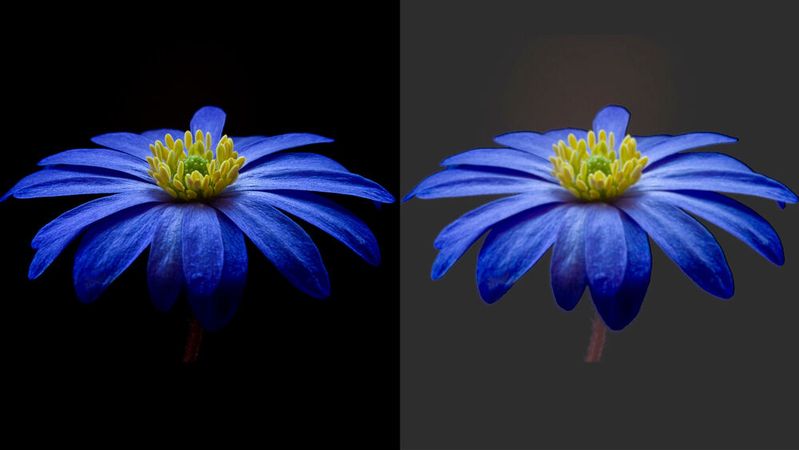
LCD with mini-LED (left) vs. LCD with edge backlight: In the left image, the background is deep black and the colors are displayed without distortion.
Liquid crystal displays were first used in a pocket calculator back in 1970. The technology has been continuously developed and is still indispensable today.
LCDs (Liquid Crystal Displays) are still used in countless applications and Codico is working intensively on current developments. In this article, we would like to pick out two of these and explain them in more detail. The direction of the optimizations can essentially be reduced to two points: Image optimization and an efficient display with the lowest possible energy consumption.
Gallery
Optimized liquid crystals improve picture quality
If you want to achieve improvements in TFT (Thin Film Transistor) LCDs, the first thing you think about is the liquid crystal itself, the basic material for producing an LCD in the first place. Intensive research is still being carried out in this area. Merck, one of the largest and best-known companies in the field of liquid crystal research and production, has been working for some time on a new type of LC technology, the Blue Phase (BP).
Blue Phase enables switching times of less than one millisecond
Current technologies such as TN (Twisted Nematic), IPS (In-Plane Switching), VA (Vertical Alignment) or FFS (Fringe Field Switching) are based on the nemantic phase of the crystal. The "blue phase", on the other hand, can occur between the cholesteric and the isotropic phase of a liquid crystal.
During production, the liquid crystal is introduced into the display in an isotropic state. The blue phase then forms and is subsequently polymer-stabilized. Stabilization extends the narrow temperature range in which the blue phase occurs from around 3 Kelvin to up to 100 Kelvin.
As with conventional displays, blue-phase displays (BPD) or blue-mode displays (BMD) use electric fields to change the light transmission. Usually, elements such as those used in IPS or MVA technology are used, in which both electrodes are located on one side.
A decisive advantage of Blue Phase is that extremely fast switching times of less than one millisecond are achieved. This is significantly faster than current LCDs, which have switching times of several 10 ms, and is therefore almost in the range of OLED displays.
An additional advantage is that no orientation layers are required for the liquid crystals, as is the case with IPS or MVA displays. The blue phase already appears optically isotropic and the liquid crystals only need to be aligned by the electric field. The orientation layers and the production processes required for this can be dispensed with in BPDs, which nevertheless achieves a wide viewing angle.
The advantages of blue mode displays at a glance
The displayed image is improved by faster frame rates due to faster switching times. The cost structure is better than with comparable technologies. Power consumption is presumably lower as less effort is required for the electrical field. The backlight probably also requires less power as the orientation layer is missing.
However, it does not currently appear that BP displays will be available in the near future. It will probably be some time before manufacturers bring a display ready for series production onto the market.
Backlight: ways to improve the energy balance
It is undisputed that the backlight is the biggest energy consumer in LCDs. Therefore, when it comes to improving energy efficiency, this is where we need to start. The current common practice for backlighting in industrial LCDs is edge backlighting. Light-emitting diodes (LEDs) are placed on one side of the display and their light is distributed evenly over the entire display surface using a reflector and a light guide. LEDs are easy to integrate, but the design of the light guide requires some specialist knowledge.
More efficient light-emitting diodes reduce energy consumption
The first approach to improving the energy balance is to use more efficient light-emitting diodes. This is a quick way to increase the brightness and/or reduce the power consumption of the panel.
Mini LEDs instead of chip LEDs open up new design possibilities
However, the use of mini LEDs is truly groundbreaking. These are significantly smaller than the chip LEDs used in edge backlights (Fig. 1). Miniaturization opens up new possibilities: Due to their reduced size, the diodes can be placed directly behind the display without making the panel thicker.
Date: 08.12.2025
Naturally, we always handle your personal data responsibly. Any personal data we receive from you is processed in accordance with applicable data protection legislation. For detailed information please see our privacy policy.
Consent to the use of data for promotional purposes
I hereby consent to Vogel Communications Group GmbH & Co. KG, Max-Planck-Str. 7-9, 97082 Würzburg including any affiliated companies according to §§ 15 et seq. AktG (hereafter: Vogel Communications Group) using my e-mail address to send editorial newsletters. A list of all affiliated companies can be found here
Newsletter content may include all products and services of any companies mentioned above, including for example specialist journals and books, events and fairs as well as event-related products and services, print and digital media offers and services such as additional (editorial) newsletters, raffles, lead campaigns, market research both online and offline, specialist webportals and e-learning offers. In case my personal telephone number has also been collected, it may be used for offers of aforementioned products, for services of the companies mentioned above, and market research purposes.
Additionally, my consent also includes the processing of my email address and telephone number for data matching for marketing purposes with select advertising partners such as LinkedIn, Google, and Meta. For this, Vogel Communications Group may transmit said data in hashed form to the advertising partners who then use said data to determine whether I am also a member of the mentioned advertising partner portals. Vogel Communications Group uses this feature for the purposes of re-targeting (up-selling, cross-selling, and customer loyalty), generating so-called look-alike audiences for acquisition of new customers, and as basis for exclusion for on-going advertising campaigns. Further information can be found in section “data matching for marketing purposes”.
In case I access protected data on Internet portals of Vogel Communications Group including any affiliated companies according to §§ 15 et seq. AktG, I need to provide further data in order to register for the access to such content. In return for this free access to editorial content, my data may be used in accordance with this consent for the purposes stated here. This does not apply to data matching for marketing purposes.
Right of revocation
I understand that I can revoke my consent at will. My revocation does not change the lawfulness of data processing that was conducted based on my consent leading up to my revocation. One option to declare my revocation is to use the contact form found at https://contact.vogel.de. In case I no longer wish to receive certain newsletters, I have subscribed to, I can also click on the unsubscribe link included at the end of a newsletter. Further information regarding my right of revocation and the implementation of it as well as the consequences of my revocation can be found in the data protection declaration, section editorial newsletter.
Apple has been using this technology with mini LEDs since 2021 in the iPad Pro series and now also in the MacBook Pro. The technology is now slowly finding its way into industrially used displays. However, the basic idea of this LED arrangement was developed much earlier, in particular by Samsung and LG. It was and still is used for large LCDs or TV panels. Larger chip LEDs are used, as the thickness of the display does not play a significant role here.
Higher contrast, brightness and color space thanks to full-array backlight
With a full-array backlight, the LEDs are arranged on an LED board in a very dense matrix. For example, a 14.2" MacBook Pro is equipped with more than 10,000 LEDs. COB (chip-on-board) technology is used for this arrangement, as the required density cannot be achieved with SMD production.
Each diode can be controlled individually, ideally depending on the image content displayed. In practice, this means that the LEDs are dimmed or switched off completely in dark to black image areas. The result is significantly improved contrast, high peak brightness and an extended color space. In short: the blacks become richer and the colors more contrasty (picture p. 36). Not to forget, the content-dependent control of the LEDs also results in lower power consumption.
How the control of the mini-LEDs is implemented
Since the diodes have to be controlled according to the screen content, an additional circuit section is required. This extracts and processes the information required to control the LEDs from the image data. There are generally two approaches. Either a separate chip is used to control the LED drivers, or the control is carried out via FPGA. Both approaches have their advantages and disadvantages.
The use of a dedicated IC has the advantage of lower costs. On the other hand, the solution is inflexible, as adjustments to the parameters, if possible at all, can only be made on the software side. This requires additional programming effort and a more powerful computer. In addition, the choice of LED driver is limited, as the combination of LCD driver, LED driver and local dimming controller is usually predefined. This solution is particularly useful for large quantities.
FPGAs offer flexible, customizable solutions
If, on the other hand, an FPGA is used, the solution is extremely flexible and can be individually adapted to the respective requirements. It is also fast, as the data processing takes place in the hardware. This also provides unlimited flexibility in the selection of LED drivers. In addition, the NRE costs are lower, but you have to reckon with slightly higher unit costs. This variant is more suitable for industrial applications (Fig. 2).
In terms of picture quality, a TFT-LC display with full-array backlight is in no way inferior to an OLED display. This is particularly important for the industry, which previously had to do without image quality similar to that of OLED displays. There are many reasons for this. Two of the most important points are, firstly, the longer service life of TFT-LCDs compared to OLEDs and, secondly, the long-term availability of OLEDs, which essentially depends on consumer applications (mainly cell phones and televisions), where much shorter product cycles are common compared to industry.
Rich blacks, high-contrast colors and lower power consumption
One advantage is the significantly improved picture quality, which impresses with rich blacks and high-contrast colors. Furthermore, power consumption is significantly lower compared to conventional LCDs.
In order to achieve these improvements, additional measures are required for the display, which is reflected in a higher price. As these displays have yet to establish themselves on the market, prices may well approach the level of current displays in the near future due to increasing production volumes. A good overview of the strengths and weaknesses can be seen in a network diagram (Fig. 3).
Detailed presentation, for example in medical technology
The first applications for this technology can be found primarily in medical devices. The focus here is on the most perfect display possible in order to be able to recognize the finest differences, such as in eye diagnostic devices or monitors to support operations.
Sunlight suitability and wide temperature range for outdoor use
The second large group includes special outdoor applications. Wherever sunlight or reflections can have an adverse effect, such displays offer a very good alternative, such as for agricultural equipment (monitors in tractor cabins) or on ships. In combination with the usual measures to improve sunlight suitability, this creates an almost perfect solution. The temperature range, which we have not looked at in detail so far, is also suitable for outdoor use at -30°C to 80°C.
True-to-life display for professional videos and images
Another group comprises the video sector. For professional equipment, too, value is placed on a display that is as true to life as possible. Whether for high-end cameras or monitors—a perfect picture is desired and expected everywhere. Excellent picture quality is also a must in many other areas.
Conclusion: Even with technologies that have been available for a long time, research is still being carried out to improve quality and—all the more important nowadays—energy efficiency. Even liquid crystal display technology, which has been established for decades, is still undergoing significant improvements and can hold its own against "new" technologies such as OLED. (mk)
*Christian Forthuber is Product Manager at Codico.
This article was first published on our sister brand www.ELEKTRONIKPRAXIS.de (German language)



:quality(80)/p7i.vogel.de/wcms/53/f7/53f7dadbe4d656a3fd4f4077445f29f6/0129828707v1.jpeg "Thanks to its compact design and drilling/unscrewing function, the Fire Birdie is suitable for applications with limited installation space and frequent tool changes. (Image:Marcel Kraibühler)")
:quality(80)/p7i.vogel.de/wcms/da/4d/da4da8d34671dc6bce80e496212de877/0129850788v1.jpeg "Mate-XT Go supports the arms and shoulders during overhead work and repetitive tasks and is designed to significantly reduce muscle strain in everyday working life. (Image:Comau)")
:quality(80)/p7i.vogel.de/wcms/95/97/95976dbaac68b249eb65e74c5aad5300/0129651893v1.jpeg "The C2.0 centric clamps, the S2 fixed jaw clamps and the \"gredoc\" zero-point clamping systems are used for machining the raw parts. Fastening is carried out with width across flats 27. (Image:Gressel)")
:quality(80)/p7i.vogel.de/wcms/57/1b/571b8895efb299d70846bbdbd7af2338/0130043886v1.jpeg "Servo hydraulics independent of the control system: The servo hydraulics software module is integrated directly into the b Maxx 5500 servo drive (pictured: Mehmet Sari, Export Sales Manager at Hürsan Pres (left), Özgür Deniz Demirbaş, Country Manager at Baumüller Turkey) (Image:Baumüller)")
:quality(80)/p7i.vogel.de/wcms/3b/27/3b27f6c5848be73acecb04054bf0a146/0130115209v1.jpeg "Spectroscopic glucose measurement with infrared spectroscopy enables more regular measurements without physical strain. (Image:Endrich)")
:quality(80)/p7i.vogel.de/wcms/3f/cc/3fccb748b0fe16f1f61249d94c72f126/0130149439v1.jpeg "Requirements for integrated power supply systems: Precise AC and DC power supply systems that not only provide energy, but also reliably combine measurement, analysis and system integration. (Image:Schulz Electronic)")
:quality(80)/p7i.vogel.de/wcms/fd/93/fd93e01c16f5a4709278499d981a459c/0130061090v1.jpeg "Revealed: These servo drives are assembled at Aerotech in Fürth. (Image:Aerotech)")
:quality(80)/p7i.vogel.de/wcms/cb/8a/cb8ae7f5205365efce3e7285154fc3cf/0130132198v1.jpeg "Markus Huber (left) and Nicolai Friis from TU Wien know how to make quantum computers multidimensional in order to perform computing operations even better. (Image:TU Vienna / A. Rommel)")
:quality(80)/p7i.vogel.de/wcms/63/21/6321beb732bf7d92640df46d7aa77573/0130125122v1.jpeg "As part of the Carbon Lab Factory Lausitz, a pilot plant for the production of sustainable, cost-effective and competitive carbon fibers will be built at the Guben site. (Image:Fraunhofer IAP / Kristin Stein)")
:quality(80)/p7i.vogel.de/wcms/53/4f/534fe0f168f6ee070ded4a48faca4cef/business-wire-main-image-1103x620v1.jpeg "The new UR AI Trainer, developed by Universal Robots and Scale AI, is the first direct lab-to-factory solution for AI model training.
(Source: Universal Robots)")
:quality(80)/p7i.vogel.de/wcms/08/70/087062e2e1a9b9add5777410dd746ee9/adobestock-1923991605-5607x3156v1v1.jpeg "A new type of tactile sensor, inspired by human skin, even recognizes grains of sand. (Image:Curioso.Photography - stock.adobe.com)")
:quality(80)/p7i.vogel.de/wcms/7f/08/7f087d7013424d123ab7275cd2e3fe55/adobestock-809456218--c2-a9-20degimages-20-e2-80-93-20stock-adobe-com-ki-generiert-4179x2351v1v1.jpeg "The digital upgrading of existing machines conserves resources, saves energy and reduces the need for new production. (Image:Degimages - stock.adobe.com/AI-generated)")
:quality(80)/p7i.vogel.de/wcms/90/db/90db3087d3af0560fcdb4dbc42443ce1/0130157448v1.jpeg "The switch to SDV is the most complex transformation the industry has ever had to master. The end consumer gets a vehicle that gains rather than loses value over its lifetime. (Image:Sonatus)")
:quality(80)/p7i.vogel.de/wcms/73/f0/73f00bb99a23197db05bb584fe78f20f/0130080581v1.jpeg "The \"China Speed\" analysis by Roland Berger shows that the speed of development has only a limited connection with labor costs. (Image:freely licensed at Pexels)")
:quality(80)/p7i.vogel.de/wcms/2f/5b/2f5ba6a150b52c2b8efada560c5cdafe/0130143442v1.jpeg "Automotive suppliers are facing a severe crisis, which is primarily due to a combination of structural change and economic problems. (Image:freely licensed at Pexels)")
:quality(80)/p7i.vogel.de/wcms/22/d0/22d03cd48e992435338b59464c428d41/0129739814v1.jpeg "More electric vehicles on the roads mean a higher demand for electricity - which should ideally be covered by renewable energies. (Image:BMW)")
:quality(80)/p7i.vogel.de/wcms/94/7a/947ac066b98cbcd3470e83ff9da3e25f/0130096114v1.jpeg "The use of amorphous steels in the stator enables a significant reduction in losses and increases the efficiency of modern electric motors in vehicle drives. (Image:Horse Powertrain)")
:quality(80)/p7i.vogel.de/wcms/e5/f1/e5f171d3d7ae021332cc0aeae4d6e299/0130127049v1.jpeg "In collaboration with Shanghai Jiao Tong University, Lenovo has presented a silicon anode battery under the name \"ED1000\" as a proof of concept for mobile workstations. (Image:Lenovo)")
:quality(80)/p7i.vogel.de/wcms/fa/69/fa696e59706b96fff02283dd74cc2398/0130129635v1.jpeg "Samsung Co-CEO Jun Young-hyun wants to respond to the AI-driven boom in demand in the memory market with contracts for up to five years. This should provide more planning security in the traditionally volatile storage business. At the same time, however, this is likely to increase the pressure on customers to secure precise long-term requirements, prices and supply chains. (Image:Samsung)")
:quality(80)/p7i.vogel.de/wcms/31/a8/31a883a47b86634c382923e78fd9a4c9/0130133225v1.jpeg "Figure 1: GMSL-capable point-to-point connection. (Image:ADI)")
:fill(fff,0)/p7i.vogel.de/companies/67/eb/67eba621ef6ea/logo2.png "logo2 (Wuxi InfiMotion)")
:quality(80)/p7i.vogel.de/wcms/07/aa/07aa1e1a9287414ba7a47bebb1f4435e/0120992527v1.jpeg "LCD with mini-LED (left) vs. LCD with edge backlight: In the left image, the background is deep black and the colors are displayed without distortion.(Image: Andreas Hensel / Pixabay)")
:quality(80)/p7i.vogel.de/wcms/8e/90/8e90244f490d2a0a81d96d77b2dfa09e/0120990070v1.jpeg "Figure 3: Overview of the strengths and weaknesses of display technologies.(Image: Codico)")
:quality(80)/p7i.vogel.de/wcms/bf/f2/bff22df1f0f53a321b814da73a5a363e/0120599148v1.jpeg "Figure 2: Control of the LED drivers via FPGA enables individual, fast solutions, as the data processing takes place in the hardware.(Image: Codico)")
:quality(80)/p7i.vogel.de/wcms/8c/cb/8ccb0a5d22d58e684a61980a563fd599/0120705603v1.jpeg "Figure 1: In a full-array backlight, the LEDs are arranged on an LED board in a very dense matrix. Each diode can be controlled individually so that the LEDs can be dimmed or switched off completely in dark to black image areas. This improves contrast, peak brightness and expands the color space.(Image: Codico)")
:quality(80)/p7i.vogel.de/wcms/b4/81/b481676a2e67f89ddde4853ac1ceab2d/0126766600v1.jpeg "The Neo:LED display technology maximizes TFT-IPS technology and delivers OLED quality. (Image:LG Display)")
:quality(80)/p7i.vogel.de/wcms/91/fd/91fd55d7dc44ce321bd7587272059d08/0128103878v1.jpeg "This ETH Zurich logo consists of 2,800 nano light-emitting diodes and, with a height of 20 micrometers, is approximately the size of a human cell. A single pixel measures around 0.2 micrometers. At this resolution, the following article could be printed about 2,000 times on the area of a period. (Image:Amanda Paganini / ETH Zurich)")