Motors consume a lot of energy worldwide. Efficient control is therefore crucial. The article highlights motor design, frequency converters and solutions for motor control applications.
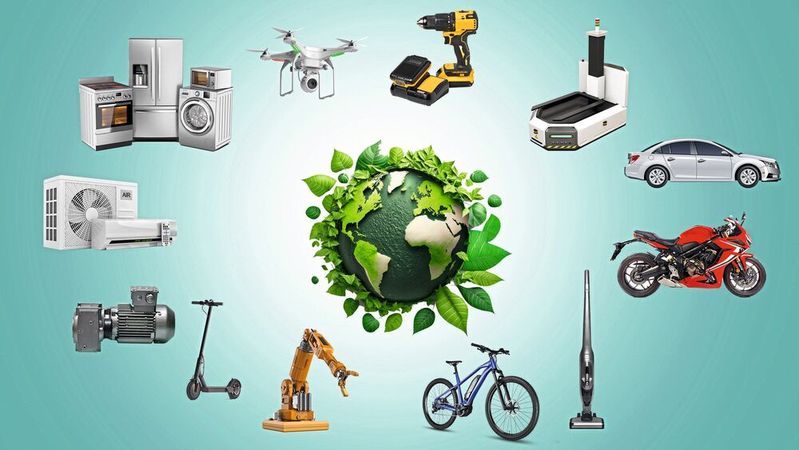
Universal: Motors are used everywhere.
(Image: Microchip Technology)
Motors have become an integral part of our everyday lives and can be found in household appliances such as washing machines, dryers, dishwashers and garden pumps. They are also indispensable in the automotive sector: modern cars contain between 40 and 100 motors, depending on the model and equipment variant. In industrial applications, motors are particularly needed in robotics and factory automation.
Key Trends in Motor Efficiency
Energy-efficient motors:One of the most important trends in motor efficiency is the transition from conventional motors, such as AC induction motors, to more efficient types such as brushless DC motors (BLDC), permanent magnet synchronous motors (PMSM) and permanent magnet motors with an internal magnet (IPM). These motors offer higher efficiency and improved performance. In addition, advances in materials, such as the use of amorphous metals and rare earth magnets, have further improved motor efficiency.
Gallery
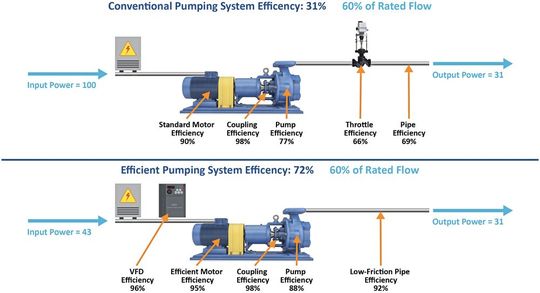
Gallery with 6 images Figure 1: Technical and economic considerations for the use of variable-speed drives in electric motor systems.
(Image: Microchip Technology)
Engine Design And Materials
In the field of engine technology, advances in materials and design have significantly improved the efficiency and performance of engines over the last century. Only by analyzing the components and their further developments is it possible to understand how the increases in efficiency were achieved.
A motor consists of end caps, a rotor, bearings and a stator with windings. Over the years, the materials used in these components have evolved. For example, the transition from aluminum to copper in the rotor and stator windings has improved conductivity and efficiency. In addition, advances in manufacturing tolerances have led to less noise and even greater efficiency.
A notable trend in motor technology is the use of amorphous materials in rotors and stators. Traditionally, silicon steels were used, but these had high eddy current and hysteresis losses. These are now being replaced by amorphous materials such as metallic glasses, which have lower losses and therefore higher efficiency. There have also been significant improvements in the field of permanent magnet motors. Stronger magnets, e.g. made of rare earth metals such as neodymium, iron and boron, offer higher torque and efficiency. However, for reasons of sustainability, alternatives such as magnets based on aluminum, nickel, chromium and ferrite are being researched. They exhibit good properties over a wide temperature range and in strong magnetic fields.
The transition from plain bearings to ball bearings has significantly reduced friction and improved tolerances, thereby increasing the efficiency of motors. Over the last century, motors have become considerably smaller with the same power output. For example, a modern 5 hp three-phase induction motor with a squirrel cage rotor is considerably smaller and weighs only around 20 percent of what a motor with the same rated output weighed in 1910. This reduction in size is due to lighter and more efficient materials as well as more advanced thermal and electrical insulation. Lighter motors are particularly beneficial for automotive applications, where lower weight leads to greater efficiency and the ability to integrate motors into more compact spaces. The impact of these advances is profound, leading to more efficient motor systems.
Continuous improvements in motor materials and designs have led to significant advances in efficiency and performance. From the use of amorphous materials and stronger magnets to the advancement of bearings and miniaturization of motors, these innovations are driving the future of motor technology. As we continue to explore new materials and designs, the potential for even greater efficiency and performance in motor systems remains promising.
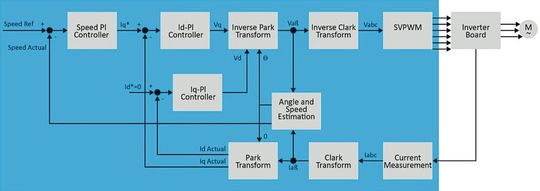
Figure 2: FOC can be implemented with or without sensors, depending on the motor type and application requirements.
(Image: Microchip Technology)
Use of Frequency Inverters (VFD)
Variable frequency drives (VFDs) are increasingly being used for motor speed control and greater efficiency. VFDs adapt the speed of the motor to the load requirements and thus reduce energy consumption. The transition from insulated gate bipolar transistors (IGBTs) to silicon carbide/SiC technology in VFDs has also contributed to higher efficiency and faster switching times.
VFDs have revolutionized engine control by enabling precise control of engine speed and torque. They optimize motor performance and significantly improve system efficiency. A VFD adjusts the frequency and voltage supplied to the motor so that it can operate at maximum efficiency for a given load. Conventional motor systems (e.g. pump motors) often operate at full load, with the flow rate controlled by throttle valves, resulting in significant energy losses. In contrast, VFDs eliminate the need for throttling by matching the motor speed to the required flow rate, reducing energy consumption and increasing the overall efficiency of the system. Studies have shown that switching to a VFD can more than double the efficiency of a motor system from around 31 to 72 percent.
Date: 08.12.2025
Naturally, we always handle your personal data responsibly. Any personal data we receive from you is processed in accordance with applicable data protection legislation. For detailed information please see our privacy policy.
Consent to the use of data for promotional purposes
I hereby consent to Vogel Communications Group GmbH & Co. KG, Max-Planck-Str. 7-9, 97082 Würzburg including any affiliated companies according to §§ 15 et seq. AktG (hereafter: Vogel Communications Group) using my e-mail address to send editorial newsletters. A list of all affiliated companies can be found here
Newsletter content may include all products and services of any companies mentioned above, including for example specialist journals and books, events and fairs as well as event-related products and services, print and digital media offers and services such as additional (editorial) newsletters, raffles, lead campaigns, market research both online and offline, specialist webportals and e-learning offers. In case my personal telephone number has also been collected, it may be used for offers of aforementioned products, for services of the companies mentioned above, and market research purposes.
Additionally, my consent also includes the processing of my email address and telephone number for data matching for marketing purposes with select advertising partners such as LinkedIn, Google, and Meta. For this, Vogel Communications Group may transmit said data in hashed form to the advertising partners who then use said data to determine whether I am also a member of the mentioned advertising partner portals. Vogel Communications Group uses this feature for the purposes of re-targeting (up-selling, cross-selling, and customer loyalty), generating so-called look-alike audiences for acquisition of new customers, and as basis for exclusion for on-going advertising campaigns. Further information can be found in section “data matching for marketing purposes”.
In case I access protected data on Internet portals of Vogel Communications Group including any affiliated companies according to §§ 15 et seq. AktG, I need to provide further data in order to register for the access to such content. In return for this free access to editorial content, my data may be used in accordance with this consent for the purposes stated here. This does not apply to data matching for marketing purposes.
Right of revocation
I understand that I can revoke my consent at will. My revocation does not change the lawfulness of data processing that was conducted based on my consent leading up to my revocation. One option to declare my revocation is to use the contact form found at https://contact.vogel.de. In case I no longer wish to receive certain newsletters, I have subscribed to, I can also click on the unsubscribe link included at the end of a newsletter. Further information regarding my right of revocation and the implementation of it as well as the consequences of my revocation can be found in the data protection declaration, section editorial newsletter.
Solutions And Hardware Support
Microchip provides components for motor control applications. These include microcontrollers, gate drivers, power electronics and sensors. Hardware support and algorithms for motor control are also offered. Microchip's hardware accelerates the development of motor control systems and optimizes performance and efficiency. For VFD, the company offers AC/DC converters and inverters with high-efficiency SiC MOSFETs and advanced gate drivers for precise switching. The inverters, which are controlled by the dsPIC digital signal controller (DSC), convert DC to AC at variable frequency for efficient motor operation. Integrated sensors provide real-time feedback on current, voltage and temperature, increasing system reliability. Microchip also offers evaluation and development boards, reference designs, software libraries and development tools to support development work and incorporate complex motor control algorithms.
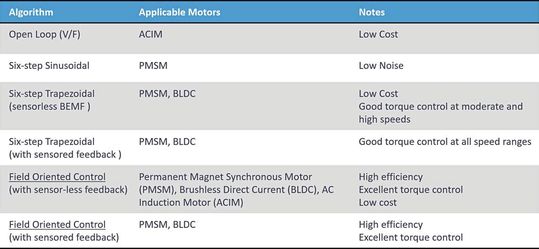
Figure 3: Comparison of the different control algorithms.
(Image: Microchip Technology)
Advanced Control Algorithms
Algorithms are fundamental to the optimization of motor control systems. Conventional methods, such as V/f control for AC induction motors, are inexpensive and straightforward, but do not offer the highest efficiency. More advanced algorithms, such as six-stage commutation for BLDC and PMSM motors, offer better torque control and can be sensor-based or sensorless. The most efficient algorithm is field-oriented control (FOC), which offers high efficiency, low noise and excellent torque and speed performance. FOC can be implemented with or without sensors, depending on the motor type and application requirements. Microchip's motor control solutions incorporate advanced algorithms such as FOC, maximum torque per ampere (MTPA) and field weakening to maximize efficiency and performance. These algorithms are supported by tools such as the MPLAB motorBench Development Suite, which facilitates the implementation and optimization of control algorithms. In addition, Microchip offers machine learning capabilities for predictive maintenance. This ensures optimal motor operation with maximum efficiency and reduces the risk of unexpected failures. The Zero Speed/Maximum Torque (ZS/MT) control algorithm is a new variant of the sensorless FOC algorithm. It enables sensorless control techniques in high torque or low speed applications. ZS/MT eliminates the need for Hall effect sensors by using a reliable Initial Position Detection (IPD) method based on High Frequency Injection (HFI) to determine the exact rotor position at zero and low speeds.
Integration With IoT And AI/ML
IoT and AI technologies have revolutionized engine control. Sensors play a crucial role in this. They are essential for recording current, torque and rotor position. These sensors supply data to microcontrollers that process this information. By integrating machine learning algorithms, these systems can perform predictive maintenance by analyzing sensor data to predict potential motor failures or maintenance needs. This capability is particularly beneficial in industrial environments where unexpected motor failures can lead to significant downtime and financial loss. Predictive maintenance ensures that motors operate at maximum efficiency and performance, reducing the likelihood of unexpected failures.
Predictive maintenance uses sensors and machine learning algorithms to monitor the condition of the motor and detect potential problems before they lead to failure. By continuously analyzing parameters such as current, torque and vibration, it ensures efficient motor operation and minimizes downtime. This approach is particularly beneficial in industrial environments where unexpected motor failures can lead to significant production downtime. Microchip's demo application illustrates predictive maintenance for motors using the MPLAB Machine Learning Development Suite in conjunction with the dsPIC LVMC Motor Control Board. The system uses a classification model to determine the operating condition of a motor and, by monitoring the Iq current, determine whether the motor is operating normally or has anomalies such as an unbalanced load or a faulty bearing.
Conclusion
Optimized motor control in terms of energy efficiency is crucial to reduce global energy consumption and improve the performance of various applications. Efficient motors, frequency converters, advanced control algorithms as well as IoT and AI technologies provide significant energy savings. Development kits offer a range of solutions to support these efforts. Hardware, software and know-how are available to ensure the development of efficient motor controls. As the demand for energy-efficient solutions continues to grow, advances in motor control will play a crucial role. (mr)
Pramit Nandy is Product Marketing Manager at Microchip Technology.



:quality(80)/p7i.vogel.de/wcms/72/a0/72a0ffc94f0929c8b193b4bc40638d72/0129755066v1.jpeg "Tens of billions less! After Ford and General Motors, Stellantis is now also feeling the painful consequences of Donald Trump's decision to change its electric car strategy ... (Image:Stellantis)")
:quality(80)/p7i.vogel.de/wcms/7f/fd/7ffd32863352c40f562f4245e4766e61/0129745849v1.jpeg "After US President Donald Trump once again resorted to his favorite weapon, tariffs, concerns rose in the EU that the so-called tariff deal could become invalid. But it looks as if the sea remains relatively calm ... (Image:F. Schneidler)")
:quality(80)/p7i.vogel.de/wcms/53/69/5369bed136061188d873441dfefd6d6e/0129245111v1.jpeg "The company revised the factory layout even though construction work had already begun. (Image:Efeso Management Consultants)")
:quality(80)/p7i.vogel.de/wcms/d2/d7/d2d79e3fb84663cb7e918c88f123989b/0129733908v1.jpeg "Mineral decision! This is how lithium is mined. There is a lot of it in Chile, Australia, Bolivia and also in Zimbabwe. However, the latter country has now announced that the export of all minerals, including lithium concentrate, will be stopped. Read more about the reasons here ... (Image:Largbatt)")
:quality(80)/p7i.vogel.de/wcms/d9/bd/d9bd1bfa7d02f586e092f06c61ee3d9a/0129464423v1.jpeg "This is what the Black Soldier Fly (BSF) looks like. The first impression is of a common two-winged insect. But appearances are deceptive, because its larvae are true protein reactors, whose industriousness is now to be exploited for food ... (Image:Fly Friends)")
:quality(80)/p7i.vogel.de/wcms/13/4d/134dee0c2b8af6b4f28937ca5b586e0d/0129499541v1.jpeg "The industry now needs to build a flexible, powerful and sovereign infrastructure that can exploit the full potential of artificial intelligence while guaranteeing control over data and processes. (Picture: ©Gorodenkoff - stock.adobe.com)")
:quality(80)/p7i.vogel.de/wcms/c6/71/c671ce338f12be49d39d1b04b40a54f7/0129697443v1.jpeg "Claas is working on making its combine harvesters fit for refurbishment. (Image:Claas)")
:quality(80)/p7i.vogel.de/wcms/f2/4b/f24b8f1c3070e7f13e4f0ffd7854e75a/0129653538v1.jpeg "The production of the BMW iX3 is to be taken as far as possible in terms of sustainability. This is also ensured by the climate-friendly Blueprint recycled steel from Thyssenkrupp Steel ... (Image:BMW)")
:quality(80)/p7i.vogel.de/wcms/f5/7e/f57ef535ee35e7b3b7ff15a8a63cef10/eds-keyvisual-8000x4496v1.jpeg "(Source: European Defence Supply)")
:quality(80)/p7i.vogel.de/wcms/af/a3/afa312176d956068af20491957eef642/newsimage418262-3100x1745v1v1.jpeg "The autonomous shuttle of the Aula AI project during a demonstration of sensor data with artificial fog. (Image:University of Magdeburg)")
:quality(80)/p7i.vogel.de/wcms/84/2d/842d51915fa4fe69c72da5cc4ba52ed1/newsimage418103-3408x1917v1v1.jpeg "3 Printing can also be sustainable—if recyclable ink is used. (Image:Hereon/Steffen Niemann)")
:quality(80)/p7i.vogel.de/wcms/b0/78/b078e07634ffd4d5ee6b73af42cc7c55/newsimage418259-1000x563v1v1.jpeg "Magnesium during forming. (Image:TU Bergakademie Freiberg)")
:quality(80)/p7i.vogel.de/wcms/c7/5e/c75e5942cd1d7e6bce973391af6dafe8/0129757614v1.jpeg "Pony.ai is cooperating with Moore Threads to bring Level 4 autonomous driving to the roads in China more quickly. (Image:Pony.ai)")
:quality(80)/p7i.vogel.de/wcms/a8/9f/a89ff7a3e28a19c03a22fd16cf3404b4/0129761837v1.jpeg "KD and Hitachi High-Tech have concluded a distribution agreement. (Image:KD)")
:quality(80)/p7i.vogel.de/wcms/29/b5/29b536a22d9b5ac80387b02620cce554/20260212-sue-60-6000x3372v1v1.jpeg "The People Mover at its world premiere. The large polycarbonate windshield is clearly visible. One of several materials contributed by Covestro. (Image:UE | STUDIOS)")
:quality(80)/p7i.vogel.de/wcms/a0/3e/a03e71cec3a956df095607a0b176a7b0/0129584071v1.jpeg "Andreas Mindt will be Head of Design at the Volkswagen Group from March. (Image:Volkswagen AG)")
:quality(80)/p7i.vogel.de/wcms/eb/4e/eb4e449562174ec95a5b3d30fb0137a2/0129648135v1.jpeg "The III-V germanium PV module with an efficiency of 34.2% is currently the most efficient solar module in the world. (Image:Jacob Forster)")
:quality(80)/p7i.vogel.de/wcms/92/c2/92c23fd5d95286c8c8c634314f6b22f8/0129722027v1.jpeg "The Meta Group has signed a five-year contract for GPU and CPU deliveries to expand its AI capacities. The agreement covers the delivery of up to 6 gigawatts of GPU computing power with a total value of around USD 60 billion. (Image:freely licensed)")
:quality(80)/p7i.vogel.de/wcms/01/77/017742db7d5eb5964c297bb8917df701/0129696639v1.jpeg "Mini-STX K3921-N: The motherboard masters Intel's Core i3 and N-Series processors and can connect multiple monitors with Full HD. (Image:Kontron)")
:quality(80)/p7i.vogel.de/wcms/17/21/1721b98b7580a86c7790f607395878a1/0129697493v1.jpeg "Universal: Motors are used everywhere. (Image:Microchip Technology)")
:fill(fff,0)/images.vogel.de/vogelonline/companyimg/76800/76895/65.jpg "FAULHABER_120mm.jpg ()")
:fill(fff,0)/p7i.vogel.de/companies/69/88/69882c428938e/tmts2026-ticec-banner-en-2000px.png "tmts2026-ticec-banner-en-2000px (https://www.tmts.tw/en)")
:fill(fff,0)/p7i.vogel.de/companies/67/eb/67eba621ef6ea/logo2.png "logo2 (Wuxi InfiMotion)")
:quality(80)/p7i.vogel.de/wcms/9c/5a/9c5adab593c15ed3187902354ff91bb1/0129177793v1.jpeg "(Image: Microchip Technology)")
:quality(80)/p7i.vogel.de/wcms/53/a0/53a0d0257946ac4a5e78f96f063de0bc/0129177757v1.jpeg "Trends in the efficiency of electric drives.(Image: Microchip Technology)")
:quality(80)/p7i.vogel.de/wcms/bd/40/bd4005e114e07473a6c201812b23c8d1/0129177782v1.jpeg "The components of an electric motor.(Image: Microchip Technology)")
:quality(80)/p7i.vogel.de/wcms/d4/5d/d45d07ecc40db20490c23c9cb3bc3ff8/0129177785v1.jpeg "The evolution of electric drives.(Image: Microchip Technology)")
:quality(80):fill(efefef,0)/p7i.vogel.de/wcms/67/ad/67adf4a647532/elatec-wp-machine-authentication.png "Elatec WP Machine Authentication")
:quality(80)/p7i.vogel.de/wcms/8c/29/8c291e23ceeb00095b603734ebef06c2/0127906197v1.jpeg "Out of the Box:
The complete kit at a glance. (Image:Nexperia)")
:quality(80)/p7i.vogel.de/wcms/73/ed/73ed37ec1255c8b95f773edeb12c1e01/0123684961v1.jpeg "The permanent magnet machines for mobile off-highway applications provide a significantly more efficient, safe, and low-maintenance alternative to hydraulic motors. (Image:Liebherr-Components)")