


:quality(80)/p7i.vogel.de/wcms/a2/9b/a29bb02b3f1e34962e28579dccfbbc49/0129266114v1.jpeg "Bevel gears on workpiece carriers in the rotary indexing conveyor of the VSC 400 DDS - the pick-up spindle removes the workpiece precisely and reproducibly for hard machining at EWS. (Image:Emag)")
:quality(80)/p7i.vogel.de/wcms/c0/2c/c02c6f8c4c079cc5db6a21c00affcecd/0128311235v1.jpeg "Tatra chose a Fastems FPC3000 system as the automation solution, which initially contains twelve pallet spaces, and in a later stage 18 pallet spaces and a linear conveyor. (Image:Starrag/Ralf Baumgarten)")
:quality(80)/p7i.vogel.de/wcms/45/e4/45e497fad5299ffbb7278c1636a261ba/0129304667v1.jpeg "Screw head forming with heat: The heads of the blanks are heated to over 1,000 °C in the induction stage. (Image:Aachen mechanical engineering)")
:quality(80)/p7i.vogel.de/wcms/bc/df/bcdfa690253179f44dfa43986e35e3d4/0129302450v1.jpeg "The VSC 400 DDS retrofit machine from EMAG at EWS Weigele with tool shuttle for external tool preparation - the basis for reliable hard machining of gears. (Image:Emag Systems)")
:quality(80)/p7i.vogel.de/wcms/a3/0c/a30c4c3a36910e92d6082fde37261730/0129555015v1.jpeg "From command recipient to decision-maker: thanks to Agentic AI, robots no longer just stubbornly execute pre-programmed scripts. Instead, they analyze visual data in real time and decide autonomously on the next process step (Image:Nano Banana / AI-generated)")
:quality(80)/p7i.vogel.de/wcms/19/97/1997c06eb2970b0528308f315d0c8e2b/0129538778v1.jpeg "Robots on demand: Rental robots can offer advantages for small and medium-sized companies in particular. (Image:Christopher White)")
:quality(80)/p7i.vogel.de/wcms/99/2e/992e57a54c4ddeaafc113de8e56f2b73/0129501004v1.jpeg "Sereact's AI-based control system can process new and unknown items without prior data collection. (Image:Sereact)")
:quality(80)/p7i.vogel.de/wcms/97/3a/973acc83133c28605f855d750523142e/0129492013v1.jpeg "During the opening, Agile One symbolically pressed the start button. (Image:Deutsche Telekom AG / Cindy Albrecht)")
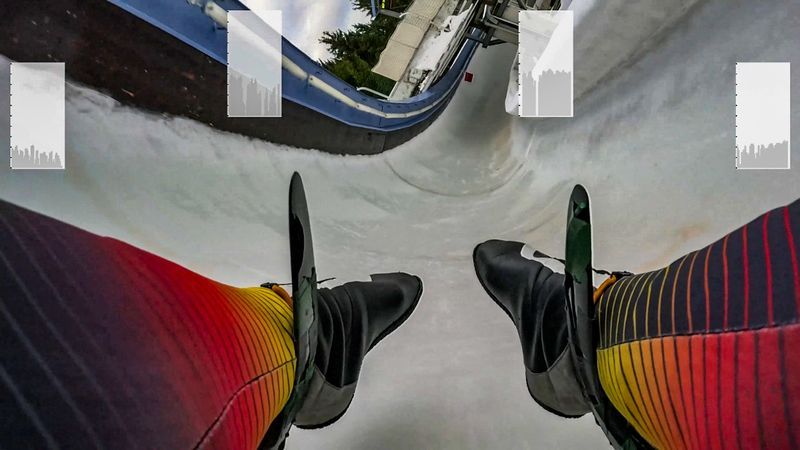
:quality(80)/p7i.vogel.de/wcms/3f/7f/3f7f9f45ebccd4751d41106866314aea/newsimage418028-2772x1559v1v1.jpeg "Live in the ice channel—detailed recordings in real time make the smallest mistakes and thus time losses in the luge run visible. (Image:Mittweida University of Applied Sciences)")
:quality(80)/p7i.vogel.de/wcms/05/b7/05b7c58dcf5a7fc900348d1c30f7c116/0129540459v1.jpeg "Researchers from Stuttgart have investigated whether the \"technology\" behind hairy elephant trunks, which function as a sensitive gripping system, can also be used in robotics. (Image:Zoo Magic)")
:quality(80)/p7i.vogel.de/wcms/5c/6b/5c6ba3b01c770e0430c88a902149b004/0129558666v1.jpeg "Using quantum computing for highly complex industrial applications: this is what the Q-Genesys project is working on. (Picture: ©Kale Galaxy - stock.adobe.com)")
:quality(80)/p7i.vogel.de/wcms/f8/2d/f82d45c2610205e2c0c188968022890d/more-liftoff-power-first-ariane-6-with-four-boosters-launched-4781x2691v1v1.jpeg "The Ariane 6 can be modularly adapted to any mission—either with two or four boosters and a variable payload fairing length. (Image:ESA-M. Pedoussaut)")
:quality(80)/p7i.vogel.de/wcms/40/46/4046da1c71903423938da8f8ddd9bd4a/0129532197v1.jpeg "The AxTrax 2 LF electric portal axle, specially developed for low-floor buses, delivers a continuous output of up to 360 kW, which is twice as much as its predecessor model at almost the same weight. (Image:ZF Group)")
:quality(80)/p7i.vogel.de/wcms/19/a6/19a63e69256e4dcfb3671d42d3eb5e98/0129568242v1.jpeg "Air bp and Airbus have signed a multi-year contract for the supply of fuel. (Image:Airbus)")
:quality(80)/p7i.vogel.de/wcms/ee/dc/eedc0c644f450569196251abb50015d7/0129550734v1.jpeg "The Open System Protocol from ams Osram for dynamic lighting applications and intelligent vehicle networks is to be implemented as an ISO standard in the future. (Image:ams Osram)")
:quality(80)/p7i.vogel.de/wcms/13/2b/132bf97fa04bd56098181b9651ad80e9/0129534568v1.jpeg "According to media reports, Volkswagen wants to save a further 60 billion euros. (Image:Volkswagen)")
:quality(80)/p7i.vogel.de/wcms/18/87/1887248f7eb3fabfbbfb90b3b7e4e79e/0129551381v1.jpeg "Digital self-determination: Red Hat's new assessment tool helps companies regain full control over their IT infrastructure. (Image:AI-generated)")
:quality(80)/p7i.vogel.de/wcms/68/ec/68ec268edc51a26c4e6e2de7187e8e4f/0129456364v1.jpeg "The storage facilities are being built at three locations in Lithuania. (Image:Nidec Conversion)")
:quality(80)/p7i.vogel.de/wcms/a0/36/a03679debcdda99158f4eaa0d6fbe43d/0129505643v1.jpeg "Arduino App Lab: The current release 0.4.0 brings a number of helpful new features. (Image:Arduino)")
:quality(80)/p7i.vogel.de/wcms/36/c8/36c8b329076027abf5def92031e3028e/0129508876v1.jpeg "Microsoft German headquarters in Munich: As part of the Munich Security Conference, 15 international companies along the entire electronics value chain have formed a tech alliance for digital sovereignty and common trust standards under the leadership of Microsoft and Ericsson. (Image:Microsoft)")
:fill(fff,0)/images.vogel.de/vogelonline/companyimg/76800/76895/65.jpg "FAULHABER_120mm.jpg ()")
:fill(fff,0)/p7i.vogel.de/companies/69/88/69882c428938e/tmts2026-ticec-banner-en-2000px.png "tmts2026-ticec-banner-en-2000px (https://www.tmts.tw/en)")
:fill(fff,0)/p7i.vogel.de/companies/67/eb/67eba621ef6ea/logo2.png "logo2 (Wuxi InfiMotion)")
:quality(80):fill(efefef,0)/p7i.vogel.de/wcms/68/2b/682b2c790057d/elatec-titelbild-wp7-pac.png "Elatec Titelbild WP7 PAC")
Date: 08.12.2025
Naturally, we always handle your personal data responsibly. Any personal data we receive from you is processed in accordance with applicable data protection legislation. For detailed information please see our privacy policy.
Consent to the use of data for promotional purposes
I hereby consent to Vogel Communications Group GmbH & Co. KG, Max-Planck-Str. 7-9, 97082 Würzburg including any affiliated companies according to §§ 15 et seq. AktG (hereafter: Vogel Communications Group) using my e-mail address to send editorial newsletters. A list of all affiliated companies can be found here
Newsletter content may include all products and services of any companies mentioned above, including for example specialist journals and books, events and fairs as well as event-related products and services, print and digital media offers and services such as additional (editorial) newsletters, raffles, lead campaigns, market research both online and offline, specialist webportals and e-learning offers. In case my personal telephone number has also been collected, it may be used for offers of aforementioned products, for services of the companies mentioned above, and market research purposes.
Additionally, my consent also includes the processing of my email address and telephone number for data matching for marketing purposes with select advertising partners such as LinkedIn, Google, and Meta. For this, Vogel Communications Group may transmit said data in hashed form to the advertising partners who then use said data to determine whether I am also a member of the mentioned advertising partner portals. Vogel Communications Group uses this feature for the purposes of re-targeting (up-selling, cross-selling, and customer loyalty), generating so-called look-alike audiences for acquisition of new customers, and as basis for exclusion for on-going advertising campaigns. Further information can be found in section “data matching for marketing purposes”.
In case I access protected data on Internet portals of Vogel Communications Group including any affiliated companies according to §§ 15 et seq. AktG, I need to provide further data in order to register for the access to such content. In return for this free access to editorial content, my data may be used in accordance with this consent for the purposes stated here. This does not apply to data matching for marketing purposes.
Right of revocation
I understand that I can revoke my consent at will. My revocation does not change the lawfulness of data processing that was conducted based on my consent leading up to my revocation. One option to declare my revocation is to use the contact form found at https://contact.vogel.de. In case I no longer wish to receive certain newsletters, I have subscribed to, I can also click on the unsubscribe link included at the end of a newsletter. Further information regarding my right of revocation and the implementation of it as well as the consequences of my revocation can be found in the data protection declaration, section editorial newsletter.
:quality(80)/p7i.vogel.de/wcms/c6/f6/c6f6b694b9da9c6adf39c524d16d1aa2/0126441039v1.jpeg "From sprinting to basketball to synchronized dancing: Humanoid robots recently competed in 487 competitions across 26 \"sports.\" (Image: ©MutshI - stock.adobe.com / AI-generated)")
:quality(80)/p7i.vogel.de/wcms/3e/1a/3e1aa402d388556f6d8e4da140e00876/0128339770v1.jpeg "Frank Mücklich, Professor of Functional Materials at Saarland University and Head of the Steinbeis Research Center for Materials Engineering (MECS) (Image:Saarland University)")