


:quality(80)/p7i.vogel.de/wcms/8e/7a/8e7a8d7cd0b947550da99f3d888a57a6/maas-blechnetbeitrag-20blechnext-2563x1440v1v1.png "Blechnext shows that the future of sheet metal processing lies not only in better machines, but also in smarter business models. \"Machine-as-a-Service\" is not just a financing tool; it is an accelerator for digital transformation. (Image:Blechnext)")
:quality(80)/p7i.vogel.de/wcms/d3/b7/d3b76d4685cc7167034912cdc4f6ca7c/0129496821v1.jpeg "According to an Allensbach study, the majority of German machine and plant manufacturers expect to lose their technological leadership to foreign countries. (Picture: ©Photocreo Bednarek - stock.adobe.com)")
:quality(80)/p7i.vogel.de/wcms/8e/fa/8efad6aa006fcf624d07c645b774d8ce/screenshot-202026-01-21-20113324-764x430v1v1.png "The system processes heavy sheets weighing up to 200 kg fully automatically, without programming or teaching. (Image:Teqram)")
:quality(80)/p7i.vogel.de/wcms/0c/58/0c587c8221ae96052b5dcc0f40eb3dcd/0128880879v1.jpeg "A chip surfer with a solid carbide head is used for finishing in the third operation. (Image:Ingersoll)")
:quality(80)/p7i.vogel.de/wcms/93/33/93337b12f88eb2c776c80d4f9e49d323/0129247650v1.jpeg "Isolated IoT data becomes connected real-time personalization. (Image: ©PB Studio Photo - stock.adobe.com)")
:quality(80)/p7i.vogel.de/wcms/4d/74/4d745446555110ca9797db1eabb7c9d3/0129551585v1.jpeg "Jochen Gemeinhardt is responsible for NTT Data's AI business in the DACH region as Head of Production & Supply Chain and Head of Industry Line Global Business. (Image:NTT Data)")
:quality(80)/p7i.vogel.de/wcms/bc/8c/bc8c831daa7f85dbd1e44ea8fbd8089b/open-source-bild5-406x228v1v1.png "Four steps to an open source crash simulation - find out how here. (Image:Alsado)")
:quality(80)/p7i.vogel.de/wcms/af/9d/af9dc917a1eb91fd0e201d5bf8b7a57c/0129614075v1.jpeg "The future of manufacturing will be determined by demonstrable productivity gains - with more digitalization, networked data streams and simulation-based decisions. (Image:Visual Components)")
:quality(80)/p7i.vogel.de/wcms/63/c9/63c9b33f58938f4ffc2a3cefddd924e3/0129599881v1.jpeg "View of the manual casting process of a magnesium part. Apart from a few exceptions, the light metal actually leads a shadowy existence as an industrial material. However, researchers in Freiberg are now in the process of making magnesium much more attractive in terms of costs and sustainability. (Image:Metal Master)")
:quality(80)/p7i.vogel.de/wcms/6b/6f/6b6fff754fedf05375e5255460743297/0129197850v1.jpeg "A new core-shell design for anodes aims to reduce storage losses during the first charge cycle of sodium-ion batteries. (Image:BAM)")
:quality(80)/p7i.vogel.de/wcms/53/6b/536be1966f279ef2cd99509d00e79fca/0129693994v1.jpeg "Elektrobit is working on a new architecture for cockpit systems. (Image:Elektrobit)")
:quality(80)/p7i.vogel.de/wcms/b0/95/b09529a8952b5b03f1fa096af571967c/0129618836v1.jpeg "The Aurora Botnia ferry currently has the largest battery capacity of any RoPax ship in the world. (Image:Wasaline)")
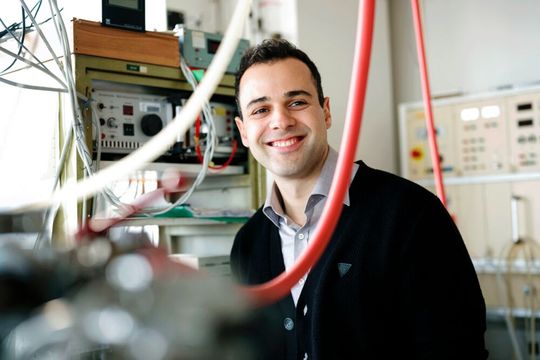
:quality(80)/p7i.vogel.de/wcms/f9/12/f9126b5a89a1d631b8de7da6775583be/0129663582v1.jpeg "Audi appoints Rouven Mohr as new CTO as of March 01, 2026. (Image:Audi)")
:quality(80)/p7i.vogel.de/wcms/37/23/372374e00db2f1803ae5cde2f00aff31/0129599814v1.jpeg "The new Euro 7 standard sets requirements for the wear of service brakes. These can be met with some technical methods. (Image:Aumovio)")
:quality(80)/p7i.vogel.de/wcms/0f/b2/0fb28656d39754b67a76b90b42243cda/0129655768v1.jpeg "Driven by GaN wafer production at 300 millimeters, Infineon's GaN products deliver outstanding performance with clear application benefits. (Image:Infineon Technologies AG)")
:quality(80)/p7i.vogel.de/wcms/98/c7/98c77993453c1edf3d2bd54b0028fa6a/0129630827v1.jpeg "Left: High Bandwidth Flash (HBF) stacks multiple layers of NAND chips to significantly increase storage capacity; Right: Concept of the \"hybrid\" H³ architecture presented in the IEEE study. (Image:Sandisk (left) / Sk hynix (right))")
:quality(80)/p7i.vogel.de/wcms/ae/cf/aecf874a057676aa69b3b5e4c7b52411/0129609464v1.jpeg "Glass storage in action: Microsoft has stored map data from the Flight Simulator on this piece of glass. (Image:Microsoft Research)")
:quality(80)/p7i.vogel.de/wcms/2c/8d/2c8da4b72e35ded278178929afb94d55/0129561713v1.jpeg "Change in direction: The shift away from PFAS in semiconductor manufacturing and the move toward sustainable chip production is demonstrated by the trilateral collaboration between Fraunhofer ENAS, the Paul Scherrer Institute PSI, and Memsstar Limited, which rely on the environmentally friendly Gas-MacEtch technology. (Image:andreyarmyagov/Canva)")
:fill(fff,0)/p7i.vogel.de/companies/67/eb/67eba621ef6ea/logo2.png "logo2 (Wuxi InfiMotion)")
:quality(80):fill(efefef,0)/p7i.vogel.de/wcms/67/ad/67adf92d254d2/elatec-wp-smart-factory.png "Elatec WP Smart Factory")
Date: 08.12.2025
Naturally, we always handle your personal data responsibly. Any personal data we receive from you is processed in accordance with applicable data protection legislation. For detailed information please see our privacy policy.
Consent to the use of data for promotional purposes
I hereby consent to Vogel Communications Group GmbH & Co. KG, Max-Planck-Str. 7-9, 97082 Würzburg including any affiliated companies according to §§ 15 et seq. AktG (hereafter: Vogel Communications Group) using my e-mail address to send editorial newsletters. A list of all affiliated companies can be found here
Newsletter content may include all products and services of any companies mentioned above, including for example specialist journals and books, events and fairs as well as event-related products and services, print and digital media offers and services such as additional (editorial) newsletters, raffles, lead campaigns, market research both online and offline, specialist webportals and e-learning offers. In case my personal telephone number has also been collected, it may be used for offers of aforementioned products, for services of the companies mentioned above, and market research purposes.
Additionally, my consent also includes the processing of my email address and telephone number for data matching for marketing purposes with select advertising partners such as LinkedIn, Google, and Meta. For this, Vogel Communications Group may transmit said data in hashed form to the advertising partners who then use said data to determine whether I am also a member of the mentioned advertising partner portals. Vogel Communications Group uses this feature for the purposes of re-targeting (up-selling, cross-selling, and customer loyalty), generating so-called look-alike audiences for acquisition of new customers, and as basis for exclusion for on-going advertising campaigns. Further information can be found in section “data matching for marketing purposes”.
In case I access protected data on Internet portals of Vogel Communications Group including any affiliated companies according to §§ 15 et seq. AktG, I need to provide further data in order to register for the access to such content. In return for this free access to editorial content, my data may be used in accordance with this consent for the purposes stated here. This does not apply to data matching for marketing purposes.
Right of revocation
I understand that I can revoke my consent at will. My revocation does not change the lawfulness of data processing that was conducted based on my consent leading up to my revocation. One option to declare my revocation is to use the contact form found at https://contact.vogel.de. In case I no longer wish to receive certain newsletters, I have subscribed to, I can also click on the unsubscribe link included at the end of a newsletter. Further information regarding my right of revocation and the implementation of it as well as the consequences of my revocation can be found in the data protection declaration, section editorial newsletter.
:quality(80)/p7i.vogel.de/wcms/cc/b7/ccb7dc654b353a3a027e5dabd8c7421f/0125723793v1.jpeg "Four in one: New semiconductor for the chips of the future The coated wafer is visually indistinguishable from a conventional one. (Image:Forschungszentrum Jülich / Jenö Gellinek)")
:quality(80)/p7i.vogel.de/wcms/9f/6d/9f6d49531e135e393e985a7a942d3212/0123226319v1.jpeg "3D printing of pellets for measuring thermoelectric properties. (Image:WSS, photo: Felix Wey, Baden)")