With the "Bluetooth Direction Finding" extension introduced in 2019, the inexpensive radio standard is also suitable for precise indoor positioning applications - as a proof-of-concept demonstrates.
Cost advantage: Bluetooth solutions have become popular because they are inexpensive and easy to use. Indoor positioning systems based on this radio technology also benefit from these advantages.
(Image: u-blox)
Location tracking is one of the key benefits of IoT technology for businesses and consumers. For a moderate cost, fleet managers can track their vehicles, logistics companies can monitor their shipments, and farmers can keep tabs on their livestock — all in real time. Connected IoT devices can also be utilized to monitor the whereabouts of elderly family members, pets, or valuable items like a car.
Thanks to global navigation satellite systems (GNSS), including GPS, GLONASS, BeiDou, and Galileo, location technology has permeated almost every aspect of our economy and daily lives. At the same time, GNSS technology has improved year after year, with achievable accuracy transitioning from meters to a few centimeters, the time to first fix from tens of seconds to seconds, and service availability increasing even in the densest urban areas.
However, to date, highly accurate positioning has a significant blind spot: large indoor areas. The weak GNSS signals do not penetrate most indoor spaces with sufficient strength. As a result, applications - and therefore efficiency gains - through continuous localization are denied to many potential users:
Hospital managers who track medical equipment, patients, and staff;
Airport operators who optimize baggage handling and quickly locate delayed passengers;
Manufacturing companies automating production processes;
Service and retail companies tracking customer behavior and backend operations, or
Warehouse managers looking to improve operations with autonomous ground robots.
As satellite signals are largely unavailable in these environments, a number of alternative technologies have been proposed to address this limitation. Devices equipped with mobile modems, for example, can determine their position in relation to nearby mobile towers using mobile signals, employing techniques such as network fingerprinting or advanced signal time-of-flight methods. Devices equipped with Wi-Fi can utilize similar approaches to determine their location in the vicinity of Wi-Fi hotspots. Similarly, Bluetooth devices can use signal strength indication (RSSI) to provide an approximate distance estimate relative to Bluetooth beacons.
These technologies all suffer from shortcomings that limit their acceptance in the aforementioned use cases, where the accuracy, availability, user-friendliness, and affordability of GNSS technology have set a high standard. Mobile and Wi-Fi-based location technologies require relatively high hardware costs and often do not meet expectations in terms of accuracy. Despite its low accuracy, Bluetooth RSSI has gained ground in applications requiring room-level positioning due to its low cost, low energy consumption, and compatibility with the majority of connected devices in circulation.
Bluetooth Direction Finding improves indoor positioning
In 2019, the Bluetooth SIG introduced Bluetooth Direction Finding to improve indoor positioning. This approach, utilizing a new type of Bluetooth signal and multiple antenna arrays to measure the angle of propagation of a Bluetooth message between a mobile tag and one or more static anchor points, provides a new potential solution to the indoor location determination problem that likely meets all the criteria for the first time. High precision? Achieved. Easy deployment? Achieved. Low device costs? Achieved. Low energy consumption? All achieved.
Since their introduction, Bluetooth-based indoor positioning solutions have garnered significant interest. ABI Research forecasts an average annual growth rate (CAGR) of 28.3% for the shipment of Bluetooth tags from 2019 to 2025, with the largest increase (64.2%) expected in smart offices and the largest absolute number (over 163 million) in the warehouse and logistics industry.
Due to the complementarity of GNSS solutions for outdoor use, the extensive global ecosystem of companies developing solutions based on this technology, its low power consumption and cost, as well as the positioning accuracy provided within a range of less than one meter, u-blox has focused significant research and development activities on promoting the acceptance of this technology.
Higher accuracy in positioning with Bluetooth direction finding
Bluetooth indoor positioning is based on Bluetooth direction finding, available in two variants that enable the determination of the propagation direction of a Bluetooth signal between a mobile tag and a fixed anchor point. In the case of Angle of Arrival (AoA), the anchor point calculates the direction of the incoming signal sent by the tag. Conversely, in Angle of Departure (AoD), the roles are reversed, and the tag is tasked with calculating the angle at which the signal was transmitted by the anchor point. This article focuses on AoA, which is better suited for indoor positioning solutions, while AoD provides advantages for indoor navigation.
Date: 08.12.2025
Naturally, we always handle your personal data responsibly. Any personal data we receive from you is processed in accordance with applicable data protection legislation. For detailed information please see our privacy policy.
Consent to the use of data for promotional purposes
I hereby consent to Vogel Communications Group GmbH & Co. KG, Max-Planck-Str. 7-9, 97082 Würzburg including any affiliated companies according to §§ 15 et seq. AktG (hereafter: Vogel Communications Group) using my e-mail address to send editorial newsletters. A list of all affiliated companies can be found here
Newsletter content may include all products and services of any companies mentioned above, including for example specialist journals and books, events and fairs as well as event-related products and services, print and digital media offers and services such as additional (editorial) newsletters, raffles, lead campaigns, market research both online and offline, specialist webportals and e-learning offers. In case my personal telephone number has also been collected, it may be used for offers of aforementioned products, for services of the companies mentioned above, and market research purposes.
Additionally, my consent also includes the processing of my email address and telephone number for data matching for marketing purposes with select advertising partners such as LinkedIn, Google, and Meta. For this, Vogel Communications Group may transmit said data in hashed form to the advertising partners who then use said data to determine whether I am also a member of the mentioned advertising partner portals. Vogel Communications Group uses this feature for the purposes of re-targeting (up-selling, cross-selling, and customer loyalty), generating so-called look-alike audiences for acquisition of new customers, and as basis for exclusion for on-going advertising campaigns. Further information can be found in section “data matching for marketing purposes”.
In case I access protected data on Internet portals of Vogel Communications Group including any affiliated companies according to §§ 15 et seq. AktG, I need to provide further data in order to register for the access to such content. In return for this free access to editorial content, my data may be used in accordance with this consent for the purposes stated here. This does not apply to data matching for marketing purposes.
Right of revocation
I understand that I can revoke my consent at will. My revocation does not change the lawfulness of data processing that was conducted based on my consent leading up to my revocation. One option to declare my revocation is to use the contact form found at https://contact.vogel.de. In case I no longer wish to receive certain newsletters, I have subscribed to, I can also click on the unsubscribe link included at the end of a newsletter. Further information regarding my right of revocation and the implementation of it as well as the consequences of my revocation can be found in the data protection declaration, section editorial newsletter.
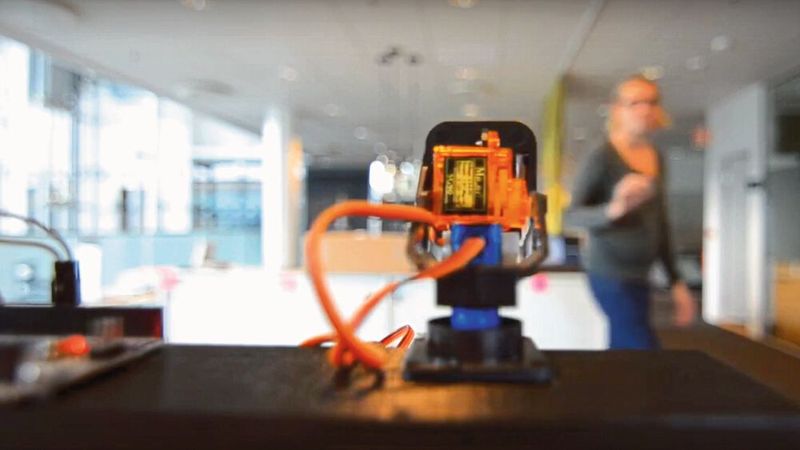
To evaluate the technology, u-blox set up an AoA-based demonstration setup for Bluetooth direction finding in its offices in Malmö, Sweden. A servo device attached to an anchor point for direction determination is programmed to track a mobile Bluetooth tag based on the real-time calculated angle of arrival.
Two extensions optimize the direction finding
Bluetooth direction finding utilizes two enhancements. Firstly, a new Bluetooth direction finding signal that contains additional data: the so-called Constant Tone Extension (CTE). While the rest of the Bluetooth message is modulated for data transmission purposes, the CTE consists solely of a series of ones. Therefore, the receiver can use this part of the message to precisely measure the phase differences between the signals.
Secondly, each anchor point contains not just a single antenna, but a multiple-antenna array. The image above shows how the direction-finding signal emitted by the mobile tag reaches the individual antennas within the antenna array of the static anchor point. Due to the varying distances traveled, each antenna receives the signal with a slight phase shift compared to the others, which is measurable thanks to the CTE.
Accurately calculate signal arrival angles
Algorithms running on a microcontroller embedded in the anchor point can then analyze this data to calculate the arrival angle of the signal with an accuracy of a few degrees. By using multiple anchor points instead of a single one, the approximate location of the direction-finding transmitter can be more precisely triangulated through the combined calculation of arrival angles.
For this, the exact positions and orientations of the anchor points need to be input into the location system, which then runs another algorithm to calculate the location of the tagged object—either in 2D or 3D—based on the arrival angles calculated by each anchor point. For example, in a simple 8 by 6 meter office with four anchor points positioned in the corners, it is possible to achieve an average accuracy of under 1 meter with a 95% probability.
Testing the technology in an industrial warehouse
U-Blox tested its indoor Bluetooth positioning solution in a real industrial warehouse—a typical use case for asset tracking applications. The 30 by 50 meter warehouse had metal shelves for storing devices and containers. While the lower layers for processing RF raw data are defined in the Bluetooth specification, the algorithm for calculating the actual arrival angle is not specified.
For the experiment, u-blox developed an efficient algorithm that runs on the embedded microcontroller in the Bluetooth chip, achieving high accuracy and update rates. Specifically, u-blox optimized the RF frontend, antennas, embedded algorithms running in the anchor point Bluetooth modules, as well as the wireless connectivity backbone connecting the anchor points to a network.
For the experiment, ten anchor points were used to cover a six-meter-high volume with a footprint of approximately 1,000 square meters. After careful planning and preparation, the installation of the positioning system took only about two hours.
To maximize line of sight between the tracker tags and the multi-antenna arrays, the anchor points were mounted three to five meters above the ground. Traxmate, a third-party solution, was used as the tracking software. Within Traxmate, the positions and orientations of the anchor points were input, and the positioning unit was configured through an integrated API. A Wi-Fi communication backbone between each anchor point and the localization system completed the installation.
Ideal: Unobstructed "view" of at least three anchor points
The setup aimed to mirror a real-world use case, providing reliable performance even in intricate indoor environments with typical obstacles like shelves. Initially, u-blox technicians strategically placed the anchor points to maximize the likelihood of line of sight between all likely tag positions and at least three anchor points.
Additionally, one had to take into account Doppler effects that occur, for example, when radio signals are reflected off walls. The algorithms running in the anchor points to calculate the angles incorporate a mitigation of these multipath interferences, delivering a reliable performance even in the challenging radio environment of a warehouse.
Bluetooth direction finding is a convincing solution
The experiences with this proof-of-concept have shown that the highly accurate Bluetooth indoor positioning delivers as promised. On the one hand, if well implemented, it can provide accuracies in the sub-meter range. As is typical for Bluetooth devices, the costs for the necessary hardware are significantly lower than those of competing technologies.
The same applies to power consumption. Using positioning solutions indoors has long been a particular challenge. The integration of the hardware used by u-blox with web interfaces has greatly simplified deployment.
With the release of the Bluetooth direction finding feature, the Bluetooth SIG has provided a compelling solution to the indoor positioning problem, addressing many of the shortcomings of currently available solutions on the market.
This article was originally published on our partner portal Elektronikpraxis.



:quality(80)/p7i.vogel.de/wcms/53/f7/53f7dadbe4d656a3fd4f4077445f29f6/0129828707v1.jpeg "Thanks to its compact design and drilling/unscrewing function, the Fire Birdie is suitable for applications with limited installation space and frequent tool changes. (Image:Marcel Kraibühler)")
:quality(80)/p7i.vogel.de/wcms/da/4d/da4da8d34671dc6bce80e496212de877/0129850788v1.jpeg "Mate-XT Go supports the arms and shoulders during overhead work and repetitive tasks and is designed to significantly reduce muscle strain in everyday working life. (Image:Comau)")
:quality(80)/p7i.vogel.de/wcms/95/97/95976dbaac68b249eb65e74c5aad5300/0129651893v1.jpeg "The C2.0 centric clamps, the S2 fixed jaw clamps and the \"gredoc\" zero-point clamping systems are used for machining the raw parts. Fastening is carried out with width across flats 27. (Image:Gressel)")
:quality(80)/p7i.vogel.de/wcms/57/1b/571b8895efb299d70846bbdbd7af2338/0130043886v1.jpeg "Servo hydraulics independent of the control system: The servo hydraulics software module is integrated directly into the b Maxx 5500 servo drive (pictured: Mehmet Sari, Export Sales Manager at Hürsan Pres (left), Özgür Deniz Demirbaş, Country Manager at Baumüller Turkey) (Image:Baumüller)")
:quality(80)/p7i.vogel.de/wcms/3b/27/3b27f6c5848be73acecb04054bf0a146/0130115209v1.jpeg "Spectroscopic glucose measurement with infrared spectroscopy enables more regular measurements without physical strain. (Image:Endrich)")
:quality(80)/p7i.vogel.de/wcms/3f/cc/3fccb748b0fe16f1f61249d94c72f126/0130149439v1.jpeg "Requirements for integrated power supply systems: Precise AC and DC power supply systems that not only provide energy, but also reliably combine measurement, analysis and system integration. (Image:Schulz Electronic)")
:quality(80)/p7i.vogel.de/wcms/fd/93/fd93e01c16f5a4709278499d981a459c/0130061090v1.jpeg "Revealed: These servo drives are assembled at Aerotech in Fürth. (Image:Aerotech)")
:quality(80)/p7i.vogel.de/wcms/cb/8a/cb8ae7f5205365efce3e7285154fc3cf/0130132198v1.jpeg "Markus Huber (left) and Nicolai Friis from TU Wien know how to make quantum computers multidimensional in order to perform computing operations even better. (Image:TU Vienna / A. Rommel)")
:quality(80)/p7i.vogel.de/wcms/63/21/6321beb732bf7d92640df46d7aa77573/0130125122v1.jpeg "As part of the Carbon Lab Factory Lausitz, a pilot plant for the production of sustainable, cost-effective and competitive carbon fibers will be built at the Guben site. (Image:Fraunhofer IAP / Kristin Stein)")
:quality(80)/p7i.vogel.de/wcms/53/4f/534fe0f168f6ee070ded4a48faca4cef/business-wire-main-image-1103x620v1.jpeg "The new UR AI Trainer, developed by Universal Robots and Scale AI, is the first direct lab-to-factory solution for AI model training.
(Source: Universal Robots)")
:quality(80)/p7i.vogel.de/wcms/08/70/087062e2e1a9b9add5777410dd746ee9/adobestock-1923991605-5607x3156v1v1.jpeg "A new type of tactile sensor, inspired by human skin, even recognizes grains of sand. (Image:Curioso.Photography - stock.adobe.com)")
:quality(80)/p7i.vogel.de/wcms/7f/08/7f087d7013424d123ab7275cd2e3fe55/adobestock-809456218--c2-a9-20degimages-20-e2-80-93-20stock-adobe-com-ki-generiert-4179x2351v1v1.jpeg "The digital upgrading of existing machines conserves resources, saves energy and reduces the need for new production. (Image:Degimages - stock.adobe.com/AI-generated)")
:quality(80)/p7i.vogel.de/wcms/90/db/90db3087d3af0560fcdb4dbc42443ce1/0130157448v1.jpeg "The switch to SDV is the most complex transformation the industry has ever had to master. The end consumer gets a vehicle that gains rather than loses value over its lifetime. (Image:Sonatus)")
:quality(80)/p7i.vogel.de/wcms/73/f0/73f00bb99a23197db05bb584fe78f20f/0130080581v1.jpeg "The \"China Speed\" analysis by Roland Berger shows that the speed of development has only a limited connection with labor costs. (Image:freely licensed at Pexels)")
:quality(80)/p7i.vogel.de/wcms/2f/5b/2f5ba6a150b52c2b8efada560c5cdafe/0130143442v1.jpeg "Automotive suppliers are facing a severe crisis, which is primarily due to a combination of structural change and economic problems. (Image:freely licensed at Pexels)")
:quality(80)/p7i.vogel.de/wcms/22/d0/22d03cd48e992435338b59464c428d41/0129739814v1.jpeg "More electric vehicles on the roads mean a higher demand for electricity - which should ideally be covered by renewable energies. (Image:BMW)")
:quality(80)/p7i.vogel.de/wcms/94/7a/947ac066b98cbcd3470e83ff9da3e25f/0130096114v1.jpeg "The use of amorphous steels in the stator enables a significant reduction in losses and increases the efficiency of modern electric motors in vehicle drives. (Image:Horse Powertrain)")
:quality(80)/p7i.vogel.de/wcms/e5/f1/e5f171d3d7ae021332cc0aeae4d6e299/0130127049v1.jpeg "In collaboration with Shanghai Jiao Tong University, Lenovo has presented a silicon anode battery under the name \"ED1000\" as a proof of concept for mobile workstations. (Image:Lenovo)")
:quality(80)/p7i.vogel.de/wcms/fa/69/fa696e59706b96fff02283dd74cc2398/0130129635v1.jpeg "Samsung Co-CEO Jun Young-hyun wants to respond to the AI-driven boom in demand in the memory market with contracts for up to five years. This should provide more planning security in the traditionally volatile storage business. At the same time, however, this is likely to increase the pressure on customers to secure precise long-term requirements, prices and supply chains. (Image:Samsung)")
:quality(80)/p7i.vogel.de/wcms/31/a8/31a883a47b86634c382923e78fd9a4c9/0130133225v1.jpeg "Figure 1: GMSL-capable point-to-point connection. (Image:ADI)")
:fill(fff,0)/images.vogel.de/vogelonline/companyimg/76800/76895/65.jpg "FAULHABER_120mm.jpg ()")
:fill(fff,0)/p7i.vogel.de/companies/67/eb/67eba621ef6ea/logo2.png "logo2 (Wuxi InfiMotion)")
:quality(80)/p7i.vogel.de/wcms/54/93/54937cd5531323e201fe09aab0e9fb95/0124652859v1.jpeg "Centimeter-accurate determination of distances with Bluetooth channel sounding. Accidents between humans and machines can be avoided. (Image:Metirionic)")
:quality(80)/p7i.vogel.de/wcms/22/f9/22f92624c4274b3a1f7d72e9c24e4613/0127733357v1.jpeg "The Evertag Mini is a lightweight, compact IoT tag designed for space-constrained environments while still offering full Wirepas mesh tracking functionality. (Image:Cargobeacon)")