Further developments of the A2B bus open up new possibilities for the transmission of data and audio signals. Intelligent buildings, halls, rooms and smart homes benefit from this. The article shows application examples and how the technology behind them simplifies wiring with little hardware and software effort.
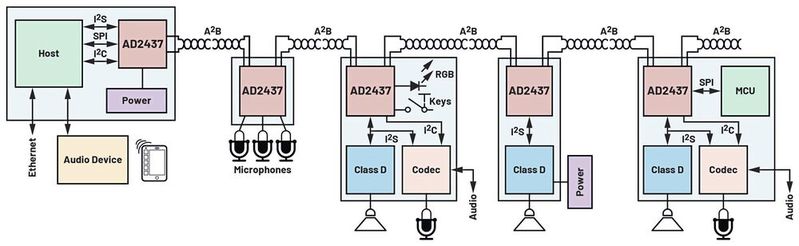
Figure 1: An example of setting up an A²B network and the connected blocks.
(Image: ADI)
Loudspeaker systems are required in many public buildings, factories or offices. These consist of microphones, amplifiers, loudspeakers and accessories. Such systems replace traditional alarm systems, for example. Music transmission, voice alarms, broadcasting and intercom systems can be integrated into these systems.
Ethernet networks are used for simple audio and control devices. In addition, 100 V cables are also used. However, these cables only transmit a single audio signal in one direction. Data communication cannot be added.
This is where the Audiobus A2B comes into its own, connecting components such as loudspeakers, microphones, microphone units, control panels and sensors with simple daisy-chain cabling. The digital audio bus works bidirectionally with a high bandwidth. It transmits control signals as well as clock information and power via a 2-wire UTP cable (unshielded twisted pair cable) over a length of up to 98 feet between the individual nodes and up to 984 feet over the entire bus length.
A2B has proven itself in both automotive and communication applications and can be used for many commercial and industrial purposes.
When connecting an A2B transceiver to a device, users have 64 bidirectional audio channels (32 downstream and 32 upstream) that can be coupled with I2C/SPI/GPIO communication for peripheral devices at the endpoint. No more complex time slot stacks need to be developed or used.
The time-synchronized high-speed bus, which transmits I2S/TDM together with I2C, SPI and GPIO signals at a data rate of 50 Mbit/s, offers a latency between any two nodes of 50 μs. Up to 17 nodes (including the main node) can be connected to the bus via a UTP cable.
Communication takes place from node to node, which means that each node can send 32 audio channels to every other node if 48 kHz and 16 bits are selected. The data size can be set for different requirements, with the data rate adjustable between 1.5 and 192 kHz. Lower bandwidths and data rates result in more available channels.
Power Supply Integrated in the Bus
Another advantage is the power supply integrated into the bus, which can supply power of up to 50 W over the entire bus. This means that nodes can be supplied with phantom power via the bus without the need for an additional local power supply. Speaker nodes with low output power can also be supplied via the A2B bus. However, external power supplies are required for higher power consumption.
Figure 1 illustrates the flexibility of the A2B bus, which simplifies the design and configuration of the system. As the transceiver already contains many blocks and interfaces, it can often be operated without a separate microcontroller.
As shown, the simplest node is a microphone array with the AD2437 transceiver. Up to four PDM (pulse density modulation) microphones can be connected. Such microphone arrays localize around noise sources, perform noise suppression or detect the direction from which a noise is coming. In this case, it is possible to extract the audio source from the adjacent background noise.
Due to the very low latency of the bus, this array does not necessarily have to be present on one node. It can easily be distributed to different nodes at different locations within a room. Power is supplied via the bus, as the node has a very low power consumption. This makes the solution very compact and easy to install. In an example application, the node had a size of 1.38 inches × 0.75 inches, including cabling and bus power supply.
Connecting A Class D Or Audio Amplifier
For more complex requirements, a separate Class D or other power amplifier can be connected to the AD2437 via the I2S output. An audio codec can also be integrated. As audio must not normally be interrupted, the I2C interface is used to set up the power amplifier or codec in parallel.
This configuration can be used to create a simple, bus-powered intercom system. The AD2437 also has GPIOs, some of which are equipped with pulse width modulation (PWM). These can be used as keyport inputs for interaction with the host. The host receives an interrupt signal when a button is pressed, after which communication can be established.
The PWM output is used to indicate whether communication is active, to control LEDs that indicate the connection status and to display any other information required. This simple but effective function does not require a separate microcontroller, which reduces the software effort for the entire system.
Date: 08.12.2025
Naturally, we always handle your personal data responsibly. Any personal data we receive from you is processed in accordance with applicable data protection legislation. For detailed information please see our privacy policy.
Consent to the use of data for promotional purposes
I hereby consent to Vogel Communications Group GmbH & Co. KG, Max-Planck-Str. 7-9, 97082 Würzburg including any affiliated companies according to §§ 15 et seq. AktG (hereafter: Vogel Communications Group) using my e-mail address to send editorial newsletters. A list of all affiliated companies can be found here
Newsletter content may include all products and services of any companies mentioned above, including for example specialist journals and books, events and fairs as well as event-related products and services, print and digital media offers and services such as additional (editorial) newsletters, raffles, lead campaigns, market research both online and offline, specialist webportals and e-learning offers. In case my personal telephone number has also been collected, it may be used for offers of aforementioned products, for services of the companies mentioned above, and market research purposes.
Additionally, my consent also includes the processing of my email address and telephone number for data matching for marketing purposes with select advertising partners such as LinkedIn, Google, and Meta. For this, Vogel Communications Group may transmit said data in hashed form to the advertising partners who then use said data to determine whether I am also a member of the mentioned advertising partner portals. Vogel Communications Group uses this feature for the purposes of re-targeting (up-selling, cross-selling, and customer loyalty), generating so-called look-alike audiences for acquisition of new customers, and as basis for exclusion for on-going advertising campaigns. Further information can be found in section “data matching for marketing purposes”.
In case I access protected data on Internet portals of Vogel Communications Group including any affiliated companies according to §§ 15 et seq. AktG, I need to provide further data in order to register for the access to such content. In return for this free access to editorial content, my data may be used in accordance with this consent for the purposes stated here. This does not apply to data matching for marketing purposes.
Right of revocation
I understand that I can revoke my consent at will. My revocation does not change the lawfulness of data processing that was conducted based on my consent leading up to my revocation. One option to declare my revocation is to use the contact form found at https://contact.vogel.de. In case I no longer wish to receive certain newsletters, I have subscribed to, I can also click on the unsubscribe link included at the end of a newsletter. Further information regarding my right of revocation and the implementation of it as well as the consequences of my revocation can be found in the data protection declaration, section editorial newsletter.
Intercom systems with a graphical user interface (GUI) use a microcontroller that receives data via the SPI interface. The maximum speed of the SPI bus is10 MBit/s.
External power supply units are sufficient for pure loudspeaker nodes that are located in ceilings or other parts of buildings, for example, and require a higher output power. The bus does not have to be powered at the host node, but can be powered at any point within any intermediate node in order to reduce the current load in the lines.
Applications of the Audio Bus in Care
There are numerous other areas of application in which the functions of the A2B audio bus offer a decisive advantage over previously used technologies.
A nurse call/notification system is based on an Ethernet configuration. In this case, a room controller is connected via Ethernet, but the connection to the patient terminals is made via the A2B bus. In this configuration, all necessary audio, data and power signals are transmitted to 16 beds in a room via a UTP cable.
Each terminal can easily be equipped with a small microcontroller to provide patients with different audio channels. A display shows the selected channel, time and alarm status. An alarm button can be connected directly to one of the GPIO ports to trigger an interrupt on the room controller. If patients are restricted in their freedom of movement, a selected end device can also transmit microphone signals immediately to the room controller. A selected keyword triggers an alarm.
The system configuration can be changed easily. Terminals are added and removed from the network via the host's plug-and-play stack. To maintain the daisy chain configuration on remote terminals, a small adapter can bridge the missing node. If communication is interrupted, the diagnostic function reports an error.
Beamforming: Distribute Audio Signal to Several Rooms
Counter intercom systems also benefit from the very low latency and fully synchronous behavior of the A2B bus. Multiple microphones can be placed in different positions to achieve clear channel separation of the person speaking in front of the counter using beamforming. All background noise from neighboring people is suppressed.
In this way, crystal-clear conversation can be ensured between any acoustic barriers such as glass walls. Such solutions are typically used for counters, isolation areas in hospitals or clean room facilities. Similarly, intercom systems in prisons can transmit all microphone conversations to a host system and many audio channels, such as different radio channels, to each cell.
Another example of the use of beamforming is conference systems where many microphones are placed in a meeting room. Speech-to-text systems require a clear separation of the audio signals of different speakers. Due to the low latency, all microphone channels can be transmitted simultaneously to the host controller or the DSP, which calculates the different beam positions.
An alternative would be a table microphone or headset for each seat that is connected to an interpreting system. Here, all participants receive personalized audio data that is automatically translated into their native language. By using a lower audio bandwidth, a very high number of channels is supported.
This means that all microphone signals are available at the host and can be easily prioritized, either to the signal with the highest volume or in a system-controlled manner where the microphone is only enabled for selected people. In this case, all terminals are supplied with power via the bus without the need for a local power supply at the tables.
Audio distribution to many rooms is also desirable in home automation systems. This way, users can hear the doorbell anywhere in the house, even if they are listening to their favorite hi-fi playlist in the bathroom. The ability to stream audio to anywhere in the house is also beneficial, as is microphone presence to control the house with voice commands. Compared to a wireless connection via WLAN, a wired connection is more reliable and reduces the load on wireless data traffic.
A2B is also suitable for professional audio systems, sound recording studios and live stage installations and enables a simple audio connection with existing cable standards such as CAT.-5 or XLR.
Functionality of the A2B Bus
The A2B bus sends superframes via the bus in a 48 kHz clock. The data is transmitted 1,024 times faster, resulting in a transmission frequency of 49.152 MHz on the bus. The superframe consists of two parts: an upstream and a downstream, whereby the start is initiated by a sync control frame and a sync response frame. All I2S/TDM data, I2C data, GPIO and interrupt information is inserted into the downstream/upstream slots.
The host generates the clock signal and all nodes synchronize with this clock signal. This ensures that the system is synchronized at all times. A preamble in the synchronization control frame ensures that all nodes are synchronized and can pass this clock on to peripheral devices. This has the advantage that the entire audio chain does not require any additional clocks, local oscillators or asynchronous sample rate converters.
At system startup, the host processor, which is directly connected to the first transceiver chip, is set as the main node. The host provides a stable signal of 48 kHz and the transceiver synchronizes its phase locked loop (PLL) to this signal. After the main node has been set up, the sub-nodes are activated one after the other.
Setting Up the System With SigmaStudio+
The SigmaStudio+ software supports the entire system setup, including the configuration of audio channels and nodes. It is a graphical programming, diagnostic and tuning tool that allows the developer to create a graphical user interface for an A2B network by integrating peripherals such as audio codecs, Class D amplifiers, etc. Software stacks are available for Linux along with a plug-and-play stack that allows nodes to be added or removed from the bus on the fly.
A2B is supported by evaluation modules for main or sub-nodes with XLR or RJ45 connectors including power transmission.
Conclusion: Further improvements to the new A2B transceivers, such as a longer cable range and more bus power, open up a wide range of possibilities for different applications, especially when connecting multiple audio channels to control data via simple cabling.
If the devices connected to the bus are a mixture of simple and complex nodes, the bus enables cost-effective hardware implementation even for less complex devices. Even in non-audio applications, such as precisely synchronized sensor networks, A2B can provide significant simplification. (kr)
*Roland Prager works as a Staff Field Applications Engineer at Analog Devices in Wilmington / USA.
Secure and Compliant Authentication in Laboratories



:quality(80)/p7i.vogel.de/wcms/53/f7/53f7dadbe4d656a3fd4f4077445f29f6/0129828707v1.jpeg "Thanks to its compact design and drilling/unscrewing function, the Fire Birdie is suitable for applications with limited installation space and frequent tool changes. (Image:Marcel Kraibühler)")
:quality(80)/p7i.vogel.de/wcms/da/4d/da4da8d34671dc6bce80e496212de877/0129850788v1.jpeg "Mate-XT Go supports the arms and shoulders during overhead work and repetitive tasks and is designed to significantly reduce muscle strain in everyday working life. (Image:Comau)")
:quality(80)/p7i.vogel.de/wcms/95/97/95976dbaac68b249eb65e74c5aad5300/0129651893v1.jpeg "The C2.0 centric clamps, the S2 fixed jaw clamps and the \"gredoc\" zero-point clamping systems are used for machining the raw parts. Fastening is carried out with width across flats 27. (Image:Gressel)")
:quality(80)/p7i.vogel.de/wcms/57/1b/571b8895efb299d70846bbdbd7af2338/0130043886v1.jpeg "Servo hydraulics independent of the control system: The servo hydraulics software module is integrated directly into the b Maxx 5500 servo drive (pictured: Mehmet Sari, Export Sales Manager at Hürsan Pres (left), Özgür Deniz Demirbaş, Country Manager at Baumüller Turkey) (Image:Baumüller)")
:quality(80)/p7i.vogel.de/wcms/3b/27/3b27f6c5848be73acecb04054bf0a146/0130115209v1.jpeg "Spectroscopic glucose measurement with infrared spectroscopy enables more regular measurements without physical strain. (Image:Endrich)")
:quality(80)/p7i.vogel.de/wcms/3f/cc/3fccb748b0fe16f1f61249d94c72f126/0130149439v1.jpeg "Requirements for integrated power supply systems: Precise AC and DC power supply systems that not only provide energy, but also reliably combine measurement, analysis and system integration. (Image:Schulz Electronic)")
:quality(80)/p7i.vogel.de/wcms/fd/93/fd93e01c16f5a4709278499d981a459c/0130061090v1.jpeg "Revealed: These servo drives are assembled at Aerotech in Fürth. (Image:Aerotech)")
:quality(80)/p7i.vogel.de/wcms/cb/8a/cb8ae7f5205365efce3e7285154fc3cf/0130132198v1.jpeg "Markus Huber (left) and Nicolai Friis from TU Wien know how to make quantum computers multidimensional in order to perform computing operations even better. (Image:TU Vienna / A. Rommel)")
:quality(80)/p7i.vogel.de/wcms/63/21/6321beb732bf7d92640df46d7aa77573/0130125122v1.jpeg "As part of the Carbon Lab Factory Lausitz, a pilot plant for the production of sustainable, cost-effective and competitive carbon fibers will be built at the Guben site. (Image:Fraunhofer IAP / Kristin Stein)")
:quality(80)/p7i.vogel.de/wcms/53/4f/534fe0f168f6ee070ded4a48faca4cef/business-wire-main-image-1103x620v1.jpeg "The new UR AI Trainer, developed by Universal Robots and Scale AI, is the first direct lab-to-factory solution for AI model training.
(Source: Universal Robots)")
:quality(80)/p7i.vogel.de/wcms/08/70/087062e2e1a9b9add5777410dd746ee9/adobestock-1923991605-5607x3156v1v1.jpeg "A new type of tactile sensor, inspired by human skin, even recognizes grains of sand. (Image:Curioso.Photography - stock.adobe.com)")
:quality(80)/p7i.vogel.de/wcms/7f/08/7f087d7013424d123ab7275cd2e3fe55/adobestock-809456218--c2-a9-20degimages-20-e2-80-93-20stock-adobe-com-ki-generiert-4179x2351v1v1.jpeg "The digital upgrading of existing machines conserves resources, saves energy and reduces the need for new production. (Image:Degimages - stock.adobe.com/AI-generated)")
:quality(80)/p7i.vogel.de/wcms/90/db/90db3087d3af0560fcdb4dbc42443ce1/0130157448v1.jpeg "The switch to SDV is the most complex transformation the industry has ever had to master. The end consumer gets a vehicle that gains rather than loses value over its lifetime. (Image:Sonatus)")
:quality(80)/p7i.vogel.de/wcms/73/f0/73f00bb99a23197db05bb584fe78f20f/0130080581v1.jpeg "The \"China Speed\" analysis by Roland Berger shows that the speed of development has only a limited connection with labor costs. (Image:freely licensed at Pexels)")
:quality(80)/p7i.vogel.de/wcms/2f/5b/2f5ba6a150b52c2b8efada560c5cdafe/0130143442v1.jpeg "Automotive suppliers are facing a severe crisis, which is primarily due to a combination of structural change and economic problems. (Image:freely licensed at Pexels)")
:quality(80)/p7i.vogel.de/wcms/22/d0/22d03cd48e992435338b59464c428d41/0129739814v1.jpeg "More electric vehicles on the roads mean a higher demand for electricity - which should ideally be covered by renewable energies. (Image:BMW)")
:quality(80)/p7i.vogel.de/wcms/94/7a/947ac066b98cbcd3470e83ff9da3e25f/0130096114v1.jpeg "The use of amorphous steels in the stator enables a significant reduction in losses and increases the efficiency of modern electric motors in vehicle drives. (Image:Horse Powertrain)")
:quality(80)/p7i.vogel.de/wcms/e5/f1/e5f171d3d7ae021332cc0aeae4d6e299/0130127049v1.jpeg "In collaboration with Shanghai Jiao Tong University, Lenovo has presented a silicon anode battery under the name \"ED1000\" as a proof of concept for mobile workstations. (Image:Lenovo)")
:quality(80)/p7i.vogel.de/wcms/fa/69/fa696e59706b96fff02283dd74cc2398/0130129635v1.jpeg "Samsung Co-CEO Jun Young-hyun wants to respond to the AI-driven boom in demand in the memory market with contracts for up to five years. This should provide more planning security in the traditionally volatile storage business. At the same time, however, this is likely to increase the pressure on customers to secure precise long-term requirements, prices and supply chains. (Image:Samsung)")
:quality(80)/p7i.vogel.de/wcms/31/a8/31a883a47b86634c382923e78fd9a4c9/0130133225v1.jpeg "Figure 1: GMSL-capable point-to-point connection. (Image:ADI)")
:quality(80)/p7i.vogel.de/wcms/fb/34/fb342718210eb201703e709ba7e7765a/0126716394v1.jpeg "Figure 2: An example of a loudspeaker system.(Image: ADI)")
:quality(80)/p7i.vogel.de/wcms/7c/83/7c83be1ca05a5648146b93f8aa185c0e/0126716666v1.jpeg "Figure 4: Principle of the A²B superframe.(Image: ADI)")
:quality(80)/p7i.vogel.de/wcms/ef/f8/eff8a1694ba59a50a76250c6c30bf1c6/0126716660v1.jpeg "Figure 3: An example of a counter intercom system.(Image: ADI)")
:quality(80)/p7i.vogel.de/wcms/ab/2f/ab2f7691d05e0a10aaa35ae056f1cce7/0126716671v1.jpeg "Figure 5: Block diagram of the A²B data flow.(Image: ADI)")
:quality(80):fill(efefef,0)/p7i.vogel.de/wcms/67/ac/67acb931a438c/elatec-wp-gmp.png "Elatec WP GMP")
:quality(80)/p7i.vogel.de/wcms/66/72/66727bd681ea686728d92c34c945696a/0127890956v1.jpeg "Microchip Technology has introduced the LAN866x family of 10BASE-T1S endpoints with Remote Control Protocol. (Image:Microchip)")
:quality(80)/p7i.vogel.de/wcms/66/08/660805a7af69a79b12c4d76fccc5b56b/0129347606v1.jpeg "Can real-time applications for motion or robotics, for example, be operated with virtual controllers in the data center? (Image:AI-generated)")