In addition to motor vehicles, there are other significant emitters involved in greenhouse gas emissions. Over 55 percent of the emissions from internal combustion engines do not fall back on cars. The electrification of these sectors could play a significant role in the fight against climate change.
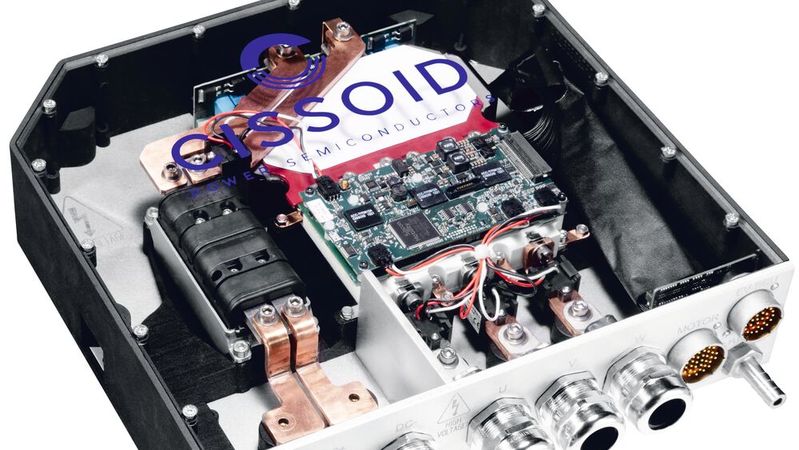
Image 1: Cissoid's SiC inverter reference design.
(Image: CISSOID)
Pierre Delatte is CTO at Cissoid
Freight transport, off-road and industrial vehicles, shipping, and aviation contribute more than 55 percent [1] to the total greenhouse gas emissions from internal combustion engines. The electrification of these drivetrains could make a big difference in the fight against climate change. However, the large number of drives in use worldwide is associated with a great variety of types and platforms.
To develop new electric drives quickly, engineers need comprehensive support. The differences are not only physical in terms of size, shape, and weight. The requirements for functional and electrical safety, as well as environmental conditions, are highly dependent on the applications and geographical markets, but also take into account that the competitive situation requires rapid market introduction.
For greater performance and reliability, silicon carbide (SiC) is the power semiconductor technology of choice. Range anxiety is one reason why the car market has moved away from silicon and towards more energy-efficient SiC. Vehicles such as buses operate on known routes, while off-road vehicles cover relatively short distances. In these applications, the high operating voltage of SiC allows faster charging for shorter turnaround times, and the ability to operate at high temperatures contributes to maximum reliability. SiC modules also require fewer components to share the load. In addition, SiC MOSFETs can be smaller relative to their breakdown voltage than their silicon counterparts. Therefore, the modules are also smaller.
However, SiC power components are not a direct replacement for silicon MOSFETs or IGBTs. It is not easy to control a gate in a way that ensures fast and smooth switching operations at high frequencies. Additional challenges include the integration of hardware components, particularly the inverter and intelligent power module (IPM), and the setting up and calibrating of the motor control software.
Faster development
To overcome development challenges and accelerate the market launch of robust and reliable SiC power modules (Figure 1), Cissoid provides a SiC traction inverter platform and reference design. Drive manufacturers can use it to create systems that can operate at battery voltages up to 850 V. The hardware is modular and scalable, in order to create designs with different rated powers.
The reference design addresses aspects of the inverter that are known to be difficult and time-consuming to correct. Key components include a 3-phase 1,200 V IPM (Intelligent Power Module) already equipped with a gate driver optimized for SiC applications, designed for high temperatures (Figure 2). The driver delivers gate peak currents of over 10 A and can operate at ambient temperatures up to 125 °C.
Since the SiC gate driver is already integrated into the power module, users can start directly with their own solution strategy. The design is already validated and optimized for fast switching speeds and low losses. It is immune to high di/dt and du/dt effects and contains robust protection devices for the power stages. This significantly reduces the number of runs required to fine-tune module performance and ensure adequate thermal management. The additional hardware of the reference design includes DC and phase current sensors, EMI filters, a compact liquid cooler, and a compact DC link capacitor. The latter was specifically developed for the inverter platform and covers a wide range of voltage and current options.
Software control and calibration
To complete the reference design, an electric motor control board with an application-specific processor and software is also available, both pre-certified for functional safety according to ISO 26262 (ASIL level D). The motor control software allows numerous adjustments without affecting the certification for functional safety. This allows the motor's behavior to be flexibly optimized according to the requirements. Users can thus run their own application software.
Date: 08.12.2025
Naturally, we always handle your personal data responsibly. Any personal data we receive from you is processed in accordance with applicable data protection legislation. For detailed information please see our privacy policy.
Consent to the use of data for promotional purposes
I hereby consent to Vogel Communications Group GmbH & Co. KG, Max-Planck-Str. 7-9, 97082 Würzburg including any affiliated companies according to §§ 15 et seq. AktG (hereafter: Vogel Communications Group) using my e-mail address to send editorial newsletters. A list of all affiliated companies can be found here
Newsletter content may include all products and services of any companies mentioned above, including for example specialist journals and books, events and fairs as well as event-related products and services, print and digital media offers and services such as additional (editorial) newsletters, raffles, lead campaigns, market research both online and offline, specialist webportals and e-learning offers. In case my personal telephone number has also been collected, it may be used for offers of aforementioned products, for services of the companies mentioned above, and market research purposes.
Additionally, my consent also includes the processing of my email address and telephone number for data matching for marketing purposes with select advertising partners such as LinkedIn, Google, and Meta. For this, Vogel Communications Group may transmit said data in hashed form to the advertising partners who then use said data to determine whether I am also a member of the mentioned advertising partner portals. Vogel Communications Group uses this feature for the purposes of re-targeting (up-selling, cross-selling, and customer loyalty), generating so-called look-alike audiences for acquisition of new customers, and as basis for exclusion for on-going advertising campaigns. Further information can be found in section “data matching for marketing purposes”.
In case I access protected data on Internet portals of Vogel Communications Group including any affiliated companies according to §§ 15 et seq. AktG, I need to provide further data in order to register for the access to such content. In return for this free access to editorial content, my data may be used in accordance with this consent for the purposes stated here. This does not apply to data matching for marketing purposes.
Right of revocation
I understand that I can revoke my consent at will. My revocation does not change the lawfulness of data processing that was conducted based on my consent leading up to my revocation. One option to declare my revocation is to use the contact form found at https://contact.vogel.de. In case I no longer wish to receive certain newsletters, I have subscribed to, I can also click on the unsubscribe link included at the end of a newsletter. Further information regarding my right of revocation and the implementation of it as well as the consequences of my revocation can be found in the data protection declaration, section editorial newsletter.
The control board was developed around the field programmable control unit (FPCU) Olea T222 from Silicon Mobility. This allows the reference design to combine the software-based flexibility of a conventional processor with hardware acceleration to ensure real-time performance up to the highest desired engine speed. The inclusion of the control board also helps the reference design to avoid the usual mechanical and electrical challenges of integration when bringing together the control board and the IPM.
The Olea App for Inverters is a flexible and customizable control software (Figure 3). It allows configuration and calibration parameters to be changed offline or in real time. In this way, the software can be adapted to any electric drive configuration and power range. The software also has a debugging and calibration framework including a graphical interface. With the Olea Composer, developers can shorten the time needed to optimize the motor control software (see box for more information about this four-stage process).
Performance of the SiC inverter
Once the parameters are set up, the motor can be tested and the efficiency of the converter-motor combination can be determined. Images 4a and 4b show the comparison of the performance of the SiC-based inverter with that of a silicon IGBT inverter, which was tested under similar real conditions.
With increasing speed and load demand, the motor torque decreases significantly during operation with the IGBT-based drive due to its lower efficiency. The self-heating associated with the energy losses in the module cannot be dissipated without greatly increased cooling. In contrast, the highly efficient SiC-based drive approaches the maximum torque over a much wider speed and load range.
Setting up and calibrating the drive
The Olea Composer tool suite helps the user get the motor running according to customer specifications. It assists in calibrating parameters such as voltage, rated power, speed, and torque to achieve an optimal working range. Once this is completed, the efficiency of the inverter and motor can be represented in the real test environment.
Setting up and calibrating in four steps:
Step 1 - Configuration of software parameters:
Configuration of the Olea App Inverter software according to the parameters of the electric motor.
Step 2 - Setting up the inverter hardware:
Setup of the electric motor including components such as resolver and temperature sensors. Connection of the electronic control unit (ECU) and the inverter's interfaces (e.g. CAN, safety) as well as the power supply and cooling interfaces. Checking the inverter's safety interfaces with the test stand.
Step 3 - Calibration of the control system:
Open-Loop Mode: Calibration of the current and voltage sensor signal conditioning chains through the Olea T222 FPCU.
Partial Open-Loop Mode: Calibration of the position sensor offset, regardless of whether resolvers or inductive sensors are used.
Current Control Mode: internal PI controller tuning of ID and IQ vectors for field-oriented control.
Torque Control: Fine-tuning of the torque control loop for precision and dynamic behavior. Speed Control Mode: Calibration of the speed controller.
Step 4 - Advanced System Optimization:
Scaling the switching frequency: Adjusting the switching frequency depending on speed and phase currents.
Dead time compensation: Adjusting the dead time compensation algorithm to minimize phase current harmonics.
Flux weakening: Optimizing the id/iq set values for efficient operation in the area of maximum torque per voltage (MTPV).
SVPWM/DPWM: Definition of the threshold between space vector pulse width modulation (SVPWM) and discontinuous pulse width modulation (DPWM), which allows higher efficiency at high speeds. With this approach, the reference design can be tuned to achieve over 99 percent efficiency at a 700 V bus and up to 4,000 rpm, as shown in Figure 5.
Conclusion
The bus, truck and agricultural vehicle sectors offer an excellent opportunity for electrification and reduction of emissions. SiC power components contribute to maximizing the reliability and operating time of vehicles and achieving higher efficiency in the usage area compared to silicon IGBTs or MOSFETs.
The complexity of developing with SiC and the need to ensure a quick market launch require a flexible development platform that helps engineers meet the goals for various vehicle categories and types.
A complete reference design that provides solutions to the key challenges of SiC design while allowing flexibility and scalability for various power levels and battery voltages for small to large vehicles, minimizes design risks and helps accelerate market launch. (mr)



:quality(80)/p7i.vogel.de/wcms/31/1f/311fb5b8aa1683b31cca284c8d33f443/0130073373v1.jpeg "Ceratizit has forged a very stable supply chain through a sophisticated and comprehensive recycling concept as well as through its holdings in tungsten mines. Here are some details ... (Image:Ceratite)")
:quality(80)/p7i.vogel.de/wcms/4c/49/4c49ab206af08de47d42c35bacc89c1d/0129539746v1.jpeg "With CPQ software, sales staff can create quotes for complex heavy-duty vehicles in minutes. (Image:TII Scheuerle)")
:quality(80)/p7i.vogel.de/wcms/bc/29/bc29ee18ce776b1915e10e07c1525f3a/0129766196v1.jpeg "The control cabinet is integrated into the rear of the press frame and offers accessibility with a small overhang thanks to the variable door opening. (Image:Tox)")
:quality(80)/p7i.vogel.de/wcms/fe/8a/fe8af1b829b085210fef4c1fa8abddb5/0129784389v1.jpeg "As an integral part of Koch Pac-Systeme's Predictive Pack digital service product, the gearboxes with Cynapse and Wittenstein's Smart Services make it possible to detect damage risks in the packaging specialist's machines at an early stage. (Image:Koch Pac systems)")
:quality(80)/p7i.vogel.de/wcms/b5/34/b534e64b2db218cdb5ad938898cbed56/0130044810v1.jpeg "The magnet of the torus-shaped tokamak reactor will generate magnetic pulses lasting up to 500 seconds and heat the enclosed plasma to a temperature of 150 million degrees. (Image:Iter)")
:quality(80)/p7i.vogel.de/wcms/97/28/9728e560d751dd54acd8b88a82ff7330/0129610882v1.jpeg "Temperature measuring devices are essential for monitoring industrial processes and thus ensuring high product quality. (Image:Micro-Epsilon)")
:quality(80)/p7i.vogel.de/wcms/6b/0d/6b0d694b060190016a4db18401fa55eb/0129937458v1.jpeg "(Picture: ©AI-generated)")
:quality(80)/p7i.vogel.de/wcms/db/68/db689490e348201603dd30447711ea2b/0129578734v1.jpeg "With three-axis vibration measurement (X, Y and Z axes) and temperature detection, the CMSVT38 condition monitoring sensor provides detailed status information that helps to detect machine damage at an early stage. (Image:Kübler)")
:quality(80)/p7i.vogel.de/wcms/48/8a/488afa7c9416394023a5ea1095f4ee4b/rfc4800-1-787x443v1v1.jpeg "Precise, intelligent and robust sensors will play a key role in an increasingly automated and data-driven world. (Image:Novotechnology)")
:quality(80)/p7i.vogel.de/wcms/08/70/087062e2e1a9b9add5777410dd746ee9/adobestock-1923991605-5607x3156v1v1.jpeg "A new type of tactile sensor, inspired by human skin, even recognizes grains of sand. (Image:Curioso.Photography - stock.adobe.com)")
:quality(80)/p7i.vogel.de/wcms/7f/08/7f087d7013424d123ab7275cd2e3fe55/adobestock-809456218--c2-a9-20degimages-20-e2-80-93-20stock-adobe-com-ki-generiert-4179x2351v1v1.jpeg "The digital upgrading of existing machines conserves resources, saves energy and reduces the need for new production. (Image:Degimages - stock.adobe.com/AI-generated)")
:quality(80)/p7i.vogel.de/wcms/dd/ce/ddcef80b290218276bf857cdb64a45e1/finkel-stephan-4162x2341v1.jpeg "Stephan Finkel, Partner and Industry Lead Defence & Security at 3DSE (Source: 3DSE)")
:quality(80)/p7i.vogel.de/wcms/34/e2/34e2a9e46e59eb28f09f9a5fdf41ff9a/0130091813v1.jpeg "Electrical drive trains require a multidimensional concept of performance characterization. Rohde & Schwarz has developed the MXO 3 oscilloscope series for this purpose. (Image:Rohde & Schwarz)")
:quality(80)/p7i.vogel.de/wcms/c9/2a/c92af18e41b077a518994a2ba60eb09f/0130037726v1.jpeg "The Renault subsidiary has presented a new brand strategy (Image:Alpine)")
:quality(80)/p7i.vogel.de/wcms/d8/fc/d8fc13ba0ae6e2180b3954cb1f1bd34c/0130060162v1.jpeg "Volkswagen has started series production of the ID Unyx 08. The model was developed in collaboration with Xpeng. (Image:Volkswagen)")
:quality(80)/p7i.vogel.de/wcms/f5/80/f5809e877017e40b413b48fcd8452246/cefmof-hydrogen-station-29-2048x1366-2048x1152v1v1.jpeg "The hydrogen filling station in Jyväskylä. The electrolyzer is installed in the fenced area at the top right. (Image:Cefmof Hydrogen)")
:quality(80)/p7i.vogel.de/wcms/3d/f2/3df286b8c62e72218e4ea42dcd959ee1/0130050208v1.jpeg "The Heracles chip from Intel calculates fully encrypted data without decrypting it. According to the company, the chip is 1,074 to 1,547 times faster than an Intel Xeon with 24 cores in FHE (Fully Homomorphic Encryption) computing operations. (Image:Intel)")
:quality(80)/p7i.vogel.de/wcms/f6/a5/f6a587801c676040f1e6413a7d305e33/0130062380v1.jpeg "Nvidia is investing 4 billion US dollars in silicon photonics. The aim is to avoid an impending bottleneck in the AI infrastructure. (Image:freely licensed)")
:quality(80)/p7i.vogel.de/wcms/02/36/02364f083b3023cee3b3f0893ea3f859/0129857003v1.jpeg "AI will continue to drive growth in the semiconductor market in 2026. (Image:Dall-E / AI-generated)")
:quality(80)/p7i.vogel.de/wcms/61/8f/618f16f8fa95ec6cc838ca9bfb5dbaf1/0130027046v1.jpeg "The Belgian Research Institute has set up a European university consortium on the subject of CMOS 2.0. It brings together 26 university groups to research chip technologies that go beyond conventional transistor scaling. (Image:Imec)")
:fill(fff,0)/images.vogel.de/vogelonline/companyimg/76800/76895/65.jpg "FAULHABER_120mm.jpg ()")
:fill(fff,0)/p7i.vogel.de/companies/67/eb/67eba621ef6ea/logo2.png "logo2 (Wuxi InfiMotion)")
:quality(80)/p7i.vogel.de/wcms/5e/3d/5e3db63701d479418c3be4d1fdafff78/0118171665v1.jpeg "Image 4a: Performance data of the SiC inverter up to 260 kW at 13,500 rpm showing efficiency over the entire speed and torque range.(Image: CISSOID)")
:quality(80)/p7i.vogel.de/wcms/cb/51/cb51e0d663a39f9214c6f6829e6ad106/0118176144v1.jpeg "Image 3: The control software OLEA APP INVERTER offers numerous functions to regulate and optimize motor operation.(Image: CISSOID)")
![Image 2: The Intelligent Power Module (IPM) consists of a SiC power stage with pin fin cooling and a top-mounted gate driver [2].(Image: Melting Prod SPRL)](https://cdn1.vogel.de/SGrnfuh_JjVjNGp9JSrHudkpqvM=/300x300/smart/filters:format(jpg):quality(80)/p7i.vogel.de/wcms/a0/4f/a04fbe534d7e28e4960a04889795f6c4/0118171934v1.jpeg "Image 2: The Intelligent Power Module (IPM) consists of a SiC power stage with pin fin cooling and a top-mounted gate driver [2].(Image: Melting Prod SPRL)")
:quality(80)/p7i.vogel.de/wcms/e8/43/e8438854cffa6a1750711550ca5aff5b/0118171881v1.jpeg "Image 1: Cissoid's SiC inverter reference design.(Image: CISSOID)")
:quality(80)/p7i.vogel.de/wcms/17/21/1721b98b7580a86c7790f607395878a1/0129697493v1.jpeg "Universal: Motors are used everywhere. (Image:Microchip Technology)")
:quality(80)/p7i.vogel.de/wcms/34/e2/34e2a9e46e59eb28f09f9a5fdf41ff9a/0130091813v1.jpeg "Electrical drive trains require a multidimensional concept of performance characterization. Rohde & Schwarz has developed the MXO 3 oscilloscope series for this purpose. (Image:Rohde & Schwarz)")