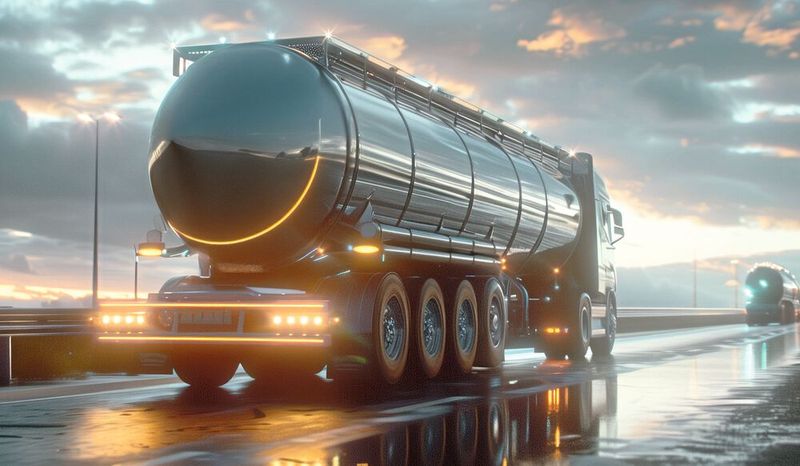
In the transport of hydrogen, safety and efficiency are crucial. High-precision inclination sensors are an indispensable tool in the hydrogen transport sector, helping to meet these requirements.
Safety is a very important and central issue in the handling of hydrogen.
(Image: Michael Heßhaus / Midjourney)
The use of hydrogen as an energy carrier plays a crucial role in the transition to a more sustainable energy future. Hydrogen transport and storage are essential components of this value chain. Safety and efficiency are central requirements in this context. High-precision inclination sensors can be a key technology to meet these demands, as they can significantly enhance the monitoring and control of transport processes.
Chemical And Physical Characteristics
But why must inclination be monitored during hydrogen transport? On a chemical and physical level, there are characteristics that can lead to significant problems if mishandled.
For example, hydrogen is the lightest and smallest element in the periodic table. Due to its low density and high diffusion rate, hydrogen can escape through small openings and pores, increasing the risk of leaks. Inclinations can potentially exacerbate these risks, especially when hydrogen is in liquid form.
Furthermore, liquid hydrogen is stored and transported at extremely low temperatures (around –423 °F). These temperatures require special materials and insulation to minimize evaporation and energy losses. An inclination can affect the temperature distribution within the tank, leading to uneven thermal stresses and potentially contributing to the formation of cracks or leaks.
The very low boiling point of –252.9 °C (–423 °F) poses an additional risk in closed containers. Even minor heat input can cause the hydrogen to vaporize. If the transport container is inclined, the liquid phase can separate from the gaseous phase, favoring an uneven pressure build-up, which could in turn lead to the failure of seals or safety valves.
The high chemical reactivity also presents challenges for designers. In the presence of catalysts, hydrogen embrittlement can occur, where adjacent metals lose their ductility. An inclination can further increase mechanical stresses and deformations in the materials, which collectively heighten the likelihood of cracks and fractures in the transport containers.
Hydrogen belongs to the group of highly flammable substances and forms explosive mixtures with air in the concentration range of 4 to 75 percent by volume. Inclination could lead to local concentrations that fall within the explosive range. A spark or static discharge could then trigger an explosion.
KAS4000 Series Inclination Sensors
These points clearly emphasize the necessity for precise monitoring and control of inclination angles in hydrogen transportation. Suitable sensors are widely used and differ in many aspects. Generally, it can be said that inclination sensors, by definition, measure an object's angle relative to gravity. They often operate based on MEMS (Micro-Electro-Mechanical Systems) and function with high precision. Typically, they consist of a sensing element that responds to changes in inclination and an electronic evaluation unit that processes and forwards the signals.
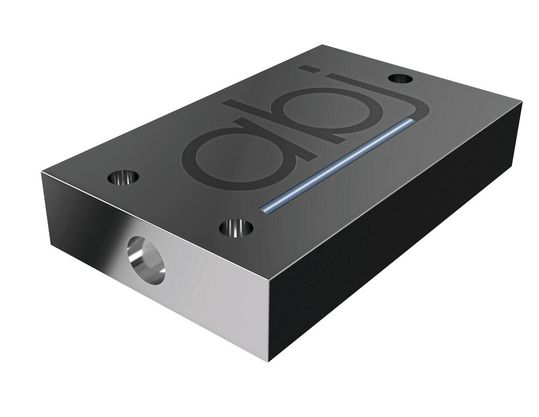
The KAS4000 series dual-axis inclination and acceleration sensors measure both statically (inclination) and dynamically (acceleration).
(Image: a.b.jödden)
An example of this is the new KAS4000 series from Swiss producer Kelag Künzli, distributed by sensor specialists a.b.Jödden in Krefeld. This model series features the typical characteristics of its predecessors and adds some functions that can play a significant role, especially in transportation. The dual-axis inclination and acceleration sensors measure statically (inclination) and dynamically (acceleration). The angle measurement is sinus-compensated. A high repeatability of 0.01% and high long-term stability of 0.03%/a are the result of a new, unique technology.
Advanced Construction in Three Layers
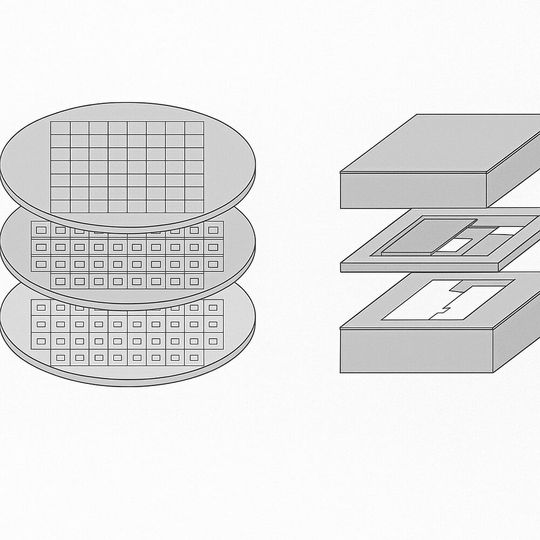
Novel three-layer construction of the KAS4000 series
(Image: a.b.jödden)
The sensors are based on advanced "Micro Machined" technology built in three layers. This three-dimensional structure is hermetically sealed with glass inlays. This complex construction results in a long-term stable, high-resolution, and shock-resistant sensor. Gas damping reduces vibrations and prevents overshoot and disruptive resonance oscillations.
Special Requirements for Hydrogen Transport
The integration of inclination sensors in hydrogen transport requires meeting specific requirements:
Precision and sensitivity: Sensors must be extremely precise and sensitive to reliably detect even the smallest inclination changes.
Robustness and reliability: Since the sensors operate in challenging environments, they must be robust and reliable against vibrations, temperature fluctuations, and mechanical stress.
Safety standards: The sensors must comply with the strict safety and explosion protection requirements of the hydrogen transport sector.
Enclosure With Protection Class IP68
Precise and reliable measurements are readily achievable with this type of sensor technology. The safety aspect is also addressed: the entire assembly is fully encapsulated in a housing made from solid, impact-resistant POM (polyoxymethylene), and the M8 connector is sealed. This construction already achieves protection class IP68. If an explosion protection class is desired, additional certified housings with optical passages can be used. This allows the use of the latest Quality of Life feature of the KAS4000 series:
Date: 08.12.2025
Naturally, we always handle your personal data responsibly. Any personal data we receive from you is processed in accordance with applicable data protection legislation. For detailed information please see our privacy policy.
Consent to the use of data for promotional purposes
I hereby consent to Vogel Communications Group GmbH & Co. KG, Max-Planck-Str. 7-9, 97082 Würzburg including any affiliated companies according to §§ 15 et seq. AktG (hereafter: Vogel Communications Group) using my e-mail address to send editorial newsletters. A list of all affiliated companies can be found here
Newsletter content may include all products and services of any companies mentioned above, including for example specialist journals and books, events and fairs as well as event-related products and services, print and digital media offers and services such as additional (editorial) newsletters, raffles, lead campaigns, market research both online and offline, specialist webportals and e-learning offers. In case my personal telephone number has also been collected, it may be used for offers of aforementioned products, for services of the companies mentioned above, and market research purposes.
Additionally, my consent also includes the processing of my email address and telephone number for data matching for marketing purposes with select advertising partners such as LinkedIn, Google, and Meta. For this, Vogel Communications Group may transmit said data in hashed form to the advertising partners who then use said data to determine whether I am also a member of the mentioned advertising partner portals. Vogel Communications Group uses this feature for the purposes of re-targeting (up-selling, cross-selling, and customer loyalty), generating so-called look-alike audiences for acquisition of new customers, and as basis for exclusion for on-going advertising campaigns. Further information can be found in section “data matching for marketing purposes”.
In case I access protected data on Internet portals of Vogel Communications Group including any affiliated companies according to §§ 15 et seq. AktG, I need to provide further data in order to register for the access to such content. In return for this free access to editorial content, my data may be used in accordance with this consent for the purposes stated here. This does not apply to data matching for marketing purposes.
Right of revocation
I understand that I can revoke my consent at will. My revocation does not change the lawfulness of data processing that was conducted based on my consent leading up to my revocation. One option to declare my revocation is to use the contact form found at https://contact.vogel.de. In case I no longer wish to receive certain newsletters, I have subscribed to, I can also click on the unsubscribe link included at the end of a newsletter. Further information regarding my right of revocation and the implementation of it as well as the consequences of my revocation can be found in the data protection declaration, section editorial newsletter.
An included infrared interface enables adjustment and calibration without removal. The maximum measurable inclination angle of ± 90° can be precisely reduced to fit the specific application, thus increasing accuracy. Factory-level reconfiguration would also be possible at any time with this technology.
Fully Leverage the Advantages of Hydrogen
High-precision inclination sensors are an indispensable tool in hydrogen transportation, contributing to ensuring safe and efficient transport. The continuous improvement and integration of these technologies will be crucial to meeting the growing requirements and safety standards in the hydrogen economy. Through investments in research and development, as well as collaboration between industry and science, these challenges can be overcome, and the benefits of hydrogen as a sustainable energy carrier can be fully utilized.



:quality(80)/p7i.vogel.de/wcms/1d/85/1d856c359855885a633f48d9f77fe69c/0130227630v1.jpeg "Two \"HBZ AeroCell 160\" in the Moyola factory. The machines mark a significant milestone in Moyola's ongoing commitment to performance, innovation and global competitiveness. (Image:Moyola)")
:quality(80)/p7i.vogel.de/wcms/78/e3/78e3db1b32fb30c9a9195e36864db885/0129830906v1.jpeg "Siemens and Caphenia sign the partnership agreement. From left to right: Nicky Ahnert, Jürgen Giegerich, Frank Knauf (all Siemens), Dr. Mark Misselhorn, Dr. Andreas Waibel (both Caphenia). (Image:Siemens)")
:quality(80)/p7i.vogel.de/wcms/5a/d7/5ad72fd14971344dbfed431e07ae6423/0130200276v1.jpeg "A new machining job needs to be processed! Open the drawer—but the right tool is missing! That's what happens when you work with old data. But EVO Informationssysteme has an AI tool that means the problem will never slow down production again. (Image:EVO Information Systems)")
:quality(80)/p7i.vogel.de/wcms/53/f7/53f7dadbe4d656a3fd4f4077445f29f6/0129828707v1.jpeg "Thanks to its compact design and drilling/unscrewing function, the Fire Birdie is suitable for applications with limited installation space and frequent tool changes. (Image:Marcel Kraibühler)")
:quality(80)/p7i.vogel.de/wcms/21/3b/213b5e5454b0c4344ba0eaa700857607/0129635774v1.jpeg "The QRV flow control valves from Lee are available in sizes from 5.5 to 18 mm and cover a flow rate of 0.2 to 20 l/min. Depending on the version, the pressure range is either between 0.1 and 2.75 bar (1.5 - 40 psi) or between 0.17 and 2 bar (2.5 - 30 psi). (Image:Lee)")
:quality(80)/p7i.vogel.de/wcms/63/e9/63e9db3259a656cca88c5f7158af3fcb/0129385769v1.jpeg "The Agibot A2 at a Fortune China event in December 2025. (Image:Agibot)")
:quality(80)/p7i.vogel.de/wcms/df/a1/dfa1786a3b05f5ff2e51d0f633695c57/0130137877v1.jpeg "Openclaw inspires AI communities. (Image:Openclaw.ai)")
:quality(80)/p7i.vogel.de/wcms/16/9c/169ce3040d09673a91a403598d15dbf1/0130162776v1.jpeg "From networked cameras to vacuum robots, industrial robots, drones and humanoids, AI is moving ever closer to sensors and actuators as it develops from \"basic intelligence\" to \"multi-purpose intelligence\", while software-defined architectures make long-term systems flexibly upgradeable for new functions and AI models. (Image:Globalfoundries)")
:quality(80)/p7i.vogel.de/wcms/78/28/7828775af76773458b4d1409ceb1cf0c/368945-20dam-20imagery-digital-transformation-pc-1920x1079v1v1.jpeg "Complex development projects with high regulatory requirements, such as in the aerospace industry, benefit in particular from the Intelligent Product Lifecycle. (Image:PTC)")
:quality(80)/p7i.vogel.de/wcms/e7/82/e7822e208621ba2ae892d609e60481e8/texas-20uni-850x478v1v1.jpeg "Superfoam is a composite that is capable of absorbing 10 times more energy than a conventional foam. (Image:Abbey Toronjo/Texas A&M University Division of Marketing & Communications)")
:quality(80)/p7i.vogel.de/wcms/da/4d/da4da8d34671dc6bce80e496212de877/0129850788v1.jpeg "Mate-XT Go supports the arms and shoulders during overhead work and repetitive tasks and is designed to significantly reduce muscle strain in everyday working life. (Image:Comau)")
:quality(80)/p7i.vogel.de/wcms/3f/cc/3fccb748b0fe16f1f61249d94c72f126/0130149439v1.jpeg "Requirements for integrated power supply systems: Precise AC and DC power supply systems that not only provide energy, but also reliably combine measurement, analysis and system integration. (Image:Schulz Electronic)")
:quality(80)/p7i.vogel.de/wcms/2b/0b/2b0b5ff55299be32174cb0ed76718253/0130177406v1.jpeg "Rolls-Royce has received funding of 70 million US dollars from the EU public-private partnership \"Joint Undertakings for Clean Aviation\". (Image:Rolls-Royce)")
:quality(80)/p7i.vogel.de/wcms/95/7e/957ed49b185794b3e76b9e610a8a389f/0130217926v1.jpeg "Bosch wants to offer components for e-vehicles in India together with Tata. (Image:Bosch)")
:quality(80)/p7i.vogel.de/wcms/d8/11/d8118b193939ca897a4962aeb1bbc5ae/0130224537v1.jpeg "Opel plans to participate in the Formula Ene racing series from fall 2026 with the fully electric Gen4 racing cars. (Image:Opel)")
:quality(80)/p7i.vogel.de/wcms/92/f1/92f12f22e5045c6af002ab48a59841d0/0130171646v1.jpeg "The US electric vehicle manufacturer Rivian is to supply self-driving vehicles to Uber. (Image:Rivian)")
:quality(80)/p7i.vogel.de/wcms/3a/50/3a50d3f269f38f14d7a25a93c6f2b2f8/0130147601v1.jpeg "The compact modulator enables fast and energy-efficient data transmission and can be manufactured cost-effectively. (Image:Hugo Larocque, EPFL)")
:quality(80)/p7i.vogel.de/wcms/54/d3/54d34bf24912ac87780c1fbfa745dad7/0130174841v1.jpeg "Simulation can help to optimize material flows in production. (Image:freely licensed)")
:quality(80)/p7i.vogel.de/wcms/1f/8e/1f8e294ac0af3a801575c7e1400cc830/0130164847v1.jpeg "While micro-injection molding takes 10 to 12 weeks for critical components, 3D printing offers faster manufacturing and greater flexibility for design iterations, Collins said. (Image:Boston Micro Fabrication)")
:quality(80)/p7i.vogel.de/wcms/ae/8f/ae8f87001d67841b6a6f9e3efb5a2f1a/0130176499v1.jpeg "Almost 160 exhibitors and 2,400 participants came to Munich for LOPEC 2026 to find out about printed electronics. (Image:Messe München GmbH)")
:fill(fff,0)/images.vogel.de/vogelonline/companyimg/76800/76895/65.jpg "FAULHABER_120mm.jpg ()")
:fill(fff,0)/p7i.vogel.de/companies/67/eb/67eba621ef6ea/logo2.png "logo2 (Wuxi InfiMotion)")
:quality(80)/p7i.vogel.de/wcms/2e/06/2e0693d02acb99e2bab7daef25db3a9d/0123888763v1.jpeg "Our solar system has fascinated humanity for thousands of years. Astronomical research seeks answers to the great questions of human existence. (Image:Anthony Wesley)")
:quality(80)/p7i.vogel.de/wcms/66/2d/662dce5c2dc45696bc98faf2917a2c50/0124271041v1.jpeg "A completely finished switch cabinet has, among other things, a distributor, circuit breakers. contactors and connector and coupling blocks. (Image:Friedrich Lütze GmbH)")
:quality(80)/p7i.vogel.de/wcms/fb/a0/fba0d7559dab6fbdde49cbd32b968636/0126113524v1.jpeg "For the energy transition to succeed, machines and systems must operate energy-efficiently. (Image: ©OlegDoroshin - stock.adobe.com)")