Magnesium alloys are processed in melting furnaces, where extreme heat and large temperature fluctuations prevail. If the so-called crucible fails, the entire casting cell comes to a halt. Rauch Furnace Technology has drastically reduced this risk by using a digital twin to monitor the crucible condition in detail.
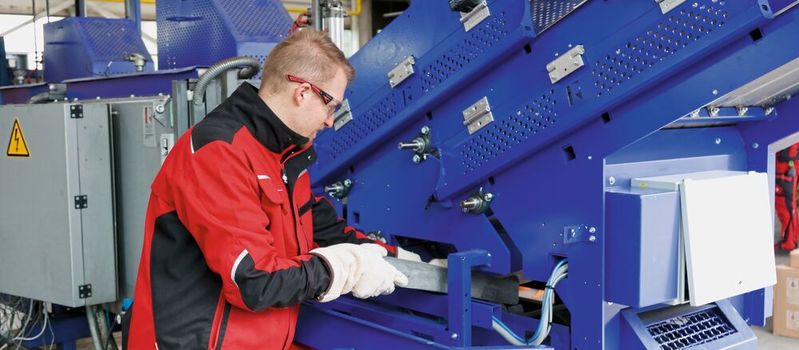
Recharging a Rauch FT melting system with Mg ingots. The quality of the melt material largely determines the maintenance requirements of the system.
(Image: Rauch-FT)
What connects hydropower and foundry technology? They are traditional industries where large forces are at work. They are also considered conservative and often underestimated when it comes to topics like digital transformation. However, this is unjust, as seen in the example of Verbund, the operator of large Austrian hydropower plants, which has been digitally securing the operational readiness of its facilities for years.
For this purpose, real sensors supply the condition monitoring of critical components with current load data. Virtual sensors at critical points also allow for the evaluation of the occurring load and assessment of wear. When defined threshold values that indicate a failure are reached, technicians can take care of maintenance or replacement without delay.
The presentation of the Verbund project at the Cadfem Conference in Linz in 2019 so inspired Florian Sipek, a physicist working for the Austrian specialist in melting technology Rauch-FT, that he applied the "lessons learned" to his own solutions. It is important to consider that melting furnaces are quite complex: when metals are melted, recycled, and alloyed, temperatures reach up to 2,000 degrees Celsius (3632 °F), gas flows reach speeds of up to 1,000 km/h (approx. 621 mph), and load changes are the norm.
Greater reliability of the melting systems is of great importance to operators. If a system suddenly stops, not only is there a risk of damage to the furnace but also significant production delays or outages. In the worst case, there is a risk to employee safety.
Thus, the idea was born to use digital twins to significantly reduce such risks by making problems visible early on. Additionally, Rauch-FT aims to provide customers with valuable insights during ongoing operations, meaning they can be alerted to maintenance or cleaning needs.
Data and Simulation Knowledge Perfectly Orchestrated
In foundry technology, there were previously no comparable approaches. Rauch-FT, like its inspirer Verbund, tackled the challenge with Itficient and Cadfem: Itficient was responsible for data management, business model, and IT architecture, while Cadfem focused on simulation—from flow to various transient and nonlinear structural mechanical applications and sensitivity studies to system simulations including condition assessment. Thus, Rauch-FT was well-prepared for the digital twin.
On the one hand, many systems and components are already being simulated. This mostly involved fluid mechanics, with the range extending from transient cooling and heating processes to operations in dosing or flow pumps and even chemical reactions. On the other hand, a large data pool is already available via remote maintenance alongside a powerful IT infrastructure. The evaluation of this data provided valuable insights into the operation of the furnaces.
How Long Does the Crucible Last?
The ideal component for the first practical implementation is the crucible. The welded steel construction is highly stressed: "2,000 degrees Celsius (3632 °F) hot exhaust gas outside, corrosive shielding gas, and hydrostatic pressure from up to 4 tons of molten metal inside," explains Florian Sipek. "Additionally, there are extreme temperature gradients, the radiant power of the flame, and high speeds with inhomogeneously distributed radiation energy." If the crucible fails, the system comes to a halt.
Maintenance is usually based on experience, which can work—in an ideal world. However, as soon as irregularities occur in the processes or handling, failure and consequential damage threaten. "That's exactly when the added value of predictive maintenance becomes apparent," Florian Sipek summarizes.
Influences of Segregation
The approach to digital condition monitoring of the crucible is based on a combination of real measurements and virtual sensors. Due to the segregation occurring in the melt (settling of certain chemical compounds), a "sump" forms at the crucible bottom. This locally changes the flow conditions and the material parameters of thermal conductivity and heat capacity, disrupting heat transport from the furnace chamber to the melt at the crucible bottom. Combined with the inhomogeneous temperature distribution on the outer wall, high stresses are generated in the crucible.
The sump quantity is therefore an important parameter for a correct assessment of the real-time stress on the crucible, and thus also for the reliability of predictive maintenance. Due to the environmental conditions in the crucible and furnace, the use of real sensors for temperature measurement is hardly possible. Thus, Cadfem's concept included virtual sensors for the simulations. Together with a sump quantity calculated from the temperatures and the process parameters, this allows local stress on the crucible to be inferred from just a few measurement points and input variables.
For predicting the remaining service life of the crucible, precise modeling of the temperature distribution in the furnace chamber through flow simulation (Computational Fluid Dynamics, CFD) and stresses at the weld seams (structural mechanics, FEM) is essential. On the CFD side, a combustion simulation of the burner and furnace chamber is conducted for accurate prediction of the flame temperature, thermal radiation, and momentum input. Based on the CFD results, a temperature field and stress analysis are performed, with the melt as a variable heat sink to model the melting of inserted ingots.
Date: 08.12.2025
Naturally, we always handle your personal data responsibly. Any personal data we receive from you is processed in accordance with applicable data protection legislation. For detailed information please see our privacy policy.
Consent to the use of data for promotional purposes
I hereby consent to Vogel Communications Group GmbH & Co. KG, Max-Planck-Str. 7-9, 97082 Würzburg including any affiliated companies according to §§ 15 et seq. AktG (hereafter: Vogel Communications Group) using my e-mail address to send editorial newsletters. A list of all affiliated companies can be found here
Newsletter content may include all products and services of any companies mentioned above, including for example specialist journals and books, events and fairs as well as event-related products and services, print and digital media offers and services such as additional (editorial) newsletters, raffles, lead campaigns, market research both online and offline, specialist webportals and e-learning offers. In case my personal telephone number has also been collected, it may be used for offers of aforementioned products, for services of the companies mentioned above, and market research purposes.
Additionally, my consent also includes the processing of my email address and telephone number for data matching for marketing purposes with select advertising partners such as LinkedIn, Google, and Meta. For this, Vogel Communications Group may transmit said data in hashed form to the advertising partners who then use said data to determine whether I am also a member of the mentioned advertising partner portals. Vogel Communications Group uses this feature for the purposes of re-targeting (up-selling, cross-selling, and customer loyalty), generating so-called look-alike audiences for acquisition of new customers, and as basis for exclusion for on-going advertising campaigns. Further information can be found in section “data matching for marketing purposes”.
In case I access protected data on Internet portals of Vogel Communications Group including any affiliated companies according to §§ 15 et seq. AktG, I need to provide further data in order to register for the access to such content. In return for this free access to editorial content, my data may be used in accordance with this consent for the purposes stated here. This does not apply to data matching for marketing purposes.
Right of revocation
I understand that I can revoke my consent at will. My revocation does not change the lawfulness of data processing that was conducted based on my consent leading up to my revocation. One option to declare my revocation is to use the contact form found at https://contact.vogel.de. In case I no longer wish to receive certain newsletters, I have subscribed to, I can also click on the unsubscribe link included at the end of a newsletter. Further information regarding my right of revocation and the implementation of it as well as the consequences of my revocation can be found in the data protection declaration, section editorial newsletter.
IT Integration and Digital Twin
The digital twin must reflect the individual conditions at the end customer—in the processes being modeled as well as in the used IT infrastructure. Therefore, a concept for IT integration is an important building block in the implementation. This involves processing sensor data, operating the digital twin, and addressing security and network issues. Itficient was able to build on a data pool and an IoT platform. The necessary microservices—receipt of sensor and machine data, calculation of virtual sensors, models and processes, data storage and analysis, as well as visualization of results—were integrated in such a way that IT resources were utilized optimally, no IT silos were created, and Rauch-FT retained full control over all processes, allowing it to further develop the system independently.
A powerful digital twin encompasses two essential aspects: accurate simulations and a reliable IT infrastructure. The project becomes successful when both aspects interlock. This has also been achieved at Rauch-FT because Cadfem and Itficient, two partners with extensive experience in their respective fields, were involved. At the same time, they maintain close communication with one another, being both organizationally connected as part of the Cadfem Group.
The third partner is Rauch-FT, supported by its pilot customer Georg Fischer Casting Solutions, who achieves greater occupational safety for employees with the digitally monitored melting furnace. In-depth product knowledge, openness to new ideas, extensive communication, a clear vision of what is to be achieved, and the involvement of all company areas in the project were the keys to success. Existing competencies were integrated, some tasks were carried out cooperatively, while others were outsourced as pure services—always in the spirit of complete knowledge transfer.
Scale Up Acquired Digital Twin Capabilities
Because the crucible was only the starting point—Rauch-FT wants to scale up the acquired capabilities for planning, building, and managing a digital twin and, in the future, provide all relevant components such as dosing pumps, heating systems, or circulation pumps and entire systems with digital solutions for predictive maintenance.
This vision does not end with our own products. A typical die-casting cell consists not only of the melting furnace but also of other components from various manufacturers. Whether it's robots, presses, heating/cooling devices, or the die-casting machine itself—in the foundry, almost every component has potential for the digital twin.
*Alexander Kunz is an editor at Cadfem Germany, Florian Sipek is Head of the R&D Department at Rauch Furnace Technology GmbH.



:quality(80)/p7i.vogel.de/wcms/a0/47/a04725ef9bd09fb6c9341a1bea1b5d93/0130443083v1.jpeg "Here, a type of plastic pallet is produced by thermoforming (vacuum forming or deep drawing) at the corresponding division of New England Plastics in the USA. This division, which specializes in so-called liners, is now part of Ringmetall ... (Image:New England Plastics)")
:quality(80)/p7i.vogel.de/wcms/23/99/23992bf2dcdc432c9b7209c34a4a7c48/0129733089v1.jpeg "Stork relies on the modular Neoswiss turning system from Iscar to shorten the set-up times for its sliding headstock lathes and work more productively. (Image:Iscar)")
:quality(80)/p7i.vogel.de/wcms/7d/e2/7de2923434b2f1a78ba5482d8d335269/0113143253v1.jpeg "In our China Market Insider we regularly provide you with relevant information directly from China. (Image:© Eisenhans - stock.adobe.com)")
:quality(80)/p7i.vogel.de/wcms/9d/2b/9d2b802f800e5caf17b2831e74228cd3/screenshot-202026-03-03-20103822-609x343v1v1.png "Visual comparison: on the left, a clean, burr-free cut edge; on the right, typical burr formation with oxidation discoloration. This illustrates how strongly parameter control and gas management influence the quality of the result. (CO₂ laser, oxygen cutting gas, sheet thickness approx. 15 mm). (Image:Picture: Rime)")
:quality(80)/p7i.vogel.de/wcms/b7/36/b736dfebc16c42d6901d0d0e1f390493/3d-druck-20factory-20--20ki-20generiert-1920x1079v1.png "(Source: AI-generated)")
:quality(80)/p7i.vogel.de/wcms/79/b2/79b21aad663f4a7bd4472afc1c1afc62/0130433994v1.jpeg "Mission Joyride: The free-flying robot (shown here in the rendering) will relieve the ISS crew of logistics tasks from 2027 with its two mechanical arms. (Image:Icarus Robotics)")
:quality(80)/p7i.vogel.de/wcms/6b/45/6b4546fa6ebf305c3660326909363f32/0130437089v1.jpeg "Industrial AI in action: Rockwell Automation presents practical solutions for self-controlling production systems at the Hannover Messe. (Image:Rainer Jensen, Deutsche Messe)")
:quality(80)/p7i.vogel.de/wcms/78/e9/78e9188c25a8a94e67c34c9bf8ffe495/visual-agile-20robots-20and-20google-20deepmind-20partner-20to-20bring-20intelligence-20to-20robotics-2500x1406v1v1.jpeg "Together, the partners are developing adaptable, intelligent robots for a wide range of applications (Image:Agile Robots SE)")
:quality(80)/p7i.vogel.de/wcms/59/a2/59a2b11f0aa1b700eff02addd5de8703/adobestock-1788280853--c2-a9-20satria-20-e2-80-93-20stock-adobe-com-5081x2860v1v1.jpeg "Quantum computers require extreme cooling to temperatures close to absolute zero in order to keep qubits stable. (Image:satria - stock.adobe.com)")
:quality(80)/p7i.vogel.de/wcms/49/38/493876a248943456b7e4a6db6edfc454/0130230765v1.jpeg "Safe and reliable in aircraft construction: light-curing adhesive bond combined with universal fastening elements. (Source: Delo)")
:quality(80)/p7i.vogel.de/wcms/b5/c7/b5c749d16c8a2e789c1469c2c8c1c387/0130452780v1.jpeg "Volvo Trucks completes road tests with its new hydrogen-powered trucks. (Image:Volvo Trucks)")
:quality(80)/p7i.vogel.de/wcms/ba/69/ba6975f417a85147084f38dc2cd209e2/0130451386v1.jpeg "Together with Nvidia, Hyundai wants to develop an architecture that will be used for level 4 robotaxis (image) as well as for level 2 customer vehicles. (Image:Hyundai)")
:quality(80)/p7i.vogel.de/wcms/93/4d/934de334b47abaa526c78cba1417d7af/0130343495v1.jpeg "The new SU7 is available in three price categories, \"Standard\", \"Pro\" and \"Max\" (Image:Xiaomi)")
:quality(80)/p7i.vogel.de/wcms/df/a0/dfa048434bb94f1b7d030e346b25b3ae/0130373541v1.jpeg "From August, BMW will be producing the i3 at its main plant in Munich - which the car manufacturer has extensively rebuilt for this purpose. (Image:Rainer Haeckl)")
:quality(80)/p7i.vogel.de/wcms/ee/09/ee09acbd6dc896df25affaa9e871e6e5/0130440053v1.jpeg "IMS chip module for simple system integration into an ion mobility spectrometer. (Image:Fraunhofer IPMS)")
:quality(80)/p7i.vogel.de/wcms/10/6c/106cd22de5f68a0f74639d654827228c/0130345302v1.jpeg "Made in India: According to the India Electronics and Semiconductor Association (IESA), the country should be able to produce between 75 and 80 million chips by the beginning of 2027, once the plants currently under construction become operational. (Image:Pixabay (Montage: Sebastian Gerstl))")
:quality(80)/p7i.vogel.de/wcms/a5/ed/a5ed6fda029d362732a293d6b19d74c4/0130444216v1.jpeg "Thirteen executives from the Chinese chip industry have drawn up a plan to achieve an 80% self-sufficiency rate for semiconductors by 2030. (Image:Maxim_Kazmin - stock.adobe.com)")
:quality(80)/p7i.vogel.de/wcms/31/a6/31a646018b34d8e0a44bfc8bf17837f6/0130361632v1.jpeg "For many companies, PFAS are considered indispensable in electronics production. (Image:freely licensed)")
:fill(fff,0)/images.vogel.de/vogelonline/companyimg/76800/76895/65.jpg "FAULHABER_120mm.jpg ()")
:fill(fff,0)/p7i.vogel.de/companies/69/88/69882c428938e/tmts2026-ticec-banner-en-2000px.png "tmts2026-ticec-banner-en-2000px (https://www.tmts.tw/en)")
:quality(80)/p7i.vogel.de/wcms/ba/54/ba54f630f0a351e734079d4208bcc6a2/0124876005v1.jpeg "Florian Sipek, Head of R&D at Rauch-FT: \"With the digital twin, we are advancing digitization even in such a traditional industry as foundry and demonstrating the benefits.\"(Image: Rauch-FT)")
:quality(80)/p7i.vogel.de/wcms/76/67/7667e30807ba3ca5f22d425ff3eebc52/0123825003v1.jpeg "The crucible was just the beginning. Rauch-FT is in the process of developing digital twins for other components of the furnace and accessory parts as well.(Image: Rauch-FT)")
:quality(80)/p7i.vogel.de/wcms/ed/b3/edb3cae1cf22c222f914be09e71835a0/0124808419v1.jpeg "The precise simulation of the thermal processes in the furnace chamber, conducted in collaboration with Cadfem specialists, significantly contributes to reliable prediction of the crucible condition.(Image: Rauch-FT)")
:quality(80)/p7i.vogel.de/wcms/b4/a5/b4a54f5d4204c74c02042c6c61ee824e/0124808251v1.jpeg "Complex and extremely rapid flow processes in the furnace chamber need to be modeled.(Image: Rauch-FT)")
:quality(80):fill(efefef,0)/p7i.vogel.de/wcms/67/ad/67adf92d254d2/elatec-wp-smart-factory.png "Elatec WP Smart Factory")
:quality(80)/p7i.vogel.de/wcms/5e/e3/5ee329167f111885b28f2c94bf380e0d/0127110091v1.jpeg "Digitalization: Digital twins are changing the way manufacturers manage their operations, perform maintenance, and make decisions. (Image:Gerd Altmann)")
:quality(80)/p7i.vogel.de/wcms/9b/0b/9b0b36b44295aec66449dc602f0db193/0127926769v1.jpeg "During ongoing operations, the digital twin becomes the central \"hub\" for process understanding. (Image:Hexagon)")