


:quality(80)/p7i.vogel.de/wcms/43/23/4323f084e85dabc5eb7bc2f577dd654e/0131573143v1v1.jpeg "The statistics office Eurostat took a look at how exports and imports with regard to EU countries fared in the first quarter of 2026... (Image: F. Schneidler)")
:quality(80)/p7i.vogel.de/wcms/a5/5a/a55acfd4b5ca53a59b5b9cd40537a356/0131592914v1.jpeg "Closer cooperation between the capital markets in Europe has been under negotiation for many years. The six largest EU economies have now taken a step forward, according to reports. However, this also entails stricter controls ... (Image:Flaggilus)")
:quality(80)/p7i.vogel.de/wcms/84/50/8450286fd20371bcb8c9fd254e84eba8/0131591665v1.jpeg "Now that relations with China have been discussed in Brussels, the Chinese dragon is taking the precaution of standing on its hind legs and making it clear to the EU that it will no longer put up with everything ... (Image:Jing Po)")
:quality(80)/p7i.vogel.de/wcms/a5/e6/a5e646776e849dba4e3b797644666b05/0131517170v1v1.jpeg "The sawing technology specialist Kasto announces that it has developed a new generation of controls that makes sawing even easier. And it has already been successfully tested in practice. Here's a quirky look at it and much more information in the text ... (Image:Kasto)")
:quality(80)/p7i.vogel.de/wcms/63/af/63af13ebca7a90a63942c48f87331fa3/0113143253v1.jpeg "In our China Market Insider, we regularly provide you with relevant information directly from China. (Image:© Eisenhans - stock.adobe.com)")
:quality(80)/p7i.vogel.de/wcms/74/2e/742ece7cb952b3dd4d819cea7079732a/0131381613v1.jpeg "The hydrogen project in Hünfeld-Michelsrombach consists of an electrolyzer, a refueling station, and a trailer filling station. (Image:Jumo)")
:quality(80)/p7i.vogel.de/wcms/54/c6/54c66d4c64ef70bd1e7b69de5bc7c2d8/0131546149v1.jpeg "Possible locations for vertical solar installations on infrastructure buildings were mapped and evaluated as part of the \"Solar Vertical\" project of the University of Applied Sciences Graubünden—here using the example of the municipality of Disentis. (Image:University of Applied Sciences Graubünden)")
:quality(80)/p7i.vogel.de/wcms/7f/42/7f42affb75dfaa7226d60346e5454489/im7a6513-rampe-6720x3778v1v1.jpeg "As part of the benchmark, the ability of humanoids to self-stabilize is examined through movements with various walking paths on a ramp. (Image: Image: Fraunhofer IPA/Rainer Bez)")
:quality(80)/p7i.vogel.de/wcms/7a/8a/7a8a7f057f927ffce96370990ee80faa/iono-launch-event8-1492x840v1-799x449v1.jpeg "Inside the head of the humanoid robot Workmate, developed by the Austrian company Iono Robotics, is a drone that expands the robot's field of view. (Source: Iono Robotics)")
:quality(80)/p7i.vogel.de/wcms/d2/62/d262e113639b7f0b718e62f606f520eb/lenze-fast-moving-consumer-goods-package-2309x1298v1v1.jpeg "Lenze offers efficient drive and automation solutions for the packaging industry. (Image: Lenze)")
:quality(80)/p7i.vogel.de/wcms/30/76/30763f7287a8d7b73f1a4aa3a0bb6a36/mark3d-markforged-digitalforge-1-800x533-800x450v1v1.jpeg "MarkForged has developed a range of technologies for additive manufacturing (AM), the Digital Forge platform, to make the benefits of additive manufacturing more reliable and accessible, even for the most demanding manufacturing tasks. (Image: MarkForged)")
:quality(80)/p7i.vogel.de/wcms/ee/1a/ee1a263c18a55cfdde8520eefb8a22d4/bild-201-72dpi-922x519v1v1.jpeg "Dorothee Bär (Federal Minister for Research, Technology, and Space) presented the Electrifying Ideas Award to: Dr. Helmut Kreiser (GSI Helmholtz Centre), Philipp Müller (Rittal), and Dr. Thomas Weber (etalytics). Also in the picture: ZVEI President Daniel Hager (ZVEI). (from left to right) (Image: Rittal)")
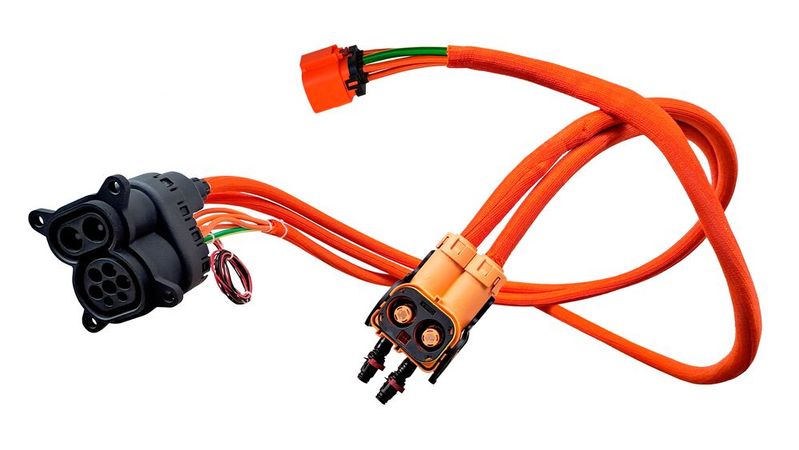
:quality(80)/p7i.vogel.de/wcms/6a/75/6a75a2337b0f368825ad7212d84254e3/0131572292v1.jpeg "High-voltage connector for e-mobility platforms: the HVR 280 from Rosenberger Hochfrequenztechnik (Image:Rosenberger Hochfrequenztechnik)")
:quality(80)/p7i.vogel.de/wcms/ac/d0/acd027c686844ad86469c2e5e63e1bd3/0131498990v2v1.jpeg "Cars could generate up to 55 percent of their energy needs themselves in Central Europe; in Southern Europe, it could be up to 80 percent. (Image:Lightyear)")
:quality(80)/p7i.vogel.de/wcms/e6/eb/e6eb854770fb7e87869e393badbda5d8/0131586713v1.jpeg "Infineon has introduced its new 1,300 V HybridPack Drive SiC module, which is designed for continuous operation at temperatures up to 400°F. (Image:Infineon)")
:quality(80)/p7i.vogel.de/wcms/4e/15/4e15d1c92ff2bc5169291db403dd86e2/0131594892v1.jpeg "Thanks in part to advances in the field of automotive Ethernet, car manufacturers can equip their vehicles with a wider range of functions. (Image:Texas Instruments)")
:quality(80)/p7i.vogel.de/wcms/5a/06/5a06fc761f054780e5472a8408cf2c85/0131558023v1.jpeg "Valeo and Zuken aim to combine their expertise in mobility technologies and electronic design automation. (Image:Valeo)")
:quality(80)/p7i.vogel.de/wcms/82/e9/82e9721702ef7486a1be36562dc94dd2/0131558676v1v1.jpeg "3D printing of a demonstrator for quasi-monolithic integration with a chiplet in the pocket. (Image: Fraunhofer IPMS)")
:quality(80)/p7i.vogel.de/wcms/18/b5/18b5ccdac59d8df24d7a46e283cbcc32/0131551751v1.jpeg "Figure 1: Example of a possible division of an SoC according to Imec's CMOS 2.0 scaling paradigm. The Belgian research institute and Imec, together with the EV Group, have demonstrated wafer-to-wafer hybrid bonding with 200 nm pad spacing. (Image:Imec)")
:quality(80)/p7i.vogel.de/wcms/87/1a/871a6b59eab3199ebf41559abbb30745/0131550247v1.jpeg "Reconfigurable printed circuit boards: San Francisco-based Itera has developed an approach to PCB prototyping that it claims makes replacing a PCB as easy as updating software. (Image:Itera)")
:fill(fff,0)/images.vogel.de/vogelonline/companyimg/76800/76895/65.jpg "FAULHABER_120mm.jpg ()")
:quality(80):fill(efefef,0)/p7i.vogel.de/wcms/67/ae/67ae0b9ac31f8/elatec-wp-universal-reader.png "Elatec WP Universal Reader")
Date: 08.12.2025
Naturally, we always handle your personal data responsibly. Any personal data we receive from you is processed in accordance with applicable data protection legislation. For detailed information please see our privacy policy.
Consent to the use of data for promotional purposes
I hereby consent to Vogel Communications Group GmbH & Co. KG, Max-Planck-Str. 7-9, 97082 Würzburg including any affiliated companies according to §§ 15 et seq. AktG (hereafter: Vogel Communications Group) using my e-mail address to send editorial newsletters. A list of all affiliated companies can be found here
Newsletter content may include all products and services of any companies mentioned above, including for example specialist journals and books, events and fairs as well as event-related products and services, print and digital media offers and services such as additional (editorial) newsletters, raffles, lead campaigns, market research both online and offline, specialist webportals and e-learning offers. In case my personal telephone number has also been collected, it may be used for offers of aforementioned products, for services of the companies mentioned above, and market research purposes.
Additionally, my consent also includes the processing of my email address and telephone number for data matching for marketing purposes with select advertising partners such as LinkedIn, Google, and Meta. For this, Vogel Communications Group may transmit said data in hashed form to the advertising partners who then use said data to determine whether I am also a member of the mentioned advertising partner portals. Vogel Communications Group uses this feature for the purposes of re-targeting (up-selling, cross-selling, and customer loyalty), generating so-called look-alike audiences for acquisition of new customers, and as basis for exclusion for on-going advertising campaigns. Further information can be found in section “data matching for marketing purposes”.
In case I access protected data on Internet portals of Vogel Communications Group including any affiliated companies according to §§ 15 et seq. AktG, I need to provide further data in order to register for the access to such content. In return for this free access to editorial content, my data may be used in accordance with this consent for the purposes stated here. This does not apply to data matching for marketing purposes.
Right of revocation
I understand that I can revoke my consent at will. My revocation does not change the lawfulness of data processing that was conducted based on my consent leading up to my revocation. One option to declare my revocation is to use the contact form found at https://contact.vogel.de. In case I no longer wish to receive certain newsletters, I have subscribed to, I can also click on the unsubscribe link included at the end of a newsletter. Further information regarding my right of revocation and the implementation of it as well as the consequences of my revocation can be found in the data protection declaration, section editorial newsletter.
:quality(80)/p7i.vogel.de/wcms/fc/44/fc44f6959cccb7fd722465177788f151/0128048731v1.jpeg "In electrified agricultural machinery, cooling is essential: Voss acts as a partner when it comes to cooling strategies and thermal management. (Image:Voss)")
:quality(80)/p7i.vogel.de/wcms/d6/a5/d6a598893f7f79a0d8625f51e16d305f/0127360662v1.jpeg "Thermal management: Thermally conductive and electrically insulating interface materials (TIM) offer an effective, straightforward, and cost-efficient solution. (Image: ©Tatyana Evdokimova – stock.adobe.com / AI-generated)")