The aim of the industry and research partners in the project CO2-saving lightweight solutions for the next generation battery housing demonstrator, or Cool Bat for short, is to manufacture housings for battery systems in electric cars in an environmentally friendly way and thus contribute to an improved CO2 balance of the vehicles. The goal is to make the central component of the electric car lighter and save 15 percent carbon dioxide during its production.
Producing housings for battery systems in electric cars in a climate-friendly way and thus contributing to an improved CO2 balance of the vehicles is the aim of the partners from industry and research in the project CO2-saving lightweight solutions on the next-generation battery housing demonstrator, known as Cool Bat.
(Image: Fraunhofer IWU)
In the project, 15 partners are conducting interdisciplinary research on innovative lightweight design principles for mass reduction, lightweight materials, and production processes that are intended to help produce battery system housings in an environmentally friendly way with better functional properties. The partners pursue a broad-based approach that focuses on aspects such as recyclability and reparability, resource and energy efficiency, safety, and fire protection at the design and material level. The Fraunhofer IWU in Chemnitz coordinates the project, which is funded by the Federal Ministry for Economic Affairs and Climate Action (BMWK) as part of the Technology Transfer Program Lightweighting (TTP-LB) and supervised by Projektträger Jülich (PTJ).
By implementing the housing cover in fiber composite construction, we were able to reduce the mass by more than 60 percent compared to the steel reference.
Rico Schmerler
The principle is simple: the lighter the housings, the more the range of electric cars increases, as power consumption decreases. "The energy density of today's battery systems, to which battery housings contribute significantly, can still be significantly increased. By integrating new lightweight construction methods and more functions in a smaller installation space with fewer interfaces, weight can be reduced and at the same time a 15 percent reduction in CO2 can be achieved," says Rico Schmerler, project manager and scientist in the Battery Systems Department at Fraunhofer IWU. "By reducing the mass, we increase the energy density and thus the range with the same number of battery cells. By implementing the housing cover in a fiber-reinforced composite design, we were able to reduce the mass by more than 60 percent compared to the steel reference."
Gallery
Cooling and load-bearing capacity integrated into one component
Another possibility for weight reduction, the researchers see, is in the combination of individual systems in the housing, which had previously separately handled thermal and mechanical tasks. For example, thermal channels are directly integrated into load-bearing structures such as crossbeams—manufactured by casting technology at the Fraunhofer Institute for Manufacturing Technology and Advanced Materials IFAM. Additionally, the function of the cooling unit is combined with that of the underride protection in one component, the floor plate.
For energy absorption during stone impacts and accidents, an aluminum foam embedded in the floor plate is used. It absorbs a large portion of the energy generated upon impact. In conjunction with a phase change material (PCM), a type of wax that can store and release a lot of heat and cold energy, the aluminum foam further reduces the energy effort for cooling the electric battery. The floor plate was developed by Fraunhofer IWU and the company FES/AES and manufactured including the foam at Fraunhofer IWU. This way, the battery cells are protected against mechanical loads as well as overheating.
We rely on functionally integrated structures. Tasks for which various modules within the battery were previously responsible are integrated into one component—in this case, the floor assembly—thus saving installation space and interfaces.
Rico Schmerler
In this process, a fluid flows through the channels, and tempers the cells not only from below but also from the sides. This reduces the electrical consumption for cooling the cells, and cooling elements elsewhere in the car can be dispensed with. "We are focusing on function-integrated structures. Tasks that were previously the responsibility of different modules within the battery are integrated into one component—in this case, the underbody—thereby saving installation space and interfaces," explains Schmerler. "The floor plates will protect against overheating in the future and prevent damage to the battery core in accidents." The reference and technology carrier for the researchers is the Mercedes-EQS battery.
New thermal conductive mats replace pastes
The quality of heat dissipation from batteries towards the outer housing has a significant impact on the performance and lifespan of an electric vehicle. Typically, the battery module is thermally connected using conductive pastes. In the project, the heavy, non-sustainable pastes are to be replaced by environmentally friendly thermal conductive materials. For this purpose, the Fraunhofer Institute for Surface Engineering and Thin Films IST is metallizing open-pored, reusable foams using a plasma process, which are then inserted as mats into the spaces between the battery and the housing.
Improved fire protection through bio-based flame retardant coatings
A new fire protection coating, developed by the Fraunhofer Institute for Wood Research, Wilhelm-Klauditz-Institut, WKI, provides increased safety. Applied to the underside of the housing cover, it prevents the spread of fire that can originate from the battery cells below. A component of the coating is the bio-based material lignin, which substitutes petroleum-based materials and is non-flammable.
Design for Reuse: Housing cover made of steel replaced by fiber composite cover structure
The previous steel housing cover was replaced by a new fiber composite cover structure made from carbon and resin—known as towpregs—which not only resulted in a significant reduction in mass but also allowed for the cover's reusability. The system of cover, frame, and floor plates was designed to be separable and disassemblable down to the component level without destruction. "We are following the idea of a circular economy and material reduction through lightweight construction and reusable materials, which in turn results in a lower CO2 footprint and lower costs in case of repairs," says the engineer.
Date: 08.12.2025
Naturally, we always handle your personal data responsibly. Any personal data we receive from you is processed in accordance with applicable data protection legislation. For detailed information please see our privacy policy.
Consent to the use of data for promotional purposes
I hereby consent to Vogel Communications Group GmbH & Co. KG, Max-Planck-Str. 7-9, 97082 Würzburg including any affiliated companies according to §§ 15 et seq. AktG (hereafter: Vogel Communications Group) using my e-mail address to send editorial newsletters. A list of all affiliated companies can be found here
Newsletter content may include all products and services of any companies mentioned above, including for example specialist journals and books, events and fairs as well as event-related products and services, print and digital media offers and services such as additional (editorial) newsletters, raffles, lead campaigns, market research both online and offline, specialist webportals and e-learning offers. In case my personal telephone number has also been collected, it may be used for offers of aforementioned products, for services of the companies mentioned above, and market research purposes.
Additionally, my consent also includes the processing of my email address and telephone number for data matching for marketing purposes with select advertising partners such as LinkedIn, Google, and Meta. For this, Vogel Communications Group may transmit said data in hashed form to the advertising partners who then use said data to determine whether I am also a member of the mentioned advertising partner portals. Vogel Communications Group uses this feature for the purposes of re-targeting (up-selling, cross-selling, and customer loyalty), generating so-called look-alike audiences for acquisition of new customers, and as basis for exclusion for on-going advertising campaigns. Further information can be found in section “data matching for marketing purposes”.
In case I access protected data on Internet portals of Vogel Communications Group including any affiliated companies according to §§ 15 et seq. AktG, I need to provide further data in order to register for the access to such content. In return for this free access to editorial content, my data may be used in accordance with this consent for the purposes stated here. This does not apply to data matching for marketing purposes.
Right of revocation
I understand that I can revoke my consent at will. My revocation does not change the lawfulness of data processing that was conducted based on my consent leading up to my revocation. One option to declare my revocation is to use the contact form found at https://contact.vogel.de. In case I no longer wish to receive certain newsletters, I have subscribed to, I can also click on the unsubscribe link included at the end of a newsletter. Further information regarding my right of revocation and the implementation of it as well as the consequences of my revocation can be found in the data protection declaration, section editorial newsletter.
The diverse project results are intended to be transferred to other applications and industries later on, where large batteries are used—such as in trains, airplanes, and boats. The cooling systems could be transferred to food and medical transport, and the fire protection solutions to buildings.



:quality(80)/p7i.vogel.de/wcms/9d/2b/9d2b802f800e5caf17b2831e74228cd3/screenshot-202026-03-03-20103822-609x343v1v1.png "Visual comparison: on the left, a clean, burr-free cut edge; on the right, typical burr formation with oxidation discoloration. This illustrates how strongly parameter control and gas management influence the quality of the result. (CO₂ laser, oxygen cutting gas, sheet thickness approx. 15 mm). (Image:Picture: Rime)")
:quality(80)/p7i.vogel.de/wcms/dd/08/dd086510d9ae7b50181f6070e4463b44/0129363730v1.jpeg "Typical application for ionizing devices: Wrapping films. (Picture: ©Adobe Stock/SMC)")
:quality(80)/p7i.vogel.de/wcms/35/57/3557c819943c53acec41a0ccba87da4f/0130049064v1.jpeg "Researchers at the Fraunhofer IWU in Chemnitz have long known that many typical sheet metal parts can be manufactured more cost-effectively using hollow embossing rollers. Now there is news to report ... (Image:Fraunhofer IWU)")
:quality(80)/p7i.vogel.de/wcms/59/02/590246e3b3f415c65edbee377c14ca77/26-06-pi-fraunhofer-iws-41450-direktplattieren-pic-01-7771x4369v1v1.jpeg "The Fraunhofer IWS has developed the new \"direct laser cladding\" process, which creates a functional layer directly on the base body by applying a strip-shaped metal to rotationally symmetrical components in a spiral and bonding it locally by laser. (Image:Christoph Wilsnack/Fraunhofer IWS)")
:quality(80)/p7i.vogel.de/wcms/78/e9/78e9188c25a8a94e67c34c9bf8ffe495/visual-agile-20robots-20and-20google-20deepmind-20partner-20to-20bring-20intelligence-20to-20robotics-2500x1406v1v1.jpeg "Together, the partners are developing adaptable, intelligent robots for a wide range of applications (Image:Agile Robots SE)")
:quality(80)/p7i.vogel.de/wcms/e7/66/e7669ecf0260ae8fc54c214e34e4902a/0130316817v1.jpeg "Siemens and Palo Alto Networks offer tested cybersecurity solution for industrial 5G. (Image:Siemens)")
:quality(80)/p7i.vogel.de/wcms/9f/55/9f55324832c4f426958031375124d9de/siemens-20ubtech-20hmnd-1920x1079v1v1.png "Ready for the factory floor: While Ubtech is planning mass production, Siemens is already testing humanoids in real factory applications in Erlangen. (Image:Siemens)")
:quality(80)/p7i.vogel.de/wcms/11/36/113695ed260e29c8c2d9d39dc5f9d869/0130213768v1.jpeg "AI can work cheaply in China and deliver the results rapidly all over the world. (Image:Dall-E / AI-generated)")
:quality(80)/p7i.vogel.de/wcms/62/5f/625f41e87ebfef156a98c8e6393e32fd/0130211654v1.jpeg "Axial flux motors have some advantages over radial flux motor—but their production is currently still expensive. (Image:RWTH Aachen University)")
:quality(80)/p7i.vogel.de/wcms/77/9b/779b0685d010dfe45c9c2cb1cfecd467/0128886425v1.jpeg "The BlueEye is the first \"real\" hyperspectral camera for the UV range and covers the wavelength range from 220 to 380nm. (Image:Inno-spec GmbH)")
:quality(80)/p7i.vogel.de/wcms/e4/51/e451d52ce0182fb0aaa46a5774f832ef/26-04-pi-fraunhofer-iws-21160-bioslide-pic-01-4128x2321v1v1.jpeg "With the BioSlide research project, the Fraunhofer IWS is investigating how sliding systems can be designed to be more sustainable and energy-efficient. New materials can be tested in a particularly application-oriented manner on this plain bearing test stand. (Image:Fraunhofer IWS)")
![Thanks to advanced 3D printing technology, a more efficient use of resources should contribute to lower-emission aviation—this is the goal of ['skai]-lab. (Image:Oleksandr Pashchenko - stock.adobe.com / AI-generated)](https://cdn1.vogel.de/nghHNSbySccfOjG3n1qCA-FVOjQ=/288x162/smart/filters:format(jpg):quality(80)/p7i.vogel.de/wcms/62/64/626424c97a16e69f871bf216c9629c2a/adobestock-1927043193--c2-a9-20oleksandr-20pashchenko-20-e2-80-93-20stock-adobe-com-ki-generiertv1v1.jpeg "Thanks to advanced 3D printing technology, a more efficient use of resources should contribute to lower-emission aviation—this is the goal of ['skai]-lab. (Image:Oleksandr Pashchenko - stock.adobe.com / AI-generated)")
:quality(80)/p7i.vogel.de/wcms/b0/43/b043b86899837532aad62d63368a917a/0130371361v1.jpeg "Skoda leaves the chinese market.
(Image:Skoda)")
:quality(80)/p7i.vogel.de/wcms/c3/c4/c3c4ce270b083eeac55654148611f064/0130237945v1.jpeg "China is not giving up on hydrogen, but is intensifying its efforts. (Image:freely licensed from Pixabay)")
:quality(80)/p7i.vogel.de/wcms/4e/c0/4ec0bd19390b169edfa23677373dcdf1/0130260089v1.jpeg "Renewable fuels can supply European road traffic, according to a study. (Image:Aral)")
:quality(80)/p7i.vogel.de/wcms/6f/c9/6fc9050301d745cad25585c6780f8f51/0130197341v1.jpeg "Production facilities are a worthwhile target and are therefore at risk. (Image:ABB Robotics)")
:quality(80)/p7i.vogel.de/wcms/4d/dd/4dddf438e91f394c04a095dbfd109d1c/0130236430v1.jpeg "Measurement modules: The 720301 module in combination with the SL2000 enables RMS and power calculations, among other things. (Image:Yokogawa)")
:quality(80)/p7i.vogel.de/wcms/61/fc/61fcf95f5cca15494ad18343901ae585/0130317237v1.jpeg "With the AGI CPU, Arm says it is taking a \"historic step\": With the processor aimed at AI in data centers, the company is presenting itself for the first time as a provider of its own chips, not just as a pure IP licensor. (Image:Arm)")
:quality(80)/p7i.vogel.de/wcms/82/90/8290dfe3595b6c6b33726ae8b76172c7/0130319587v1.jpeg "The concept image illustrates how the pattern of tiny protrusions and depressions created on the substrate (MgO, bottom) controls the arrangement of atoms in the superconducting material (YBCO, top). At the interface between the two layers, an electronic structure enables superconductivity to occur at higher temperatures than previously possible. (Image:Chalmers University of Technology / Riccardo Arpaia)")
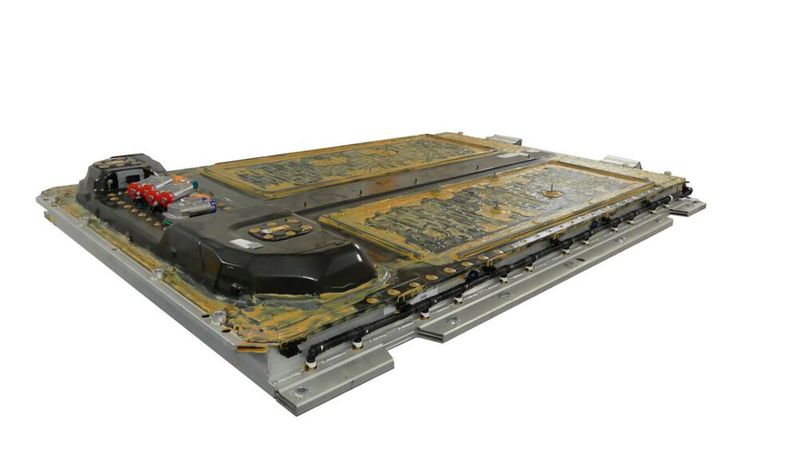
:quality(80)/p7i.vogel.de/wcms/32/51/32514badf574e19b340d2cbced3c7db2/0122466148v1.jpeg "Producing housings for battery systems in electric cars in a climate-friendly way and thus contributing to an improved CO2 balance of the vehicles is the aim of the partners from industry and research in the project CO2-saving lightweight solutions on the next-generation battery housing demonstrator, known as Cool Bat.(Image: Fraunhofer IWU)")
:quality(80)/p7i.vogel.de/wcms/ec/80/ec808cbbe5fd6dae1147dfdf7911afa7/0122466149v1.jpeg "Aluminum foam sandwich floor panel with integrated cooling structure(Image: Fraunhofer IWU)")
:quality(80)/p7i.vogel.de/wcms/c9/1f/c91ff5277d7686bfae874900149ccb2d/0122466152v1.jpeg "Part of the project team at partner Compositence in Leonberg(Image: Fraunhofer IWU)")
:quality(80)/p7i.vogel.de/wcms/43/50/43502689b5318f092d1bb07adabb4e18/0128063487v1.jpeg "The special material structure of the housing consists of two solid aluminum sheets enclosing an inner core made of aluminum foam. (Image:Fraunhofer IWU)")
:quality(80)/p7i.vogel.de/wcms/58/ab/58ab0269123cadf1eabecd4020352eb3/0127033452v1.jpeg "In the EU project Resilite, the partners are working on new battery packs based on cylindrical cells in thermoplastic housings, which, if successfully implemented, could also be of interest for aviation. (Image:AI-generated at PEM RWTH Aachen)")