China's supreme court clarifies liability for assistance systems. Additionally, a new standard for ADAS Levels 3 and 4 establishes new regulations.
Anyone who allows themselves to be distracted in China when the assistance system is switched on is responsible. The "Supreme People's Court" came to this conclusion.
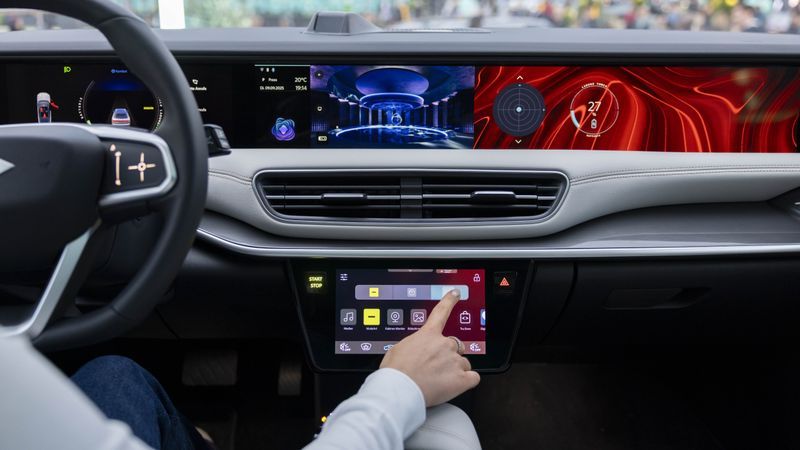
(Image: Togg)
Anyone allowing their car to drive autonomously is liable for accidents. This was recently decided by the "Supreme People's Court" in Beijing. The occasion was the "Wang case" from September 2025. The ruling aims to provide nationwide clarity as more and more cars equipped with various levels of assistance systems (ADAS) are on the road.
Mr. Wang had attached an "Autopilot Buddy" to the steering wheel, which tricked his Level 2 ADAS into thinking that he had at least one hand on the wheel. He then lay down in the passenger seat to sleep off his intoxication while the car was supposed to drive him home.
Steering Wheel Weights Trick the Sensors
Such steering wheel weights that can trick the sensors are available for purchase online in China. For Mr. Wang, this did not end well. He was sentenced to a "short detention." This means that the court or even a police station in China can temporarily put someone in a cell with little bureaucracy. The person's phone is confiscated during this time. Family members often wonder why their relative doesn't come home for one or two weeks. Additionally, Mr. Wang had to pay a fine of 4,000 yuan, which is approximately 490 euros / USD 560.
The punishment was lenient, as not much had happened. While Mr. Wang was peacefully sleeping, his car merely blocked a street. A passerby had called the police, but there were neither damages to vehicles nor injuries. Wang was convicted for endangering other road users. The leading verdict of the supreme Chinese court is one of many examples of stricter regulation of autonomous driving. In this case, the court reaffirmed that responsibility rests entirely with the driver.
Deployment of Highly Automated Vehicles Requires Regulation
However, with levels 3 and 4, which are increasingly seen on China's roads, the legal questions become more complicated. Who is at fault if the driver initially legally turns away from the steering wheel for a short period or longer but then cannot intervene quickly enough when a problem arises?
In December 2025, a "Hello" brand robotaxi in Zhuzhou, Hunan Province, struck a pedestrian and pulled her under the vehicle. "According to industry sources, the roadway was slippery, and the injured person likely fell while riding a bicycle," reported the economic portal Caixin. The robotaxi was unable to recognize her quickly enough. This was just one of many accidents: due to the numerous pilot trials in China, there are already thousands.
At Level 3, "conditionally automated driving," the driver is allowed to take their hands off the steering wheel but must be able to intervene within a few seconds if the system triggers an alarm. In "highly automated driving" (Level 4), no human intervention is required anymore. Here, liability shifts entirely to the manufacturers and operators, but this is still not definitively regulated.
New National Regulations
On February 12, the Chinese Ministry of Industry and Information Technology (MIIT) in Beijing published the first binding safety standards for Levels 3 and 4 and is collecting public comments until April 13. This draft of the national standard "Intelligent Vehicles – Safety Requirements for Automated Driving Systems" stipulates that autonomous driving systems "must achieve at least the safety level of an attentive driver."
Starting from Level 3, the system must be able to switch to a "minimal risk strategy" if the driver does not intervene in time. It must independently bring the vehicle to a stop in a location where it minimizes the risk to occupants and other road users.
Additionally, the installation of a specialized data storage system for automated driving (DSSAD) will be mandatory starting from Level 3. There must be records that can retrospectively provide insights into what happened from the perspective of the accident vehicle.
Consumer Protection and Promotion of New Technology
China's authorities and courts do not view their role in all these actions solely as protectors of road users, but also as important enablers of autonomous driving, whose widespread commercialization is seen as a key growth engine for the Chinese economy and, consequently, as a public good.
"The widespread adoption of autonomous vehicles requires further legal and technical coordination," comments Caixin on the draft of the new safety standard for Levels 3 and 4. This is precisely what is currently happening in China, when one reads the various news in context.
Date: 08.12.2025
Naturally, we always handle your personal data responsibly. Any personal data we receive from you is processed in accordance with applicable data protection legislation. For detailed information please see our privacy policy.
Consent to the use of data for promotional purposes
I hereby consent to Vogel Communications Group GmbH & Co. KG, Max-Planck-Str. 7-9, 97082 Würzburg including any affiliated companies according to §§ 15 et seq. AktG (hereafter: Vogel Communications Group) using my e-mail address to send editorial newsletters. A list of all affiliated companies can be found here
Newsletter content may include all products and services of any companies mentioned above, including for example specialist journals and books, events and fairs as well as event-related products and services, print and digital media offers and services such as additional (editorial) newsletters, raffles, lead campaigns, market research both online and offline, specialist webportals and e-learning offers. In case my personal telephone number has also been collected, it may be used for offers of aforementioned products, for services of the companies mentioned above, and market research purposes.
Additionally, my consent also includes the processing of my email address and telephone number for data matching for marketing purposes with select advertising partners such as LinkedIn, Google, and Meta. For this, Vogel Communications Group may transmit said data in hashed form to the advertising partners who then use said data to determine whether I am also a member of the mentioned advertising partner portals. Vogel Communications Group uses this feature for the purposes of re-targeting (up-selling, cross-selling, and customer loyalty), generating so-called look-alike audiences for acquisition of new customers, and as basis for exclusion for on-going advertising campaigns. Further information can be found in section “data matching for marketing purposes”.
In case I access protected data on Internet portals of Vogel Communications Group including any affiliated companies according to §§ 15 et seq. AktG, I need to provide further data in order to register for the access to such content. In return for this free access to editorial content, my data may be used in accordance with this consent for the purposes stated here. This does not apply to data matching for marketing purposes.
Right of revocation
I understand that I can revoke my consent at will. My revocation does not change the lawfulness of data processing that was conducted based on my consent leading up to my revocation. One option to declare my revocation is to use the contact form found at https://contact.vogel.de. In case I no longer wish to receive certain newsletters, I have subscribed to, I can also click on the unsubscribe link included at the end of a newsletter. Further information regarding my right of revocation and the implementation of it as well as the consequences of my revocation can be found in the data protection declaration, section editorial newsletter.
In recent weeks, Chinese governments at various levels have permitted additional pilot trials for robotaxis. In December, two vehicle models were also issued licenses for test operations in public spaces.



:quality(80)/p7i.vogel.de/wcms/7f/fd/7ffd32863352c40f562f4245e4766e61/0129745849v1.jpeg "After US President Donald Trump once again resorted to his favorite weapon, tariffs, concerns rose in the EU that the so-called tariff deal could become invalid. But it looks as if the sea remains relatively calm ... (Image:F. Schneidler)")
:quality(80)/p7i.vogel.de/wcms/53/69/5369bed136061188d873441dfefd6d6e/0129245111v1.jpeg "The company revised the factory layout even though construction work had already begun. (Image:Efeso Management Consultants)")
:quality(80)/p7i.vogel.de/wcms/d2/d7/d2d79e3fb84663cb7e918c88f123989b/0129733908v1.jpeg "Mineral decision! This is how lithium is mined. There is a lot of it in Chile, Australia, Bolivia and also in Zimbabwe. However, the latter country has now announced that the export of all minerals, including lithium concentrate, will be stopped. Read more about the reasons here ... (Image:Largbatt)")
:quality(80)/p7i.vogel.de/wcms/8e/7a/8e7a8d7cd0b947550da99f3d888a57a6/maas-blechnetbeitrag-20blechnext-2563x1440v1v1.png "Blechnext shows that the future of sheet metal processing lies not only in better machines, but also in smarter business models. \"Machine-as-a-Service\" is not just a financing tool; it is an accelerator for digital transformation. (Image:Blechnext)")
:quality(80)/p7i.vogel.de/wcms/13/4d/134dee0c2b8af6b4f28937ca5b586e0d/0129499541v1.jpeg "The industry now needs to build a flexible, powerful and sovereign infrastructure that can exploit the full potential of artificial intelligence while guaranteeing control over data and processes. (Picture: ©Gorodenkoff - stock.adobe.com)")
:quality(80)/p7i.vogel.de/wcms/c6/71/c671ce338f12be49d39d1b04b40a54f7/0129697443v1.jpeg "Claas is working on making its combine harvesters fit for refurbishment. (Image:Claas)")
:quality(80)/p7i.vogel.de/wcms/f2/4b/f24b8f1c3070e7f13e4f0ffd7854e75a/0129653538v1.jpeg "The production of the BMW iX3 is to be taken as far as possible in terms of sustainability. This is also ensured by the climate-friendly Blueprint recycled steel from Thyssenkrupp Steel ... (Image:BMW)")
:quality(80)/p7i.vogel.de/wcms/bc/8c/bc8c831daa7f85dbd1e44ea8fbd8089b/open-source-bild5-406x228v1v1.png "Four steps to an open source crash simulation - find out how here. (Image:Alsado)")
:quality(80)/p7i.vogel.de/wcms/af/9d/af9dc917a1eb91fd0e201d5bf8b7a57c/0129614075v1.jpeg "The future of manufacturing will be determined by demonstrable productivity gains - with more digitalization, networked data streams and simulation-based decisions. (Image:Visual Components)")
:quality(80)/p7i.vogel.de/wcms/63/c9/63c9b33f58938f4ffc2a3cefddd924e3/0129599881v1.jpeg "View of the manual casting process of a magnesium part. Apart from a few exceptions, the light metal actually leads a shadowy existence as an industrial material. However, researchers in Freiberg are now in the process of making magnesium much more attractive in terms of costs and sustainability. (Image:Metal Master)")
:quality(80)/p7i.vogel.de/wcms/6b/6f/6b6fff754fedf05375e5255460743297/0129197850v1.jpeg "A new core-shell design for anodes aims to reduce storage losses during the first charge cycle of sodium-ion batteries. (Image:BAM)")
:quality(80)/p7i.vogel.de/wcms/29/b5/29b536a22d9b5ac80387b02620cce554/20260212-sue-60-6000x3372v1v1.jpeg "The People Mover at its world premiere. The large polycarbonate windshield is clearly visible. One of several materials contributed by Covestro. (Image:UE | STUDIOS)")
:quality(80)/p7i.vogel.de/wcms/a0/3e/a03e71cec3a956df095607a0b176a7b0/0129584071v1.jpeg "Andreas Mindt will be Head of Design at the Volkswagen Group from March. (Image:Volkswagen AG)")
:quality(80)/p7i.vogel.de/wcms/fc/bd/fcbdbf5c6fdf969dc3e005b3ae512915/can-ai-5000x2812v1v1.jpeg "Anyone who allows themselves to be distracted in China when the assistance system is switched on is responsible. The \"Supreme People's Court\" came to this conclusion. (Image:Togg)")
:quality(80)/p7i.vogel.de/wcms/0a/79/0a79d81b63254586a4548085ab0f609c/0129744210v1.jpeg "The Schaeffler Group wants to reduce its dependence on the automotive industry. (Image:Schaeffler)")
:quality(80)/p7i.vogel.de/wcms/0f/b2/0fb28656d39754b67a76b90b42243cda/0129655768v1.jpeg "Driven by GaN wafer production at 300 millimeters, Infineon's GaN products deliver outstanding performance with clear application benefits. (Image:Infineon Technologies AG)")
:quality(80)/p7i.vogel.de/wcms/98/c7/98c77993453c1edf3d2bd54b0028fa6a/0129630827v1.jpeg "Left: High Bandwidth Flash (HBF) stacks multiple layers of NAND chips to significantly increase storage capacity; Right: Concept of the \"hybrid\" H³ architecture presented in the IEEE study. (Image:Sandisk (left) / Sk hynix (right))")
:quality(80)/p7i.vogel.de/wcms/ae/cf/aecf874a057676aa69b3b5e4c7b52411/0129609464v1.jpeg "Glass storage in action: Microsoft has stored map data from the Flight Simulator on this piece of glass. (Image:Microsoft Research)")
:quality(80)/p7i.vogel.de/wcms/2c/8d/2c8da4b72e35ded278178929afb94d55/0129561713v1.jpeg "Change in direction: The shift away from PFAS in semiconductor manufacturing and the move toward sustainable chip production is demonstrated by the trilateral collaboration between Fraunhofer ENAS, the Paul Scherrer Institute PSI, and Memsstar Limited, which rely on the environmentally friendly Gas-MacEtch technology. (Image:andreyarmyagov/Canva)")
:fill(fff,0)/images.vogel.de/vogelonline/companyimg/76800/76895/65.jpg "FAULHABER_120mm.jpg ()")
:fill(fff,0)/p7i.vogel.de/companies/67/eb/67eba621ef6ea/logo2.png "logo2 (Wuxi InfiMotion)")
:quality(80)/p7i.vogel.de/wcms/05/d3/05d39704bff2ef7463349e208c095fa9/0128367551v1.jpeg "At the beginning of December, a robotaxi from the mobility service provider Hello hit two pedestrians in Zhuzhou, China. (Image:Hello)")
:quality(80)/p7i.vogel.de/wcms/46/27/462771587caab31a02524d660c56a286/download-3840x2158v1v1.png "Allowed in China from July 2026: Steer-by-wire steering systems without a mechanical connection between the steering wheel and steering gear. (Image:ZF)")