China Market InsiderCATL Plans Mega IPO in Hong Kong
From
Henrik Bork | Translated by AI
3 min Reading Time
CATL plans a mega IPO in Hong Kong to secure foreign currency for its expansion in Europe and global markets.
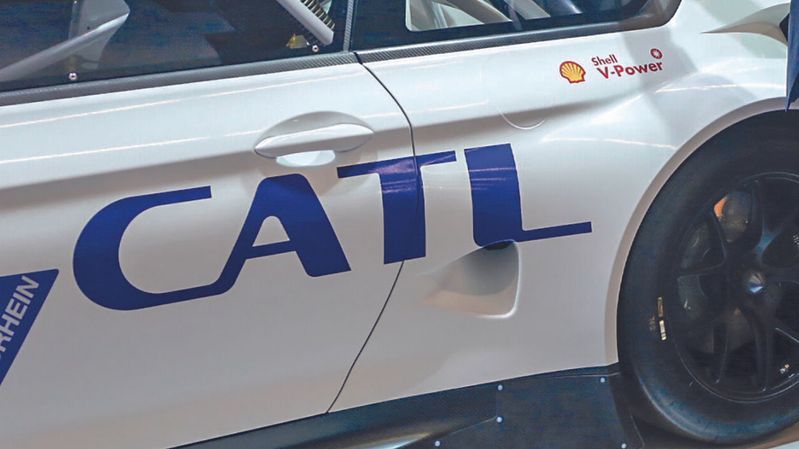
CATL wants to go public in Hong Kong.
(Image:)
CATL aims to defend its global market leadership with a mega IPO in Hong Kong, targeting up to $5 billion through a secondary listing. According to its prospectus, the funds will primarily support expansion in Europe and other international markets.
Back in 2022, the battery manufacturer secured $6.7 billion in capital through an IPO in mainland China. This time, CATL has opted for the Hong Kong Stock Exchange, where so-called A-to-H listings are possible. This allows the company to offer its mainland China "A-shares" as "H-shares" in Hong Kong, granting direct access to foreign currency.
Capital for Factories in Hungary and Spain
CATL urgently needs US dollars and euros, particularly for the construction of new factories in Hungary and Spain. Converting Chinese yuan (renminbi) into these currencies comes with exchange rate risks and bureaucratic hurdles in China. In Hong Kong, however, CATL can obtain foreign currency directly without the need for complex conversions.
CATL is just one of many Chinese companies driving a surge in A-to-H listings in Hong Kong. According to a report by Bloomberg, CATL supplier Lead Intelligent, based in Wuxi and specializing in manufacturing equipment for EV battery production, is also planning a Hong Kong IPO. The offering is estimated to be worth around $500 million.
Strengthening Global Production and Capital Structure
Just like CATL, its suppliers also benefit from manufacturing directly in Europe and other foreign markets. Raising foreign currency reserves through a Hong Kong IPO helps establish the necessary capital structure for this expansion.
Securing Global Market Leadership
CATL’s planned $5 billion IPO is exceptionally large, even by Hong Kong standards. Analysts believe this move will help the Chinese battery giant solidify its position as the world's leading battery manufacturer.
“The majority of CATL’s funds are held in Chinese yuan,” the South China Morning Post quotes a financial expert from Shanghai. “Raising capital in Hong Kong will effectively support its ambition to become the undisputed champion of the global EV battery market.”
Leadership Under Pressure
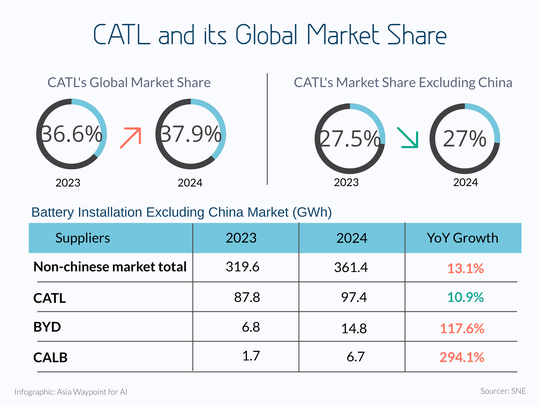
CATL’s dominant market position has recently come under significant pressure—from both domestic and international rivals. While the company maintained its status as the world’s leading high-voltage battery supplier for the eighth consecutive year in 2024, holding an impressive 38% market share (+1.3% year-over-year), much of this success stemmed from sales in China, where market growth has slowed.Beyond China, CATL faces stiff competition. In 2024, it held a narrow global market lead outside of China, with a 26.4% share—just barely ahead of Korea’s LG Energy Solution at 25.9%.
Threats from the U.S. and Europe
Korean competitors are closing in, but CATL also faces mounting geopolitical challenges. Since Donald Trump’s second term began, global tensions and rising protectionism—particularly from the European Union—have posed real threats. The European Commission has imposed additional tariffs on Chinese EVs, and the U.S. has gone even further, extending tariffs to all Chinese-made batteries, not just those used in electric vehicles.
To maintain its success amid rising global trade barriers, CATL must invest in battery factories across Europe, Indonesia, and other regions. Avoiding import tariffs and securing massive capital reserves are both crucial for this strategy. According to CATL’s Hong Kong IPO prospectus, the company has already invested $700 million in its battery plant under construction in Hungary. The total cost is expected to reach $7.5 billion, with a significant portion of the funding coming from the secondary listing in Hong Kong.
CATL and its Global Market Share.
(Bild: SNE Research / Asia Waypoint)
Declining Market Share in China
While CATL remains the undisputed market leader in China, its domestic market share has dropped from a peak of 52% to 45%. More and more automakers are investing in their own battery production or forming joint ventures with smaller battery suppliers.
CATL has secured its market dominance through innovative products, earning widespread recognition and acclaim. However, its success also creates concerns among industry players who fear becoming too reliant on a single giant. This sentiment has fueled the rapid rise of Chinese competitors like Fudi Battery and CALB.
Date: 08.12.2025
Naturally, we always handle your personal data responsibly. Any personal data we receive from you is processed in accordance with applicable data protection legislation. For detailed information please see our privacy policy.
Consent to the use of data for promotional purposes
I hereby consent to Vogel Communications Group GmbH & Co. KG, Max-Planck-Str. 7-9, 97082 Würzburg including any affiliated companies according to §§ 15 et seq. AktG (hereafter: Vogel Communications Group) using my e-mail address to send editorial newsletters. A list of all affiliated companies can be found here
Newsletter content may include all products and services of any companies mentioned above, including for example specialist journals and books, events and fairs as well as event-related products and services, print and digital media offers and services such as additional (editorial) newsletters, raffles, lead campaigns, market research both online and offline, specialist webportals and e-learning offers. In case my personal telephone number has also been collected, it may be used for offers of aforementioned products, for services of the companies mentioned above, and market research purposes.
Additionally, my consent also includes the processing of my email address and telephone number for data matching for marketing purposes with select advertising partners such as LinkedIn, Google, and Meta. For this, Vogel Communications Group may transmit said data in hashed form to the advertising partners who then use said data to determine whether I am also a member of the mentioned advertising partner portals. Vogel Communications Group uses this feature for the purposes of re-targeting (up-selling, cross-selling, and customer loyalty), generating so-called look-alike audiences for acquisition of new customers, and as basis for exclusion for on-going advertising campaigns. Further information can be found in section “data matching for marketing purposes”.
In case I access protected data on Internet portals of Vogel Communications Group including any affiliated companies according to §§ 15 et seq. AktG, I need to provide further data in order to register for the access to such content. In return for this free access to editorial content, my data may be used in accordance with this consent for the purposes stated here. This does not apply to data matching for marketing purposes.
Right of revocation
I understand that I can revoke my consent at will. My revocation does not change the lawfulness of data processing that was conducted based on my consent leading up to my revocation. One option to declare my revocation is to use the contact form found at https://contact.vogel.de. In case I no longer wish to receive certain newsletters, I have subscribed to, I can also click on the unsubscribe link included at the end of a newsletter. Further information regarding my right of revocation and the implementation of it as well as the consequences of my revocation can be found in the data protection declaration, section editorial newsletter.
Smaller Manufacturers Gaining Ground
This competition is not limited to China—smaller manufacturers are increasingly challenging CATL on the global stage. According to Sina Caijing, the installed capacity of CALB batteries outside China grew by more than 300% from January to October 2024, while BYD saw an increase of over 140%. To be fair, CALB’s growth started from a smaller base compared to CATL. However, the message is clear: CATL cannot afford to rest on its achievements. “CATL is under attack from both Chinese and international competitors,” Sina Caijing reports.



:quality(80)/p7i.vogel.de/wcms/a0/47/a04725ef9bd09fb6c9341a1bea1b5d93/0130443083v1.jpeg "Here, a type of plastic pallet is produced by thermoforming (vacuum forming or deep drawing) at the corresponding division of New England Plastics in the USA. This division, which specializes in so-called liners, is now part of Ringmetall ... (Image:New England Plastics)")
:quality(80)/p7i.vogel.de/wcms/23/99/23992bf2dcdc432c9b7209c34a4a7c48/0129733089v1.jpeg "Stork relies on the modular Neoswiss turning system from Iscar to shorten the set-up times for its sliding headstock lathes and work more productively. (Image:Iscar)")
:quality(80)/p7i.vogel.de/wcms/7d/e2/7de2923434b2f1a78ba5482d8d335269/0113143253v1.jpeg "In our China Market Insider we regularly provide you with relevant information directly from China. (Image:© Eisenhans - stock.adobe.com)")
:quality(80)/p7i.vogel.de/wcms/9d/2b/9d2b802f800e5caf17b2831e74228cd3/screenshot-202026-03-03-20103822-609x343v1v1.png "Visual comparison: on the left, a clean, burr-free cut edge; on the right, typical burr formation with oxidation discoloration. This illustrates how strongly parameter control and gas management influence the quality of the result. (CO₂ laser, oxygen cutting gas, sheet thickness approx. 15 mm). (Image:Picture: Rime)")
:quality(80)/p7i.vogel.de/wcms/b7/36/b736dfebc16c42d6901d0d0e1f390493/3d-druck-20factory-20--20ki-20generiert-1920x1079v1.png "(Source: AI-generated)")
:quality(80)/p7i.vogel.de/wcms/79/b2/79b21aad663f4a7bd4472afc1c1afc62/0130433994v1.jpeg "Mission Joyride: The free-flying robot (shown here in the rendering) will relieve the ISS crew of logistics tasks from 2027 with its two mechanical arms. (Image:Icarus Robotics)")
:quality(80)/p7i.vogel.de/wcms/6b/45/6b4546fa6ebf305c3660326909363f32/0130437089v1.jpeg "Industrial AI in action: Rockwell Automation presents practical solutions for self-controlling production systems at the Hannover Messe. (Image:Rainer Jensen, Deutsche Messe)")
:quality(80)/p7i.vogel.de/wcms/78/e9/78e9188c25a8a94e67c34c9bf8ffe495/visual-agile-20robots-20and-20google-20deepmind-20partner-20to-20bring-20intelligence-20to-20robotics-2500x1406v1v1.jpeg "Together, the partners are developing adaptable, intelligent robots for a wide range of applications (Image:Agile Robots SE)")
:quality(80)/p7i.vogel.de/wcms/59/a2/59a2b11f0aa1b700eff02addd5de8703/adobestock-1788280853--c2-a9-20satria-20-e2-80-93-20stock-adobe-com-5081x2860v1v1.jpeg "Quantum computers require extreme cooling to temperatures close to absolute zero in order to keep qubits stable. (Image:satria - stock.adobe.com)")
:quality(80)/p7i.vogel.de/wcms/62/5f/625f41e87ebfef156a98c8e6393e32fd/0130211654v1.jpeg "Axial flux motors have some advantages over radial flux motor—but their production is currently still expensive. (Image:RWTH Aachen University)")
:quality(80)/p7i.vogel.de/wcms/b5/c7/b5c749d16c8a2e789c1469c2c8c1c387/0130452780v1.jpeg "Volvo Trucks completes road tests with its new hydrogen-powered trucks. (Image:Volvo Trucks)")
:quality(80)/p7i.vogel.de/wcms/ba/69/ba6975f417a85147084f38dc2cd209e2/0130451386v1.jpeg "Together with Nvidia, Hyundai wants to develop an architecture that will be used for level 4 robotaxis (image) as well as for level 2 customer vehicles. (Image:Hyundai)")
:quality(80)/p7i.vogel.de/wcms/93/4d/934de334b47abaa526c78cba1417d7af/0130343495v1.jpeg "The new SU7 is available in three price categories, \"Standard\", \"Pro\" and \"Max\" (Image:Xiaomi)")
:quality(80)/p7i.vogel.de/wcms/df/a0/dfa048434bb94f1b7d030e346b25b3ae/0130373541v1.jpeg "From August, BMW will be producing the i3 at its main plant in Munich - which the car manufacturer has extensively rebuilt for this purpose. (Image:Rainer Haeckl)")
:quality(80)/p7i.vogel.de/wcms/ee/09/ee09acbd6dc896df25affaa9e871e6e5/0130440053v1.jpeg "IMS chip module for simple system integration into an ion mobility spectrometer. (Image:Fraunhofer IPMS)")
:quality(80)/p7i.vogel.de/wcms/10/6c/106cd22de5f68a0f74639d654827228c/0130345302v1.jpeg "Made in India: According to the India Electronics and Semiconductor Association (IESA), the country should be able to produce between 75 and 80 million chips by the beginning of 2027, once the plants currently under construction become operational. (Image:Pixabay (Montage: Sebastian Gerstl))")
:quality(80)/p7i.vogel.de/wcms/a5/ed/a5ed6fda029d362732a293d6b19d74c4/0130444216v1.jpeg "Thirteen executives from the Chinese chip industry have drawn up a plan to achieve an 80% self-sufficiency rate for semiconductors by 2030. (Image:Maxim_Kazmin - stock.adobe.com)")
:quality(80)/p7i.vogel.de/wcms/31/a6/31a646018b34d8e0a44bfc8bf17837f6/0130361632v1.jpeg "For many companies, PFAS are considered indispensable in electronics production. (Image:freely licensed)")
![After three years of recovery, the global supplier industry is stumbling again in 2024. There is a glimmer of hope. (Image:sizsus - stock.adobe.com / [M] / AI-generated)](https://cdn1.vogel.de/mnaXF19EY8ZzpR7o6SBlbZYZz2o=/392x392/smart/filters:format(jpg):quality(80)/p7i.vogel.de/wcms/4f/81/4f81e55dcaaa4199ecf0c08d5da86730/0125319744v1.jpeg "After three years of recovery, the global supplier industry is stumbling again in 2024. There is a glimmer of hope. (Image:sizsus - stock.adobe.com / [M] / AI-generated)")
:quality(80)/p7i.vogel.de/wcms/45/a4/45a4af91880907fea97cadd5c6758e3a/0113143253v1.jpeg "In our China Market Insider, we regularly provide you with relevant information directly from China. (Image:© Eisenhans - stock.adobe.com)")