Infrared thermometers enable reliable, non-contact temperature measurement of materials with high heat emission. These properties convinced Ecobat Resources Braubach to use them in battery recycling at the rotary kiln for lead smelting.
The measuring head of the OI98C558 can be used at ambient temperatures up to +180 °C (+356 °F). The system solution, including the evaluation unit, is particularly suitable for non-contact temperature measurement of objects with high heat emission.
(Image: IPF Electronic)
Ecobat, based in Texas, USA, is a world leader in the production of lead, lead alloys, and the recycling of lead batteries. The production is complemented by a lead recycling system that allows 99 percent of the metal to be recovered and reused. The company's network includes eleven smelters in the USA and Europe, including Germany, with Ecobat Resources Braubach in Braubach, about 30 kilometers (approx. 18,64 miles) south of Koblenz (Germany).
"With more than 100 employees, we recycle lead accumulators from various vehicles. The plastic from the old batteries is also recycled by us and then reused by the automotive industry for specific vehicle exterior parts. The raw lead obtained in our plant is sent in the form of cast lead blocks to our sister plant in Freiberg (Germany) to be further processed there for later use, for example, in the chemical or battery industry," explains Clemens Schaab, head of electrical maintenance at Ecobat Resources Braubach.
The lead is melted in large rotary kilns that are lined inside with firebricks and are subject to wear during operation, requiring maintenance after certain operating times.
Some time ago, the company began regularly measuring the temperatures on the steel shell of the kiln to gain more concrete insights into the condition of the lining and thus the wear of the rotary kiln.
The head of electrical maintenance gives an example: "The furnace is filled every four hours, with the cold lead gradually gaining temperature initially at a low flame. However, if the temperature of the furnace shell rises sharply during this time and does not significantly decrease after the furnace is emptied, this is an indicator of the decreasing thickness of the lining, which results in reduced insulation to the outside. The temperature inside the furnace is increasingly transferred to the outer shell, which essentially reflects the ongoing reaction inside the furnace."
No exactly reproducible results
Until now, temperature measurements were taken once per shift with a handheld device. Ideally, the measurement data should be collected at precisely defined areas of the kiln shell and always during the same operating phases of the kiln.
However, manual measurements always entail potential inaccuracies, as Clemens Schaab knows: "During measurements by different employees, it is not always ensured that the temperatures are determined at the same locations and with an approximately equal distance from the furnace shell. Additionally, it is crucial to have the exact measurement timing in relation to a previously set operating condition of the furnace in order to compare the measurement data and thus recognize a trend in the temperature profiles. Although the corresponding measurement times were recorded, the respective operating conditions of the furnace were not always considered at that time."
Measurements under demanding operating conditions
At the suggestion of an employee, those responsible in the maintenance department at Ecobat Resources Braubach decided to conduct temperature measurements continuously to obtain more reliable data at all times. Clemens Schaab states: "The solution should enable trouble-free and continuous temperature measurements in an environment with high dust and dirt exposure and, above all, high ambient temperatures. Additionally, the required electronics needed to be installed at a sufficient distance from the measurement point due to the high radiant heat."
Emissivity as a material-specific constant
An application specialist from IPF ultimately recommended an infrared (IR) thermometer in light of these specific requirements—and for several good reasons.
One of the most common tasks of infrared sensors is determining the surface temperature of hard-to-reach or moving objects, especially when they have high heat emission.
The technology takes advantage of the fact that every body emits a certain amount of infrared radiation depending on its temperature, the intensity of which changes accordingly with a change in temperature. In this case, since the intensity of the infrared thermal radiation emitted by the furnace shell depends not only on its temperature but also on its specific radiation properties, the so-called emissivity is set as a material-dependent constant on IPF's IR thermometers before commissioning to ensure the solution operates accurately.
Designed for ambient temperatures up to +180 °C (+356 °F)
IR thermometers from IPF consist essentially of a two-part system comprising an infrared sensor head and an evaluation unit. For the application at Ecobat Resources Braubach, the OI98C558 is used as a system solution that can be parameterized via free software. The evaluation unit features, among other things, a switching output as well as a freely selectable analog output (0…10V/0…20mA/0…5V/4…20mA) and can optionally be expanded with numerous interfaces.
Date: 08.12.2025
Naturally, we always handle your personal data responsibly. Any personal data we receive from you is processed in accordance with applicable data protection legislation. For detailed information please see our privacy policy.
Consent to the use of data for promotional purposes
I hereby consent to Vogel Communications Group GmbH & Co. KG, Max-Planck-Str. 7-9, 97082 Würzburg including any affiliated companies according to §§ 15 et seq. AktG (hereafter: Vogel Communications Group) using my e-mail address to send editorial newsletters. A list of all affiliated companies can be found here
Newsletter content may include all products and services of any companies mentioned above, including for example specialist journals and books, events and fairs as well as event-related products and services, print and digital media offers and services such as additional (editorial) newsletters, raffles, lead campaigns, market research both online and offline, specialist webportals and e-learning offers. In case my personal telephone number has also been collected, it may be used for offers of aforementioned products, for services of the companies mentioned above, and market research purposes.
Additionally, my consent also includes the processing of my email address and telephone number for data matching for marketing purposes with select advertising partners such as LinkedIn, Google, and Meta. For this, Vogel Communications Group may transmit said data in hashed form to the advertising partners who then use said data to determine whether I am also a member of the mentioned advertising partner portals. Vogel Communications Group uses this feature for the purposes of re-targeting (up-selling, cross-selling, and customer loyalty), generating so-called look-alike audiences for acquisition of new customers, and as basis for exclusion for on-going advertising campaigns. Further information can be found in section “data matching for marketing purposes”.
In case I access protected data on Internet portals of Vogel Communications Group including any affiliated companies according to §§ 15 et seq. AktG, I need to provide further data in order to register for the access to such content. In return for this free access to editorial content, my data may be used in accordance with this consent for the purposes stated here. This does not apply to data matching for marketing purposes.
Right of revocation
I understand that I can revoke my consent at will. My revocation does not change the lawfulness of data processing that was conducted based on my consent leading up to my revocation. One option to declare my revocation is to use the contact form found at https://contact.vogel.de. In case I no longer wish to receive certain newsletters, I have subscribed to, I can also click on the unsubscribe link included at the end of a newsletter. Further information regarding my right of revocation and the implementation of it as well as the consequences of my revocation can be found in the data protection declaration, section editorial newsletter.
The robust infrared measuring head is one of the smallest in the world and is designed for ambient temperatures up to +180 °C (+356 °F) without cooling. The system from IPF, with an exceptionally wide measuring range from -40 °C to +900 °C (-104 °F to +1652 °F), determines the infrared radiation emitted by the kiln shell contactlessly and thus entirely without wear and calculates its surface temperature based on this.
Trouble-free use in harsh environments
Continuous measurements of the shell temperature are carried out in the front and rear areas of the rotary kiln. For this purpose, two infrared measuring heads were each mounted at a distance of approximately 1,000 mm from the shell. The evaluation units of the measuring heads are located in a separate housing in a thermally less critical area of the kiln.
The solution from IPF has been in operation for several months in the hot environment of the rotary kiln and has been working trouble-free ever since. The initial results of continuous temperature measurement and the resulting advantages for preventive maintenance of the kiln are promising.
Many potentials for optimized processes
"With the continuous measurement and recording, we are now able to track the temperatures of the furnace shell at specific operating states at any time, without requiring an employee on site. We are extremely satisfied with the entire project, as a clear correlation between the temperature trend on the furnace shell and the wear of the rotary kiln has become evident, allowing us to better assess its condition," says Clemens Schaab. For Maxym Boboshko, operations manager in the lead section, this also offers numerous possibilities for optimizing preventive maintenance: "We can now always react in time and plan the necessary procedures for the overhaul of the rotary kiln even better, for example, with regard to lead times for just-in-time delivery of furnace bricks or timely notification of the external company for the corresponding repair work in the rotary kiln, to name just two examples."



:quality(80)/p7i.vogel.de/wcms/a0/47/a04725ef9bd09fb6c9341a1bea1b5d93/0130443083v1.jpeg "Here, a type of plastic pallet is produced by thermoforming (vacuum forming or deep drawing) at the corresponding division of New England Plastics in the USA. This division, which specializes in so-called liners, is now part of Ringmetall ... (Image:New England Plastics)")
:quality(80)/p7i.vogel.de/wcms/23/99/23992bf2dcdc432c9b7209c34a4a7c48/0129733089v1.jpeg "Stork relies on the modular Neoswiss turning system from Iscar to shorten the set-up times for its sliding headstock lathes and work more productively. (Image:Iscar)")
:quality(80)/p7i.vogel.de/wcms/7d/e2/7de2923434b2f1a78ba5482d8d335269/0113143253v1.jpeg "In our China Market Insider we regularly provide you with relevant information directly from China. (Image:© Eisenhans - stock.adobe.com)")
:quality(80)/p7i.vogel.de/wcms/9d/2b/9d2b802f800e5caf17b2831e74228cd3/screenshot-202026-03-03-20103822-609x343v1v1.png "Visual comparison: on the left, a clean, burr-free cut edge; on the right, typical burr formation with oxidation discoloration. This illustrates how strongly parameter control and gas management influence the quality of the result. (CO₂ laser, oxygen cutting gas, sheet thickness approx. 15 mm). (Image:Picture: Rime)")
:quality(80)/p7i.vogel.de/wcms/b7/36/b736dfebc16c42d6901d0d0e1f390493/3d-druck-20factory-20--20ki-20generiert-1920x1079v1.png "(Source: AI-generated)")
:quality(80)/p7i.vogel.de/wcms/79/b2/79b21aad663f4a7bd4472afc1c1afc62/0130433994v1.jpeg "Mission Joyride: The free-flying robot (shown here in the rendering) will relieve the ISS crew of logistics tasks from 2027 with its two mechanical arms. (Image:Icarus Robotics)")
:quality(80)/p7i.vogel.de/wcms/6b/45/6b4546fa6ebf305c3660326909363f32/0130437089v1.jpeg "Industrial AI in action: Rockwell Automation presents practical solutions for self-controlling production systems at the Hannover Messe. (Image:Rainer Jensen, Deutsche Messe)")
:quality(80)/p7i.vogel.de/wcms/78/e9/78e9188c25a8a94e67c34c9bf8ffe495/visual-agile-20robots-20and-20google-20deepmind-20partner-20to-20bring-20intelligence-20to-20robotics-2500x1406v1v1.jpeg "Together, the partners are developing adaptable, intelligent robots for a wide range of applications (Image:Agile Robots SE)")
:quality(80)/p7i.vogel.de/wcms/59/a2/59a2b11f0aa1b700eff02addd5de8703/adobestock-1788280853--c2-a9-20satria-20-e2-80-93-20stock-adobe-com-5081x2860v1v1.jpeg "Quantum computers require extreme cooling to temperatures close to absolute zero in order to keep qubits stable. (Image:satria - stock.adobe.com)")
:quality(80)/p7i.vogel.de/wcms/49/38/493876a248943456b7e4a6db6edfc454/0130230765v1.jpeg "Safe and reliable in aircraft construction: light-curing adhesive bond combined with universal fastening elements. (Source: Delo)")
:quality(80)/p7i.vogel.de/wcms/b5/c7/b5c749d16c8a2e789c1469c2c8c1c387/0130452780v1.jpeg "Volvo Trucks completes road tests with its new hydrogen-powered trucks. (Image:Volvo Trucks)")
:quality(80)/p7i.vogel.de/wcms/ba/69/ba6975f417a85147084f38dc2cd209e2/0130451386v1.jpeg "Together with Nvidia, Hyundai wants to develop an architecture that will be used for level 4 robotaxis (image) as well as for level 2 customer vehicles. (Image:Hyundai)")
:quality(80)/p7i.vogel.de/wcms/93/4d/934de334b47abaa526c78cba1417d7af/0130343495v1.jpeg "The new SU7 is available in three price categories, \"Standard\", \"Pro\" and \"Max\" (Image:Xiaomi)")
:quality(80)/p7i.vogel.de/wcms/df/a0/dfa048434bb94f1b7d030e346b25b3ae/0130373541v1.jpeg "From August, BMW will be producing the i3 at its main plant in Munich - which the car manufacturer has extensively rebuilt for this purpose. (Image:Rainer Haeckl)")
:quality(80)/p7i.vogel.de/wcms/ee/09/ee09acbd6dc896df25affaa9e871e6e5/0130440053v1.jpeg "IMS chip module for simple system integration into an ion mobility spectrometer. (Image:Fraunhofer IPMS)")
:quality(80)/p7i.vogel.de/wcms/10/6c/106cd22de5f68a0f74639d654827228c/0130345302v1.jpeg "Made in India: According to the India Electronics and Semiconductor Association (IESA), the country should be able to produce between 75 and 80 million chips by the beginning of 2027, once the plants currently under construction become operational. (Image:Pixabay (Montage: Sebastian Gerstl))")
:quality(80)/p7i.vogel.de/wcms/a5/ed/a5ed6fda029d362732a293d6b19d74c4/0130444216v1.jpeg "Thirteen executives from the Chinese chip industry have drawn up a plan to achieve an 80% self-sufficiency rate for semiconductors by 2030. (Image:Maxim_Kazmin - stock.adobe.com)")
:quality(80)/p7i.vogel.de/wcms/31/a6/31a646018b34d8e0a44bfc8bf17837f6/0130361632v1.jpeg "For many companies, PFAS are considered indispensable in electronics production. (Image:freely licensed)")
:fill(fff,0)/images.vogel.de/vogelonline/companyimg/76800/76895/65.jpg "FAULHABER_120mm.jpg ()")
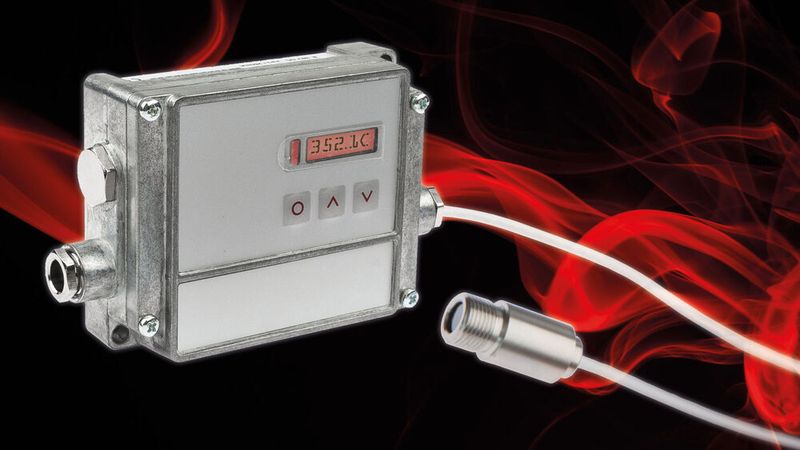
:quality(80)/p7i.vogel.de/wcms/72/02/7202340c1da8705bbcf049321d8b5d59/0120410522v1.jpeg "The measuring head of the OI98C558 can be used at ambient temperatures up to +180 °C. The system solution, including the evaluation unit, is particularly suitable for non-contact temperature measurement of objects with high heat emission.(Image: IPF Electronic)")
:quality(80)/p7i.vogel.de/wcms/dc/2e/dc2eb703b41beada32d60c08dfffbb6c/0120410525v1.jpeg "The angle bracket AY98C075 was used for mounting and easy alignment of the measuring heads, which can be easily adjusted in two axes.(Image: IPF Electronic)")
:quality(80)/p7i.vogel.de/wcms/a3/42/a342424a18dacb5df331cdbd32cd8a6d/0120410521v1.jpeg "Two infrared measuring heads were installed at a distance of approximately 1,000 mm from the kiln shell in the front and rear areas of the rotary kiln for continuous temperature measurement.(Image: IPF Electronic)")
:quality(80)/p7i.vogel.de/wcms/04/1d/041db8bbfc0f4289a0f89c1a9a710bc3/0120410526v1.jpeg "The two evaluation units are located in a thermally less critical area in a separate housing on the rotary kiln.(Image: IPF Electronic)")
:quality(80)/p7i.vogel.de/wcms/97/28/9728e560d751dd54acd8b88a82ff7330/0129610882v1.jpeg "Temperature measuring devices are essential for monitoring industrial processes and thus ensuring high product quality. (Image:Micro-Epsilon)")
:quality(80)/p7i.vogel.de/wcms/b7/87/b787c7cc520349a7069fb2b2b98df1df/0124875844v1.jpeg "Recharging a Rauch FT melting system with Mg ingots. The quality of the melt material largely determines the maintenance requirements of the system. (Image:Rauch-FT)")