SiCarrier electrifies Semicon China: With over 30 new tools and big ambitions, the young Chinese company is attracting all the attention at Semicon—and wants to position itself as a future challenger to Western equipment manufacturers like ASML.
The Chinese lithography equipment supplier SiCarrier made waves at Semicon China 2025 with announcements challenging Western semiconductor equipment manufacturers.
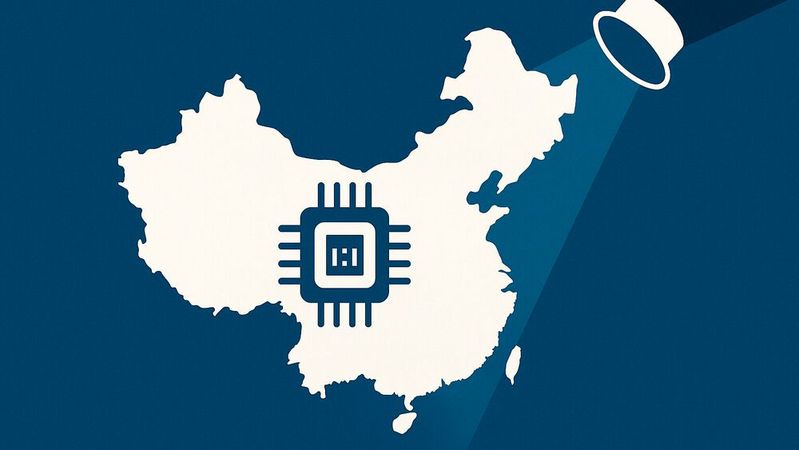
(Image: Dall-E / AI-generated)
Never before has the rush been so great. Anyone who made their way through the halls of Semicon China 2025 this time could hardly miss the SiCarrier booth. On the last day of the fair, March 26, 2025, when emptiness had already spread among other exhibitors, hundreds of visitors were still crowding at the SiCarrier booth. Not even real machines were exhibited, just photos of equipment for chip manufacturing. Nevertheless, the rush was tremendous.
"This is our first product launch since the company's founding just over three years ago—and all the devices we show have already reached mass production," a SiCarrier employee told the newspaper Zhengquan Shibao. The great attention is explained by the surprising announcements that SiCarrier made at the fair: they are technically already close to global market leaders such as ASML, Applied Materials, or Tokyo Electron—at least in certain classes like the 28-nanometer process.
Make a Virtue out of Necessity
In Chinese industry media, SiCarrier's appearance at the fair is already being described as a "DeepSeek moment of the domestic semiconductor industry"—in reference to the LLM model of the same name, celebrated as China's answer to ChatGPT-4. That may be a bit exaggerated, but the development is undoubtedly very interesting. Since the USA, Japan, and the Netherlands have massively tightened their export controls for semiconductor technologies, China is pushing forward the development of its own production means. SiCarrier is also moving into this gap.
The company presented more than 30 new devices at the fair, including tools for etching, thin-film deposition (PVD/CVD/ALD), optical inspection, and metrology. According to SiCarrier, some of the tools are already in use by customers, even though not all process steps have yet reached mass production. A complete exhibition of physical lithography systems was still withheld at the fair. However, the company stated through its WeChat channel that it has litho tools for 300-mm (12 inches) wafers and 28-nm nodes that are "compatible with international standards." For 2026, they are already planning a platform that can compete with the technologies of ASML and Applied Materials.
Technological Protectionism
The media force with which SiCarrier pushes into the spotlight cannot be separated from the political context. In the so-called "chip war" between the USA and China, it is no longer just about smartphones and memory chips. Nationalistically thinking strategists on both sides see lithography capabilities as nothing less than a question of technological and strategic autonomy for their states.
The export ban on advanced lithography systems from the USA, Europe, and Japan—most recently also for DUV systems from ASML—has triggered a significant acceleration in China's own development efforts: massive investments, state backing, and a new generation of ambitious start-ups.
SiCarrier in the Spotlight
SiCarrier is one of them—with excellent connections in politics and industry. Founded in 2021, the company is a wholly-owned subsidiary of the "Shenzhen Major Industrial Investment Group," a state-owned investment company that is also involved in Huawei-affiliated semiconductor companies. The proximity to Huawei, to which both companies do not comment, can be seen in personnel matters, among other things. Several senior engineers moved from Huawei or SMIC, China's leading chip manufacturer, to SiCarrier. According to Nikkei Asia, one of them is also a member of the SMIC supervisory boards.
Despite the boom, some experts remain skeptical. The specialist portals Tom's Hardware and TrendForce point out that many of SiCarrier's devices are still in the validation phase. Also, as mentioned earlier, no actual lithography systems have been exhibited yet. "Of course, there are still many hurdles that Chinese companies need to overcome. We still don't see globally competitive DUV or EUV equipment, and there are also many questions about SiCarrier's actual performance," writes Technode.
But the strategic relevance of the company and its progress is obvious. While earlier hopefuls like "Shanghai Microelectronics Equipment" (SMEE) in Shanghai seem almost forgotten at the moment—their booth was nearly deserted this year—it is now SiCarrier that is reinterpreting the already known narrative with dozens of machine classes and its own R&D campus in Shenzhen: Chinese self-sufficiency instead of dependence on foreign countries.
Date: 08.12.2025
Naturally, we always handle your personal data responsibly. Any personal data we receive from you is processed in accordance with applicable data protection legislation. For detailed information please see our privacy policy.
Consent to the use of data for promotional purposes
I hereby consent to Vogel Communications Group GmbH & Co. KG, Max-Planck-Str. 7-9, 97082 Würzburg including any affiliated companies according to §§ 15 et seq. AktG (hereafter: Vogel Communications Group) using my e-mail address to send editorial newsletters. A list of all affiliated companies can be found here
Newsletter content may include all products and services of any companies mentioned above, including for example specialist journals and books, events and fairs as well as event-related products and services, print and digital media offers and services such as additional (editorial) newsletters, raffles, lead campaigns, market research both online and offline, specialist webportals and e-learning offers. In case my personal telephone number has also been collected, it may be used for offers of aforementioned products, for services of the companies mentioned above, and market research purposes.
Additionally, my consent also includes the processing of my email address and telephone number for data matching for marketing purposes with select advertising partners such as LinkedIn, Google, and Meta. For this, Vogel Communications Group may transmit said data in hashed form to the advertising partners who then use said data to determine whether I am also a member of the mentioned advertising partner portals. Vogel Communications Group uses this feature for the purposes of re-targeting (up-selling, cross-selling, and customer loyalty), generating so-called look-alike audiences for acquisition of new customers, and as basis for exclusion for on-going advertising campaigns. Further information can be found in section “data matching for marketing purposes”.
In case I access protected data on Internet portals of Vogel Communications Group including any affiliated companies according to §§ 15 et seq. AktG, I need to provide further data in order to register for the access to such content. In return for this free access to editorial content, my data may be used in accordance with this consent for the purposes stated here. This does not apply to data matching for marketing purposes.
Right of revocation
I understand that I can revoke my consent at will. My revocation does not change the lawfulness of data processing that was conducted based on my consent leading up to my revocation. One option to declare my revocation is to use the contact form found at https://contact.vogel.de. In case I no longer wish to receive certain newsletters, I have subscribed to, I can also click on the unsubscribe link included at the end of a newsletter. Further information regarding my right of revocation and the implementation of it as well as the consequences of my revocation can be found in the data protection declaration, section editorial newsletter.
SiCarrier's vision could be even greater: not only to replace foreign manufacturers but also to surpass and outperform them in the global market. The SiCarrier CTO stated that the company expects commercial orders from SMIC and Hua Hong, the two largest foundries in China, later this year. In the next three years, the company also plans to establish research centers in more than ten cities as well as service centers in Europe and Southeast Asia.
Real Competition?
A snapshot assessment would likely conclude: SiCarrier is still young and not yet a replacement for ASML but is very ambitious and has come surprisingly far. In just over three years, the company has reportedly built a manufacturing depth that other Chinese equipment manufacturers are still far from. State support and targeted industrial policy in China's tech metropolis Shenzhen have undoubtedly helped. Through the "Shenzhen Major Industry Investment Group," which has invested in SiCarrier, the Shenzhen city government aims to promote the development of local chip production.
But the hard work driven by a common goal of thousands of Chinese engineers was undoubtedly also necessary for these advances. SiCarrier does not only see itself in competition with the USA but also with other high-tech clusters within China, which could ultimately be the more important competition from the company's perspective. Whether SiCarrier's devices can actually compete with those of ASML or AMAT in the end remains to be seen. They would not only have to be demonstrated but also prove themselves in mass production.
But it is already certain that the pressure on Western equipment suppliers continues to grow. The attempt to keep China away from advanced lithography equipment from abroad may achieve short-term successes, but in the long term, it could become a boomerang for the USA, Europe, and Japan. (sb)



:quality(80)/p7i.vogel.de/wcms/53/f7/53f7dadbe4d656a3fd4f4077445f29f6/0129828707v1.jpeg "Thanks to its compact design and drilling/unscrewing function, the Fire Birdie is suitable for applications with limited installation space and frequent tool changes. (Image:Marcel Kraibühler)")
:quality(80)/p7i.vogel.de/wcms/da/4d/da4da8d34671dc6bce80e496212de877/0129850788v1.jpeg "Mate-XT Go supports the arms and shoulders during overhead work and repetitive tasks and is designed to significantly reduce muscle strain in everyday working life. (Image:Comau)")
:quality(80)/p7i.vogel.de/wcms/95/97/95976dbaac68b249eb65e74c5aad5300/0129651893v1.jpeg "The C2.0 centric clamps, the S2 fixed jaw clamps and the \"gredoc\" zero-point clamping systems are used for machining the raw parts. Fastening is carried out with width across flats 27. (Image:Gressel)")
:quality(80)/p7i.vogel.de/wcms/57/1b/571b8895efb299d70846bbdbd7af2338/0130043886v1.jpeg "Servo hydraulics independent of the control system: The servo hydraulics software module is integrated directly into the b Maxx 5500 servo drive (pictured: Mehmet Sari, Export Sales Manager at Hürsan Pres (left), Özgür Deniz Demirbaş, Country Manager at Baumüller Turkey) (Image:Baumüller)")
:quality(80)/p7i.vogel.de/wcms/3b/27/3b27f6c5848be73acecb04054bf0a146/0130115209v1.jpeg "Spectroscopic glucose measurement with infrared spectroscopy enables more regular measurements without physical strain. (Image:Endrich)")
:quality(80)/p7i.vogel.de/wcms/3f/cc/3fccb748b0fe16f1f61249d94c72f126/0130149439v1.jpeg "Requirements for integrated power supply systems: Precise AC and DC power supply systems that not only provide energy, but also reliably combine measurement, analysis and system integration. (Image:Schulz Electronic)")
:quality(80)/p7i.vogel.de/wcms/fd/93/fd93e01c16f5a4709278499d981a459c/0130061090v1.jpeg "Revealed: These servo drives are assembled at Aerotech in Fürth. (Image:Aerotech)")
:quality(80)/p7i.vogel.de/wcms/cb/8a/cb8ae7f5205365efce3e7285154fc3cf/0130132198v1.jpeg "Markus Huber (left) and Nicolai Friis from TU Wien know how to make quantum computers multidimensional in order to perform computing operations even better. (Image:TU Vienna / A. Rommel)")
:quality(80)/p7i.vogel.de/wcms/63/21/6321beb732bf7d92640df46d7aa77573/0130125122v1.jpeg "As part of the Carbon Lab Factory Lausitz, a pilot plant for the production of sustainable, cost-effective and competitive carbon fibers will be built at the Guben site. (Image:Fraunhofer IAP / Kristin Stein)")
:quality(80)/p7i.vogel.de/wcms/53/4f/534fe0f168f6ee070ded4a48faca4cef/business-wire-main-image-1103x620v1.jpeg "The new UR AI Trainer, developed by Universal Robots and Scale AI, is the first direct lab-to-factory solution for AI model training.
(Source: Universal Robots)")
:quality(80)/p7i.vogel.de/wcms/08/70/087062e2e1a9b9add5777410dd746ee9/adobestock-1923991605-5607x3156v1v1.jpeg "A new type of tactile sensor, inspired by human skin, even recognizes grains of sand. (Image:Curioso.Photography - stock.adobe.com)")
:quality(80)/p7i.vogel.de/wcms/7f/08/7f087d7013424d123ab7275cd2e3fe55/adobestock-809456218--c2-a9-20degimages-20-e2-80-93-20stock-adobe-com-ki-generiert-4179x2351v1v1.jpeg "The digital upgrading of existing machines conserves resources, saves energy and reduces the need for new production. (Image:Degimages - stock.adobe.com/AI-generated)")
:quality(80)/p7i.vogel.de/wcms/90/db/90db3087d3af0560fcdb4dbc42443ce1/0130157448v1.jpeg "The switch to SDV is the most complex transformation the industry has ever had to master. The end consumer gets a vehicle that gains rather than loses value over its lifetime. (Image:Sonatus)")
:quality(80)/p7i.vogel.de/wcms/73/f0/73f00bb99a23197db05bb584fe78f20f/0130080581v1.jpeg "The \"China Speed\" analysis by Roland Berger shows that the speed of development has only a limited connection with labor costs. (Image:freely licensed at Pexels)")
:quality(80)/p7i.vogel.de/wcms/2f/5b/2f5ba6a150b52c2b8efada560c5cdafe/0130143442v1.jpeg "Automotive suppliers are facing a severe crisis, which is primarily due to a combination of structural change and economic problems. (Image:freely licensed at Pexels)")
:quality(80)/p7i.vogel.de/wcms/22/d0/22d03cd48e992435338b59464c428d41/0129739814v1.jpeg "More electric vehicles on the roads mean a higher demand for electricity - which should ideally be covered by renewable energies. (Image:BMW)")
:quality(80)/p7i.vogel.de/wcms/94/7a/947ac066b98cbcd3470e83ff9da3e25f/0130096114v1.jpeg "The use of amorphous steels in the stator enables a significant reduction in losses and increases the efficiency of modern electric motors in vehicle drives. (Image:Horse Powertrain)")
:quality(80)/p7i.vogel.de/wcms/e5/f1/e5f171d3d7ae021332cc0aeae4d6e299/0130127049v1.jpeg "In collaboration with Shanghai Jiao Tong University, Lenovo has presented a silicon anode battery under the name \"ED1000\" as a proof of concept for mobile workstations. (Image:Lenovo)")
:quality(80)/p7i.vogel.de/wcms/fa/69/fa696e59706b96fff02283dd74cc2398/0130129635v1.jpeg "Samsung Co-CEO Jun Young-hyun wants to respond to the AI-driven boom in demand in the memory market with contracts for up to five years. This should provide more planning security in the traditionally volatile storage business. At the same time, however, this is likely to increase the pressure on customers to secure precise long-term requirements, prices and supply chains. (Image:Samsung)")
:quality(80)/p7i.vogel.de/wcms/31/a8/31a883a47b86634c382923e78fd9a4c9/0130133225v1.jpeg "Figure 1: GMSL-capable point-to-point connection. (Image:ADI)")
:fill(fff,0)/p7i.vogel.de/companies/69/88/69882c428938e/tmts2026-ticec-banner-en-2000px.png "tmts2026-ticec-banner-en-2000px (https://www.tmts.tw/en)")
:fill(fff,0)/p7i.vogel.de/companies/67/eb/67eba621ef6ea/logo2.png "logo2 (Wuxi InfiMotion)")
:quality(80):fill(efefef,0)/p7i.vogel.de/wcms/67/ad/67adf92d254d2/elatec-wp-smart-factory.png "Elatec WP Smart Factory")
:quality(80)/p7i.vogel.de/wcms/d5/e2/d5e22c63ba60d609d973da20984f6828/0126218335v1.jpeg "The long-term impact of state-led initiatives to promote high-tech industries is continually demonstrated in China. (Symbolic image) (Image:Dall-E / AI-generated)")
:quality(80)/p7i.vogel.de/wcms/61/9d/619d8849d4790159707bd796d17bbebd/0128679771v1.jpeg "The EXE:5000 from ASML. Version EXE:5200B has brought High-NA EUV lithography technology to production maturity. (Image:ASML)")