Europe’s semiconductor sector remains in an economic trough, yet a closer look at key market indicators reveals early signs of a potential turnaround. Analyst Marco Mezger from IDEA (International Distributors of Electronics Association) has reviewed the developments of Q1 2025 and stresses that Europe must not miss out on the momentum behind the “AI Everywhere” trend.
Hopes for the European semiconductor industry, according to Mezger, lie in the form of a second wave of AI that is not just happening in server rooms, but everywhere: “AI Everywhere.”
(Image: Dall-E / AI-Generated)
While the global semiconductor market continues to expand, largely driven by artificial intelligence, Europe’s chip industry remains cautious. AI is currently propelled by global leaders such as Nvidia, Taiwanese foundry TSMC, and major hyperscaler clients in the United States.
Analysts from IDC, McKinsey, and other research firms expect the semiconductor market to surpass USD 1 trillion in annual revenue by 2035 and to double again to USD 2 trillion just a decade later.
Markets in the U.S. and Asia are already booming. But how can Europe secure a meaningful role in this transformation? Industry expert Marco Mezger of IDEA (International Distributors of Electronics Association) sees early signs of recovery and highlights the opportunities arising from the shift toward AI-integrated applications across industries.
Weak Performance, but Signs of Stabilization
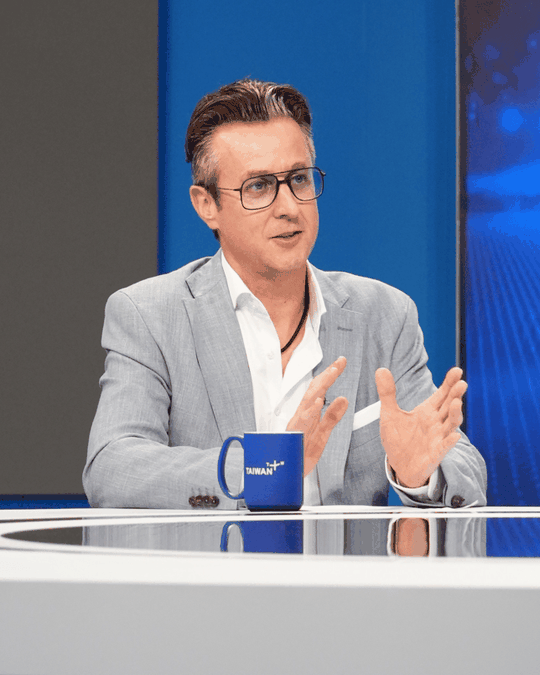
Marco Mezger is a global entrepreneur, investor, and advisor with over 30 years of experience in the semiconductor industry. Born in Germany and based in Taipei, Marco has a unique understanding of global semiconductor businesses and their challenges resulting in a track record as a matchmaker in the industry. As a thought leader focusing on memory technology, Marco has a sizeable global follower base on LinkedIn. He is also a regular guest commenting in international publications and TV programs about the semiconductor industry news and market trends.
(Image: IDEA)
According to DMASS, European semiconductor distribution revenue declined by approximately 20% in Q1 2025 compared to the previous year. Germany and Italy reported even sharper declines of 27%. Nearly all product categories—including analog, power, and microcontrollers—experienced double-digit losses.
Memory, Mezger’s core area of expertise, also declined by 22%, although this figure conceals a more complex picture. Global demand for High Bandwidth Memory (HBM) is rising sharply due to AI-driven workloads, but Europe has yet to benefit meaningfully from this trend.
Still, one metric signals potential stabilization: the book-to-bill ratio, which compares incoming orders to actual sales. A value below 1.0 suggests contraction; above 1.0 indicates expansion. In Germany—Europe’s largest semiconductor market—the ratio stood at 0.98 in Q1 2025, its highest level since the onset of the downturn. By comparison, it had dropped to 0.47 in Q3 2023, reflecting post-pandemic inventory overhangs. While this suggests a potential bottoming out of the market, a full recovery remains out of reach.
Europe’s Strategic Challenge: No Seat at the AI Table—Yet
Artificial intelligence is the primary growth engine of the global semiconductor market. However, Europe currently plays a limited role in the first AI wave, which is dominated by hyperscalers, large-scale data centers, and direct-to-OEM supply chains. High-end HBM modules and AI accelerators are shipped directly from manufacturers to tech giants like Google, Amazon, and Meta, bypassing traditional distribution channels where European firms could otherwise participate.
Yet the market is evolving, entering a second wave of AI adoption —commonly referred to as “AI Everywhere”— that is about embedding AI into industrial equipment, vehicles, medical devices, and edge computing environments. This phase aligns closely with Europe’s core strengths in automation, industrial control, and precision engineering.
TSMC’s investments in Dresden (via the ESMC joint venture) and Munich (design center) could help lay the foundation for a European AI ecosystem that does not rely on ultra-fine process nodes. Applications in AIoT (Artificial Intelligence of Things), HAI (Hybrid Artificial Intelligence), and edge computing require robust, specialized architectures rather than cutting-edge miniaturization, an area where European players like Infineon, NXP, and Bosch are already well positioned.
Memory Cycles: Familiar Patterns, New Pressures
While Europe currently lags in the memory segment, global developments in DRAM and NAND remain relevant. Both segments follow traditional cyclical patterns, but demand for HBM is introducing new market dynamics.
DRAM manufacturers are shifting capacity from legacy technologies to boost HBM output, resulting in short-term shortages of standard DRAM and rising prices. Yet Europe is largely excluded from this growth segment, as HBM remains complex, expensive, and highly centralized in OEM-directed channels.
The NAND market continues its familiar cycle: output is constrained early in the year to support pricing, then accelerates later, often outpacing demand and triggering price corrections. Europe remains largely detached from this global memory upswing, both technologically and commercially. This further highlights the need to focus on robust, design-in-driven segments that offer longer-term value creation.
Date: 08.12.2025
Naturally, we always handle your personal data responsibly. Any personal data we receive from you is processed in accordance with applicable data protection legislation. For detailed information please see our privacy policy.
Consent to the use of data for promotional purposes
I hereby consent to Vogel Communications Group GmbH & Co. KG, Max-Planck-Str. 7-9, 97082 Würzburg including any affiliated companies according to §§ 15 et seq. AktG (hereafter: Vogel Communications Group) using my e-mail address to send editorial newsletters. A list of all affiliated companies can be found here
Newsletter content may include all products and services of any companies mentioned above, including for example specialist journals and books, events and fairs as well as event-related products and services, print and digital media offers and services such as additional (editorial) newsletters, raffles, lead campaigns, market research both online and offline, specialist webportals and e-learning offers. In case my personal telephone number has also been collected, it may be used for offers of aforementioned products, for services of the companies mentioned above, and market research purposes.
Additionally, my consent also includes the processing of my email address and telephone number for data matching for marketing purposes with select advertising partners such as LinkedIn, Google, and Meta. For this, Vogel Communications Group may transmit said data in hashed form to the advertising partners who then use said data to determine whether I am also a member of the mentioned advertising partner portals. Vogel Communications Group uses this feature for the purposes of re-targeting (up-selling, cross-selling, and customer loyalty), generating so-called look-alike audiences for acquisition of new customers, and as basis for exclusion for on-going advertising campaigns. Further information can be found in section “data matching for marketing purposes”.
In case I access protected data on Internet portals of Vogel Communications Group including any affiliated companies according to §§ 15 et seq. AktG, I need to provide further data in order to register for the access to such content. In return for this free access to editorial content, my data may be used in accordance with this consent for the purposes stated here. This does not apply to data matching for marketing purposes.
Right of revocation
I understand that I can revoke my consent at will. My revocation does not change the lawfulness of data processing that was conducted based on my consent leading up to my revocation. One option to declare my revocation is to use the contact form found at https://contact.vogel.de. In case I no longer wish to receive certain newsletters, I have subscribed to, I can also click on the unsubscribe link included at the end of a newsletter. Further information regarding my right of revocation and the implementation of it as well as the consequences of my revocation can be found in the data protection declaration, section editorial newsletter.
A Niche with Strategic Value
Europe’s semiconductor industry stands at a pivotal moment. Short-term performance remains weak, but the fundamentals are not without promise. In the medium to long term, success will depend on redefining the region’s strategic position, shifting away from commoditized mass markets and toward resilient, high-value, application-specific solutions. A genuine market recovery will be driven not by pricing, but by volume.This is where Europe’s real opportunity lies.



:quality(80)/p7i.vogel.de/wcms/dd/08/dd086510d9ae7b50181f6070e4463b44/0129363730v1.jpeg "Typical application for ionizing devices: Wrapping films. (Picture: ©Adobe Stock/SMC)")
:quality(80)/p7i.vogel.de/wcms/35/57/3557c819943c53acec41a0ccba87da4f/0130049064v1.jpeg "Researchers at the Fraunhofer IWU in Chemnitz have long known that many typical sheet metal parts can be manufactured more cost-effectively using hollow embossing rollers. Now there is news to report ... (Image:Fraunhofer IWU)")
:quality(80)/p7i.vogel.de/wcms/59/02/590246e3b3f415c65edbee377c14ca77/26-06-pi-fraunhofer-iws-41450-direktplattieren-pic-01-7771x4369v1v1.jpeg "The Fraunhofer IWS has developed the new \"direct laser cladding\" process, which creates a functional layer directly on the base body by applying a strip-shaped metal to rotationally symmetrical components in a spiral and bonding it locally by laser. (Image:Christoph Wilsnack/Fraunhofer IWS)")
:quality(80)/p7i.vogel.de/wcms/73/60/73608418789b1d9c393f5e2fa974eda2/0130209906v1.jpeg "The robots of the X6 generation from b+m enable very high painting quality and are also particularly compact and easy to maintain. (Image:Beckhoff)")
:quality(80)/p7i.vogel.de/wcms/78/e9/78e9188c25a8a94e67c34c9bf8ffe495/visual-agile-20robots-20and-20google-20deepmind-20partner-20to-20bring-20intelligence-20to-20robotics-2500x1406v1v1.jpeg "Together, the partners are developing adaptable, intelligent robots for a wide range of applications (Image:Agile Robots SE)")
:quality(80)/p7i.vogel.de/wcms/e7/66/e7669ecf0260ae8fc54c214e34e4902a/0130316817v1.jpeg "Siemens and Palo Alto Networks offer tested cybersecurity solution for industrial 5G. (Image:Siemens)")
:quality(80)/p7i.vogel.de/wcms/9f/55/9f55324832c4f426958031375124d9de/siemens-20ubtech-20hmnd-1920x1079v1v1.png "Ready for the factory floor: While Ubtech is planning mass production, Siemens is already testing humanoids in real factory applications in Erlangen. (Image:Siemens)")
:quality(80)/p7i.vogel.de/wcms/11/36/113695ed260e29c8c2d9d39dc5f9d869/0130213768v1.jpeg "AI can work cheaply in China and deliver the results rapidly all over the world. (Image:Dall-E / AI-generated)")
:quality(80)/p7i.vogel.de/wcms/62/5f/625f41e87ebfef156a98c8e6393e32fd/0130211654v1.jpeg "Axial flux motors have some advantages over radial flux motor—but their production is currently still expensive. (Image:RWTH Aachen University)")
:quality(80)/p7i.vogel.de/wcms/77/9b/779b0685d010dfe45c9c2cb1cfecd467/0128886425v1.jpeg "The BlueEye is the first \"real\" hyperspectral camera for the UV range and covers the wavelength range from 220 to 380nm. (Image:Inno-spec GmbH)")
:quality(80)/p7i.vogel.de/wcms/e4/51/e451d52ce0182fb0aaa46a5774f832ef/26-04-pi-fraunhofer-iws-21160-bioslide-pic-01-4128x2321v1v1.jpeg "With the BioSlide research project, the Fraunhofer IWS is investigating how sliding systems can be designed to be more sustainable and energy-efficient. New materials can be tested in a particularly application-oriented manner on this plain bearing test stand. (Image:Fraunhofer IWS)")
![Thanks to advanced 3D printing technology, a more efficient use of resources should contribute to lower-emission aviation—this is the goal of ['skai]-lab. (Image:Oleksandr Pashchenko - stock.adobe.com / AI-generated)](https://cdn1.vogel.de/nghHNSbySccfOjG3n1qCA-FVOjQ=/288x162/smart/filters:format(jpg):quality(80)/p7i.vogel.de/wcms/62/64/626424c97a16e69f871bf216c9629c2a/adobestock-1927043193--c2-a9-20oleksandr-20pashchenko-20-e2-80-93-20stock-adobe-com-ki-generiertv1v1.jpeg "Thanks to advanced 3D printing technology, a more efficient use of resources should contribute to lower-emission aviation—this is the goal of ['skai]-lab. (Image:Oleksandr Pashchenko - stock.adobe.com / AI-generated)")
:quality(80)/p7i.vogel.de/wcms/c3/c4/c3c4ce270b083eeac55654148611f064/0130237945v1.jpeg "China is not giving up on hydrogen, but is intensifying its efforts. (Image:freely licensed from Pixabay)")
:quality(80)/p7i.vogel.de/wcms/4e/c0/4ec0bd19390b169edfa23677373dcdf1/0130260089v1.jpeg "Renewable fuels can supply European road traffic, according to a study. (Image:Aral)")
:quality(80)/p7i.vogel.de/wcms/6f/c9/6fc9050301d745cad25585c6780f8f51/0130197341v1.jpeg "Production facilities are a worthwhile target and are therefore at risk. (Image:ABB Robotics)")
:quality(80)/p7i.vogel.de/wcms/b6/62/b662adc2cec8227d8172509bbfb6ee42/25c0207-107-4961x2789v1v1.jpeg "The GLB is the second model based on Mercedes' new MMA platform. Apparently, Geely's platform is better and cheaper, which is why the two companies are negotiating a partnership. (Image:Mercedes-Benz)")
:quality(80)/p7i.vogel.de/wcms/4d/dd/4dddf438e91f394c04a095dbfd109d1c/0130236430v1.jpeg "Measurement modules: The 720301 module in combination with the SL2000 enables RMS and power calculations, among other things. (Image:Yokogawa)")
:quality(80)/p7i.vogel.de/wcms/61/fc/61fcf95f5cca15494ad18343901ae585/0130317237v1.jpeg "With the AGI CPU, Arm says it is taking a \"historic step\": With the processor aimed at AI in data centers, the company is presenting itself for the first time as a provider of its own chips, not just as a pure IP licensor. (Image:Arm)")
:quality(80)/p7i.vogel.de/wcms/82/90/8290dfe3595b6c6b33726ae8b76172c7/0130319587v1.jpeg "The concept image illustrates how the pattern of tiny protrusions and depressions created on the substrate (MgO, bottom) controls the arrangement of atoms in the superconducting material (YBCO, top). At the interface between the two layers, an electronic structure enables superconductivity to occur at higher temperatures than previously possible. (Image:Chalmers University of Technology / Riccardo Arpaia)")
:fill(fff,0)/images.vogel.de/vogelonline/companyimg/76800/76895/65.jpg "FAULHABER_120mm.jpg ()")
:fill(fff,0)/p7i.vogel.de/companies/69/88/69882c428938e/tmts2026-ticec-banner-en-2000px.png "tmts2026-ticec-banner-en-2000px (https://www.tmts.tw/en)")
:fill(fff,0)/p7i.vogel.de/companies/67/eb/67eba621ef6ea/logo2.png "logo2 (Wuxi InfiMotion)")

:quality(80)/p7i.vogel.de/wcms/8d/2f/8d2f7919476f218e58f73dbcc1f2090e/0126622896v1.jpeg "Developments in the semiconductor market in Q2/2025: Globally, there is growth, while revenue in Europe continues to stagnate. (Image:Dall-E / AI-generated)")
:quality(80)/p7i.vogel.de/wcms/cc/de/ccde430f4429d51c9ede08bbc1644c41/0128808423v1.jpeg "Memory technologies: A symbolic image. (Image:Dall-E / AI-generated)")