To increase the efficiency of industrial processes and at the same time optimize energy consumption, energy management is considered one of the most important tools in today's industry - just like at Jumo.
The company presented its energy management tool "Jumo Werk 1 - Chiller" at the ISH 2023 trade fair.
(Image: Jumo)
The description of energy was heavily influenced by the scientific, technological, and industrial developments of the 19th century. During this period, humanity underwent a significant transition from the use of predominantly mechanical energy to chemical and electrical energy sources. Mechanical energy initiated and drove the industrial revolution.
Carrier carbon cycle
The energy from the movement of machines, using wind and water power, was often described as "mechanical work". The use of fuels (chemical energy) such as wood, coal, and later petroleum and natural gas led to the most revolutionary development of the time - steam engines, whose thermal energy was converted into mechanical work or into electricity.
Gallery
However, it should be noted that the storage of CO2 in plants through photosynthesis and the thermal release of CO2 through combustion is a recurring, slow and lengthy carbon cycle. Due to overburdening of the carbon cycle by mass CO2 combustion and slow storage, only a significant reduction in CO2 will lead to a noticeable reversal of the trend in CO2 levels in the atmosphere. Initially it was thought that fuel was available infinitely and inexpensively, but economic growth, competitiveness and subsequent cost reduction measures demonstrated that energy costs are a significant part of industrial operating expenses today.
To increase the efficiency of industrial processes and optimize energy consumption at the same time, energy management has become one of the most important tools in today's industry. The implementation of energy management technologies often promotes and leads to technological innovation because they know where and how energy flows. Companies that continuously invest in energy-efficient technologies can not only improve their energy balance but also become more competitive globally. More and more customers expect industries to provide CO2 evidence that the products purchased are produced more and more sustainably year after year. Many countries have also introduced laws and regulations that require industries to monitor and reduce their energy consumption.
Reduce energy consumption further
An energy management system helps to meet the increasingly demanding legal requirements. By reducing energy consumption, Jumo will further minimize its environmental impact and contribute to more sustainable development without affecting its productivity and quality. For this, Jumo has developed and installed its own energy management system for the water chillers in the main plant in Fulda. Important components of this energy management system are:
the energy management software, e.g. Jumo Cloud,
the energy management system, e.g. Jumo Smartware SCADA,
the regulation, e.g. influencing a heating system based on a target-actual comparison,
the control, e.g. influencing a heating valve to influence the room temperature,
the sensors, e.g. for temperature, pressure, power.
With existing older industrial buildings, the reduction measures of the ecological footprint continually reach their limits. This leads, among other things, to the largest investment in Jumo's history, a new building in the Fulda-West Technology Park. With around 50 million euros, the company is successfully setting the course for a sustainable future. After all, around 13,000 m² - equivalent to approximately two football fields - will be available for modern production of temperature and pressure sensors. A lot is also happening in the new factory in terms of innovation, digitalization and sustainability. According to current planning, fossil fuels will be completely avoided there. A geothermal system is to be used to support heating. This will cover peak load, with base load being covered completely by heat recovery from production processes. The electricity demand of the production facilities will largely be covered by its own power. The cooling and ventilation systems of the new plant will mainly be operated with self-generated electricity from its own photovoltaic system. Overall, all energy processes are aimed at minimizing the CO2 footprint and fully utilizing the existing energies.
The importance of sustainability is increasing
The European Green Deal aims to make the EU the world's first greenhouse gas neutral bloc by 2050. European companies are urged to disclose and improve their CO2 footprint. For companies, this means initially getting an overview of where which CO2 emissions occur in the company by determining the company-wide CO2 footprint (Corporate Carbon Footprint).
According to the Greenhouse Gas Protocol, the CO2 footprint is divided into three scopes. The first scope includes the direct emissions in the company (e.g., heat, cold generation, vehicle fleet, etc). The second scope includes the indirect emissions, e.g., from energy suppliers (electricity, heat, gas, steam, etc). The third and last scope covers the indirect emissions in the upstream and downstream supply chains.
Since 2023, medium-sized and large companies have been required to report their CO2 footprint according to the legal requirements of the CSRD Directive (Corporate Sustainability Reporting Directive, EU Directive on Corporate Sustainability Reporting). The requirements, processing and reporting of energy data in a company can thus become a major challenge. Especially in industries with complex processes and numerous influencing factors, such as in process engineering or machine manufacturing, like at Jumo in Fulda, various energy flows have to be considered and evaluated.
An expandable digital energy management system is, so to speak, at the center of the processes and orchestrates the most diverse energy flows. This digital solution ensures the ongoing monitoring (e.g. every quarter of an hour, quasi-continuously, ...) and optimal control of energy production, consumption and storage and operates largely autonomously. Optimal are learning digital systems, because they calculate the optimal energy flow based on forecast data and balance deviations in real time.
Date: 08.12.2025
Naturally, we always handle your personal data responsibly. Any personal data we receive from you is processed in accordance with applicable data protection legislation. For detailed information please see our privacy policy.
Consent to the use of data for promotional purposes
I hereby consent to Vogel Communications Group GmbH & Co. KG, Max-Planck-Str. 7-9, 97082 Würzburg including any affiliated companies according to §§ 15 et seq. AktG (hereafter: Vogel Communications Group) using my e-mail address to send editorial newsletters. A list of all affiliated companies can be found here
Newsletter content may include all products and services of any companies mentioned above, including for example specialist journals and books, events and fairs as well as event-related products and services, print and digital media offers and services such as additional (editorial) newsletters, raffles, lead campaigns, market research both online and offline, specialist webportals and e-learning offers. In case my personal telephone number has also been collected, it may be used for offers of aforementioned products, for services of the companies mentioned above, and market research purposes.
Additionally, my consent also includes the processing of my email address and telephone number for data matching for marketing purposes with select advertising partners such as LinkedIn, Google, and Meta. For this, Vogel Communications Group may transmit said data in hashed form to the advertising partners who then use said data to determine whether I am also a member of the mentioned advertising partner portals. Vogel Communications Group uses this feature for the purposes of re-targeting (up-selling, cross-selling, and customer loyalty), generating so-called look-alike audiences for acquisition of new customers, and as basis for exclusion for on-going advertising campaigns. Further information can be found in section “data matching for marketing purposes”.
In case I access protected data on Internet portals of Vogel Communications Group including any affiliated companies according to §§ 15 et seq. AktG, I need to provide further data in order to register for the access to such content. In return for this free access to editorial content, my data may be used in accordance with this consent for the purposes stated here. This does not apply to data matching for marketing purposes.
Right of revocation
I understand that I can revoke my consent at will. My revocation does not change the lawfulness of data processing that was conducted based on my consent leading up to my revocation. One option to declare my revocation is to use the contact form found at https://contact.vogel.de. In case I no longer wish to receive certain newsletters, I have subscribed to, I can also click on the unsubscribe link included at the end of a newsletter. Further information regarding my right of revocation and the implementation of it as well as the consequences of my revocation can be found in the data protection declaration, section editorial newsletter.



:quality(80)/p7i.vogel.de/wcms/53/f7/53f7dadbe4d656a3fd4f4077445f29f6/0129828707v1.jpeg "Thanks to its compact design and drilling/unscrewing function, the Fire Birdie is suitable for applications with limited installation space and frequent tool changes. (Image:Marcel Kraibühler)")
:quality(80)/p7i.vogel.de/wcms/da/4d/da4da8d34671dc6bce80e496212de877/0129850788v1.jpeg "Mate-XT Go supports the arms and shoulders during overhead work and repetitive tasks and is designed to significantly reduce muscle strain in everyday working life. (Image:Comau)")
:quality(80)/p7i.vogel.de/wcms/95/97/95976dbaac68b249eb65e74c5aad5300/0129651893v1.jpeg "The C2.0 centric clamps, the S2 fixed jaw clamps and the \"gredoc\" zero-point clamping systems are used for machining the raw parts. Fastening is carried out with width across flats 27. (Image:Gressel)")
:quality(80)/p7i.vogel.de/wcms/57/1b/571b8895efb299d70846bbdbd7af2338/0130043886v1.jpeg "Servo hydraulics independent of the control system: The servo hydraulics software module is integrated directly into the b Maxx 5500 servo drive (pictured: Mehmet Sari, Export Sales Manager at Hürsan Pres (left), Özgür Deniz Demirbaş, Country Manager at Baumüller Turkey) (Image:Baumüller)")
:quality(80)/p7i.vogel.de/wcms/3b/27/3b27f6c5848be73acecb04054bf0a146/0130115209v1.jpeg "Spectroscopic glucose measurement with infrared spectroscopy enables more regular measurements without physical strain. (Image:Endrich)")
:quality(80)/p7i.vogel.de/wcms/3f/cc/3fccb748b0fe16f1f61249d94c72f126/0130149439v1.jpeg "Requirements for integrated power supply systems: Precise AC and DC power supply systems that not only provide energy, but also reliably combine measurement, analysis and system integration. (Image:Schulz Electronic)")
:quality(80)/p7i.vogel.de/wcms/fd/93/fd93e01c16f5a4709278499d981a459c/0130061090v1.jpeg "Revealed: These servo drives are assembled at Aerotech in Fürth. (Image:Aerotech)")
:quality(80)/p7i.vogel.de/wcms/cb/8a/cb8ae7f5205365efce3e7285154fc3cf/0130132198v1.jpeg "Markus Huber (left) and Nicolai Friis from TU Wien know how to make quantum computers multidimensional in order to perform computing operations even better. (Image:TU Vienna / A. Rommel)")
:quality(80)/p7i.vogel.de/wcms/63/21/6321beb732bf7d92640df46d7aa77573/0130125122v1.jpeg "As part of the Carbon Lab Factory Lausitz, a pilot plant for the production of sustainable, cost-effective and competitive carbon fibers will be built at the Guben site. (Image:Fraunhofer IAP / Kristin Stein)")
:quality(80)/p7i.vogel.de/wcms/53/4f/534fe0f168f6ee070ded4a48faca4cef/business-wire-main-image-1103x620v1.jpeg "The new UR AI Trainer, developed by Universal Robots and Scale AI, is the first direct lab-to-factory solution for AI model training.
(Source: Universal Robots)")
:quality(80)/p7i.vogel.de/wcms/08/70/087062e2e1a9b9add5777410dd746ee9/adobestock-1923991605-5607x3156v1v1.jpeg "A new type of tactile sensor, inspired by human skin, even recognizes grains of sand. (Image:Curioso.Photography - stock.adobe.com)")
:quality(80)/p7i.vogel.de/wcms/7f/08/7f087d7013424d123ab7275cd2e3fe55/adobestock-809456218--c2-a9-20degimages-20-e2-80-93-20stock-adobe-com-ki-generiert-4179x2351v1v1.jpeg "The digital upgrading of existing machines conserves resources, saves energy and reduces the need for new production. (Image:Degimages - stock.adobe.com/AI-generated)")
:quality(80)/p7i.vogel.de/wcms/90/db/90db3087d3af0560fcdb4dbc42443ce1/0130157448v1.jpeg "The switch to SDV is the most complex transformation the industry has ever had to master. The end consumer gets a vehicle that gains rather than loses value over its lifetime. (Image:Sonatus)")
:quality(80)/p7i.vogel.de/wcms/73/f0/73f00bb99a23197db05bb584fe78f20f/0130080581v1.jpeg "The \"China Speed\" analysis by Roland Berger shows that the speed of development has only a limited connection with labor costs. (Image:freely licensed at Pexels)")
:quality(80)/p7i.vogel.de/wcms/2f/5b/2f5ba6a150b52c2b8efada560c5cdafe/0130143442v1.jpeg "Automotive suppliers are facing a severe crisis, which is primarily due to a combination of structural change and economic problems. (Image:freely licensed at Pexels)")
:quality(80)/p7i.vogel.de/wcms/22/d0/22d03cd48e992435338b59464c428d41/0129739814v1.jpeg "More electric vehicles on the roads mean a higher demand for electricity - which should ideally be covered by renewable energies. (Image:BMW)")
:quality(80)/p7i.vogel.de/wcms/94/7a/947ac066b98cbcd3470e83ff9da3e25f/0130096114v1.jpeg "The use of amorphous steels in the stator enables a significant reduction in losses and increases the efficiency of modern electric motors in vehicle drives. (Image:Horse Powertrain)")
:quality(80)/p7i.vogel.de/wcms/e5/f1/e5f171d3d7ae021332cc0aeae4d6e299/0130127049v1.jpeg "In collaboration with Shanghai Jiao Tong University, Lenovo has presented a silicon anode battery under the name \"ED1000\" as a proof of concept for mobile workstations. (Image:Lenovo)")
:quality(80)/p7i.vogel.de/wcms/fa/69/fa696e59706b96fff02283dd74cc2398/0130129635v1.jpeg "Samsung Co-CEO Jun Young-hyun wants to respond to the AI-driven boom in demand in the memory market with contracts for up to five years. This should provide more planning security in the traditionally volatile storage business. At the same time, however, this is likely to increase the pressure on customers to secure precise long-term requirements, prices and supply chains. (Image:Samsung)")
:quality(80)/p7i.vogel.de/wcms/31/a8/31a883a47b86634c382923e78fd9a4c9/0130133225v1.jpeg "Figure 1: GMSL-capable point-to-point connection. (Image:ADI)")
:fill(fff,0)/images.vogel.de/vogelonline/companyimg/76800/76895/65.jpg "FAULHABER_120mm.jpg ()")
:fill(fff,0)/p7i.vogel.de/companies/69/88/69882c428938e/tmts2026-ticec-banner-en-2000px.png "tmts2026-ticec-banner-en-2000px (https://www.tmts.tw/en)")
:fill(fff,0)/p7i.vogel.de/companies/67/eb/67eba621ef6ea/logo2.png "logo2 (Wuxi InfiMotion)")
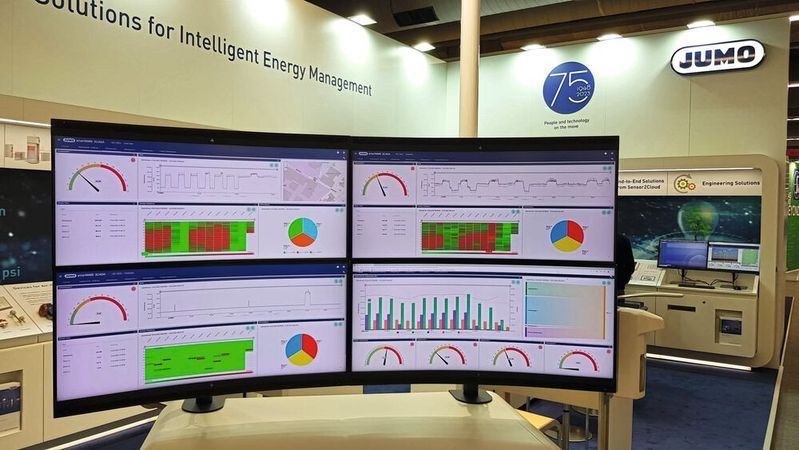
:quality(80)/p7i.vogel.de/wcms/69/ce/69ce4517daa2b3135ced0dc1d3f19902/0118601570v1.jpeg "The company presented its energy management tool \"Jumo Werk 1 - Chiller\" at the ISH 2023 trade fair.(Image: Jumo)")
:quality(80)/p7i.vogel.de/wcms/54/91/5491838b7ff2bc07c6f17f120fd481a4/0118427349v1.jpeg "(Image: Jumo)")
:quality(80)/p7i.vogel.de/wcms/be/b8/beb838765cbe54c46ef5e0afdc508fe0/0118427343v1.jpeg "The picture shows the construction progress of the new Jumo factory \"Sensilo\".(Image: Jumo)")
:quality(80)/p7i.vogel.de/wcms/8d/04/8d0485897b5fc1dae0474ef42ab9584f/0118331503.jpeg "Identifikation von Skids im Karosseriebau (Bild: Pepperl+Fuchs)")
:quality(80)/p7i.vogel.de/wcms/be/e9/bee9b7f2fc8eff621090186fb974c724/0118233697.jpeg "Das kundenspezifische AC/DC-Medizin-Netzteil BEO-3036M-B1 von Bicker Elektronik ist in die mobile Energieversorgungseinheit im Fuß des digitalen Visitenwagens integriert. (Bild: Bicker Elektronik GmbH / JÜKE Systemtechnik GmbH / Integrion GmbH / Adobe Stock Art.disini #620099151)")
:quality(80)/p7i.vogel.de/wcms/2d/d3/2dd39c1ef4e8136a25ac906f765c7480/0127131722v1.jpeg "MTU gas generators of the 4000 series, which reach full load in 120 seconds, can already be used for power supply in data centers. (Image:Rolls-Royce)")
:quality(80)/p7i.vogel.de/wcms/f0/35/f035afad8613734aaefe4d6778d21309/0129554823v1.jpeg "The Aquis Touch S multi-channel measuring, control and recording device ensures that the quality parameters of the cooling media are correct. (Image:Jumo)")