5G networks are relatively well developed in urban areas and along major traffic corridors. Problems exist in rural and remote areas. The necessary connections for communication and data exchange of autonomous vehicles are not guaranteed. Satellites can remedy this.
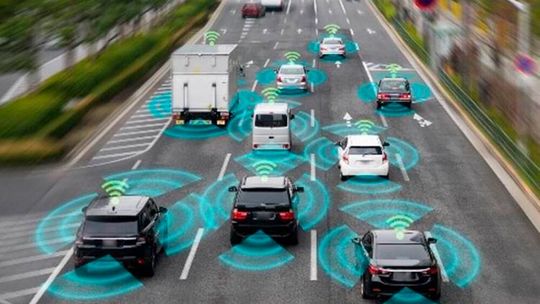
Connected vehicles communicate via satellites and terrestrially via 5G.
(Image: ADAC)
Universal connectivity is crucial for many vehicle applications. However, terrestrial coverage, including 5G, is inadequate even in advanced countries due to poor or absent infrastructure. This limits autonomous driving to basic assistance systems. The industry does not anticipate fully autonomous driving through the use of satellite-based connectivity, high throughput satellites (HTS), and the development of low Earth orbit satellites (LEO) until 2030. Hybrid cellular-satellite systems are increasingly becoming a realistic option for vehicle connectivity.
More and more new cars are connected
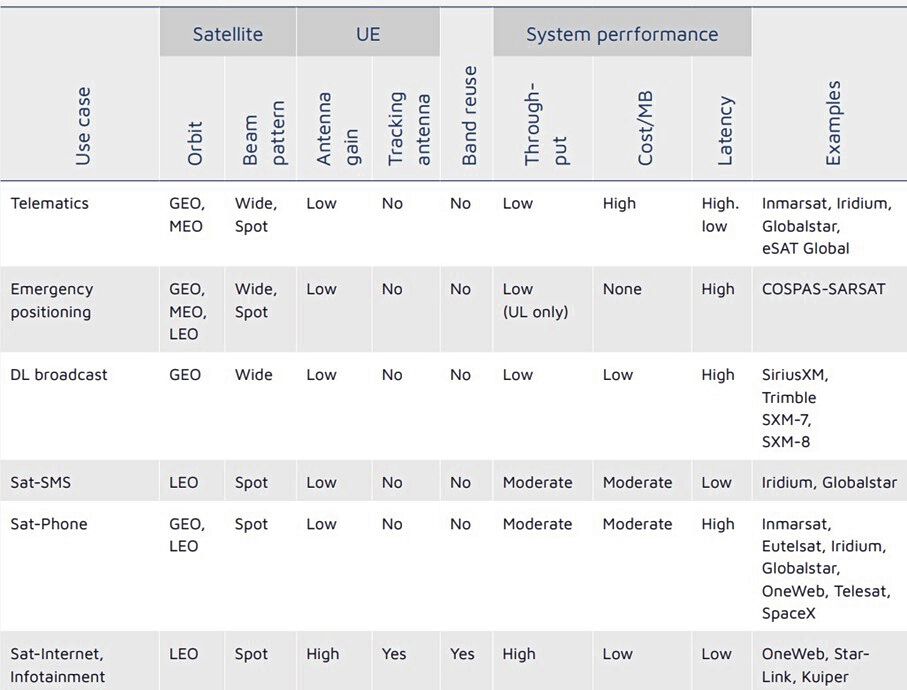
Image 1: Comparison of communication.
(Image:mm1)
In the automotive sector, a turnover of over 400 billion US dollars is forecast for 2025, when 68 percent of new cars are expected to be connected. Satellite applications are influenced by data throughput, latency, coverage, and end device (UE) costs.
This includes telematics (tracking, eCall, telemetry, enhanced navigation, GNSS integrity monitoring and anti-spoofing), emergency location (COSPAS-SARSAT-based services for vessels, aircrafts or individuals; eCall), DL-Broadcast (high-accuracy vehicle positioning, OTA updates for global distribution of software/firmware updates), satellite messenger services (messaging services for vehicles in areas without or with poor terrestrial coverage), satellite telephony (e.g. GEO Inmarsat, Eutelsat, LEO Iridium, Globalstar, OneWeb, Telesat, SpaceX), satellite Internet services and infotainment (here, LEOs promise significant performance improvements in throughput and latency at lower cost).
Connected vehicles and new opportunities
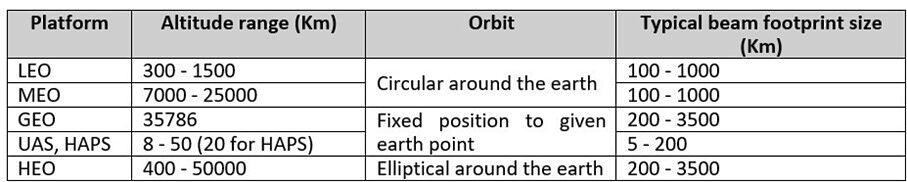
Image 2: Comparison of different platforms.
(Image:mm1)
Vehicles are increasingly able to connect with cellular networks, enabling many new applications. Satellite connection should be considered as a resource when terrestrial LTE/5G connection fails or to improve the reliability of critical applications. Non-Terrestrial Network (NTN) links end devices to spacecraft such as High Altitude Platform Stations (HAPS), Unmanned Aerial Vehicles (UAVs), and satellites (see 3GPP TS 38.300).
Existing antenna techniques and the ability to integrate satellite chipsets into vehicles can leverage the hardware costs and production sizes of Tier 1 suppliers (Bosch, Continental Automotive or Aptiv), while OEMs can optimize their operating costs through automating updates, minimizing recalls, enhancing customer retention, and increasing revenue from satellite services.
LEO constellations promote standardization in air interface compatibility, architecture integration and requirements for satellite communication chipsets. In order for LEO systems and 5G NR to become compatible and interoperable, 3GPP and ITU satellites have integrated into the 5G standards. This requires a comprehensive design that includes RAN, services, core network and end devices.
Vehicles are supported by the satellite
The ESA is testing vehicles that can stay seamlessly connected even in remote areas by switching between 5G and satellite networks. A satellite-supported delivery van, which was tested on the roads of Cornwall (UK) in 2021, was able to switch repeatedly between terrestrial 5G and GEO networks (Hispanica, Avanti, Eutelsat).
An autonomous shuttle collected extensive test data over a distance of more than 13,000 km (December 2023) thanks to a combination of terrestrial (4G, 5G) and satellite-based (Hispanica) connectivity.
5G and satellite-supported vehicles
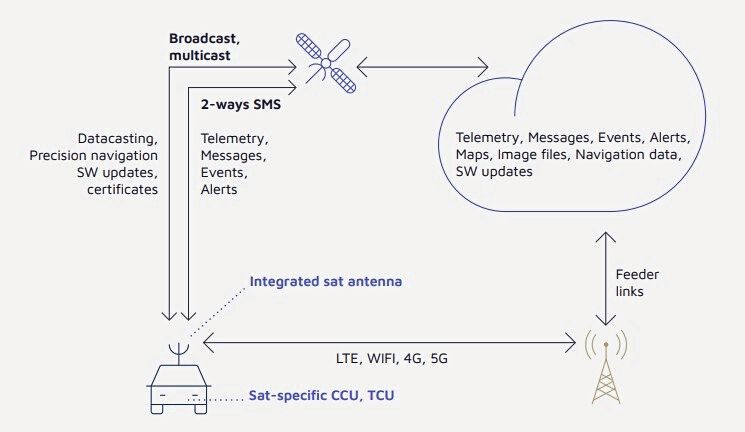
Image 3: 5G and satellite-supported vehicles for direct communication.
(Image:mm1)
Terrestrial and satellite-based connections enable direct in-vehicle communication and passenger entertainment. Self-aligning satellite antennas that can be integrated into every vehicle are of great benefit. A close partnership between Tier 1 suppliers and OEMs is crucial in bringing the required technology to market at sustainable costs and affordable prices.
Key points are:
Collaboration with satellite operators.
Adaptation of the TCU/CCU to integrate gateway, firewall, and IDS functions.
Integration of the CCU into the vehicle using the satellite operator's chipset and software library.
Manufacturing a flat S/L band antenna according to the specifications of the satellite operator and integration into the existing antenna mount.
Satellite-supported eCall
The aim of eCall is to save lives and mitigate the consequences of road accidents by manually or automatically establishing an emergency call connection within the vehicle and transmitting location, time of accident, vehicle identification number (VIN) and direction of travel. With IMS and VoLTE, the GNSS position is immediately transmitted in a SIP INFO message. Although eCall is conceived as a public 112 service, third parties such as manufacturers, automobile clubs, and car insurers are also involved.
Date: 08.12.2025
Naturally, we always handle your personal data responsibly. Any personal data we receive from you is processed in accordance with applicable data protection legislation. For detailed information please see our privacy policy.
Consent to the use of data for promotional purposes
I hereby consent to Vogel Communications Group GmbH & Co. KG, Max-Planck-Str. 7-9, 97082 Würzburg including any affiliated companies according to §§ 15 et seq. AktG (hereafter: Vogel Communications Group) using my e-mail address to send editorial newsletters. A list of all affiliated companies can be found here
Newsletter content may include all products and services of any companies mentioned above, including for example specialist journals and books, events and fairs as well as event-related products and services, print and digital media offers and services such as additional (editorial) newsletters, raffles, lead campaigns, market research both online and offline, specialist webportals and e-learning offers. In case my personal telephone number has also been collected, it may be used for offers of aforementioned products, for services of the companies mentioned above, and market research purposes.
Additionally, my consent also includes the processing of my email address and telephone number for data matching for marketing purposes with select advertising partners such as LinkedIn, Google, and Meta. For this, Vogel Communications Group may transmit said data in hashed form to the advertising partners who then use said data to determine whether I am also a member of the mentioned advertising partner portals. Vogel Communications Group uses this feature for the purposes of re-targeting (up-selling, cross-selling, and customer loyalty), generating so-called look-alike audiences for acquisition of new customers, and as basis for exclusion for on-going advertising campaigns. Further information can be found in section “data matching for marketing purposes”.
In case I access protected data on Internet portals of Vogel Communications Group including any affiliated companies according to §§ 15 et seq. AktG, I need to provide further data in order to register for the access to such content. In return for this free access to editorial content, my data may be used in accordance with this consent for the purposes stated here. This does not apply to data matching for marketing purposes.
Right of revocation
I understand that I can revoke my consent at will. My revocation does not change the lawfulness of data processing that was conducted based on my consent leading up to my revocation. One option to declare my revocation is to use the contact form found at https://contact.vogel.de. In case I no longer wish to receive certain newsletters, I have subscribed to, I can also click on the unsubscribe link included at the end of a newsletter. Further information regarding my right of revocation and the implementation of it as well as the consequences of my revocation can be found in the data protection declaration, section editorial newsletter.
Satellites can support eCall in areas with white spots. A PoC demonstrated by the ESA showed emergency warnings, remote vehicle diagnosis, and passenger data transmission. It was based on the European SAR network (Galileo) and a nano-satellite constellation that provides global coverage.
MEOSAR served as a backup solution in case the GNSS receiver failed. The positions were transmitted to the eCall system via an IVS device, which can transmit data via MEOSAR without relying on mobile networks. MEOSAR (Medium Earth Orbit Search and Rescue) is a satellite system specifically designed for search and rescue services.
Everywhere, anytime and with any device
By combining satellites and 5G, the user's end device can remain connected even without a terrestrial connection. Thanks to the work of ITU and 3GPP, 5G is geared towards supporting satellite-based broadband services directly to (adapted) smartphones and IoT devices. For communication between UE and SAN (Satellite Access Node), three S/L bands have been defined: N254, N255, N256; more bands over 10 GHz will be defined in 3GPP Rel. 18/19.
The standardization of frequency bands promotes a global market where the satellite-based UE can achieve scale effects as in the mobile industry, paves the way for the goal of "everywhere, anytime, on any device" and makes the 3GPP architecture 6G-capable through the native integration of the satellite component.
5G systems with satellite access
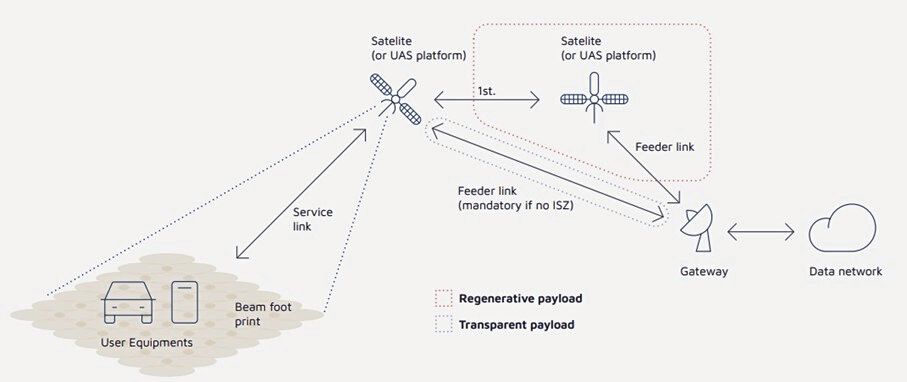
Image 4: The satellite architecture.
(Image:mm1)
The 3GPP pillars of NTN are gateways, public data network, satellite service zone, feeder/service link, mobility, transparent/regenerative payload, and ISL. Possible architectures are multi-connectivity with transparent NTN-based NG-RAN; combination of two transparent NTN-based NG-RAN; combination of NG-RAN (regenerative NTN-based or cellular) and multi-connectivity with regenerative NTN-based NG-RAN.
The 3GPP defines six satellite scenarios: A, B with GEO; C1, C2, D1 and D2 with LEO.
The following maximum end-to-end latencies for 5G systems with satellite access are defined in 3GPP TS 22.261: GEO 285 ms, MEO 95 ms and LEO 35 ms. KPIs are: QoS negotiation, high UL/DL data rates and 99.99 percent service availability.
The problem with orbital speed
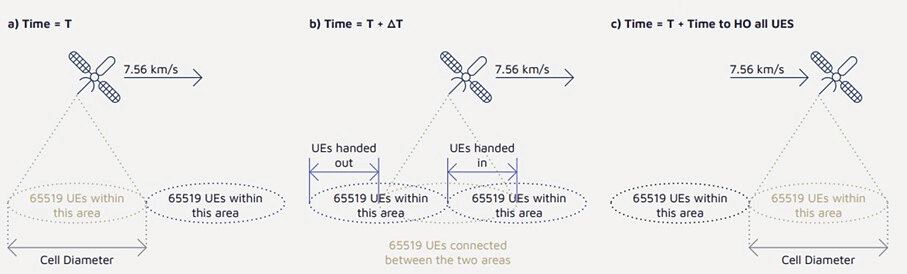
Image 5: A LEO satellite with a speed of 7.56 km/s achieves good handover rates in 3GPP TS 38.821.
(Image:mm1)
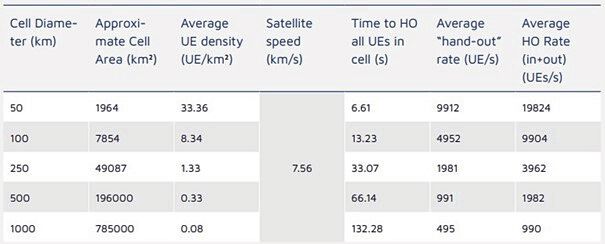
Image 6: Comparison of the covered area and the different handover times.
(Image:mm1)
3GPP defines the service continuity between 5G terrestrial and 5G satellite-supported accesses, regardless of whether these are owned by the same operator or by two different operators with an agreement.
The mobility management has to be adjusted to the propagation delay of the satellites, especially for handover (HO). Frequent HOs can cause significant overhead, influence energy consumption, and lead to service interruptions (1080 ms for GEO, 810 ms for LEO, see 3GPP TS 38.821). With LEO, the speed of the satellite results in a HO frequency similar to the experience of a user on a high-speed train, while with GEO frequent HO's should not occur. Both LEO and GEO scenarios are affected by cell overlaps and reduced signal strength fluctuations (near-far effect). Individual satellite cells, due to their size, can serve a large number of devices, meaning that large volumes of simultaneous HOs triggered by UEs can lead to signal overloads and issues with service continuity.
For a LEO satellite moving at 7.56 km/s, 3GPP TS 38.821 achieves impressive HO rates.
Vehicle to Everything (V2X)
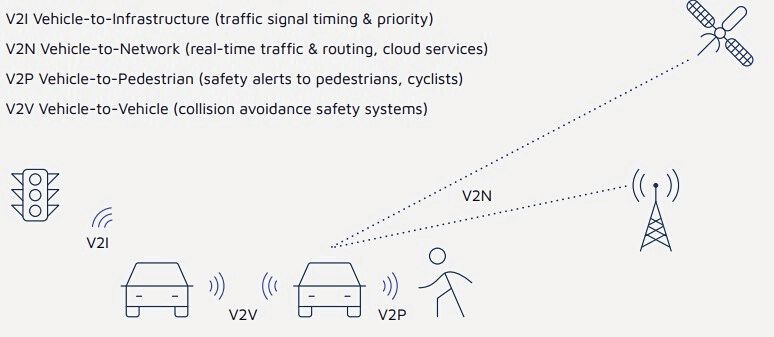
Image 7: Vehicle-to-Everything (V2X) communication via radio and satellite.
(Image:mm1)
5G combined with comprehensive LEO coverage facilitates V2X, which aims to create a safe environment for cars, commercial vehicles, motorcyclists, cyclists, and pedestrians. V2X applications are promoted by various cross-industry players in the automotive sector and include vehicle, infrastructure, network, and pedestrian.
Some promising V2X use cases that have proven successful in PoCs include: traffic management solutions, real-time emergency alerts (V2N, N2V), live data collection and transmission, combined network and direct solutions, and remote operated driving (ROD).
The connected car challenges the internet
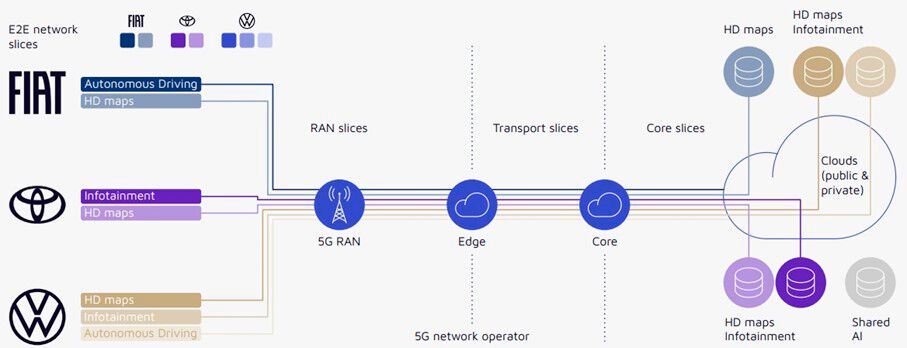
Image 8: The network slicing for some services of three tenants sharing the physical resources of a 5G network.
(Image:mm1)
By 2025, millions of vehicles with forward-facing cameras are expected to be sold in Western markets as the connected vehicle ecosystem rapidly advances services that require massive data downloads. The AECC warns that network capacity will not be sufficient if this data is uploaded during peak times.
The internet could reach its limits by 2030 if its download-centric nature is not corrected, which would mean a massive shift in data infrastructures. However, there are a number of approaches to mitigate the problem, such as edge computing, opportunistic data transfer, and network slicing.
Edge computing distinguishes between data flows in the vehicle, near the vehicle (network edge), and in the cloud (Internet). In Multiaccess Edge Computing (MEC), vehicle data for critical/local services are kept at the edge to ensure low latency, while data for non-time-critical services can be processed end-to-end. ODT aims for the data management model "90 percent in the vehicle, 9 percent at the periphery, 1 percent in the cloud."
High-volume and low-priority data is only shifted to the cloud outside peak times to avoid impacting critical services. In network slicing, a physical infrastructure is logically broken down into slices formed by application-specific functions, QoS, and users. 3GPP TS 23.501 defines application-specific slicing parameters. Figure 8 shows network slicing for some services for three tenants sharing the physical resources of a 5G network.
A unified network infrastructure
Local data processing plays a central role, although the vehicle manufacturers need to understand how the same network infrastructure can be used uniformly in different areas without specific modifications. They still prefer to process data at a central location rather than process it millions of times in vehicles distributed worldwide.
The automotive industry should also consider how to consistently deliver the demanding functions that have been tested so far across a vehicle fleet and in a market. Even the most advanced markets do not yet have the uniform network infrastructure to support the automotive industry's ambitious goals. To introduce data-intensive services on a large scale and fully enable vehicle connectivity, different industries need to work together to manage the data pipeline and data volume and agree on common solutions.(heh)



:quality(80)/p7i.vogel.de/wcms/9d/2b/9d2b802f800e5caf17b2831e74228cd3/screenshot-202026-03-03-20103822-609x343v1v1.png "Visual comparison: on the left, a clean, burr-free cut edge; on the right, typical burr formation with oxidation discoloration. This illustrates how strongly parameter control and gas management influence the quality of the result. (CO₂ laser, oxygen cutting gas, sheet thickness approx. 15 mm). (Image:Picture: Rime)")
:quality(80)/p7i.vogel.de/wcms/dd/08/dd086510d9ae7b50181f6070e4463b44/0129363730v1.jpeg "Typical application for ionizing devices: Wrapping films. (Picture: ©Adobe Stock/SMC)")
:quality(80)/p7i.vogel.de/wcms/35/57/3557c819943c53acec41a0ccba87da4f/0130049064v1.jpeg "Researchers at the Fraunhofer IWU in Chemnitz have long known that many typical sheet metal parts can be manufactured more cost-effectively using hollow embossing rollers. Now there is news to report ... (Image:Fraunhofer IWU)")
:quality(80)/p7i.vogel.de/wcms/59/02/590246e3b3f415c65edbee377c14ca77/26-06-pi-fraunhofer-iws-41450-direktplattieren-pic-01-7771x4369v1v1.jpeg "The Fraunhofer IWS has developed the new \"direct laser cladding\" process, which creates a functional layer directly on the base body by applying a strip-shaped metal to rotationally symmetrical components in a spiral and bonding it locally by laser. (Image:Christoph Wilsnack/Fraunhofer IWS)")
:quality(80)/p7i.vogel.de/wcms/78/e9/78e9188c25a8a94e67c34c9bf8ffe495/visual-agile-20robots-20and-20google-20deepmind-20partner-20to-20bring-20intelligence-20to-20robotics-2500x1406v1v1.jpeg "Together, the partners are developing adaptable, intelligent robots for a wide range of applications (Image:Agile Robots SE)")
:quality(80)/p7i.vogel.de/wcms/e7/66/e7669ecf0260ae8fc54c214e34e4902a/0130316817v1.jpeg "Siemens and Palo Alto Networks offer tested cybersecurity solution for industrial 5G. (Image:Siemens)")
:quality(80)/p7i.vogel.de/wcms/9f/55/9f55324832c4f426958031375124d9de/siemens-20ubtech-20hmnd-1920x1079v1v1.png "Ready for the factory floor: While Ubtech is planning mass production, Siemens is already testing humanoids in real factory applications in Erlangen. (Image:Siemens)")
:quality(80)/p7i.vogel.de/wcms/11/36/113695ed260e29c8c2d9d39dc5f9d869/0130213768v1.jpeg "AI can work cheaply in China and deliver the results rapidly all over the world. (Image:Dall-E / AI-generated)")
:quality(80)/p7i.vogel.de/wcms/62/5f/625f41e87ebfef156a98c8e6393e32fd/0130211654v1.jpeg "Axial flux motors have some advantages over radial flux motor—but their production is currently still expensive. (Image:RWTH Aachen University)")
:quality(80)/p7i.vogel.de/wcms/77/9b/779b0685d010dfe45c9c2cb1cfecd467/0128886425v1.jpeg "The BlueEye is the first \"real\" hyperspectral camera for the UV range and covers the wavelength range from 220 to 380nm. (Image:Inno-spec GmbH)")
:quality(80)/p7i.vogel.de/wcms/e4/51/e451d52ce0182fb0aaa46a5774f832ef/26-04-pi-fraunhofer-iws-21160-bioslide-pic-01-4128x2321v1v1.jpeg "With the BioSlide research project, the Fraunhofer IWS is investigating how sliding systems can be designed to be more sustainable and energy-efficient. New materials can be tested in a particularly application-oriented manner on this plain bearing test stand. (Image:Fraunhofer IWS)")
![Thanks to advanced 3D printing technology, a more efficient use of resources should contribute to lower-emission aviation—this is the goal of ['skai]-lab. (Image:Oleksandr Pashchenko - stock.adobe.com / AI-generated)](https://cdn1.vogel.de/nghHNSbySccfOjG3n1qCA-FVOjQ=/288x162/smart/filters:format(jpg):quality(80)/p7i.vogel.de/wcms/62/64/626424c97a16e69f871bf216c9629c2a/adobestock-1927043193--c2-a9-20oleksandr-20pashchenko-20-e2-80-93-20stock-adobe-com-ki-generiertv1v1.jpeg "Thanks to advanced 3D printing technology, a more efficient use of resources should contribute to lower-emission aviation—this is the goal of ['skai]-lab. (Image:Oleksandr Pashchenko - stock.adobe.com / AI-generated)")
:quality(80)/p7i.vogel.de/wcms/b0/43/b043b86899837532aad62d63368a917a/0130371361v1.jpeg "Skoda leaves the chinese market.
(Image:Skoda)")
:quality(80)/p7i.vogel.de/wcms/c3/c4/c3c4ce270b083eeac55654148611f064/0130237945v1.jpeg "China is not giving up on hydrogen, but is intensifying its efforts. (Image:freely licensed from Pixabay)")
:quality(80)/p7i.vogel.de/wcms/4e/c0/4ec0bd19390b169edfa23677373dcdf1/0130260089v1.jpeg "Renewable fuels can supply European road traffic, according to a study. (Image:Aral)")
:quality(80)/p7i.vogel.de/wcms/6f/c9/6fc9050301d745cad25585c6780f8f51/0130197341v1.jpeg "Production facilities are a worthwhile target and are therefore at risk. (Image:ABB Robotics)")
:quality(80)/p7i.vogel.de/wcms/4d/dd/4dddf438e91f394c04a095dbfd109d1c/0130236430v1.jpeg "Measurement modules: The 720301 module in combination with the SL2000 enables RMS and power calculations, among other things. (Image:Yokogawa)")
:quality(80)/p7i.vogel.de/wcms/61/fc/61fcf95f5cca15494ad18343901ae585/0130317237v1.jpeg "With the AGI CPU, Arm says it is taking a \"historic step\": With the processor aimed at AI in data centers, the company is presenting itself for the first time as a provider of its own chips, not just as a pure IP licensor. (Image:Arm)")
:quality(80)/p7i.vogel.de/wcms/82/90/8290dfe3595b6c6b33726ae8b76172c7/0130319587v1.jpeg "The concept image illustrates how the pattern of tiny protrusions and depressions created on the substrate (MgO, bottom) controls the arrangement of atoms in the superconducting material (YBCO, top). At the interface between the two layers, an electronic structure enables superconductivity to occur at higher temperatures than previously possible. (Image:Chalmers University of Technology / Riccardo Arpaia)")
:fill(fff,0)/images.vogel.de/vogelonline/companyimg/76800/76895/65.jpg "FAULHABER_120mm.jpg ()")
:quality(80)/p7i.vogel.de/wcms/58/f2/58f220c93ab6a5fc7c8374849430a444/0128247466v1.jpeg "Space satellites: \"Setting up and providing NTN has never been so easy.\" (Image:AI-generated)")
:quality(80)/p7i.vogel.de/wcms/33/3b/333ba42d70724fd60e6c2c5d28207d7c/0127301607v1.jpeg "The communication of IoT devices via standard mobile communication protocols by satellite is possible. (Image:Sateliot)")