More software, shorter development cycles, stricter safety requirements – developing today’s vehicle systems calls for new ways of thinking and working.
MBSE proves especially valuable wherever system complexity, variant diversity, and safety requirements must be addressed simultaneously.
(Image: AI-generated with DALL-E)
How can highly complex vehicle architectures be created that seamlessly integrate software, electronics, and mechanics – and all within increasingly compressed timelines? This question is at the forefront for virtually every player in the automotive industry. The Software-Defined Vehicle (SDV) is transforming the sector at its core: functions are becoming increasingly software-controlled, vehicle platforms more modular, innovation cycles shorter – all while safety standards, product variability, and integration demands continue to grow.
In this context, one approach is gaining increasing attention: Model-Based Systems Engineering (MBSE). As an end-to-end, digitally supported development methodology, MBSE offers the potential to manage complex technical systems – across disciplines, departments, and even company boundaries.
A New Set of Rules for Vehicle Development
Until quite recently, document-centric processes dominated the day-to-day reality of vehicle development. Requirements were gathered manually, test plans maintained in Excel, and system architectures visualised in PowerPoint. These practices are no longer sustainable. Today’s vehicles can contain up to 150 million lines of code. Dozens of control units must harmonise with mechanical components and software modules, and over-the-air updates need to be reliably delivered across the entire lifecycle.
MBSE replaces such linear development approaches with interdisciplinary, model-driven workflows. Instead of mapping specifications in isolated documents, digital system models are created that serve as a single source of truth.
Three Key Benefits of Model-Based Vehicle Development
To successfully navigate the shift to the Software-Defined Vehicle, companies require not only new technologies but also new methodological foundations. MBSE is a key enabler of this transformation. The model-based approach delivers a number of clear advantages – for both the development process and the final product.
Faster Development Through Parallel Workflows MBSE allows requirements, architectures, and test cases to be modelled in sync. This enables design conflicts or errors to be identified early on – long before any physical prototypes are built. Validation can be carried out using simulations, reducing the number of physical test cycles. This significantly shortens development timelines.
Enhanced Product Quality and Functional Safety Consistency is critical, especially in safety-relevant components such as driver assistance or control systems. MBSE supports compliance with standards like ISO 26262 (functional safety) and ISO 21448 (SOTIF) through integrated requirements management, end-to-end traceability, and systematic verification. Discrepancies between specification, implementation, and testing are greatly reduced.
Improved Cross-Disciplinary Collaboration System models provide a shared communication foundation for development teams across software, electronics, and mechanical engineering. Rather than working from static specification documents, teams collaborate on a dynamic, jointly maintained model that transparently documents changes. Communication becomes more efficient, and the risk of misunderstandings is lowered.
These three aspects clearly demonstrate how MBSE enhances efficiency, quality, and coordination in vehicle development. The earlier companies integrate model-based principles into their processes, the greater the benefits – particularly when combined with ALM tools, simulation-driven validation, and compliance with safety standards.
Real-World Examples of Model-Based Development
Many OEMs and suppliers are already applying MBSE successfully – depending on their level of maturity, use cases, and tool environments. ZF, for example, combines MBSE with digital twins to model, simulate, and validate complex power electronic systems such as inverters for electric vehicles at an early stage. Volvo uses model-based development with PTC Codebeamer to consistently modularise components and shorten development cycles. What becomes evident is that MBSE proves especially valuable wherever system complexity, variant diversity, and safety requirements must be addressed simultaneously.
MBSE: A Structured Response to Growing Complexity
The growing emphasis on software in vehicle development poses major challenges for engineering organisations: functions are becoming more dynamic, product variants more numerous, and development cycles shorter – all while demands for functional safety, regulatory compliance, and system integration continue to increase. MBSE provides a structured, scalable, and standards-compliant approach to mastering this complexity.
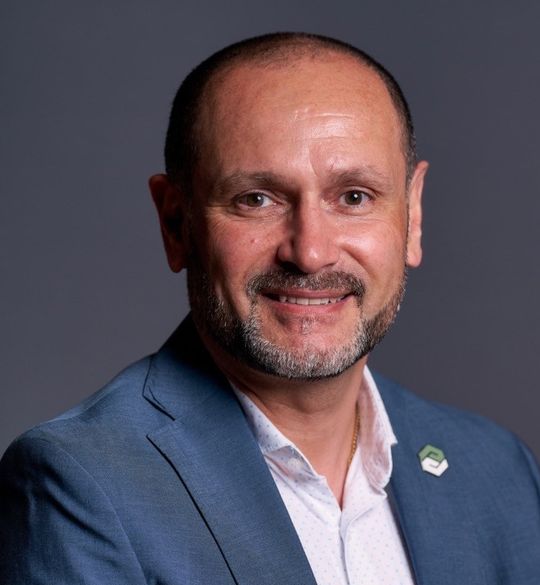
Michele Del Mondo, Global Advisor Automotive at PTC.
(Image: PTC)
In practice, companies are already using MBSE productively – for example, in the model-based development of power electronics systems or to define platform strategies for modular machinery. Crucially, this involves not only modelling functional relationships but also integrating relevant standards and processes. Supplemented by digital twins, semantic traceability, and variant-aware modelling, this creates a development framework that strengthens both compliance and innovation capabilities.
Far more than a passing methodology trend, MBSE represents a paradigm shift for engineering – one that is shaping the next generation of mechatronic systems. Those who begin to adopt systematic modelling today are not only creating transparency and consistency in product development, but also laying the foundation for continuous engineering, automated verification, and long-term future readiness in the era of the Software-Defined Vehicle.
*Michele Del Mondo is currently Global Advisor Automotive at PTC, overseeing the company's global automotive business.
Date: 08.12.2025
Naturally, we always handle your personal data responsibly. Any personal data we receive from you is processed in accordance with applicable data protection legislation. For detailed information please see our privacy policy.
Consent to the use of data for promotional purposes
I hereby consent to Vogel Communications Group GmbH & Co. KG, Max-Planck-Str. 7-9, 97082 Würzburg including any affiliated companies according to §§ 15 et seq. AktG (hereafter: Vogel Communications Group) using my e-mail address to send editorial newsletters. A list of all affiliated companies can be found here
Newsletter content may include all products and services of any companies mentioned above, including for example specialist journals and books, events and fairs as well as event-related products and services, print and digital media offers and services such as additional (editorial) newsletters, raffles, lead campaigns, market research both online and offline, specialist webportals and e-learning offers. In case my personal telephone number has also been collected, it may be used for offers of aforementioned products, for services of the companies mentioned above, and market research purposes.
Additionally, my consent also includes the processing of my email address and telephone number for data matching for marketing purposes with select advertising partners such as LinkedIn, Google, and Meta. For this, Vogel Communications Group may transmit said data in hashed form to the advertising partners who then use said data to determine whether I am also a member of the mentioned advertising partner portals. Vogel Communications Group uses this feature for the purposes of re-targeting (up-selling, cross-selling, and customer loyalty), generating so-called look-alike audiences for acquisition of new customers, and as basis for exclusion for on-going advertising campaigns. Further information can be found in section “data matching for marketing purposes”.
In case I access protected data on Internet portals of Vogel Communications Group including any affiliated companies according to §§ 15 et seq. AktG, I need to provide further data in order to register for the access to such content. In return for this free access to editorial content, my data may be used in accordance with this consent for the purposes stated here. This does not apply to data matching for marketing purposes.
Right of revocation
I understand that I can revoke my consent at will. My revocation does not change the lawfulness of data processing that was conducted based on my consent leading up to my revocation. One option to declare my revocation is to use the contact form found at https://contact.vogel.de. In case I no longer wish to receive certain newsletters, I have subscribed to, I can also click on the unsubscribe link included at the end of a newsletter. Further information regarding my right of revocation and the implementation of it as well as the consequences of my revocation can be found in the data protection declaration, section editorial newsletter.



:quality(80)/p7i.vogel.de/wcms/d0/4c/d04c032c8e1e150bf33ba84def4ed9a6/0130721540v1.jpeg "Müller Precision Tools supports its customers with customized, application-specific tools. (Image: Müller)")
:quality(80)/p7i.vogel.de/wcms/f0/7a/f07aa6f8243048d3bc7156fa4fc263bb/0113143253v1.jpeg "In our China Market Insider, we regularly provide you with relevant information directly from China. (Image:© Eisenhans - stock.adobe.com)")
:quality(80)/p7i.vogel.de/wcms/c0/92/c0922365a230627bafa6a3ed7fbe15d7/0131573143v1v1.jpeg "The EU members of the European Parliament have voted by a majority in favor of the planned tariff agreement coming into effect. Trump's threats have clearly worked ... (Image: F. Schneidler)")
:quality(80)/p7i.vogel.de/wcms/81/22/8122583abe81b65e0590e99aa189b001/0131847826v1.jpeg "Rymoplast has invested in a recycling plant in Markranstädt, Saxony, near Leipzig. There, high-quality granulate is produced from plastic films. However, the thermal management of the processing systems must be optimal for this. Technotrans had the right solution ... (Image: Rymoplast)")
:quality(80)/p7i.vogel.de/wcms/72/a4/72a42738f6a899a841d4fa5961aca547/0131865780v1.jpeg "Siemens Industrial Edge enables customers to deploy and manage edge devices and apps directly at the production site. The app ecosystem ensures seamless connectivity to industrial systems, IT systems, and the cloud. (Image:Siemens)")
:quality(80)/p7i.vogel.de/wcms/bb/38/bb38b290715449fdcb977cb4a0c720be/0131850167v1.jpeg "To make manufacturing faster, more robust, and more flexible, production must be designed in a more IT-oriented manner. This also requires virtual controls. (Image: Audi AG)")
:quality(80)/p7i.vogel.de/wcms/ab/e8/abe8dd2398744832931a48d525b18acf/screenshot-202026-04-02-20163710v1.png "The interplay of horizontal and vertical grinding discs effortlessly creates a 2-mm radius with maximum efficiency. (Source: Teqram)")
:quality(80)/p7i.vogel.de/wcms/de/49/de496edc0815d63154eccc7d1341d696/0131501872v1.jpeg "Cybersecurity: is increasingly evolving from an isolated IT discipline to an integral part of industrial value creation. (Image: Designed by Freepik)")
:quality(80)/p7i.vogel.de/wcms/7d/f0/7df0df2c3fc0cd9cb7fd614412361aac/henkel-20ami-20pm-20anodis-uminium-bild-201-v1.jpeg "Henkel research in action: The development of Bonderite M-AD 2000A demonstrates how targeted additives can make anodizing processes more energy-efficient, sustainable, and economical. (Source: Henkel)")
:quality(80)/p7i.vogel.de/wcms/e3/01/e3018c55021f2a0ce0745124354eb96e/6000x4000v1.jpeg "Holographic projection of a model of a human ear. (Source: Adrien Buttier/EPFL)")
:quality(80)/p7i.vogel.de/wcms/2c/65/2c65057b446b0c6fd5f59a51af9081c1/ruderer-pm-sonderfahrzeugbau-caravan-cmyk-02v1.jpeg "Modern adhesives and sealants enable stable, tight, and economical connections in special vehicle construction – from vehicle structure to interior fittings to repairs. (Source: Ruderer)")
:quality(80)/p7i.vogel.de/wcms/dc/1e/dc1e164ca1e524e7cb48de6fd6a16a1c/hytank-ifam-pi-bilder-1-ad-plasmav1.png "Non-contact atmospheric pressure plasma pretreatment of a CFRP surface. (Source: Fraunhofer IFAM)")
:quality(80)/p7i.vogel.de/wcms/52/8f/528f5c85caa342eaa46e101351bbb1ee/a201486-largev1.jpeg "Permanent magnets from electric motors contain valuable raw materials. (Source: Audi)")
:quality(80)/p7i.vogel.de/wcms/5a/b6/5ab6a38b387b4f9d9f18e889588d85da/0131905522v1.jpeg "The Chinese are clever! After the EU introduced countervailing duties on electric cars, they quickly realized that plug-in hybrids, like the Sealing 6 Touring from BYD, were not affected. However, the EU Commission now wants to block these loopholes... (Image: BYD)")
:quality(80)/p7i.vogel.de/wcms/5c/46/5c4696dbe0c30e52f9cccb6b0aba1af9/b2026cw00206v1.jpeg "Oliver Blume has reaffirmed the automaker's cost-cutting strategy. (Source: Volkswagen)")
:quality(80)/p7i.vogel.de/wcms/49/d2/49d254cee8bf109b21ebe0012ab7b896/0131877440v1.jpeg "Press conference for the opening of the Schaeffler Automotive Symposium 2026 (from left): Klaus Rosenfeld, CEO of Schaeffler AG, together with Matthias Zink, Board Member Powertrain & Chassis, and Thomas Stierle, Board Member E-Mobility. (Image:Schaeffler | Daniel Karmann)")
:quality(80)/p7i.vogel.de/wcms/49/db/49dbdb906050c2ee2f12aca95a309599/0131907985v1.jpeg "System-wide context integration: AI agents consolidate isolated data from ALM, PLM, and ERP systems into well-founded decision templates. (Image: PTC)")
:quality(80)/p7i.vogel.de/wcms/a8/f7/a8f769adac577406bb0c56f5b7535564/0131874725v1.jpeg "Huge success: In 1983, the Controller Area Network was born. A revolution, as it reduced wiring efforts, is fail-safe, and real-time capable. (Image: ©Elena - stock.adobe.com / AI-generated)")
:quality(80)/p7i.vogel.de/wcms/d3/37/d337fde36d300515a0d679aa55fb5432/0131894777v1.jpeg "Mixed-signal and power semiconductors: The services of the Cosmic Group support customers from the initial design phase to the end-of-line test. (Image: Cosmic Group)")
:quality(80)/p7i.vogel.de/wcms/40/77/4077a0064066bde13aa0a8e2817c8858/0131879275v1.jpeg "Bosch location in Shanghai: Due to unauthorized deliveries to Huawei, Bosch must pay a multi-million dollar fine in the USA. (Image: Bosch)")
:fill(fff,0)/images.vogel.de/vogelonline/companyimg/76800/76895/65.jpg "FAULHABER_120mm.jpg ()")

:quality(80)/p7i.vogel.de/wcms/7a/1a/7a1a6035f21cbb53d373d759944a680e/bild-01-co-improve-agile-produktentwicklung-systemkomplexit-c3-a4t-governance-compliance-finalv1.png "The agile framework - extended for product development in the regulatory environment. (Source: CO-Improve)")
:quality(80)/p7i.vogel.de/wcms/d6/94/d694db1af2cad4cfd03e1ae617b2967b/0127938873v1.jpeg "Fieldbus integration in embedded systems is considered a supreme discipline—EMI robustness, real-time capable protocols, and certification processes challenge developers on all levels. (Image:AI-generated)")