Nvidia is once again facing geopolitical tensions: The Cyberspace Administration of China has raised security concerns regarding the company's AI chips. A controversial US bill mandating the installation of backdoors in exported chips intensifies the mistrust.
Backdoor or not: Why tensions between the US and China are worsening over the H20 AI chip.
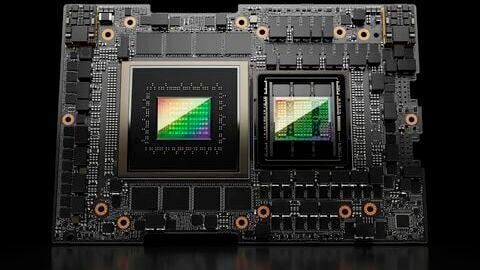
(Image: Nvidia)
Nvidia is again facing issues with its China business. This time, the pushback comes directly from China itself. The top Chinese cyberspace regulatory authority, the Cyberspace Administration of China (CAC), summoned the US chipmaker to a challenging meeting in its office on July 31.
The company is required, according to the regulators, to explain whether its AI processor H20, specifically developed for China, contains hidden access mechanisms—so-called backdoors. Subsequently, the CAC also initiated an official investigation into the H20 chip. All of this is, on one hand, part of the US-China chip war, but on the other hand, this time, US lawmakers in Washington have specifically contributed to fueling mistrust in China.
Install Backdoors in Exported Chips
In May of this year, Representative Bill Foster, a member of the Democratic Party in the U.S. House of Representatives, introduced a bill that would require American manufacturers to install backdoors in all export-controlled chips. The initiative from the U.S. Congress is also supported by Republicans.
Foster is a physicist with a doctorate and experience in chip design. "As a congressional chip designer, AI programmer, and physicist with a doctorate, I know we have the technical means to prevent powerful AI technology from falling into the wrong hands," he says. "With advanced AI chips being smuggled into China and posing a national security risk, Congress must act," argues Foster.
Certainly, the Democrat is using this initiative to make headlines and advance his political career. The bipartisan China hysteria in Washington is worsening and increasingly resembles the persecution faced by Japanese scientists and businesspeople in the U.S. during World War II. Technically, however, the tracking of individual chips is highly controversial among true experts. Among other things, it would pose a significant security risk for every user if chips were so easily traceable. In the current anti-Chinese fervor, however, it is quite possible that rational arguments will ultimately play only a minor role.
Nvidia's Reaction And the Geopolitical Tensions
The Chinese authority directly referenced this initiative in the U.S. Congress to justify its investigation of the Nvidia chip. "Nvidia's AI chips are said to pose serious security risks, and some U.S. lawmakers have called for advanced chips intended for export to be equipped with 'tracking and location' features," reads a statement released by the CAC.
Nvidia responded with active crisis management on the same day it was summoned to the Beijing CAC office. "There are no 'backdoors' in our chips that would allow anyone remote access to their control or remote operation," stated a press release from the chipmaker, which was sent to Reuters and many other media outlets in China.
Tracking (location) and remote shutdown are the features that U.S. chip manufacturers are being pushed to incorporate into all semiconductors exported to China, according to the wishes of the China hawks in the House of Representatives. For Nvidia, the new controversy surrounding the H20 comes at an especially unfavorable time. It was only at the end of July that Washington lifted its export ban on the H20 to the People's Republic, imposed earlier this spring, after China threatened to halt exports of rare earths as retaliation for all the U.S. boycotts.
The Wheels of Geopolitical Power Struggles
Nvidia CEO Jensen Huang had only just personally announced the resumption of exports during a trip to Beijing. For a brief moment, it appeared that balancing compliance in the U.S. with success in the Chinese market was still possible to a limited extent. Now, however, Nvidia's dilemma deepens as the company seems increasingly caught in the gears of this geopolitical power struggle at the expense of the semiconductor industry.
The company is currently losing trust not only with the Chinese government but also within China's semiconductor industry. "Nvidia, how can we trust you?" headlined the People's Daily (Renmin Ribao) in its report on the CAC meeting. The newspaper, which is closely aligned with the Communist Party of China, called on the U.S. corporation to "comply with the demands and provide convincing security evidence" to regain the trust of Chinese customers. "Ensuring network security is as important as protecting national territory," the People's Daily wrote, warning that China must never use "sick chips."
Date: 08.12.2025
Naturally, we always handle your personal data responsibly. Any personal data we receive from you is processed in accordance with applicable data protection legislation. For detailed information please see our privacy policy.
Consent to the use of data for promotional purposes
I hereby consent to Vogel Communications Group GmbH & Co. KG, Max-Planck-Str. 7-9, 97082 Würzburg including any affiliated companies according to §§ 15 et seq. AktG (hereafter: Vogel Communications Group) using my e-mail address to send editorial newsletters. A list of all affiliated companies can be found here
Newsletter content may include all products and services of any companies mentioned above, including for example specialist journals and books, events and fairs as well as event-related products and services, print and digital media offers and services such as additional (editorial) newsletters, raffles, lead campaigns, market research both online and offline, specialist webportals and e-learning offers. In case my personal telephone number has also been collected, it may be used for offers of aforementioned products, for services of the companies mentioned above, and market research purposes.
Additionally, my consent also includes the processing of my email address and telephone number for data matching for marketing purposes with select advertising partners such as LinkedIn, Google, and Meta. For this, Vogel Communications Group may transmit said data in hashed form to the advertising partners who then use said data to determine whether I am also a member of the mentioned advertising partner portals. Vogel Communications Group uses this feature for the purposes of re-targeting (up-selling, cross-selling, and customer loyalty), generating so-called look-alike audiences for acquisition of new customers, and as basis for exclusion for on-going advertising campaigns. Further information can be found in section “data matching for marketing purposes”.
In case I access protected data on Internet portals of Vogel Communications Group including any affiliated companies according to §§ 15 et seq. AktG, I need to provide further data in order to register for the access to such content. In return for this free access to editorial content, my data may be used in accordance with this consent for the purposes stated here. This does not apply to data matching for marketing purposes.
Right of revocation
I understand that I can revoke my consent at will. My revocation does not change the lawfulness of data processing that was conducted based on my consent leading up to my revocation. One option to declare my revocation is to use the contact form found at https://contact.vogel.de. In case I no longer wish to receive certain newsletters, I have subscribed to, I can also click on the unsubscribe link included at the end of a newsletter. Further information regarding my right of revocation and the implementation of it as well as the consequences of my revocation can be found in the data protection declaration, section editorial newsletter.
A WeChat account linked to Chinese state television CCTV, called "Yuyuan Tantian," strikes an alarmist tone as well. It states that Nvidia's H20 chip is unsuitable for China on multiple fronts. "If a chip series is neither environmentally friendly, advanced, nor secure, we as consumers naturally have the option not to buy it," says the commentary.
The commentator fails to provide concrete evidence for the allegation that the H20 is not secure. However, the claim that the Nvidia chip is not advanced is harder to refute. Nvidia developed the H20 as a scaled-down version of its high-performance chip H100 after the U.S. banned the export of the H100 to China at the end of 2023. It is the result of a compromise through which Nvidia aims to salvage at least a portion of the billions it earns in the world's largest semiconductor market.
Huawei Develops Its Own AI Chips
Zhou Hongyi, the head of the Chinese IT security company 360, shared his assessment at a conference in Beijing, stating that Nvidia "probably has no intention of embedding backdoors in its software, but the U.S. government could pressure it to do so." He described the CAC investigation as "completely normal" and suggested that Nvidia should invite independent inspectors to examine its chips.
In a way, Nvidia is now merely forced into similar self-defense measures that have long been part of everyday life for many Chinese companies abroad. In 2019, the U.S. banned telecom routers from the Chinese technology company Huawei, citing alleged backdoors. All of Huawei's assurances at the time that this was not the case were to no avail.
In China, many companies are still dependent on Nvidia's AI chips at the moment. At the same time, however, Chinese competitors, including Huawei, are working at full speed to develop their own high-performance chips to replace those from Nvidia.
Huawei's AI chip "Ascend 910C" is gaining increasing popularity among Chinese internet giants such as Baidu and Alibaba. Market observers predict that Nvidia's market share in China will continue to decline from now on. While the "localization rate" of domestically produced chips by Chinese companies was still at 17% in 2023, it could rise to 55% by 2027, according to a forecast by the American investment advisory firm Bernstein.
Demands for the inclusion of backdoors in Washington and the many export controls on Nvidia are, according to analysts in New York, helping Chinese competitors gradually catch up technologically and in the market. "The U.S. export controls have created a unique opportunity for domestic AI processor providers, as they no longer have to compete with the most advanced global alternatives," writes Bernstein, also highlighting the growing importance of Chinese companies Cambricon and Hygon. (heh)



:quality(80)/p7i.vogel.de/wcms/dd/08/dd086510d9ae7b50181f6070e4463b44/0129363730v1.jpeg "Typical application for ionizing devices: Wrapping films. (Picture: ©Adobe Stock/SMC)")
:quality(80)/p7i.vogel.de/wcms/35/57/3557c819943c53acec41a0ccba87da4f/0130049064v1.jpeg "Researchers at the Fraunhofer IWU in Chemnitz have long known that many typical sheet metal parts can be manufactured more cost-effectively using hollow embossing rollers. Now there is news to report ... (Image:Fraunhofer IWU)")
:quality(80)/p7i.vogel.de/wcms/59/02/590246e3b3f415c65edbee377c14ca77/26-06-pi-fraunhofer-iws-41450-direktplattieren-pic-01-7771x4369v1v1.jpeg "The Fraunhofer IWS has developed the new \"direct laser cladding\" process, which creates a functional layer directly on the base body by applying a strip-shaped metal to rotationally symmetrical components in a spiral and bonding it locally by laser. (Image:Christoph Wilsnack/Fraunhofer IWS)")
:quality(80)/p7i.vogel.de/wcms/73/60/73608418789b1d9c393f5e2fa974eda2/0130209906v1.jpeg "The robots of the X6 generation from b+m enable very high painting quality and are also particularly compact and easy to maintain. (Image:Beckhoff)")
:quality(80)/p7i.vogel.de/wcms/78/e9/78e9188c25a8a94e67c34c9bf8ffe495/visual-agile-20robots-20and-20google-20deepmind-20partner-20to-20bring-20intelligence-20to-20robotics-2500x1406v1v1.jpeg "Together, the partners are developing adaptable, intelligent robots for a wide range of applications (Image:Agile Robots SE)")
:quality(80)/p7i.vogel.de/wcms/e7/66/e7669ecf0260ae8fc54c214e34e4902a/0130316817v1.jpeg "Siemens and Palo Alto Networks offer tested cybersecurity solution for industrial 5G. (Image:Siemens)")
:quality(80)/p7i.vogel.de/wcms/9f/55/9f55324832c4f426958031375124d9de/siemens-20ubtech-20hmnd-1920x1079v1v1.png "Ready for the factory floor: While Ubtech is planning mass production, Siemens is already testing humanoids in real factory applications in Erlangen. (Image:Siemens)")
:quality(80)/p7i.vogel.de/wcms/11/36/113695ed260e29c8c2d9d39dc5f9d869/0130213768v1.jpeg "AI can work cheaply in China and deliver the results rapidly all over the world. (Image:Dall-E / AI-generated)")
:quality(80)/p7i.vogel.de/wcms/62/5f/625f41e87ebfef156a98c8e6393e32fd/0130211654v1.jpeg "Axial flux motors have some advantages over radial flux motor—but their production is currently still expensive. (Image:RWTH Aachen University)")
:quality(80)/p7i.vogel.de/wcms/77/9b/779b0685d010dfe45c9c2cb1cfecd467/0128886425v1.jpeg "The BlueEye is the first \"real\" hyperspectral camera for the UV range and covers the wavelength range from 220 to 380nm. (Image:Inno-spec GmbH)")
:quality(80)/p7i.vogel.de/wcms/e4/51/e451d52ce0182fb0aaa46a5774f832ef/26-04-pi-fraunhofer-iws-21160-bioslide-pic-01-4128x2321v1v1.jpeg "With the BioSlide research project, the Fraunhofer IWS is investigating how sliding systems can be designed to be more sustainable and energy-efficient. New materials can be tested in a particularly application-oriented manner on this plain bearing test stand. (Image:Fraunhofer IWS)")
![Thanks to advanced 3D printing technology, a more efficient use of resources should contribute to lower-emission aviation—this is the goal of ['skai]-lab. (Image:Oleksandr Pashchenko - stock.adobe.com / AI-generated)](https://cdn1.vogel.de/nghHNSbySccfOjG3n1qCA-FVOjQ=/288x162/smart/filters:format(jpg):quality(80)/p7i.vogel.de/wcms/62/64/626424c97a16e69f871bf216c9629c2a/adobestock-1927043193--c2-a9-20oleksandr-20pashchenko-20-e2-80-93-20stock-adobe-com-ki-generiertv1v1.jpeg "Thanks to advanced 3D printing technology, a more efficient use of resources should contribute to lower-emission aviation—this is the goal of ['skai]-lab. (Image:Oleksandr Pashchenko - stock.adobe.com / AI-generated)")
:quality(80)/p7i.vogel.de/wcms/b6/62/b662adc2cec8227d8172509bbfb6ee42/25c0207-107-4961x2789v1v1.jpeg "The GLB is the second model based on Mercedes' new MMA platform. Apparently, Geely's platform is better and cheaper, which is why the two companies are negotiating a partnership. (Image:Mercedes-Benz)")
:quality(80)/p7i.vogel.de/wcms/c1/79/c179ce9acd000e7cf48318e03e3fe4da/0130333964v1.jpeg "Magna is expanding its hybrid portfolio with the DHD REX, a dedicated hybrid drive for REEVs. (Image:Magna)")
:quality(80)/p7i.vogel.de/wcms/80/c2/80c2ea3fbe2df808a263d99adad93f66/0130160344v1.jpeg "Francois Provost has been CEO of Renault since summer 2025. (Image:Renault)")
:quality(80)/p7i.vogel.de/wcms/8d/f8/8df87aa10e28419e1869acb641b4c4dd/0130324805v1.jpeg "With the Affela 1 in the Signature Edition, the Sony Honda Mobility joint project was to be launched in a few months' time. (Image:SHM)")
:quality(80)/p7i.vogel.de/wcms/4d/dd/4dddf438e91f394c04a095dbfd109d1c/0130236430v1.jpeg "Measurement modules: The 720301 module in combination with the SL2000 enables RMS and power calculations, among other things. (Image:Yokogawa)")
:quality(80)/p7i.vogel.de/wcms/61/fc/61fcf95f5cca15494ad18343901ae585/0130317237v1.jpeg "With the AGI CPU, Arm says it is taking a \"historic step\": With the processor aimed at AI in data centers, the company is presenting itself for the first time as a provider of its own chips, not just as a pure IP licensor. (Image:Arm)")
:quality(80)/p7i.vogel.de/wcms/82/90/8290dfe3595b6c6b33726ae8b76172c7/0130319587v1.jpeg "The concept image illustrates how the pattern of tiny protrusions and depressions created on the substrate (MgO, bottom) controls the arrangement of atoms in the superconducting material (YBCO, top). At the interface between the two layers, an electronic structure enables superconductivity to occur at higher temperatures than previously possible. (Image:Chalmers University of Technology / Riccardo Arpaia)")
:fill(fff,0)/p7i.vogel.de/companies/67/eb/67eba621ef6ea/logo2.png "logo2 (Wuxi InfiMotion)")
:quality(80):fill(efefef,0)/p7i.vogel.de/wcms/67/ad/67adf92d254d2/elatec-wp-smart-factory.png "Elatec WP Smart Factory")
:quality(80)/p7i.vogel.de/wcms/f5/0a/f50a18e3b418335e38be076642db3f49/0126863346v1.jpeg "The AI high-tech chip RTX Pro 6000D from Nvidia in the USA is suspicious to Chinese authorities. Therefore, domestic companies are now prohibited from purchasing these chips. So Nvidia can do whatever it wants—either it angers the US government or Beijing ... (Image:Nvidia)")
:quality(80)/p7i.vogel.de/wcms/13/20/13204ad5819ee751393c71b8bdc6a2df/0128673059v1.jpeg "Nvidia's HGX-H200 system board as a server component in the form of an integrated mainboard. The H200 products were considered the company's most powerful AI solution by the end of 2023. (Image:Nvidia)")