ZF parts with its ADAS business due to financial difficulties. Analysts see this as more than an emergency measure: the start of a new wave of future technology shifting to Asia.
The supplier ZF sells its division for assistance systems. This step is being critically assessed in Asia.
(Image: ZF)
Do German Tier 1 suppliers still have a long-term chance in the global market for automated driving? Or can they no longer keep up with Asian corporations in future technologies? These questions have been raised since ZF sold its ADAS business unit to Harman. The originally US-American company is now part of the Korean electronics corporation Samsung.
ZF announced in a press release on December 23 that it intends to transfer its ADAS business "with compute solutions, smart cameras, radar technology, and driver assistance software functions" to Harman. If the regulatory authorities approve the deal valued at €1.5 billion by the second half of 2026, 3,750 ZF employees would transition to Harman.
ZF Must Reduce Debt
ZF itself will focus on its core competencies in the future, the company announced. "The divestiture allows us to concentrate our resources on those core technologies of ZF, such as chassis, drive systems, commercial vehicles, and industrial applications, in which we are globally leading," said ZF CEO Mathias Miedreich.
However, ZF also honestly admits that it urgently needs cash and that the decision has been heavily influenced by this reality, rather than primarily by strategic considerations. "The proceeds from the sale will significantly help reduce the financial liabilities of the ZF Group," says ZF CFO Michael Frick.
Observers in Asia Are Surprised
In China and Asia, the decision by ZF's management has caused confusion. Moderate commentators referred to it as a "surprise," especially since the ADAS market is currently experiencing significant growth both in China and globally. Others were less diplomatic. The move by the Friedrichshafen-based company was likened to "trying to survive by cutting off one’s arm," wrote BusinessCars, a Chinese automotive blog on WeChat.
Indeed, ZF is parting ways with a business segment whose market is not only growing rapidly but also accounts for an increasing share of value creation in the automotive sector as the transformation to autonomous and connected driving progresses.
ADAS Market Growth
"The global market for sensors in driver assistance systems (ADAS) and autonomous vehicles is expected to grow significantly in the coming years, driven by the broader adoption of advanced safety features and automated driving functions," writes the market research agency Counterpoint in a forecast released on December 24. The ADAS and sensor market for autonomous vehicles could reach a volume of "61 billion US dollars by 2035," according to the agency.
If a "century-old German Tier-1 supplier" like ZF finds itself forced under high debt to part with one of its most profitable and future-proof business segments, many analysts in Asia believe this may indicate a new trend.
Value Creation Shifts to Asia
From their perspective, a further shift of automotive value creation from Europe to Asia may be emerging. Following the production of electric cars and hybrids, the production of key components for intelligent driving is now also moving in this interpretation, as part of a general exodus toward Asia.
What is seen as an opportunity for large Asian corporations like Samsung must raise concerns from a European perspective. With the reorganization of global supply chains due to software-defined driving, traditional suppliers in Germany and Europe may no longer be able to compete with the large corporations in Asia. The latter benefit from their higher stock valuations, giving them more capital for the ongoing investments in research and development required in this area.
Market Position of Bosch, Conti, and ZF
In 2024, ZF held only just over two percent of the total market for Level 2 and higher automated driving functions in China, according to a report by Research and Markets from September of this year. Aptiv had 2.6 percent. Bosch, Continental (now Aumovio), and Denso each had less than one percent.
"Foreign Tier-1 suppliers of ADAS are falling behind in the Chinese NOA market," writes Research and Markets. NOA stands for "Navigation-Oriented Assisted Driving," a commonly used term in China for navigation-based assistance systems.
Supply Chain Changing
In this context, ZF's decision to sell its ADAS segment would symbolize a profound shift in global supply chains, which is itself a consequence of the convergence between the automotive and electronics industries. Western suppliers, who have grown too slowly in China's ADAS market, could be forced to withdraw from such future technologies worldwide. They would then have to limit themselves to lower-margin hardware segments in the automotive supply chain.
Date: 08.12.2025
Naturally, we always handle your personal data responsibly. Any personal data we receive from you is processed in accordance with applicable data protection legislation. For detailed information please see our privacy policy.
Consent to the use of data for promotional purposes
I hereby consent to Vogel Communications Group GmbH & Co. KG, Max-Planck-Str. 7-9, 97082 Würzburg including any affiliated companies according to §§ 15 et seq. AktG (hereafter: Vogel Communications Group) using my e-mail address to send editorial newsletters. A list of all affiliated companies can be found here
Newsletter content may include all products and services of any companies mentioned above, including for example specialist journals and books, events and fairs as well as event-related products and services, print and digital media offers and services such as additional (editorial) newsletters, raffles, lead campaigns, market research both online and offline, specialist webportals and e-learning offers. In case my personal telephone number has also been collected, it may be used for offers of aforementioned products, for services of the companies mentioned above, and market research purposes.
Additionally, my consent also includes the processing of my email address and telephone number for data matching for marketing purposes with select advertising partners such as LinkedIn, Google, and Meta. For this, Vogel Communications Group may transmit said data in hashed form to the advertising partners who then use said data to determine whether I am also a member of the mentioned advertising partner portals. Vogel Communications Group uses this feature for the purposes of re-targeting (up-selling, cross-selling, and customer loyalty), generating so-called look-alike audiences for acquisition of new customers, and as basis for exclusion for on-going advertising campaigns. Further information can be found in section “data matching for marketing purposes”.
In case I access protected data on Internet portals of Vogel Communications Group including any affiliated companies according to §§ 15 et seq. AktG, I need to provide further data in order to register for the access to such content. In return for this free access to editorial content, my data may be used in accordance with this consent for the purposes stated here. This does not apply to data matching for marketing purposes.
Right of revocation
I understand that I can revoke my consent at will. My revocation does not change the lawfulness of data processing that was conducted based on my consent leading up to my revocation. One option to declare my revocation is to use the contact form found at https://contact.vogel.de. In case I no longer wish to receive certain newsletters, I have subscribed to, I can also click on the unsubscribe link included at the end of a newsletter. Further information regarding my right of revocation and the implementation of it as well as the consequences of my revocation can be found in the data protection declaration, section editorial newsletter.
Bosch and Continental would certainly not accept this logic—at least not yet, if one wishes to align with the pessimists. Both suppliers have chosen a somewhat different strategy in the Chinese market compared to their competitor ZF. They are focusing on even closer partnerships with Chinese companies.
ZF with a Different Strategy than Aumovio and Bosch
ZF itself had invested a significant amount of money in a Chinese start-up called Calmcar as recently as 2021. At the automotive exhibition in Shanghai this year, they showcased jointly developed NOA systems for the Chinese market. Now, it turns out that all these investments are being passed on to Harman.
In contrast, Bosch and Continental have opted to establish joint ventures with Chinese partners. Continental, together with Horizon Robotics, a Chinese specialist in autonomous driving, has founded the company "Horizon Continental Technology." This joint venture has launched "Astra," a Level 2+ system featuring chips from Horizon.
Bosch Invests Locally
Bosch is pursuing a "in China, for China" strategy and is heavily investing in local research and development. Bosch China is successfully selling urban NOA products and plans to offer them on the global market from China starting next year. The company is taking a bold approach that requires substantial investments over a long cycle and has so far been successful. Continental is following a similar path.
However, ZF's decision to withdraw from the ADAS business does not necessarily mean that its strategy in China was the worse one. It could simply indicate that ZF has run out of funds for this costly competition.
ZF had long fought to preserve jobs in Germany despite the known burdens of taxes, energy costs, and bureaucracy. Just recently, the company in Friedrichshafen had to announce a reduction in workforce.
ZF Will Continue to Offer Electronic Components and Systems
It should be mentioned that ZF is not completely withdrawing from vehicle electronics. The ADAS division will be sold, but electronics for chassis and passive safety systems will continue to be manufactured. The company also intends to keep offering ADAS for commercial vehicles. How this fits into the statement of "focusing" is not entirely clear.
The battle for the ADAS market in China and such corporate strategies could be more significant for the state of the German automotive industry and the overall German economy than is widely known. Bosch's low ADAS market shares in China might also raise the question of whether a healthy shrinkage similar to ZF could make sense there.
Beginning of a New Disruption Phase
It’s not quite there yet. However, if this pessimistic view from a European perspective proves to be correct in the long term, then the ADAS division currently being sold would be more than just an acknowledgment of financial weakness or a questionable management decision at ZF. It would be symptomatic of the beginning of another disruption phase in the global automotive industry.
Software-defined, autonomous, connected, and now AI-defined driving is changing value creation and generating new winners and losers in the industry. Success in individual product lines is becoming increasingly less relevant when large corporations can integrate entire full-stack systems of hardware and software, along with the corresponding competencies, under one roof.
In this new era, the car has already been referred to as a "smartphone on wheels." Even if this direct comparison is inappropriate, its mass production may be subject to similar principles as those of smartphones. Here, scaling is crucial. There is little mercy for smaller manufacturers.



:quality(80)/p7i.vogel.de/wcms/72/a0/72a0ffc94f0929c8b193b4bc40638d72/0129755066v1.jpeg "Tens of billions less! After Ford and General Motors, Stellantis is now also feeling the painful consequences of Donald Trump's decision to change its electric car strategy ... (Image:Stellantis)")
:quality(80)/p7i.vogel.de/wcms/7f/fd/7ffd32863352c40f562f4245e4766e61/0129745849v1.jpeg "After US President Donald Trump once again resorted to his favorite weapon, tariffs, concerns rose in the EU that the so-called tariff deal could become invalid. But it looks as if the sea remains relatively calm ... (Image:F. Schneidler)")
:quality(80)/p7i.vogel.de/wcms/53/69/5369bed136061188d873441dfefd6d6e/0129245111v1.jpeg "The company revised the factory layout even though construction work had already begun. (Image:Efeso Management Consultants)")
:quality(80)/p7i.vogel.de/wcms/d2/d7/d2d79e3fb84663cb7e918c88f123989b/0129733908v1.jpeg "Mineral decision! This is how lithium is mined. There is a lot of it in Chile, Australia, Bolivia and also in Zimbabwe. However, the latter country has now announced that the export of all minerals, including lithium concentrate, will be stopped. Read more about the reasons here ... (Image:Largbatt)")
:quality(80)/p7i.vogel.de/wcms/d9/bd/d9bd1bfa7d02f586e092f06c61ee3d9a/0129464423v1.jpeg "This is what the Black Soldier Fly (BSF) looks like. The first impression is of a common two-winged insect. But appearances are deceptive, because its larvae are true protein reactors, whose industriousness is now to be exploited for food ... (Image:Fly Friends)")
:quality(80)/p7i.vogel.de/wcms/13/4d/134dee0c2b8af6b4f28937ca5b586e0d/0129499541v1.jpeg "The industry now needs to build a flexible, powerful and sovereign infrastructure that can exploit the full potential of artificial intelligence while guaranteeing control over data and processes. (Picture: ©Gorodenkoff - stock.adobe.com)")
:quality(80)/p7i.vogel.de/wcms/c6/71/c671ce338f12be49d39d1b04b40a54f7/0129697443v1.jpeg "Claas is working on making its combine harvesters fit for refurbishment. (Image:Claas)")
:quality(80)/p7i.vogel.de/wcms/f2/4b/f24b8f1c3070e7f13e4f0ffd7854e75a/0129653538v1.jpeg "The production of the BMW iX3 is to be taken as far as possible in terms of sustainability. This is also ensured by the climate-friendly Blueprint recycled steel from Thyssenkrupp Steel ... (Image:BMW)")
:quality(80)/p7i.vogel.de/wcms/f5/7e/f57ef535ee35e7b3b7ff15a8a63cef10/eds-keyvisual-8000x4496v1.jpeg "(Source: European Defence Supply)")
:quality(80)/p7i.vogel.de/wcms/af/a3/afa312176d956068af20491957eef642/newsimage418262-3100x1745v1v1.jpeg "The autonomous shuttle of the Aula AI project during a demonstration of sensor data with artificial fog. (Image:University of Magdeburg)")
:quality(80)/p7i.vogel.de/wcms/84/2d/842d51915fa4fe69c72da5cc4ba52ed1/newsimage418103-3408x1917v1v1.jpeg "3 Printing can also be sustainable—if recyclable ink is used. (Image:Hereon/Steffen Niemann)")
:quality(80)/p7i.vogel.de/wcms/b0/78/b078e07634ffd4d5ee6b73af42cc7c55/newsimage418259-1000x563v1v1.jpeg "Magnesium during forming. (Image:TU Bergakademie Freiberg)")
:quality(80)/p7i.vogel.de/wcms/c7/5e/c75e5942cd1d7e6bce973391af6dafe8/0129757614v1.jpeg "Pony.ai is cooperating with Moore Threads to bring Level 4 autonomous driving to the roads in China more quickly. (Image:Pony.ai)")
:quality(80)/p7i.vogel.de/wcms/a8/9f/a89ff7a3e28a19c03a22fd16cf3404b4/0129761837v1.jpeg "KD and Hitachi High-Tech have concluded a distribution agreement. (Image:KD)")
:quality(80)/p7i.vogel.de/wcms/29/b5/29b536a22d9b5ac80387b02620cce554/20260212-sue-60-6000x3372v1v1.jpeg "The People Mover at its world premiere. The large polycarbonate windshield is clearly visible. One of several materials contributed by Covestro. (Image:UE | STUDIOS)")
:quality(80)/p7i.vogel.de/wcms/a0/3e/a03e71cec3a956df095607a0b176a7b0/0129584071v1.jpeg "Andreas Mindt will be Head of Design at the Volkswagen Group from March. (Image:Volkswagen AG)")
:quality(80)/p7i.vogel.de/wcms/eb/4e/eb4e449562174ec95a5b3d30fb0137a2/0129648135v1.jpeg "The III-V germanium PV module with an efficiency of 34.2% is currently the most efficient solar module in the world. (Image:Jacob Forster)")
:quality(80)/p7i.vogel.de/wcms/92/c2/92c23fd5d95286c8c8c634314f6b22f8/0129722027v1.jpeg "The Meta Group has signed a five-year contract for GPU and CPU deliveries to expand its AI capacities. The agreement covers the delivery of up to 6 gigawatts of GPU computing power with a total value of around USD 60 billion. (Image:freely licensed)")
:quality(80)/p7i.vogel.de/wcms/01/77/017742db7d5eb5964c297bb8917df701/0129696639v1.jpeg "Mini-STX K3921-N: The motherboard masters Intel's Core i3 and N-Series processors and can connect multiple monitors with Full HD. (Image:Kontron)")
:quality(80)/p7i.vogel.de/wcms/17/21/1721b98b7580a86c7790f607395878a1/0129697493v1.jpeg "Universal: Motors are used everywhere. (Image:Microchip Technology)")
:fill(fff,0)/images.vogel.de/vogelonline/companyimg/76800/76895/65.jpg "FAULHABER_120mm.jpg ()")
:fill(fff,0)/p7i.vogel.de/companies/67/eb/67eba621ef6ea/logo2.png "logo2 (Wuxi InfiMotion)")
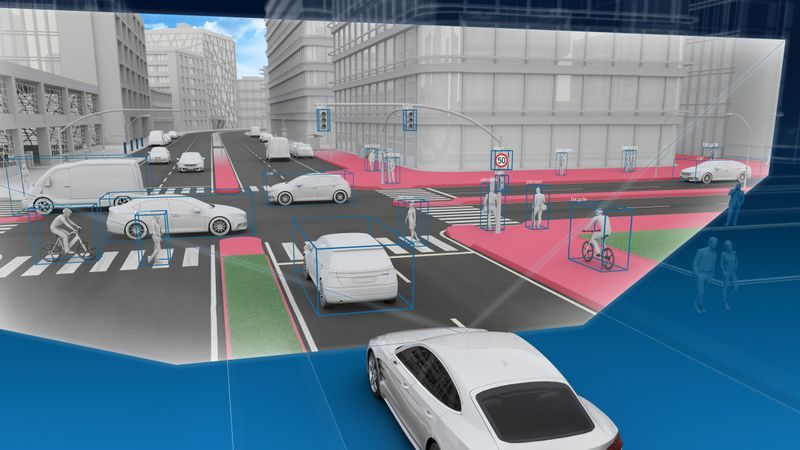
:quality(80)/p7i.vogel.de/wcms/0d/fa/0dfa36cc955d965ddbee4792024f86a9/0127681489v1.jpeg "ZF offers vehicle manufacturers ADAS hardware and software solutions, including testing, validation, and homologation. Together with Horizon Robotics, the supplier is now developing a new driver assistance system that is set to launch in China in 2026. (Image:ZF Group)")
:quality(80)/p7i.vogel.de/wcms/43/5c/435c1a59431435683e8dc1a259f854b3/screenshot-202025-07-28-20095206-1480x833v1.png "The ADAS developments with Momenta are initially intended to be used only in models that are built in China, such as the new iX3 expected in 2026. (Image: BMW)")