Sustainability and circular economy are already a relevant topic today and are expected to gain in importance in the near future. The topic of sustainability is fraught with great uncertainty, as the details and possible implementations in this area are unclear. The ZVEI Show-Case PCF@ControlCabinet demonstrates how the calculation of the PCF can be made transparently.
The Digital Product Passport for Industry 4.0 contains a unique and machine-readable identifier, which makes information about a product digitally available and thus can solve regulatory requirements.
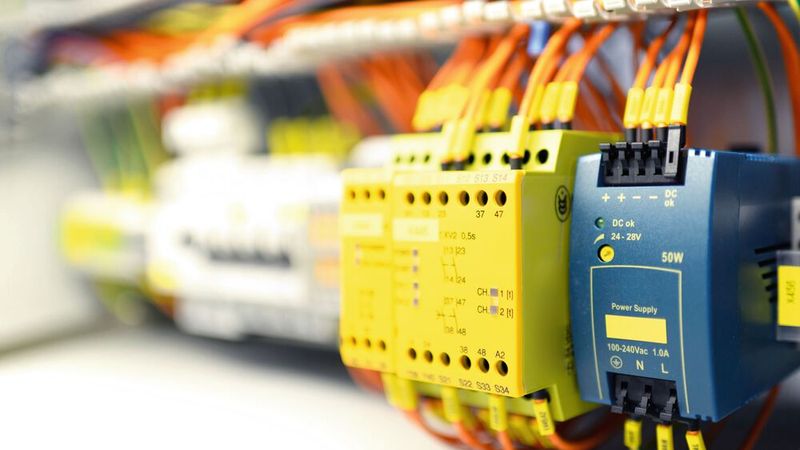
(Image: industrieblick - stock.adobe.com)
The declaration of the Product Carbon Footprint (PCF) will become one of many new regulatory requirements of the European Union as part of the Ecodesign for Sustainable Products Regulation (ESPR) and the Green Deal. Following on from this, the industry is expected to be obliged in all sectors to provide certain product information in the form of a Digital Product Passport (DPP).
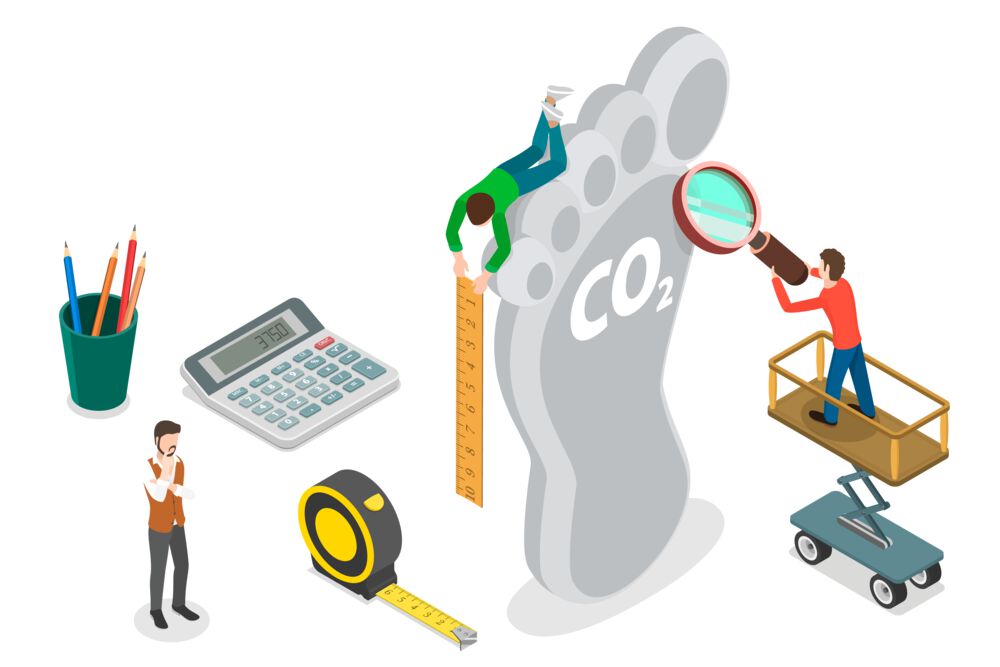
The calculation of the Product Carbon Footprint is still associated with large uncertainties.
(Image:TarikVision - stock.adobe.com)
The goal behind this is to increase the sustainability of products by providing information on various sustainability aspects of the respective product to different actors such as customers, users and authorities/market surveillance, as explained by Stefan Schork, Manager Automation at ZVEI. He expects that the first obligations will not be long in coming: "For which product groups the Digital Product Passport is introduced first is currently still being discussed. However, generally the introduction of the first Digital Product Passports can be expected from 2026."
The digital product passport is expected to be introduced for initial product groups, such as textiles, steel and iron, from 2026 onwards.
Stefan Schork, Manager Automation at ZVEI
The ZVEI show case "PCF@Control Cabinet", which was presented for the first time at the Hannover Messe 2022, demonstrates how the Digital Product Passport can be implemented flexibly and efficiently. Using the example of a switch cabinet, the ZVEI shows how the concept of the Digital Product Passport for Industry 4.0 (DPP4.0) makes it possible to document and provide the required product information. Schork explains: "DPP4.0 serves to technically fulfill the requirements for the digital product passport." The PCF information is provided by all participating companies, whereupon the system integrator has the opportunity to access the PCF information in the Asset Administration Shell (AAS) by scanning the ID link on the product and to automatically add this information to the overall PCF of the cabinet during installation.
The DPP4.0 concept combines two standards that were developed as part of the Industry 4.0 initiative:
the Digital Nameplate (DNP4.0) via IEC 61406 (Identification Link) for unique identification of a product, e.g., using QR code, and
the Asset Administration Shell (AAS) according to IEC 63278 (in progress) for the semantic structuring of product information in an interoperable data format.
How Industry 4.0, the digital twin, and the product passport are related
The basic idea of Industry 4.0 is the linkage of OT and IT levels. Each asset at the OT level (hardware and software) becomes an I4.0 component through linkage with the so-called Asset Administration Shell (AAS), thereby creating general interoperability between all I4.0 components and connecting the I4.0 component to the IoT world in a plug-and-play manner. The AAS provides a framework format for describing the assets in a standardized and semantically unambiguous form, thereby acting as a digital twin of the asset. Stefan Schork explains: "Digital twins can take on different forms, characteristics and scopes. One form is a comprehensive description of the properties of a usually physical object. The digital product passport also includes a group of product information or properties, and thus corresponds to a subset of the digital twin."
The AAS is the digital twin for Industry 4.0.
Stefan Schork, Manager Automation at ZVEI
The ZVEI showcase PCF@Control Cabinet demonstrates the DPP4.0: Each installed component is equipped with the Digital Product Passport for Industry 4.0, which among other things contains the information on the Product Carbon Footprint. This way, the PCF value of the complete switch cabinet can be easily calculated.
(Image:ZVEI)
Using various submodels, product information is semantically uniquely structured and made machine-readable so that also regulatory required as are required for example within the framework of the DPP can be depicted—without the need for a new system to be used.
What this means for designers and developers
The DPP is intended to provide a way for designers and developers to compare supplier products and select them according to their sustainability. In addition, the relevant information from the supplied products should be able to be processed automatically in their own systems. This comes into play when the DPP of their own product is to be created. "In general, the twin can also provide additional relevant information, such as dimensions, functions and installation instructions. This information can also be used automatically in various processes," Schork continues.
Another advantage of the DPP4.0 concept: According to ZVEI, it can easily be expanded in the future by adding additional submodels that represent product information that needs to be documented as part of new and other regulatory requirements. It is an easily learnable and therefore easily repeatable pattern.
Identification Link and Asset Administration Shell, the two standards combined by the DPP4.0, are well known to already exist. In the Industrial Digital Twin Association (IDTA), so to speak the user organization of the AAS, work is being done on the standardization of the different, use case related submodels, says Stefan Schork. The IDTA already has many national and international members and continues to grow steadily. Accordingly, companies are also working to implement AAS. As for the comprehensive implementation, including various product groups, Stefan Schork expects that this will take some time. When asked where the industry will stand in five years regarding AAS, Digital Twin, DPP and sustainability assessment, Stefan Schork replies:
Date: 08.12.2025
Naturally, we always handle your personal data responsibly. Any personal data we receive from you is processed in accordance with applicable data protection legislation. For detailed information please see our privacy policy.
Consent to the use of data for promotional purposes
I hereby consent to Vogel Communications Group GmbH & Co. KG, Max-Planck-Str. 7-9, 97082 Würzburg including any affiliated companies according to §§ 15 et seq. AktG (hereafter: Vogel Communications Group) using my e-mail address to send editorial newsletters. A list of all affiliated companies can be found here
Newsletter content may include all products and services of any companies mentioned above, including for example specialist journals and books, events and fairs as well as event-related products and services, print and digital media offers and services such as additional (editorial) newsletters, raffles, lead campaigns, market research both online and offline, specialist webportals and e-learning offers. In case my personal telephone number has also been collected, it may be used for offers of aforementioned products, for services of the companies mentioned above, and market research purposes.
Additionally, my consent also includes the processing of my email address and telephone number for data matching for marketing purposes with select advertising partners such as LinkedIn, Google, and Meta. For this, Vogel Communications Group may transmit said data in hashed form to the advertising partners who then use said data to determine whether I am also a member of the mentioned advertising partner portals. Vogel Communications Group uses this feature for the purposes of re-targeting (up-selling, cross-selling, and customer loyalty), generating so-called look-alike audiences for acquisition of new customers, and as basis for exclusion for on-going advertising campaigns. Further information can be found in section “data matching for marketing purposes”.
In case I access protected data on Internet portals of Vogel Communications Group including any affiliated companies according to §§ 15 et seq. AktG, I need to provide further data in order to register for the access to such content. In return for this free access to editorial content, my data may be used in accordance with this consent for the purposes stated here. This does not apply to data matching for marketing purposes.
Right of revocation
I understand that I can revoke my consent at will. My revocation does not change the lawfulness of data processing that was conducted based on my consent leading up to my revocation. One option to declare my revocation is to use the contact form found at https://contact.vogel.de. In case I no longer wish to receive certain newsletters, I have subscribed to, I can also click on the unsubscribe link included at the end of a newsletter. Further information regarding my right of revocation and the implementation of it as well as the consequences of my revocation can be found in the data protection declaration, section editorial newsletter.
The importance of data is already high today and will continue to increase in the future, as more and more systems, programs and especially artificial intelligences depend on an extensive data base. The digital twin in the form of the AAS offers enormous potential to meet the requirements for data quality and to provide it in an interoperable way. As large companies are already leading the way and more and more are becoming interested in the topic, a widespread proliferation can be expected. Regulatory initiatives such as DPP are also increasingly relying on data, which is driving the topic further forward.
But for Stefan Schork, it is also clear that the sustainability assessment and the significance of various sustainability indicators must improve in the coming years, or at least a common base must be created to allow for genuine evaluations and comparisons.
What happens next
The current demonstrators are versions in which not all concepts have been implemented to their full potential. Some questions are still open, but will be answered in the next steps. In particular, the stated values of the Product Carbon Footprints should be seen only as examples for the technical proof of concept and possibly as rough estimates—there is no claim to accuracy/correctness. In particular, the comparability of the product-specific Product Carbon Footprints among each other is not given at the current time.
For Hannover Fair 2024, further use cases are being planned, particularly referring to additional, non-DPP relevant information. In addition, more companies have expressed support for DPP4.0 and are participating in the project.



:quality(80)/p7i.vogel.de/wcms/31/84/3184f9ac736d8df7c2e934593684bc74/0130024314v1.jpeg "Here, the Bavarian car manufacturer BMW looks ahead to 2025: business was sluggish due to US tariffs and weakening sales in China ... (Image:BMW)")
:quality(80)/p7i.vogel.de/wcms/49/09/49095c6192a6c46d47b567e1def31ea6/0130024626v1.jpeg "The new TUM \"RoboGym\" (powered by Neura) is Europe's largest training center for next-generation humanoid robots. It focuses on the implementation of artificial intelligence in robotic systems. At the same time, it is a forge for AI experts ... (Image:Neura Robotics)")
:quality(80)/p7i.vogel.de/wcms/fe/8a/fe8af1b829b085210fef4c1fa8abddb5/0129784389v1.jpeg "As an integral part of Koch Pac-Systeme's Predictive Pack digital service product, the gearboxes with Cynapse and Wittenstein's Smart Services make it possible to detect damage risks in the packaging specialist's machines at an early stage. (Image:Koch Pac systems)")
:quality(80)/p7i.vogel.de/wcms/9f/7b/9f7be35880605811e045acd3af8b571b/0129558586v1.jpeg "An example of the V210 processing machine, which, according to Voortman, supplements the laser cutting of the V353 with drilling, thread cutting and milling. (Image:Voortman)")
:quality(80)/p7i.vogel.de/wcms/db/68/db689490e348201603dd30447711ea2b/0129578734v1.jpeg "With three-axis vibration measurement (X, Y and Z axes) and temperature detection, the CMSVT38 condition monitoring sensor provides detailed status information that helps to detect machine damage at an early stage. (Image:Kübler)")
:quality(80)/p7i.vogel.de/wcms/92/5e/925ee98ea36ad9bd574fa1cea11d0e53/0129964352v1.jpeg "The production of hardware components for humanoid robots offers great market potential. (Image:Fraunhofer IPA)")
:quality(80)/p7i.vogel.de/wcms/08/72/0872dd2dd119a54824c41e0e580e45a8/0129576591v1.jpeg "The Rose enclosure systems can be customized on request. (Image:Rose Systemtechnik GmbH)")
:quality(80)/p7i.vogel.de/wcms/73/17/7317794432521bf911711b91287cfc28/0129961259v1.jpeg "ABB Robotics and Nvidia are enabling the widespread use of physical AI in the world of robotics. This means that systems can be created virtually and with high precision and optimized much more cost-effectively. In the large image the virtual system, next to it the real robot cell ... (Image:ABB)")
:quality(80)/p7i.vogel.de/wcms/dd/ce/ddcef80b290218276bf857cdb64a45e1/finkel-stephan-4162x2341v1.jpeg "Stephan Finkel, Partner and Industry Lead Defence & Security at 3DSE (Source: 3DSE)")
:quality(80)/p7i.vogel.de/wcms/cb/fe/cbfe2741917274bbbf93d5b93e47a4f5/contact-software-launcht-fourier-20aiv1v1.png "Fourier AI combines AI models with AI applications developed for demanding engineering tasks. (Image:Contact Software)")
:quality(80)/p7i.vogel.de/wcms/bc/f7/bcf7a56980850be13ed37d220cd514bc/elchinator-security-5042249-1280-1280x720v1v1.jpeg "The HP Wolf Security Report shows: Attackers use AI for speed, modularity and automation, while the quality of campaigns is low. (Image:Picture: Pixabay)")
:quality(80)/p7i.vogel.de/wcms/68/89/688937087188b77da95b2079399ca862/0130009534v1.jpeg "Here you can see the Dualis layout configurator in use at Montratec. (Picture: ©Gorodenkoff - stock.adobe.com)")
:quality(80)/p7i.vogel.de/wcms/69/f5/69f516f07a0ba999c5ba8763891853f1/0130030553v1.jpeg "Can be reloaded in 210 seconds for a return trip on the Greenford branch line: the GWR's 230001. (Image:Jack Boskett Media | GWR)")
:quality(80)/p7i.vogel.de/wcms/f0/5e/f05e720c52f757660ddbf7c410074f64/adobestock-222131875-5616x3157v1.jpeg "(Source: © jeson - stock.adobe.com)")
:quality(80)/p7i.vogel.de/wcms/b2/64/b2641254fef5afa15645cefc37089c88/0130021093v1.jpeg "Daimler Truck and Quantum Systems are jointly developing unmanned military vehicles. (Image:Quantum Systems)")
:quality(80)/p7i.vogel.de/wcms/30/7e/307e71ec64f7c52c29458544ca29adf1/org-blobs-user-response-file-output-799034cb-2ad7-4031-859a-15013f5b78e3-plugin-output-toolu-01vwfuenhw3cadvud7pddgyq-1536x864v1v1.png "China's government is debating the contents of the 15th five-year plan. The focus will change for the automotive industry. (Image:AI-generated)")
:quality(80)/p7i.vogel.de/wcms/61/8f/618f16f8fa95ec6cc838ca9bfb5dbaf1/0130027046v1.jpeg "The Belgian Research Institute has set up a European university consortium on the subject of CMOS 2.0. It brings together 26 university groups to research chip technologies that go beyond conventional transistor scaling. (Image:Imec)")
:quality(80)/p7i.vogel.de/wcms/db/a2/dba29322d0934dea1bbc4b31df80e392/0129953760v1.jpeg "SEM image: High-density electrode array with 128 nm dots. (Image:imec)")
:quality(80)/p7i.vogel.de/wcms/c2/a8/c2a8a93f306c1475489dff074ad59731/0129967672v1.jpeg "Figure 1: Imec's logic technology roadmap showing the extension of the nanosheet era from 2nm to the A10 node with the outer-wall forksheet, before the transition to CFET for A7 and beyond. (Image:imec)")
:quality(80)/p7i.vogel.de/wcms/07/79/0779a3ba2b38d583fc9b515900be2add/0129957428v1.jpeg "If the Chinese government has its way, domestic data centers full of Nvidia hardware will be a thing of the past. (Image:Nvidia)")
:fill(fff,0)/p7i.vogel.de/companies/69/88/69882c428938e/tmts2026-ticec-banner-en-2000px.png "tmts2026-ticec-banner-en-2000px (https://www.tmts.tw/en)")
:fill(fff,0)/p7i.vogel.de/companies/67/eb/67eba621ef6ea/logo2.png "logo2 (Wuxi InfiMotion)")

:quality(80)/p7i.vogel.de/wcms/82/e1/82e16f091de3198fd428db965f34a2a9/0124487900v1.jpeg "The growing information demand poses increasing challenges for manufacturers and operators of products and resources. (Image:Phoenix Contact)")
:quality(80)/p7i.vogel.de/wcms/28/a2/28a2e71cd1e9daaeba5ca4112060da8a/0123736082v1.jpeg "OI4 sees the solution for the digital industry in digital twins, based on the asset administration shell. (Image:redflower - stock.adobe.com / AI-generated)")