With the Urban Cruiser, Toyota presents its second fully electric vehicle. The compact SUV marks the beginning of a major electric offensive for the Japanese. Ten new electric cars are expected to follow by the end of next year.
Toyota is launching an electric mini-crossover.
(Image: Toyota)
An electric shock lasts only milliseconds. Toyota has taken a little more time. While the Japanese were quick with hybrids, they were hesitant to fully integrate completely electrified companions into the team. However, by the upcoming season at the latest, Toyota must be taken seriously in the e-league. By the end of 2026, the world's largest automaker plans to offer ten fully electric models across all vehicle classes in our market.
Toyota is already making its first counter early in the year. Following the recently extensively refreshed crossover bZ4X comes the completely new Urban Cruiser. Together with the CH-R+ announced for spring, it is set to become one of the new volume drivers in the e-family. The second fully electric model for the mass market is a people-friendly city EV with SUV traits, launching in the B-segment. It will not replace the successful Yaris Cross but will complement it. Although the margins in this class are modest, Toyota has identified the B-segment as a future growth market. By 2028, 32 percent of all EVs in Europe are expected to be sold in this segment.
Visually Rustic, With Plenty of Space
With a compact length of 14 feet, the Urban Cruiser remains conveniently suitable for parking garages. Visually, the entry-level SUV appears like a rugged adventurer who has wandered into the big city. Slightly angular, slightly boxy. The front is a derivative of the current Hammerhead style, featuring notably short overhangs and muscular wheel arches. All around, sturdy, unpainted plastic trims protect against contact in the hustle and bustle of the city.
Expectations for the Urban Cruiser are high. So high that Toyota has equipped it with an entirely new electric platform. The BEV architecture is shared with the E-Vitara, which it rolls off the production line with at Suzuki's plant in Gujarat, India, and which will also be introduced in Germany in the spring. The platform eliminates the need for cross beams in the floor, which not only creates space for the battery but also for the interior. The comparatively generous wheelbase of 9 feet provides ample room for five passengers and still allows—depending on the version—65–82 gallons of luggage to be carried. In terms of space, the Urban Cruiser seems to jump a class. This is supported by a rear seat that can be adjusted by up to 16 centimeters in depth in ten steps, along with the backrest tilt, which is also adjustable in ten steps, making longer stays in the rear significantly more comfortable.
High-Quality Surfaces Plus Hard Plastic
Up front in the first row, while it's not quite First Class, it is more comfortable than many of its peers. With soft surfaces, color-contrasted air vents, and a "floating" center console finished in black piano lacquer, the Cruiser strives for style. However, this impression is somewhat diminished by the rather generously distributed hard plastic. On the other hand, the equipment is lavish even in the base model: a 360-degree camera system is standard, as are 18-inch alloy wheels, LED lights, a heat pump, battery preconditioning, and an extensive package of safety assistants.
In front of the driver, two screens (10.25 inches for the instrument cluster, 10.1 inches for the infotainment) merge into a modern display unit. Toyota has now brought the operation to a level that even digital novices can understand the most important functions without studying the owner's manual or having their own Instagram account. However, the outdated graphics and the slow speed of the navigation system suggest that Toyota didn't reach for the top shelf when sourcing components.
Wide Range of Powertrains, Low Charging Capacity
In the lower tier of the Urban Cruiser, three relatively closely aligned drive variants and two battery sizes are available at launch. The front-wheel-drive entry-level version Active (from $32,000) comes with a 49-kWh battery and 106 kW. Electric range: up to 210 miles. In the golden middle, we find the Urban Cruiser with a 61-kWh battery and a capacity of 128 kW. It is available as a "Teamplayer" starting at $39,000 and in the Lounge version starting at $43,000. Promised range is around 260 miles. The top Cruiser costs $45,000. It features an additional 48-kW electric motor on the rear axle, making it an all-wheel drive. It also comes as a Lounge with 61-kWh batteries, offers 135 kW, and is expected to deliver just under 250 miles. The driving modes "Auto" and "Trail" enhance traction on loose or slippery terrain.
Toyota relies on more affordable lithium iron phosphate batteries (LFP) and guarantees that the energy storage will retain at least 70 percent of their capacity after ten years or a mileage of up to 155,000 miles. Those hoping for a special formula in the electric Cruiser menu will be disappointed. Instead of gourmet cuisine, there is solid home cooking. For example, the charging times are at best average. The smaller battery charges at a maximum of 53 kW in DC mode, while the larger one charges at 67 kW.
Date: 08.12.2025
Naturally, we always handle your personal data responsibly. Any personal data we receive from you is processed in accordance with applicable data protection legislation. For detailed information please see our privacy policy.
Consent to the use of data for promotional purposes
I hereby consent to Vogel Communications Group GmbH & Co. KG, Max-Planck-Str. 7-9, 97082 Würzburg including any affiliated companies according to §§ 15 et seq. AktG (hereafter: Vogel Communications Group) using my e-mail address to send editorial newsletters. A list of all affiliated companies can be found here
Newsletter content may include all products and services of any companies mentioned above, including for example specialist journals and books, events and fairs as well as event-related products and services, print and digital media offers and services such as additional (editorial) newsletters, raffles, lead campaigns, market research both online and offline, specialist webportals and e-learning offers. In case my personal telephone number has also been collected, it may be used for offers of aforementioned products, for services of the companies mentioned above, and market research purposes.
Additionally, my consent also includes the processing of my email address and telephone number for data matching for marketing purposes with select advertising partners such as LinkedIn, Google, and Meta. For this, Vogel Communications Group may transmit said data in hashed form to the advertising partners who then use said data to determine whether I am also a member of the mentioned advertising partner portals. Vogel Communications Group uses this feature for the purposes of re-targeting (up-selling, cross-selling, and customer loyalty), generating so-called look-alike audiences for acquisition of new customers, and as basis for exclusion for on-going advertising campaigns. Further information can be found in section “data matching for marketing purposes”.
In case I access protected data on Internet portals of Vogel Communications Group including any affiliated companies according to §§ 15 et seq. AktG, I need to provide further data in order to register for the access to such content. In return for this free access to editorial content, my data may be used in accordance with this consent for the purposes stated here. This does not apply to data matching for marketing purposes.
Right of revocation
I understand that I can revoke my consent at will. My revocation does not change the lawfulness of data processing that was conducted based on my consent leading up to my revocation. One option to declare my revocation is to use the contact form found at https://contact.vogel.de. In case I no longer wish to receive certain newsletters, I have subscribed to, I can also click on the unsubscribe link included at the end of a newsletter. Further information regarding my right of revocation and the implementation of it as well as the consequences of my revocation can be found in the data protection declaration, section editorial newsletter.
Toyota Considers Customers As Home Chargers
Recharging from 10 to 80 percent takes a lengthy 45 minutes for both batteries, while charging from 15 to 100 percent at an 11-kW wallbox requires six hours. A 22-kW onboard charger is not offered. Toyota believes that the typical customer will primarily charge at home or at the office. Traveling salespeople who rack up kilometers under time pressure are likely to be rare among Urban Cruiser drivers. Nevertheless, for a newcomer aiming to compete with more affordable Chinese rivals, some of whom can satisfy their energy needs twice as fast, a bit more effort in charging performance would have been beneficial.
When driving, this doesn’t matter. At the wheel of the expected bestseller "Teamplayer" with front-wheel drive and 128 kW, it quickly becomes clear: this Cruiser is self-assured and lives up to its name. Thanks to elaborate insulation, it glides notably quietly and, with the support of its long wheelbase, comfortably sways on its suspension over the pavement. With every fiber of its body, the junior SUV resists overly hectic movements, which isn't due to a lack of power—it has plenty on board.
Rather, the sluggish steering and high seating position reinforce the impression of traveling in a luxury vehicle rather than a compact urban SUV. Instead of sitting in the cozy seats, one somehow perches on them, partly because they cannot be lowered far enough. In Sport mode, the Urban Cruiser flexes its muscles at best and becomes a little more assertive, but not more agile, such as during lane changes. Those who appreciate this enjoy the feeling of simply being driven far from the hustle and bustle, lean back relaxed—and remain silent.



:quality(80)/p7i.vogel.de/wcms/8e/63/8e631ccb75fda465c197fc52848289fa/0130260202v1.jpeg "According to the Laser-Zentrum Hannover, what is sizzling away underwater marks the first steps towards a way of repairing steel structures more cheaply and without complications using robots, laser 3D printing and AI ... (Image:LZH)")
:quality(80)/p7i.vogel.de/wcms/67/30/6730b015b3dd6f925877edd795eda319/0130247463v1.jpeg "The comparison between the SLA printable plastics Accura Xtreme Grey (above) and the robust newcomer Accura Xtreme Black now used at Speedpart, which represents an inexpensive and deep black alternative to mechanically processed plastic prototypes ... (Image:Speedpart)")
:quality(80)/p7i.vogel.de/wcms/06/9d/069d939b77a4feab0a8d2ece62c28dc1/0129655701v1.jpeg "This turned part is slotted twice. The deburring that would otherwise be necessary is no longer required for high-pressure machining. (Image:Knoll)")
:quality(80)/p7i.vogel.de/wcms/3f/72/3f72e30d61f3522bff192171b60776a4/0130245214v1.jpeg "No idea what else your humanoid robot can do, or where it fails? Then it might be worth taking a look at the Humanoid Capabilities Navigator, which now helps you to find the right robot for a job, or to improve humanoids in a targeted manner ... (Image:Fraunhofer IPA)")
:quality(80)/p7i.vogel.de/wcms/ba/28/ba28ec056a82abd76758c8c87296c0d5/0130213997v1.jpeg "The Nexy automatic material call-off system (AMS) controls the replenishment of non-stocked materials or components. (Image:Steute Technologies GmbH & Co. KG, Löhne)")
:quality(80)/p7i.vogel.de/wcms/21/3b/213b5e5454b0c4344ba0eaa700857607/0129635774v1.jpeg "The QRV flow control valves from Lee are available in sizes from 5.5 to 18 mm and cover a flow rate of 0.2 to 20 l/min. Depending on the version, the pressure range is either between 0.1 and 2.75 bar (1.5 - 40 psi) or between 0.17 and 2 bar (2.5 - 30 psi). (Image:Lee)")
:quality(80)/p7i.vogel.de/wcms/63/e9/63e9db3259a656cca88c5f7158af3fcb/0129385769v1.jpeg "The Agibot A2 at a Fortune China event in December 2025. (Image:Agibot)")
:quality(80)/p7i.vogel.de/wcms/df/a1/dfa1786a3b05f5ff2e51d0f633695c57/0130137877v1.jpeg "Openclaw inspires AI communities. (Image:Openclaw.ai)")
:quality(80)/p7i.vogel.de/wcms/e4/51/e451d52ce0182fb0aaa46a5774f832ef/26-04-pi-fraunhofer-iws-21160-bioslide-pic-01-4128x2321v1v1.jpeg "With the BioSlide research project, the Fraunhofer IWS is investigating how sliding systems can be designed to be more sustainable and energy-efficient. New materials can be tested in a particularly application-oriented manner on this plain bearing test stand. (Image:Fraunhofer IWS)")
![Thanks to advanced 3D printing technology, a more efficient use of resources should contribute to lower-emission aviation—this is the goal of ['skai]-lab. (Image:Oleksandr Pashchenko - stock.adobe.com / AI-generated)](https://cdn1.vogel.de/nghHNSbySccfOjG3n1qCA-FVOjQ=/288x162/smart/filters:format(jpg):quality(80)/p7i.vogel.de/wcms/62/64/626424c97a16e69f871bf216c9629c2a/adobestock-1927043193--c2-a9-20oleksandr-20pashchenko-20-e2-80-93-20stock-adobe-com-ki-generiertv1v1.jpeg "Thanks to advanced 3D printing technology, a more efficient use of resources should contribute to lower-emission aviation—this is the goal of ['skai]-lab. (Image:Oleksandr Pashchenko - stock.adobe.com / AI-generated)")
:quality(80)/p7i.vogel.de/wcms/78/28/7828775af76773458b4d1409ceb1cf0c/368945-20dam-20imagery-digital-transformation-pc-1920x1079v1v1.jpeg "Complex development projects with high regulatory requirements, such as in the aerospace industry, benefit in particular from the Intelligent Product Lifecycle. (Image:PTC)")
:quality(80)/p7i.vogel.de/wcms/e7/82/e7822e208621ba2ae892d609e60481e8/texas-20uni-850x478v1v1.jpeg "Superfoam is a composite that is capable of absorbing 10 times more energy than a conventional foam. (Image:Abbey Toronjo/Texas A&M University Division of Marketing & Communications)")
:quality(80)/p7i.vogel.de/wcms/e6/53/e6539c6b5df2d2af2970ca981131fb42/0130215307v1.jpeg "Volkswagen is in first place in the first two months of 2026—no one has sold as many cars in China as the car manufacturer. (Image:Volkswagen)")
:quality(80)/p7i.vogel.de/wcms/b0/6d/b06d9ad54bfc39053e1db5494df5cb9a/0130237932v1.jpeg "Pleased about their partnership in the field of bidirectional charging: Christian Haferkamp and Aurélie Alemany from enercity as well as Stefan Mecha and Lars Krause, both Volkswagen Commercial Vehicles (from left to right). (Image:PSONNACK)")
:quality(80)/p7i.vogel.de/wcms/2b/0b/2b0b5ff55299be32174cb0ed76718253/0130177406v1.jpeg "Rolls-Royce has received funding of 70 million US dollars from the EU public-private partnership \"Joint Undertakings for Clean Aviation\". (Image:Rolls-Royce)")
:quality(80)/p7i.vogel.de/wcms/95/7e/957ed49b185794b3e76b9e610a8a389f/0130217926v1.jpeg "Bosch wants to offer components for e-vehicles in India together with Tata. (Image:Bosch)")
:quality(80)/p7i.vogel.de/wcms/22/08/22085b4997a696887dd5a712a30b262b/0130211045v1.jpeg "Imec has announced that the world's most advanced high numerical aperture (High NA) EUV lithography system, the ASML EXE:5200, has arrived at its 300mm cleanroom in Leuven. (Image:Imec)")
:quality(80)/p7i.vogel.de/wcms/48/f2/48f250e2385d3f43743dc44133cc4731/0130161592v1.jpeg "The world's first fully functional quantum battery as a proof-of-concept, developed by CSIRO and its cooperation partners, the University of Melbourne and RMIT. (Image:CSIRO and collaborators, The University of Melbourne and RMIT)")
:quality(80)/p7i.vogel.de/wcms/16/9c/169c092e854d8740928a080cead3b88e/0130241261v1.jpeg "NVIDIA's GB300 AI chip with HBM3E and HBM4 from SK Hynix. (Image:SK Hynix)")
:quality(80)/p7i.vogel.de/wcms/3a/50/3a50d3f269f38f14d7a25a93c6f2b2f8/0130147601v1.jpeg "The compact modulator enables fast and energy-efficient data transmission and can be manufactured cost-effectively. (Image:Hugo Larocque, EPFL)")
:fill(fff,0)/p7i.vogel.de/companies/67/eb/67eba621ef6ea/logo2.png "logo2 (Wuxi InfiMotion)")
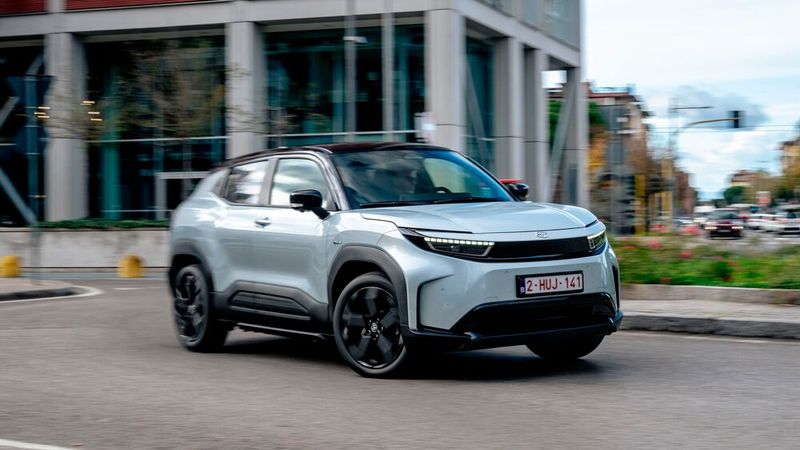
:quality(80)/p7i.vogel.de/wcms/c6/54/c6549fadbf76fe2a05950841ffb8c175/0128579287v1.jpeg "At a compact 4.28 meters, the Urban Cruiser remains conveniently suitable for parking garages.(Image: Toyota)")
:quality(80)/p7i.vogel.de/wcms/7d/9d/7d9dc0b9c0cac2256a5b9be04bdc3a95/0128579283v1.jpeg "The comparatively generous wheelbase of 2.70 meters provides plenty of space for five passengers.(Image: Toyota)")
:quality(80):fill(efefef,0)/p7i.vogel.de/wcms/67/ad/67adf4a647532/elatec-wp-machine-authentication.png "Elatec WP Machine Authentication")
:quality(80)/p7i.vogel.de/wcms/48/e0/48e06afa9efbfafea954a5860f978fe3/0127381285v1.jpeg "C-HR+ is the name of Toyota's second full-fledged electric vehicle, set to be launched in 2026. (Image:Toyota)")
:quality(80)/p7i.vogel.de/wcms/83/8b/838b7f985ca0828585ec9526b87b3a4f/0125135904v1.jpeg "Audi now also offers the Q6 with a coupe rear. (Image:Audi)")