What can a company do in times of a skills shortage to find new employees? et-editor Angela Unger-Leinhos discussed this with Bashé Gast. The Managing Director of Stammgast Personal GmbH has some helpful tips on hand.
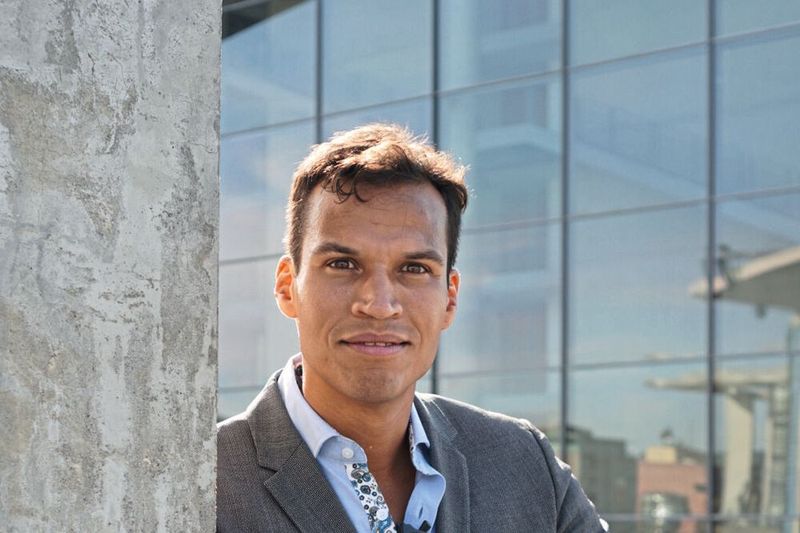
Bashé Gast is a Senior Personnel Consultant and Managing Director of Stammgast Personal GmbH.
(Image: Stammgast Personal GmbH)
Mr. Gast, there is a lot of talk about the shortage of skilled workers, especially in the engineering sector which is very affected. What is your current experience, do companies still treat potential workers as supplicants as before, or has that now changed?
It always depends on who you are talking to. There are still contacts who see their company as the center of the world. Generally, however, there has been a shift with our small and medium enterprise customers we work with: They have dissolved their dogmas and no longer see the recruitment process as one-way streets. This means they understand that not only does the candidate need to sell themselves to get into the company. But the companies know that they need to present themselves to the candidate and sell themselves as attractive, so the candidate comes to them.
What old beliefs have been dispelled by now?
For example, the belief: "We have innovative products, we are the industry leader or a hidden champion in our field, therefore candidates will be knocking down our door." Or the attitude: "If this candidate doesn't fit, we'll just wait for the next applicants.
Could you please describe this using an example?
Two months ago, I gained a new client, a measurement technology manufacturer, who has been looking for a test field manager for a year and a half. The client has conducted six interviews during this period and rejected all applicants because they are looking for the 100-percent candidate and are not willing to make any compromises. Our service also includes advising our clients to streamline their application processes and make them swift; likewise, to be able to develop an 80-percent candidate into a 100-percent candidate over the course of a few months of training.
You just mentioned that companies need to be able to develop the 80-percent candidate further. What 80 percent are important in this context? Or to put it another way: What 20 percent can be dispensed with? Can this be roughly generalized in the engineering field?
Expertise can always be further developed. We place 80 percent of electrical engineers, electrical technicians, automation engineers, or process engineers. An engineer naturally has specialized knowledge; it's just the last 20 percent, which is specific to the company they are moving to, that they might need to learn. However, often companies want employees who already possess all the necessary skills.
And that doesn't work?
We must understand that the candidate needs to learn the company-specific knowledge and conditions. If they bring the basic foundation—being capable, curious, and eager to learn, and wishing to develop further—then what’s needed is a well-planned orientation period within the company. Because it's not just about hiring employees; the company also needs sensible onboarding.
If I understand you correctly, the candidate's mindset is crucial. Could you please name an example of a successful placement?
A medium-sized client, whose managing director prefers physicists, was looking for a Head of Application Engineering. We placed a physicist who brings a broad range of expertise but had only previously managed interns. Because leadership experience is something the physicist can develop into. Now, he has been with the company for three-quarters of a year and has completed further training seminars in management. The client is happy, and we have even been able to place two more people on the team.
Did you convince your client to be satisfied with 80 percent or was it a coincidence?
No, I recommend the 80 percent to the clients. For each position to be filled, we conduct a detailed job discussion, review the job requirements or profile, and ask additional questions, such as by when the position needs to be filled or what has caused the hiring process to fail so far. It often comes to light that the company expects the applicant to already bring everything: leadership experience, project management, experience with large sums of money. We usually know then: The hiring fails because such a candidate does not exist. That's why we recommend the client take the 80%-candidate. Because the companies are not perfect either. Candidates must also make compromises in this regard.
You are mainly talking about companies outside the attractive urban centers?
Exactly! Among others, we have clients about 170 kilometers from Stuttgart. Companies based there do not attract top-tier candidates, so they need to create other incentives through an attractive employer brand, good employer branding, and other benefits. I advise them, "Develop the 80% candidate into your 100% candidate over the next 6, 9, 12 months!"
Where does this demand from companies for the 100% candidate come from? Is it due to the previously very employer-friendly job market?
In the engineering sector, precision and accuracy are crucial because the product, the machine, the drive must operate perfectly in order to be sold. My impression is that many CEOs hold their employees to the same standards as their technology. But employees are not machines or equipment; they are people.
What consequences does such an attitude entail?
We currently have two million open engineering positions in Germany. I have clients who have been unsuccessfully searching for six to twelve months. According to Handelsblatt from last October, each unfilled position in the engineering sector costs around 21,000 euros per month. Given this situation, companies can no longer afford to rest and wait for the perfect candidate to come along.
Date: 08.12.2025
Naturally, we always handle your personal data responsibly. Any personal data we receive from you is processed in accordance with applicable data protection legislation. For detailed information please see our privacy policy.
Consent to the use of data for promotional purposes
I hereby consent to Vogel Communications Group GmbH & Co. KG, Max-Planck-Str. 7-9, 97082 Würzburg including any affiliated companies according to §§ 15 et seq. AktG (hereafter: Vogel Communications Group) using my e-mail address to send editorial newsletters. A list of all affiliated companies can be found here
Newsletter content may include all products and services of any companies mentioned above, including for example specialist journals and books, events and fairs as well as event-related products and services, print and digital media offers and services such as additional (editorial) newsletters, raffles, lead campaigns, market research both online and offline, specialist webportals and e-learning offers. In case my personal telephone number has also been collected, it may be used for offers of aforementioned products, for services of the companies mentioned above, and market research purposes.
Additionally, my consent also includes the processing of my email address and telephone number for data matching for marketing purposes with select advertising partners such as LinkedIn, Google, and Meta. For this, Vogel Communications Group may transmit said data in hashed form to the advertising partners who then use said data to determine whether I am also a member of the mentioned advertising partner portals. Vogel Communications Group uses this feature for the purposes of re-targeting (up-selling, cross-selling, and customer loyalty), generating so-called look-alike audiences for acquisition of new customers, and as basis for exclusion for on-going advertising campaigns. Further information can be found in section “data matching for marketing purposes”.
In case I access protected data on Internet portals of Vogel Communications Group including any affiliated companies according to §§ 15 et seq. AktG, I need to provide further data in order to register for the access to such content. In return for this free access to editorial content, my data may be used in accordance with this consent for the purposes stated here. This does not apply to data matching for marketing purposes.
Right of revocation
I understand that I can revoke my consent at will. My revocation does not change the lawfulness of data processing that was conducted based on my consent leading up to my revocation. One option to declare my revocation is to use the contact form found at https://contact.vogel.de. In case I no longer wish to receive certain newsletters, I have subscribed to, I can also click on the unsubscribe link included at the end of a newsletter. Further information regarding my right of revocation and the implementation of it as well as the consequences of my revocation can be found in the data protection declaration, section editorial newsletter.
What other mistakes do companies make in their job searches besides insisting on the 100 percent?
Every candidate, every person wants to be courted and treated with appreciation. Some companies also fail because their application processes take too long. We advertise that we can get qualified engineers and technicians into interviews within four to six weeks. Successful candidate searches also thrive on the speed of the processes, the regular interim information provided to applicants, and the close involvement of the applicants in the process.
Do you mean that as an applicant, if you wait forever for a qualified response, interest in the company wanes?
Yes, you then feel unappreciated. If the application process is already sluggish, the candidate wonders what it will be like to work there. That's why I always tell the client, "The application process is your business card to the outside world." As a service provider, I support where needed, but the company itself needs to rethink its approach.
Bashé Gast
The senior personnel consultant and managing director of Stammgast Personal GmbH, located at Kurfürstendamm in Berlin, has been successfully placing professionals in the fields of electrical engineering, automotive, construction and energy, as well as chemistry for seven years. For engineering vacancies, Bashé Gast guarantees his clients the placement of top talents within four weeks.
Are there any other mistakes companies make?
Unfortunately, it often happens that newly hired employees are not properly onboarded. Therefore, we review the onboarding process together with the client and develop ideas for improvement if necessary.
What should your client do right to ensure things go well?
There should definitely be an onboarding timetable. Typically, employees in the engineering sector have at least a three-month notice period. Thus, we arrange placements with a lead time. Nevertheless, companies often only reach out just before or even at the start of a new employee's tenure. However, it is crucial that a company contacts the new employee well in advance of their start date, sending them materials about the company and contacts. It would also be important for the new hire to be perceived as a team member ahead of time, perhaps through a communal meal, and for a buddy from the new company to be assigned to them. Additionally, regular feedback meetings scheduled closely during the first three months are very important.
Why is that so important?
We humans are social animals; that's why we want to belong somewhere. This sense of belonging needs to start before the first day of work. Eighty percent of employed staff are latently willing to switch jobs if something better comes along. Engineers earn good money, but according to Maslow's hierarchy of needs, personal development and self-actualization play a significant role. If a potential employer can not only offer work on unique products and solutions but also quickly integrate and involve the employee, then they can truly convince the candidate.
In your opinion, do companies need more psychologists?
No, many companies already employ numerous Human Resources Managers and Business Partners trained to assist employees. Unfortunately, this support often goes unnoticed. Engineers, in particular, tend to be introverted, introspective, and sensitive individuals who, despite enjoying high status in society, often internalize their dissatisfaction. Thus, it’s crucial that engineers are closely supported by the staff of the new company during their initial months. Only once the new employee has successfully passed the probation period are they considered integrated. That's why we see our placement work as complete only at that point.



:quality(80)/p7i.vogel.de/wcms/dd/08/dd086510d9ae7b50181f6070e4463b44/0129363730v1.jpeg "Typical application for ionizing devices: Wrapping films. (Picture: ©Adobe Stock/SMC)")
:quality(80)/p7i.vogel.de/wcms/35/57/3557c819943c53acec41a0ccba87da4f/0130049064v1.jpeg "Researchers at the Fraunhofer IWU in Chemnitz have long known that many typical sheet metal parts can be manufactured more cost-effectively using hollow embossing rollers. Now there is news to report ... (Image:Fraunhofer IWU)")
:quality(80)/p7i.vogel.de/wcms/59/02/590246e3b3f415c65edbee377c14ca77/26-06-pi-fraunhofer-iws-41450-direktplattieren-pic-01-7771x4369v1v1.jpeg "The Fraunhofer IWS has developed the new \"direct laser cladding\" process, which creates a functional layer directly on the base body by applying a strip-shaped metal to rotationally symmetrical components in a spiral and bonding it locally by laser. (Image:Christoph Wilsnack/Fraunhofer IWS)")
:quality(80)/p7i.vogel.de/wcms/73/60/73608418789b1d9c393f5e2fa974eda2/0130209906v1.jpeg "The robots of the X6 generation from b+m enable very high painting quality and are also particularly compact and easy to maintain. (Image:Beckhoff)")
:quality(80)/p7i.vogel.de/wcms/78/e9/78e9188c25a8a94e67c34c9bf8ffe495/visual-agile-20robots-20and-20google-20deepmind-20partner-20to-20bring-20intelligence-20to-20robotics-2500x1406v1v1.jpeg "Together, the partners are developing adaptable, intelligent robots for a wide range of applications (Image:Agile Robots SE)")
:quality(80)/p7i.vogel.de/wcms/e7/66/e7669ecf0260ae8fc54c214e34e4902a/0130316817v1.jpeg "Siemens and Palo Alto Networks offer tested cybersecurity solution for industrial 5G. (Image:Siemens)")
:quality(80)/p7i.vogel.de/wcms/9f/55/9f55324832c4f426958031375124d9de/siemens-20ubtech-20hmnd-1920x1079v1v1.png "Ready for the factory floor: While Ubtech is planning mass production, Siemens is already testing humanoids in real factory applications in Erlangen. (Image:Siemens)")
:quality(80)/p7i.vogel.de/wcms/11/36/113695ed260e29c8c2d9d39dc5f9d869/0130213768v1.jpeg "AI can work cheaply in China and deliver the results rapidly all over the world. (Image:Dall-E / AI-generated)")
:quality(80)/p7i.vogel.de/wcms/62/5f/625f41e87ebfef156a98c8e6393e32fd/0130211654v1.jpeg "Axial flux motors have some advantages over radial flux motor—but their production is currently still expensive. (Image:RWTH Aachen University)")
:quality(80)/p7i.vogel.de/wcms/77/9b/779b0685d010dfe45c9c2cb1cfecd467/0128886425v1.jpeg "The BlueEye is the first \"real\" hyperspectral camera for the UV range and covers the wavelength range from 220 to 380nm. (Image:Inno-spec GmbH)")
:quality(80)/p7i.vogel.de/wcms/e4/51/e451d52ce0182fb0aaa46a5774f832ef/26-04-pi-fraunhofer-iws-21160-bioslide-pic-01-4128x2321v1v1.jpeg "With the BioSlide research project, the Fraunhofer IWS is investigating how sliding systems can be designed to be more sustainable and energy-efficient. New materials can be tested in a particularly application-oriented manner on this plain bearing test stand. (Image:Fraunhofer IWS)")
![Thanks to advanced 3D printing technology, a more efficient use of resources should contribute to lower-emission aviation—this is the goal of ['skai]-lab. (Image:Oleksandr Pashchenko - stock.adobe.com / AI-generated)](https://cdn1.vogel.de/nghHNSbySccfOjG3n1qCA-FVOjQ=/288x162/smart/filters:format(jpg):quality(80)/p7i.vogel.de/wcms/62/64/626424c97a16e69f871bf216c9629c2a/adobestock-1927043193--c2-a9-20oleksandr-20pashchenko-20-e2-80-93-20stock-adobe-com-ki-generiertv1v1.jpeg "Thanks to advanced 3D printing technology, a more efficient use of resources should contribute to lower-emission aviation—this is the goal of ['skai]-lab. (Image:Oleksandr Pashchenko - stock.adobe.com / AI-generated)")
:quality(80)/p7i.vogel.de/wcms/c3/c4/c3c4ce270b083eeac55654148611f064/0130237945v1.jpeg "China is not giving up on hydrogen, but is intensifying its efforts. (Image:freely licensed from Pixabay)")
:quality(80)/p7i.vogel.de/wcms/4e/c0/4ec0bd19390b169edfa23677373dcdf1/0130260089v1.jpeg "Renewable fuels can supply European road traffic, according to a study. (Image:Aral)")
:quality(80)/p7i.vogel.de/wcms/6f/c9/6fc9050301d745cad25585c6780f8f51/0130197341v1.jpeg "Production facilities are a worthwhile target and are therefore at risk. (Image:ABB Robotics)")
:quality(80)/p7i.vogel.de/wcms/b6/62/b662adc2cec8227d8172509bbfb6ee42/25c0207-107-4961x2789v1v1.jpeg "The GLB is the second model based on Mercedes' new MMA platform. Apparently, Geely's platform is better and cheaper, which is why the two companies are negotiating a partnership. (Image:Mercedes-Benz)")
:quality(80)/p7i.vogel.de/wcms/4d/dd/4dddf438e91f394c04a095dbfd109d1c/0130236430v1.jpeg "Measurement modules: The 720301 module in combination with the SL2000 enables RMS and power calculations, among other things. (Image:Yokogawa)")
:quality(80)/p7i.vogel.de/wcms/61/fc/61fcf95f5cca15494ad18343901ae585/0130317237v1.jpeg "With the AGI CPU, Arm says it is taking a \"historic step\": With the processor aimed at AI in data centers, the company is presenting itself for the first time as a provider of its own chips, not just as a pure IP licensor. (Image:Arm)")
:quality(80)/p7i.vogel.de/wcms/82/90/8290dfe3595b6c6b33726ae8b76172c7/0130319587v1.jpeg "The concept image illustrates how the pattern of tiny protrusions and depressions created on the substrate (MgO, bottom) controls the arrangement of atoms in the superconducting material (YBCO, top). At the interface between the two layers, an electronic structure enables superconductivity to occur at higher temperatures than previously possible. (Image:Chalmers University of Technology / Riccardo Arpaia)")
:fill(fff,0)/images.vogel.de/vogelonline/companyimg/76800/76895/65.jpg "FAULHABER_120mm.jpg ()")
:fill(fff,0)/p7i.vogel.de/companies/67/eb/67eba621ef6ea/logo2.png "logo2 (Wuxi InfiMotion)")
:quality(80)/p7i.vogel.de/wcms/a0/68/a068f5c560237c9fa634490b9aa1804c/pexels-daniel-smyth-83914874-10406128-4349x2446v1.jpeg "pexels-daniel-smyth-83914874-10406128-4349x2446v1 (Image: Daniel Smyth)")
:quality(80)/p7i.vogel.de/wcms/18/cb/18cb26e570eabb146e0503b468c864a8/0128555555v1.jpeg "To ensure cybersecurity, transparency throughout the entire supply chain is particularly relevant. Security gaps can arise not only from one's own employees. (Image: ©tippapatt - stock.adobe.com)")