Improving the charging infrastructure for electric vehicles will require advancements in various areas, with thermal management being a key field that demands technological development.
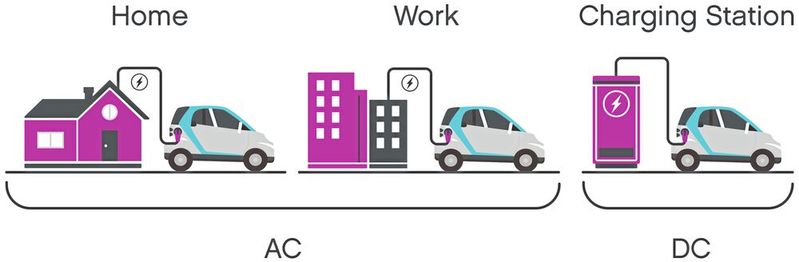
Image 1: Direct current chargers provide significantly faster charging speeds, albeit with increased complexity and heat generation.
(Image: CUI)
Although the concept of electric vehicles (EVs) has existed as long as that of gasoline vehicles, they have only become widely adopted in recent years. This surge in popularity is due to significant advances in EV technology, coupled with substantial government support. The decision of the European Union to ban combustion engine vehicles by 2035 and to require fast charging stations for electric vehicles every 60 km by 2025 is a clear indication of the anticipated surge in demand.
As electric vehicles establish themselves as the dominant mode of transport, factors such as battery range and even faster charging times will play a crucial role in the survival of the global economy. Improving the charging infrastructure for electric vehicles will require advancements in various areas, with thermal management being a key area that necessitates technological developments.
Gallery
AC and DC EV chargers—what is the difference?
As the demand for faster charging solutions increases, there are both incremental and transformative changes in approach. A notable change is the growing use of direct current chargers - a term that may initially seem ambiguous, as all battery systems inherently operate on direct current. The crucial difference, however, lies in where the conversion from alternating current to direct current occurs in these systems.
The conventional alternating current charger, typically found in households, primarily serves as a sophisticated interface responsible for communication, filtering, and regulating the flow of alternating current to the vehicle. Subsequently, a direct current charger built into the vehicle rectifies this current and charges the batteries. In contrast, with a direct current charger, the current is rectified before delivery to the vehicle and passed on as high-voltage direct current.
The main advantage of direct current chargers is that they eliminate many constraints related to weight and size by moving the power conditioning components from the vehicle to an external structure.
By eliminating weight and size constraints, DC chargers can seamlessly integrate additional components to increase both the current throughput and the operating voltage. These chargers use advanced semiconductor components for rectifying the current as well as filters and power resistors that generate significant heat during operation. While the contributions of filters and resistors to heat dissipation are noteworthy, the predominant heat emitter in an EV charging system is the IGBT, a semiconductor component that has become increasingly common in recent decades. This robust component has opened numerous opportunities in the field of charging, yet ensuring proper cooling remains a major concern.
Addressing the thermal challenges
An IGBT is essentially a mix of a field-effect transistor (FET) and a bipolar junction transistor (BJT). IGBTs are known for handling high voltages, having minimal on-state resistance, switching quickly, and exhibiting remarkable thermal resilience. Therefore, they are ideally suited for high-power scenarios such as EV chargers.
In EV charging circuits where IGBTs serve as rectifiers or inverters, their frequent switching operations lead to significant heat generation. The greatest thermal challenge currently lies in the substantial increase in heat dissipation by IGBTs. Over the past three decades, heat dissipation has more than increased tenfold, from 1.2 to 12.5 kW, and forecasts indicate a further increase. Figure 2 illustrates this trend in terms of power per unit area.
In comparison, modern CPUs achieve a power output of about 0.18 kW, which corresponds to a modest 7 kW/cm2. This huge discrepancy highlights the immense challenges for the thermal management of IGBTs in high-power applications.
Two factors play an important role in improving the cooling of IGBTs. First, the surface area of IGBTs is about twice as large as that of CPUs. Second, IGBTs can withstand higher operating temperatures of up to 170 °C, while modern CPUs typically operate at only 105 °C.
The most effective method for managing thermal conditions is a combination of heat sinks and forced air circulation. Semiconductor components, such as IGBTs, generally have an extremely low internal thermal resistance, while the thermal resistance between the component and the ambient air is comparatively high. By incorporating a heat sink, the available surface area for heat dissipation to the ambient air is significantly increased, thereby reducing the thermal resistance. Furthermore, directing the airflow over the heat sink further increases its efficiency. Since the interface between the device and the air represents the greatest thermal resistance in the system, minimizing it is crucial. The advantage of this straightforward approach lies in the reliability of passive heat sinks and the proven technology of fans.
Date: 08.12.2025
Naturally, we always handle your personal data responsibly. Any personal data we receive from you is processed in accordance with applicable data protection legislation. For detailed information please see our privacy policy.
Consent to the use of data for promotional purposes
I hereby consent to Vogel Communications Group GmbH & Co. KG, Max-Planck-Str. 7-9, 97082 Würzburg including any affiliated companies according to §§ 15 et seq. AktG (hereafter: Vogel Communications Group) using my e-mail address to send editorial newsletters. A list of all affiliated companies can be found here
Newsletter content may include all products and services of any companies mentioned above, including for example specialist journals and books, events and fairs as well as event-related products and services, print and digital media offers and services such as additional (editorial) newsletters, raffles, lead campaigns, market research both online and offline, specialist webportals and e-learning offers. In case my personal telephone number has also been collected, it may be used for offers of aforementioned products, for services of the companies mentioned above, and market research purposes.
Additionally, my consent also includes the processing of my email address and telephone number for data matching for marketing purposes with select advertising partners such as LinkedIn, Google, and Meta. For this, Vogel Communications Group may transmit said data in hashed form to the advertising partners who then use said data to determine whether I am also a member of the mentioned advertising partner portals. Vogel Communications Group uses this feature for the purposes of re-targeting (up-selling, cross-selling, and customer loyalty), generating so-called look-alike audiences for acquisition of new customers, and as basis for exclusion for on-going advertising campaigns. Further information can be found in section “data matching for marketing purposes”.
In case I access protected data on Internet portals of Vogel Communications Group including any affiliated companies according to §§ 15 et seq. AktG, I need to provide further data in order to register for the access to such content. In return for this free access to editorial content, my data may be used in accordance with this consent for the purposes stated here. This does not apply to data matching for marketing purposes.
Right of revocation
I understand that I can revoke my consent at will. My revocation does not change the lawfulness of data processing that was conducted based on my consent leading up to my revocation. One option to declare my revocation is to use the contact form found at https://contact.vogel.de. In case I no longer wish to receive certain newsletters, I have subscribed to, I can also click on the unsubscribe link included at the end of a newsletter. Further information regarding my right of revocation and the implementation of it as well as the consequences of my revocation can be found in the data protection declaration, section editorial newsletter.
CUI Devices offers custom heatsinks specifically for EV charging applications with dimensions of up to 950 mm x 350 mm x 75 mm. These heatsinks are capable of handling less demanding requirements passively or more challenging scenarios actively with forced air.
In addition to air cooling, liquid cooling offers an alternative for dissipating heat from high-power components like IGBTs. Water cooling systems are attractive because they achieve the lowest thermal resistances. However, they come with higher costs and greater complexity compared to air cooling solutions. Even with water cooling, heat sinks and fans remain indispensable components for effectively removing heat from the system.
Given the associated costs and complexity, direct cooling of IGBTs with heat sinks and fans remains the preferred approach. Ongoing research focuses on improving air cooling technologies specifically tailored for IGBT applications. This active research aims to optimize heat dissipation while minimizing the costs and system complexity associated with liquid cooling methods.
Considerations for thermal system design
The effectiveness of any cooling system heavily depends on the strategic placement of components to optimize airflow and improve heat distribution. Insufficient spacing between components can impede airflow and limit the size of usable heat sinks. Therefore, it is crucial to strategically position the critical heat-generating components throughout the system to enable efficient cooling.
In addition to the placement of components, the positioning of temperature sensors is also critical. In large systems like DC EV chargers, real-time temperature monitoring using control systems plays a crucial role in active thermal management. Automatic adjustments of cooling mechanisms based on temperature readings can optimize system performance and prevent overheating by regulating power output or adjusting fan speed. However, the accuracy of these automatic adjustments depends on the quality and precision of the temperature sensors. Poor sensor placement can lead to inaccurate temperature readings and consequently ineffective system responses. Therefore, the placement of temperature sensors must be carefully considered to ensure the accuracy and reliability of temperature monitoring and control.
Ambient conditions
Electric vehicle charging stations are often installed outdoors and exposed to various weather conditions. Therefore, the design of weatherproof enclosures with adequate ventilation and protection against environmental factors such as rain and extreme temperatures is essential to ensure optimal thermal performance. It is crucial that the airflow paths and ventilation systems are designed to prevent water ingress while ensuring unobstructed airflow.
In addition to external factors, heat from direct sunlight poses a major challenge as it leads to a significant increase in the internal ambient temperature of the charger. While this is a legitimate concern, the most efficient solution is relatively simple. Well-designed shading structures with adequate air circulation between the shading and the charger reduce heating from solar exposure, thus ensuring lower ambient temperatures within the charger.
What's next?
In recent years, the global proliferation of electric vehicles has gained remarkable momentum, with demand steadily and significantly increasing across various technological fronts. As the number of electric vehicles on the roads continues to rise, the rollout of charging infrastructure is expected to grow in tandem. The effective operation and efficiency of charging stations are of utmost importance for the development of this emerging charging infrastructure. Cost efficiency is also a crucial factor, as the speed with which individuals and businesses integrate these chargers into their homes and facilities depends on affordability.
In anticipation of the continued growth of electric vehicles and chargers, the development of the underlying technologies must be considered. This means that potential advancements in charging power and capacity must be taken into account, software and hardware standards need to be further developed, and room for unforeseen innovations should be left. This proactive approach ensures that thermal management systems can adapt to changing demands over time.
Fundamentally, electric vehicle chargers face similar thermal management issues as other compact, high-power electronic devices. However, the power density of IGBTs used in EV chargers, combined with the increasing demands placed on them, presents a unique challenge. As charging speeds and battery capacities continue to rise, the need to design chargers effectively and safely becomes more stringent, requiring more from thermal management development teams than ever before.
CUI Devices offers a comprehensive range of thermal management components along with industry-leading thermal design services to support the evolving needs of the electric vehicle charging ecosystem. (tk)



:quality(80)/p7i.vogel.de/wcms/8e/63/8e631ccb75fda465c197fc52848289fa/0130260202v1.jpeg "According to the Laser-Zentrum Hannover, what is sizzling away underwater marks the first steps towards a way of repairing steel structures more cheaply and without complications using robots, laser 3D printing and AI ... (Image:LZH)")
:quality(80)/p7i.vogel.de/wcms/67/30/6730b015b3dd6f925877edd795eda319/0130247463v1.jpeg "The comparison between the SLA printable plastics Accura Xtreme Grey (above) and the robust newcomer Accura Xtreme Black now used at Speedpart, which represents an inexpensive and deep black alternative to mechanically processed plastic prototypes ... (Image:Speedpart)")
:quality(80)/p7i.vogel.de/wcms/06/9d/069d939b77a4feab0a8d2ece62c28dc1/0129655701v1.jpeg "This turned part is slotted twice. The deburring that would otherwise be necessary is no longer required for high-pressure machining. (Image:Knoll)")
:quality(80)/p7i.vogel.de/wcms/3f/72/3f72e30d61f3522bff192171b60776a4/0130245214v1.jpeg "No idea what else your humanoid robot can do, or where it fails? Then it might be worth taking a look at the Humanoid Capabilities Navigator, which now helps you to find the right robot for a job, or to improve humanoids in a targeted manner ... (Image:Fraunhofer IPA)")
:quality(80)/p7i.vogel.de/wcms/ba/28/ba28ec056a82abd76758c8c87296c0d5/0130213997v1.jpeg "The Nexy automatic material call-off system (AMS) controls the replenishment of non-stocked materials or components. (Image:Steute Technologies GmbH & Co. KG, Löhne)")
:quality(80)/p7i.vogel.de/wcms/21/3b/213b5e5454b0c4344ba0eaa700857607/0129635774v1.jpeg "The QRV flow control valves from Lee are available in sizes from 5.5 to 18 mm and cover a flow rate of 0.2 to 20 l/min. Depending on the version, the pressure range is either between 0.1 and 2.75 bar (1.5 - 40 psi) or between 0.17 and 2 bar (2.5 - 30 psi). (Image:Lee)")
:quality(80)/p7i.vogel.de/wcms/63/e9/63e9db3259a656cca88c5f7158af3fcb/0129385769v1.jpeg "The Agibot A2 at a Fortune China event in December 2025. (Image:Agibot)")
:quality(80)/p7i.vogel.de/wcms/df/a1/dfa1786a3b05f5ff2e51d0f633695c57/0130137877v1.jpeg "Openclaw inspires AI communities. (Image:Openclaw.ai)")
:quality(80)/p7i.vogel.de/wcms/e4/51/e451d52ce0182fb0aaa46a5774f832ef/26-04-pi-fraunhofer-iws-21160-bioslide-pic-01-4128x2321v1v1.jpeg "With the BioSlide research project, the Fraunhofer IWS is investigating how sliding systems can be designed to be more sustainable and energy-efficient. New materials can be tested in a particularly application-oriented manner on this plain bearing test stand. (Image:Fraunhofer IWS)")
![Thanks to advanced 3D printing technology, a more efficient use of resources should contribute to lower-emission aviation—this is the goal of ['skai]-lab. (Image:Oleksandr Pashchenko - stock.adobe.com / AI-generated)](https://cdn1.vogel.de/nghHNSbySccfOjG3n1qCA-FVOjQ=/288x162/smart/filters:format(jpg):quality(80)/p7i.vogel.de/wcms/62/64/626424c97a16e69f871bf216c9629c2a/adobestock-1927043193--c2-a9-20oleksandr-20pashchenko-20-e2-80-93-20stock-adobe-com-ki-generiertv1v1.jpeg "Thanks to advanced 3D printing technology, a more efficient use of resources should contribute to lower-emission aviation—this is the goal of ['skai]-lab. (Image:Oleksandr Pashchenko - stock.adobe.com / AI-generated)")
:quality(80)/p7i.vogel.de/wcms/78/28/7828775af76773458b4d1409ceb1cf0c/368945-20dam-20imagery-digital-transformation-pc-1920x1079v1v1.jpeg "Complex development projects with high regulatory requirements, such as in the aerospace industry, benefit in particular from the Intelligent Product Lifecycle. (Image:PTC)")
:quality(80)/p7i.vogel.de/wcms/e7/82/e7822e208621ba2ae892d609e60481e8/texas-20uni-850x478v1v1.jpeg "Superfoam is a composite that is capable of absorbing 10 times more energy than a conventional foam. (Image:Abbey Toronjo/Texas A&M University Division of Marketing & Communications)")
:quality(80)/p7i.vogel.de/wcms/e6/53/e6539c6b5df2d2af2970ca981131fb42/0130215307v1.jpeg "Volkswagen is in first place in the first two months of 2026—no one has sold as many cars in China as the car manufacturer. (Image:Volkswagen)")
:quality(80)/p7i.vogel.de/wcms/b0/6d/b06d9ad54bfc39053e1db5494df5cb9a/0130237932v1.jpeg "Pleased about their partnership in the field of bidirectional charging: Christian Haferkamp and Aurélie Alemany from enercity as well as Stefan Mecha and Lars Krause, both Volkswagen Commercial Vehicles (from left to right). (Image:PSONNACK)")
:quality(80)/p7i.vogel.de/wcms/2b/0b/2b0b5ff55299be32174cb0ed76718253/0130177406v1.jpeg "Rolls-Royce has received funding of 70 million US dollars from the EU public-private partnership \"Joint Undertakings for Clean Aviation\". (Image:Rolls-Royce)")
:quality(80)/p7i.vogel.de/wcms/95/7e/957ed49b185794b3e76b9e610a8a389f/0130217926v1.jpeg "Bosch wants to offer components for e-vehicles in India together with Tata. (Image:Bosch)")
:quality(80)/p7i.vogel.de/wcms/22/08/22085b4997a696887dd5a712a30b262b/0130211045v1.jpeg "Imec has announced that the world's most advanced high numerical aperture (High NA) EUV lithography system, the ASML EXE:5200, has arrived at its 300mm cleanroom in Leuven. (Image:Imec)")
:quality(80)/p7i.vogel.de/wcms/48/f2/48f250e2385d3f43743dc44133cc4731/0130161592v1.jpeg "The world's first fully functional quantum battery as a proof-of-concept, developed by CSIRO and its cooperation partners, the University of Melbourne and RMIT. (Image:CSIRO and collaborators, The University of Melbourne and RMIT)")
:quality(80)/p7i.vogel.de/wcms/16/9c/169c092e854d8740928a080cead3b88e/0130241261v1.jpeg "NVIDIA's GB300 AI chip with HBM3E and HBM4 from SK Hynix. (Image:SK Hynix)")
:quality(80)/p7i.vogel.de/wcms/3a/50/3a50d3f269f38f14d7a25a93c6f2b2f8/0130147601v1.jpeg "The compact modulator enables fast and energy-efficient data transmission and can be manufactured cost-effectively. (Image:Hugo Larocque, EPFL)")
:fill(fff,0)/p7i.vogel.de/companies/67/eb/67eba621ef6ea/logo2.png "logo2 (Wuxi InfiMotion)")
:quality(80)/p7i.vogel.de/wcms/ff/e9/ffe9f1075bfe48f1ac155e995cc24116/0121261348v1.jpeg "(Image: DigiKey)")
:quality(80)/p7i.vogel.de/wcms/42/2e/422e1eba4ffb7f2cc020a6c2a160b501/0121267724v1.jpeg "Image 2: The power density of IGBTs has made significant progress.(Image: CUI)")
:quality(80)/p7i.vogel.de/wcms/a2/ac/a2ac8ffa25d48de586518d029b43b1b3/0121267816v1.jpeg "Image 3: The use of heatsinks and fans is a highly effective solution for the thermal management of IGBTs.(Image: CUI)")
:quality(80)/p7i.vogel.de/wcms/26/dd/26dd87498040faaf0319348b62c8f763/0121267813v1.jpeg "Image 4: Shielding chargers from direct sunlight is a cost-efficient and effective strategy for controlling thermal conditions.(Image: CUI)")
:quality(80)/p7i.vogel.de/wcms/17/31/1731a39024388018562376da5e9d7ca0/0125788359v1.jpeg "Electromechanical relays: When fast-charging electric vehicles at wall boxes, specially designed and optimized relays significantly reduce heat generation. (Image:Omron)")
:quality(80)/p7i.vogel.de/wcms/09/f0/09f090adaef8e92e548460beff7e96e3/0127152660v1.jpeg "Thermal management is no longer a peripheral system but a key technology in the mobility transition. (Image:freely licensed on Pixabay)")