The Iran war is hitting the electronics industry in an already tense situation. What are the consequences for the supply chains of electronic components? ELEKTRONIKPRAXIS asked the distributors.
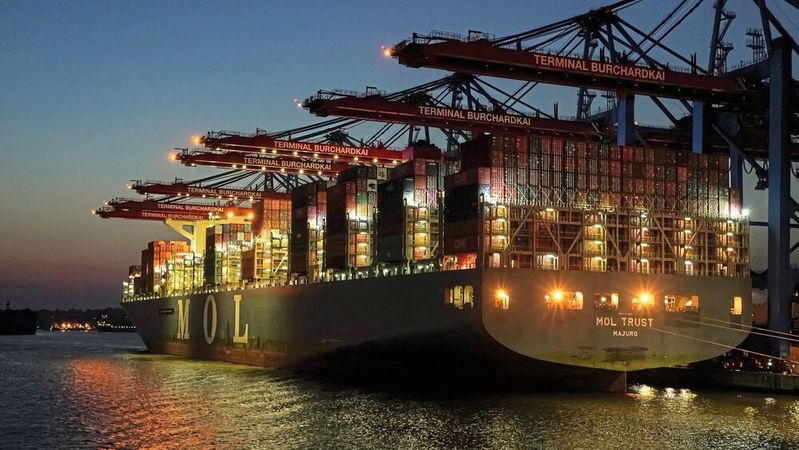
The Iran war and the supply chains: Electronic components are currently hardly affected by bottlenecks.
When the United States and Israel attacked Iran, Iran's response was prompt. Iran not only attacks targets of its neighbors, but has also blocked the Strait of Hormuz. The Strait of Hormuz is a strait in the Persian Gulf that measures around 22 miles at its narrowest point, with the navigable passages being only a few kilometers wide. Around 20 percent of globally traded crude oil is shipped through the Strait of Hormuz every day.
We asked numerous distributors how they see the situation. Note: The geopolitical situation is currently very difficult, as airspace is also closed. The situation regarding component procurement can therefore change rapidly.
Closure of the Strait of Hormuz And the Impact on the Electronic Components Supply Chain
Klaus Kruse, Managing Director of Karl Kruse GmbH & Co KG: "The Strait of Hormuz is one of the most important waterways in the world, through which around a third of the world's oil is transported every day. A blockade or massive restriction of shipping traffic could lead to a drastic increase in oil prices and significantly disrupt logistics networks. Companies that are dependent on oil and gas or are active in the chemical, automotive or manufacturing industries could be affected by delayed or restricted deliveries of raw materials and intermediate products. There could also be longer waiting times in international trade, which would slow down the entire supply chain and make it more expensive."
Markus Krieg, Chief Marketing Officer at Rutronik, adds: "For Europe, the impact is currently rather small because the proportion of oil products going through the Strait of Hormuz to Europe is relatively insignificant; however, it remains to be seen to what extent a poorer supply of oil products, especially from China, will have an impact on production there."
Marcus Warmbier, Head of Marketing & Product Data at Schukat, points out that "attacks by the Houthi rebels in the Gulf of Aden are more likely to have a noticeable impact, as this would affect the onward journey towards the Suez Canal". And this route is important for the transportation of electronic components by ship. However, this route has already been affected by blockages several times in the past, so that some shipping companies on their way to Europe use the route around the southern tip of Africa, which takes around 14 days longer.
Ralf Bühler, CEO of Conrad Electronic SE, sees geopolitical disruptions such as the current restriction of the Strait of Hormuz as "no longer an exceptional case—they are part of a new normality." Holger Ruban, Chief Executive Officer at Bürklin, summarizes: "Global supply chains remain volatile and the geopolitical environment remains fragile. The decisive factor will be how the situation develops in the coming weeks."
The consequences for the supply chains of electronic components are more indirect: the cost of oil and gas is rising and the longer transport times for shipping and the closed airports are making energy prices, logistics and insurance costs more expensive. Christian Gerland, Head of Purchasing at the TQ Group: "These factors lead to an increased risk and cost burden. In addition, market participants tend to stockpile as a precautionary measure in tense geopolitical situations, which can lead to additional availability bottlenecks in the short term, even if production capacities remain stable."
Which Components Are Currently Most Likely to Be Affected By Shortages?
Marie-Pierre Ducharme, Vice President of Marketing and Business at Mouser: "At this stage, we expect minimal impact on Mouser's supply chain, although there may be logistical disruptions if carriers divert shipments or shift some freight from sea to air transportation."
Karin Krumpel, Managing Director at Codico, adds: "As far as we are currently aware, no production facilities in our supply network are directly affected. Production at our manufacturing partners is continuing as planned. The flow of goods to and within Europe is stable; however, depending on the routing and availability of transport capacities, intercontinental shipments may experience delays or short-term cost corrections. Specifically, we are observing possible rerouting in sea and air freight traffic on affected trade routes, longer transit times on certain routes, rising freight costs due to risk and energy surcharges and continued volatility on the energy and commodity markets."
However, Christian Gerland, TQ-Group, points out: "Components with a high level of technological complexity or a limited manufacturer base are particularly sensitive. These include high-performance semiconductors such as FPGAs, high-end SoCs or specialized automotive microcontrollers, power semiconductors (especially SiC and GaN components), power management ICs, analogue and mixed-signal components as well as passive components with long production cycles. These product groups are often characterized by long production lead times and limited second sources combined with high demand from industrial, automotive or AI applications."
Date: 08.12.2025
Naturally, we always handle your personal data responsibly. Any personal data we receive from you is processed in accordance with applicable data protection legislation. For detailed information please see our privacy policy.
Consent to the use of data for promotional purposes
I hereby consent to Vogel Communications Group GmbH & Co. KG, Max-Planck-Str. 7-9, 97082 Würzburg including any affiliated companies according to §§ 15 et seq. AktG (hereafter: Vogel Communications Group) using my e-mail address to send editorial newsletters. A list of all affiliated companies can be found here
Newsletter content may include all products and services of any companies mentioned above, including for example specialist journals and books, events and fairs as well as event-related products and services, print and digital media offers and services such as additional (editorial) newsletters, raffles, lead campaigns, market research both online and offline, specialist webportals and e-learning offers. In case my personal telephone number has also been collected, it may be used for offers of aforementioned products, for services of the companies mentioned above, and market research purposes.
Additionally, my consent also includes the processing of my email address and telephone number for data matching for marketing purposes with select advertising partners such as LinkedIn, Google, and Meta. For this, Vogel Communications Group may transmit said data in hashed form to the advertising partners who then use said data to determine whether I am also a member of the mentioned advertising partner portals. Vogel Communications Group uses this feature for the purposes of re-targeting (up-selling, cross-selling, and customer loyalty), generating so-called look-alike audiences for acquisition of new customers, and as basis for exclusion for on-going advertising campaigns. Further information can be found in section “data matching for marketing purposes”.
In case I access protected data on Internet portals of Vogel Communications Group including any affiliated companies according to §§ 15 et seq. AktG, I need to provide further data in order to register for the access to such content. In return for this free access to editorial content, my data may be used in accordance with this consent for the purposes stated here. This does not apply to data matching for marketing purposes.
Right of revocation
I understand that I can revoke my consent at will. My revocation does not change the lawfulness of data processing that was conducted based on my consent leading up to my revocation. One option to declare my revocation is to use the contact form found at https://contact.vogel.de. In case I no longer wish to receive certain newsletters, I have subscribed to, I can also click on the unsubscribe link included at the end of a newsletter. Further information regarding my right of revocation and the implementation of it as well as the consequences of my revocation can be found in the data protection declaration, section editorial newsletter.
Ralf Bühler, Conrad, adds: "To be honest, the situation for certain product groups was already tense before the current crisis—and that's what's really worrying. The AI boom has recently massively boosted demand for memory chips, microcontrollers, power semiconductors and graphics processors. These components are already under pressure. The geopolitical situation, for example around the Strait of Hormuz, is now adding to the pressure."
What Advice Do You have for Your Customers?
John Hourigan, Vice President Public Affairs & Corporate Marketing, Arrow Electronics: "Arrow Electronics' business continuity team is monitoring the situation to respond to the potential impact of developments in the Middle East. Business critical activities are currently continuing and we are working with transportation companies to identify and utilize alternative shipping routes to minimize the impact on order fulfillment for our customers. We are continuously monitoring supply chains for potential impacts and providing updates to our customers as required."
Holger Ruban, Bürklin: "We recommend that our customers closely monitor their own supply chain and identify potential risks at an early stage. Where appropriate, forward planning with increased safety stocks can help to avoid gaps in supply. Transparency, early planning and partnership-based coordination along the supply chain are crucial in the current situation."
Karin Krumpel, Codico: "In recent years, our supply chain has been put to the test by a series of events—from the Ever Given accident in the Suez Canal to Houthi attacks on Red Sea shipping, flooding in Dubai, the COVID-19 pandemic and the war in Ukraine. Each of these events has strengthened our operational resilience. CODICO has drawn concrete conclusions from this: We have systematically broadened our service provider portfolio in logistics and expanded our access to alternative sources of supply. Within the overall global capacity available, we are therefore well positioned to react flexibly and act quickly in the interests of our customers.
To avoid supply bottlenecks, we recommend placing orders earlier than usual and planning additional buffer times for time-critical requirements. We are happy to support our customers individually with capacity planning and risk assessment."
Ralf Bühler, Conrad: "Security of supply is one of the most underestimated success factors in the B2B sector. My advice: Now is not the time for single-source strategies. Purchasing managers should review their supplier base, focus on alternatives at an early stage and have a partner who can also procure outside the catalog. This is precisely our promise—with a broad and deep range, consistent quality across all channels and strategic flexibility when it matters."
Klaus Kruse, Karl Kruse GmbH: "Companies should examine alternative routes and sources of supply and organize their supply chains flexibly. It could make sense to increase stock levels in order to bridge short-term bottlenecks. To reduce dependence on individual, geopolitically sensitive routes such as the Strait of Hormuz, it could be wise to diversify supplier strategies in the long term. In addition, increased communication with suppliers and precise planning of lead times are required in order to be able to react to unforeseen events. The situation is dynamic and can change quickly. It is therefore important to continuously monitor geopolitical developments and flexibly adapt business strategies."
Marie-Pierre Ducharme, Mouser: "As with any potential logistical disruption, we recommend that our customers continue to monitor delivery times and plan accordingly."
Markus Krieg, Rutronik: "Long-term planning and stockpiling always helps to avoid potential bottlenecks."
Marcus Warmbier, Schukat: "As we do not source any products from the affected countries and no sensitive logistics routes run through the affected regions for us, we are not currently facing any critical bottlenecks. Where possible, customers should plan ahead with a lead time of three to six months. If necessary, we will agree additional logistics agreements with our customers to ensure delivery reliability at all times."
Christian Gerland, TQ-Group: "Our most important piece of advice is forward-looking demand planning. Companies should regularly coordinate forecasts with their distribution and manufacturing partners and look further ahead—ideally 12 to 18 months. We also recommend systematically checking parts lists for risks, identifying single-source components, qualifying alternative components (where technically possible) and developing a targeted, differentiated stock strategy for particularly critical components. In addition, close and transparent communication and strategic resilience within the supply chain are crucial. Those who plan early and act flexibly can produce stably even in a volatile environment." (mk)



:quality(80)/p7i.vogel.de/wcms/81/c6/81c6f01476cd66350d1a6467efede21d/screenshot-202026-01-28-20174921-783x440v1v1.png "Vacuum-brazed probes. (Image:iew inductive heating systems)")
:quality(80)/p7i.vogel.de/wcms/40/c5/40c5051cebdb10fdee9a283303434d9d/0129881741v1.jpeg "3D-printed tools and other components contribute to energy-saving, precise processes. (Image:Gerhard Schubert GmbH)")
:quality(80)/p7i.vogel.de/wcms/ae/bd/aebda515c684825e97579175874ea6bd/0129920231v1.jpeg "Hensoldt, a sensor specialist for critical defense applications among other things, now has a strategic milestone ahead of it. The company is planning to acquire Nedinsco, an optronics company from Venlo in the Netherlands. Here's what's to come ... (Image:Hensoldt)")
:quality(80)/p7i.vogel.de/wcms/c3/6f/c36f031df46d22615d941d077d32313c/0129800025v1.jpeg "The laser-assisted process is intended to make wafer cutting significantly more productive. (Image:Trumpf)")
:quality(80)/p7i.vogel.de/wcms/73/17/7317794432521bf911711b91287cfc28/0129961259v1.jpeg "ABB Robotics and Nvidia are enabling the widespread use of physical AI in the world of robotics. This means that systems can be created virtually and with high precision and optimized much more cost-effectively. In the large image the virtual system, next to it the real robot cell ... (Image:ABB)")
:quality(80)/p7i.vogel.de/wcms/09/a2/09a2e832b1c0271d299fc130201e5717/adobestock-1767409934-4191x2360v1.jpeg "(Source: © ImageFlow - stock.adobe.com)")
:quality(80)/p7i.vogel.de/wcms/3e/1c/3e1c58be6be95c1f511fc6fd6812cf20/0129887455v1.jpeg "The picture shows an aerial view of the existing site, supplemented by a visualization of the Smart Factory. The new production facility is to be built on the current parking lot. (Image:Siemens AG)")
:quality(80)/p7i.vogel.de/wcms/ee/2e/ee2ed86ee6920e691aaab10cc7d2dec6/0128979319v1.jpeg "Humanoid robots can support people without adapting the environment. (Picture: ©Gorodenkoff - stock.adobe.com)")
:quality(80)/p7i.vogel.de/wcms/28/00/28008d9477bb07daa3b28ce4ac0ae907/newsimage418436-1536x864v1v1.jpeg "Researchers have produced elastic ear cartilage from human cells in the laboratory, which remains dimensionally stable in animal models. (Image:ETH Zurich)")
:quality(80)/p7i.vogel.de/wcms/1e/7d/1e7d6a316cdd7a7ba5e84d7c9a3efb80/newsimage418837-3000x1687v1v1.jpeg "Driverless shuttles can strengthen public transport, especially in rural areas. (Image:ZF Friedrichshafen)")
:quality(80)/p7i.vogel.de/wcms/85/e8/85e89606edeeec55feac9ab5617e2440/newsimage418885-3500x1969v1v1.jpeg "Flexible: The solid electrolyte based on silicone is expandable and thus compensates for the cavities that form in solid-state batteries during charging and discharging. (Image:Empa)")
:quality(80)/p7i.vogel.de/wcms/e8/dc/e8dc27a8d9fba8fbd081987400bf6848/0127426198v1.jpeg "3D FEM models are detailed, large and computationally intensive. Thanks to ROM and the support of Cadfem, Wago has succeeded in setting up an e-shop for thermal simulation. (Image:WAGO)")
:quality(80)/p7i.vogel.de/wcms/a7/22/a722a06c823b5d7405eb9fb15a0b4e7d/0129931201v1.jpeg "The company offers access to its charging network, which now has more than 1,000,000 charging points across Europe, via the Elli app. (Image:Elli | Volkswagen)")
:quality(80)/p7i.vogel.de/wcms/89/5d/895dfb4fb9a90c33ddd287c7d09c9ffd/0129938355v1.jpeg "Ganfeng Lithium has developed semi-solid batteries for eVTOLs together with Geely subsidiary Aerofugia. (Image:Aerofugia)")
:quality(80)/p7i.vogel.de/wcms/7c/b5/7cb53f75b7254936bca07deea6df4ed7/0129926273v1.jpeg "Windrose and Hubjekt cooperate on Plug&Charge authentication. (Image:Wind rose)")
:quality(80)/p7i.vogel.de/wcms/09/5a/095a3ffb6f8fa4c4ccdd40e99ad4eb57/0129947820v1.jpeg "The developers at Irlbacher prevent the glass surface from falling below the dew point with 3D printing in the form of filigree conductor tracks on flat glass. (Image:Irlbacher)")
:quality(80)/p7i.vogel.de/wcms/64/97/6497d264fcf62cf4325443498b3826f3/0129930890v1.jpeg "Switching without mechanical contacts (Image:Endrich)")
:quality(80)/p7i.vogel.de/wcms/f3/c0/f3c0040f2b655e91b80158029c65b0cc/0127314142v1.jpeg "Nexperia's assembly and testing fab in Guangdong, China. (Image:Nexperia)")
:quality(80)/p7i.vogel.de/wcms/eb/06/eb069fcd5423295876bad3277dbea0bf/0129955418v1.jpeg "The Iran war and the supply chains: Electronic components are currently hardly affected by bottlenecks. (Image:Markus Kammermann)")
:quality(80)/p7i.vogel.de/wcms/ee/75/ee7566bf98b05455703bb7521fcb98a4/0129937679v1.jpeg "The search for new semiconductor materials is progressing. (Image:Dall-E / AI-generated)")
:fill(fff,0)/images.vogel.de/vogelonline/companyimg/76800/76895/65.jpg "FAULHABER_120mm.jpg ()")
:fill(fff,0)/p7i.vogel.de/companies/67/eb/67eba621ef6ea/logo2.png "logo2 (Wuxi InfiMotion)")
:quality(80)/p7i.vogel.de/wcms/e7/ad/e7ad7dbe17ee013b9ba8b74bb7c84afc/0129956061v1.jpeg "Karin Krumpel, Codico: \"Production at our manufacturing partners is continuing as planned.\"(Image: Klimpt Sabine/Codico)")
:quality(80)/p7i.vogel.de/wcms/aa/62/aa62ceb64fb24b7800a69f5a9998b881/0129956100v1.jpeg "Marie-Pierre Ducharme, Mouser: \"Mouser's global logistics network offers the necessary flexibility to adapt shipping routes if required.\"(Image: Mouser)")
:quality(80)/p7i.vogel.de/wcms/9e/7c/9e7c1699cb38a842512ae3d8ef8c1029/0129956184v1.jpeg "Markus Krieg, Rutronik: \"It remains to be seen to what extent a poorer supply of oil products, particularly in China, will have an impact on production there.\"(Image: Rutronik)")
:quality(80)/p7i.vogel.de/wcms/a5/96/a596d3682290ada5ff88befd8212cdf9/0129956304v1.jpeg "Christian Gerland, TQ Group: \"Components with a high level of technological complexity or a limited manufacturer base are particularly sensitive.\"(Image: TQ-Group)")
:quality(80)/p7i.vogel.de/wcms/b9/4b/b94bb35f090ce3deebb3f016066ba8e3/0113143253v1.jpeg "In our China Market Insider, we regularly provide you with relevant information directly from China. (Image:© Eisenhans - stock.adobe.com)")
:quality(80)/p7i.vogel.de/wcms/55/de/55de029926f502335e998009b24bbffa/0124976151v1.jpeg "The challenges in the supply chain have been increasing for years. (Image:Biss GmbH)")