Autonomous, connected, software-driven—the automotive industry and mobility are undergoing a profound transformation. This impacts the driving experience. Pascal Peguret, Senior Vice President Connectivity at Harman Automotive, explains how vehicles are becoming digital living spaces, which technologies are driving widespread connectivity, and why satellite communication plays a crucial role in this.
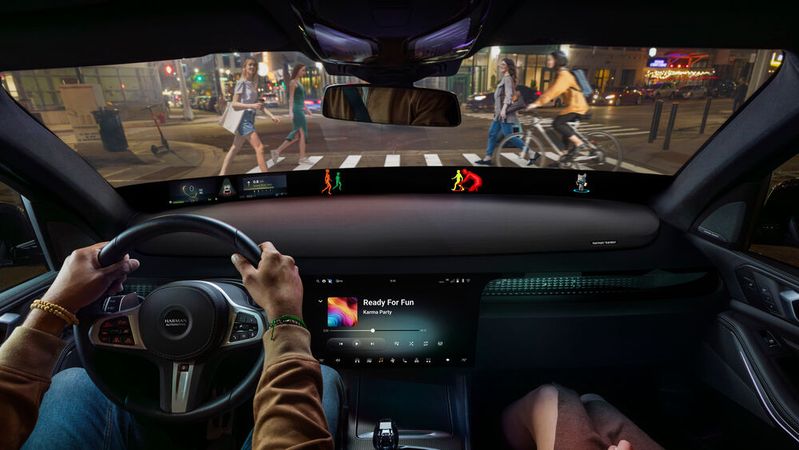
The vehicle is evolving into a digital living space. Satellite communication will play a crucial role in this.
(Image: Harman)
Mobility is changing faster than ever before: electromobility, connected vehicles, and autonomous technologies—car manufacturers and their suppliers must juggle many things to stay competitive. Connected vehicles are by no means a thing of the future anymore, but they still pose a challenge.
Next Mobility: Mr. Peguret, how will connectivity in the automotive sector develop in the coming years? Will there be regional differences?
Pascal Peguret: Connectivity in the automotive sector is evolving rapidly—we are seeing very strong upward momentum, even though only a small proportion of vehicles are currently connected. For years, many manufacturers relied on users bringing their smartphone into the car as a connection element—to stream music or control simple functions. But the market demands something different today: vehicles should be independently connected to the internet—with an integrated telematics platform and direct cloud connectivity. Without detouring through the smartphone. The take-rate of factory-connected vehicles is rising significantly in virtually all regions. A global trend is emerging: in-vehicle connectivity is becoming standard and is no longer optional.
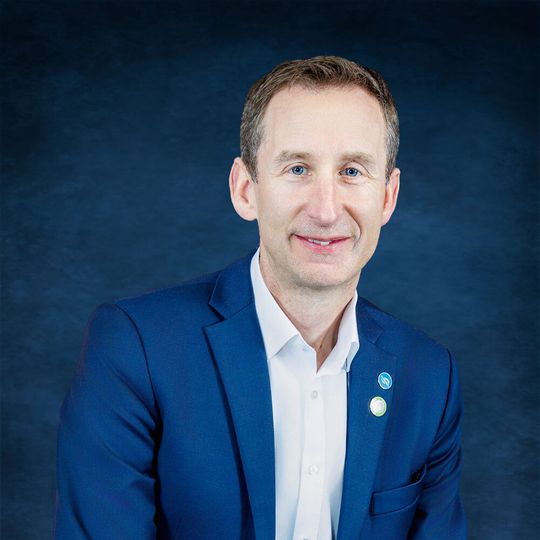
Pascal Peguret is Senior Vice President of Connectivity at Harman Automotive.
(Image: SGStudio)
For providers in the connectivity sector, this is an enormous growth area. Vehicle-to-Vehicle (V2V) or Vehicle-to-Everything (V2X) connectivity, on the other hand, are still niche markets. Development is progressing much more slowly than previously assumed. The benefit of this technology only arises through critical mass—when a certain percentage of vehicles and infrastructures adopt the same communication standards. Therefore, clear political signals and guidelines are needed to achieve a breakthrough. China is further ahead in this regard, while lawmakers in Europe and North America are still hesitant. From a technical perspective, V2X is an excellent safety solution to reduce accidents or make rescue operations in traffic more efficient, and that's why we at Harman are strong supporters of this technology.
Next Mobility: Which areas in the automotive sector will be transformed by the increasing technological possibilities—and why?
Pascal Peguret: The biggest change is currently taking place in the perception of the car itself. Today, the vehicle is evolving into a digital consumer product that accompanies the user in their connected everyday life—with seamless connection to home and office environments.
At the same time, vehicle autonomy is increasing. The more driving functions become automated, the more the focus shifts to the interior experience. Drivers—or better said: passengers—want to use their time in the vehicle meaningfully, whether for work, entertainment, or relaxation. This fundamentally changes expectations. Studies like the McKinsey Consumer Pulse Mobility Survey 2025 show that buyers of electric vehicles, in particular, are paying much more attention to the user experience, connectivity, comfort, and digital functions. This is also shifting priorities in the industry. New areas such as connectivity, E/E architecture, software, and central computing platforms are gaining importance, and it is precisely in these areas that technological differentiation between manufacturers is taking place.
For companies like Harman, the focus is on the in-car experience enabled by software-defined architecture and connectivity. These are the factors that determine how relevant a car remains in the digital everyday life of its users. Instead of isolated infotainment modules, we design holistic digital platforms with scalable software integration, tailored to the individual needs of people and enabling a seamless, uninterrupted digital experience.
Satellite communication offers high potential
Next Mobility: What needs to be done to achieve connected mobility as quickly and comprehensively as possible?
Pascal Peguret: When we talk about speed, we need to distinguish between two things: bandwidth and latency. Bandwidth describes how much data can be transmitted simultaneously—for example, during parallel streaming or software-based over-the-air updates. Latency, on the other hand, is the network's response time, meaning how long it takes for a signal to reach the recipient. It is particularly critical for safety-relevant applications, cloud-based driver assistance systems, or video conferences.
The good news: 5G can deliver both—high data rates in the gigabit range and low latencies in the millisecond range. This means that many of the scenarios we discuss in the context of connected mobility are already technologically possible today. The problem lies less in the technology itself and more in its widespread availability. In Germany, 5G coverage with around 93.2 percent of the country’s area is now significantly better than many people think. However, in large-scale markets like the USA or Australia, the question arises of how vehicles can remain connected outside terrestrial networks—for navigation, communication, and safety services alike.
Date: 08.12.2025
Naturally, we always handle your personal data responsibly. Any personal data we receive from you is processed in accordance with applicable data protection legislation. For detailed information please see our privacy policy.
Consent to the use of data for promotional purposes
I hereby consent to Vogel Communications Group GmbH & Co. KG, Max-Planck-Str. 7-9, 97082 Würzburg including any affiliated companies according to §§ 15 et seq. AktG (hereafter: Vogel Communications Group) using my e-mail address to send editorial newsletters. A list of all affiliated companies can be found here
Newsletter content may include all products and services of any companies mentioned above, including for example specialist journals and books, events and fairs as well as event-related products and services, print and digital media offers and services such as additional (editorial) newsletters, raffles, lead campaigns, market research both online and offline, specialist webportals and e-learning offers. In case my personal telephone number has also been collected, it may be used for offers of aforementioned products, for services of the companies mentioned above, and market research purposes.
Additionally, my consent also includes the processing of my email address and telephone number for data matching for marketing purposes with select advertising partners such as LinkedIn, Google, and Meta. For this, Vogel Communications Group may transmit said data in hashed form to the advertising partners who then use said data to determine whether I am also a member of the mentioned advertising partner portals. Vogel Communications Group uses this feature for the purposes of re-targeting (up-selling, cross-selling, and customer loyalty), generating so-called look-alike audiences for acquisition of new customers, and as basis for exclusion for on-going advertising campaigns. Further information can be found in section “data matching for marketing purposes”.
In case I access protected data on Internet portals of Vogel Communications Group including any affiliated companies according to §§ 15 et seq. AktG, I need to provide further data in order to register for the access to such content. In return for this free access to editorial content, my data may be used in accordance with this consent for the purposes stated here. This does not apply to data matching for marketing purposes.
Right of revocation
I understand that I can revoke my consent at will. My revocation does not change the lawfulness of data processing that was conducted based on my consent leading up to my revocation. One option to declare my revocation is to use the contact form found at https://contact.vogel.de. In case I no longer wish to receive certain newsletters, I have subscribed to, I can also click on the unsubscribe link included at the end of a newsletter. Further information regarding my right of revocation and the implementation of it as well as the consequences of my revocation can be found in the data protection declaration, section editorial newsletter.
The answer lies in satellite communication, also known as SatCom or NTN, which stands for Non-Terrestrial Networks. We see tremendous potential here, especially for markets with low mobile network density. Providers like Starlink are already demonstrating that stable and fast connections via satellites are possible and can be offered profitably. In the home sector, SatCom is already a reality, and we are convinced that this technology will soon achieve its breakthrough in the automotive sector as well. Especially where 5G reaches its limits, SatCom will become a crucial complement.
Next Mobility: Which technological prerequisites are driving the development of connected mobility—and which are currently still missing?
Pascal Peguret: First of all, there are hardly any real technological hurdles anymore. Many of the foundations have long been in place. V2X has been functioning reliably for years. The fact that it is still not widely adopted is mainly due to a lack of political will, missing standardization, and market penetration.
Another topic is the progress in satellite communication, where we differentiate between narrowband and broadband solutions. The good news: the technological prerequisites for the narrowband sector are already in place. At this year's Mobile World Congress, we presented, together with Qualcomm and Skylo, the first automotive telematic control unit with native satellite support. Even today, basic services such as an SMS-like emergency message can be delivered via narrowband satellite connections. This includes crucial information like the vehicle's position and the most recently known vehicle data to help rescue teams assess the reported emergency situation and respond appropriately.
The biggest technical challenge for broadband SatCom is the antenna technology that supports higher frequency bands and robust integration into the vehicle architecture. The goal is to make these systems suitable for use in vehicles—meaning small, durable, cost-efficient, 3GPP-compliant, and reliable in terms of providing a stable connection in as many everyday driving situations as possible. In the future, this could enable video conferences, streaming, or real-time data updates via SatCom.
We are working closely with satellite communication companies, as well as with research institutes and partners from other industries, such as the agricultural sector, to make this technology ready for the automotive market in the coming years. What’s exciting is that key innovations often don’t come from basic research but from cross-industry transfer. Technologies that are already functioning in home networks, mobile communications, agriculture, space exploration, or even the defense sector are being scaled and industrialized for automotive use.
Space Becomes A Competitive Field
Next Mobility: Which Players Are Crucial for Comprehensive And High-Quality Connected Mobility?
Pascal Peguret: In addition to traditional mobile network operators, satellite network operators providing global connectivity for safety-critical automotive applications are becoming increasingly relevant in mobility use cases. Interestingly, we are witnessing a real boom here: not only are established SNO providers driving the expansion of 3GPP standards, but new players—for example, from China—are also building their own proprietary systems. At the same time, some OEMs are even considering building their own satellite constellations or leasing capacities from existing operators. Space is literally becoming a new competitive field for the automotive industry.
In addition, MNOs and, consequently, Mobile Virtual Network Operators play an important role as they offer dynamic network management and switching between 4G, 5G, and SatCom across different countries using integrated (e)SIM profiles. This seamless architecture is essential for creating global, uninterrupted connectivity—regardless of country, network, or provider. In summary, the connected mobility ecosystem of the future will rely on both MNOs/MVNOs and SNOs. It is the interplay of these players that enables stable, global, and truly comprehensive connectivity. This is the prerequisite for connected mobility not only to function in the future but to become the norm.
On the way to SDV
Next Mobility: Where are the entrepreneurial potentials of connected mobility in the automotive industry?
Pascal Peguret: This is closely related to the E/E architecture of vehicles. Until now, vehicles had up to 100 individual control units, each responsible for a specific function. However, this approach is outdated. The future clearly belongs to the central computer, a centralized architecture in which almost all vehicle functions are software-based, controlled, updated, and extended.
This makes the car essentially an SDV, or Software Defined Vehicle. This means that most functions can be enabled, configured, and updated via software. The OEM can activate, optimize, or add new functions or improvements through over-the-air updates, similar to a smartphone. For the user, this means their car evolves, even long after it's already on the road.
Entrepreneurially, there is enormous potential here—on multiple levels:
Firstly, for hardware and platform providers. Companies that develop central computers, domain controllers, and high-performance networks become the backbone of these new vehicle architectures. They provide the technical foundation for software control and thus the greatest leverage for value creation.
Secondly, the software and enabler layer. This includes the level that makes the software platform itself possible—operating systems, hypervisors, over-the-air update management, security, and communication systems. Those who provide these infrastructures essentially control the new "operating system of the car."
Thirdly, app ecosystems and services. This is where the real revolution begins. If OEMs manage to establish open ecosystems, external developers can create their own applications for the interior, including entertainment, navigation, wellbeing, productivity, vehicle diagnostics, and personalization. This turns the car into a platform that can continuously evolve and be monetized.
You can compare this to the smartphone: the greatest value is not created by the hardware but by the ecosystem of apps and services running on it. This is exactly where the automotive industry is heading. Manufacturers who have the courage to open their platforms will generate enormous network effects and new revenue streams in the future—from app sales to data-based services to subscription-based features.
Autonomous, software-defined driving is not coming next year
Next Mobility: What does the connected mobility of the future look like from your perspective?
Pascal Peguret: I believe we are on the brink of one of the greatest transformations ever. Fully autonomous and software-defined driving will come, not tomorrow, not next year, but inevitably. And once it does, everything will change: the definition of mobility, our relationship with the car, even our cities and lifestyles.
When vehicles truly operate without a steering wheel or active driver involvement, the car will become a multifunctional space for productivity, entertainment, and well-being. We will work, relax, communicate, or entertain ourselves during the drive—in a safe, highly connected environment with continuous cloud connectivity and real-time services.
This also changes the question of ownership: do we even need to own a car anymore, or do we use mobility as an on-demand service? This development will fundamentally change the urban environment as well. If cars continue driving after passengers get out, we no longer need parking spaces in city centers. The relationship between urban and rural areas will shift. Those who wish can live further away again because mobility is no longer a loss of time.
Of course, there will always be people who enjoy driving themselves—just like classic car enthusiasts or motorcycle fans today. Driving itself will become a kind of passion or hobby, but no longer necessarily part of everyday life. The majority will use the car differently—as a digital, connected space that seamlessly integrates into their lives.



:quality(80)/p7i.vogel.de/wcms/dd/08/dd086510d9ae7b50181f6070e4463b44/0129363730v1.jpeg "Typical application for ionizing devices: Wrapping films. (Picture: ©Adobe Stock/SMC)")
:quality(80)/p7i.vogel.de/wcms/35/57/3557c819943c53acec41a0ccba87da4f/0130049064v1.jpeg "Researchers at the Fraunhofer IWU in Chemnitz have long known that many typical sheet metal parts can be manufactured more cost-effectively using hollow embossing rollers. Now there is news to report ... (Image:Fraunhofer IWU)")
:quality(80)/p7i.vogel.de/wcms/59/02/590246e3b3f415c65edbee377c14ca77/26-06-pi-fraunhofer-iws-41450-direktplattieren-pic-01-7771x4369v1v1.jpeg "The Fraunhofer IWS has developed the new \"direct laser cladding\" process, which creates a functional layer directly on the base body by applying a strip-shaped metal to rotationally symmetrical components in a spiral and bonding it locally by laser. (Image:Christoph Wilsnack/Fraunhofer IWS)")
:quality(80)/p7i.vogel.de/wcms/73/60/73608418789b1d9c393f5e2fa974eda2/0130209906v1.jpeg "The robots of the X6 generation from b+m enable very high painting quality and are also particularly compact and easy to maintain. (Image:Beckhoff)")
:quality(80)/p7i.vogel.de/wcms/78/e9/78e9188c25a8a94e67c34c9bf8ffe495/visual-agile-20robots-20and-20google-20deepmind-20partner-20to-20bring-20intelligence-20to-20robotics-2500x1406v1v1.jpeg "Together, the partners are developing adaptable, intelligent robots for a wide range of applications (Image:Agile Robots SE)")
:quality(80)/p7i.vogel.de/wcms/e7/66/e7669ecf0260ae8fc54c214e34e4902a/0130316817v1.jpeg "Siemens and Palo Alto Networks offer tested cybersecurity solution for industrial 5G. (Image:Siemens)")
:quality(80)/p7i.vogel.de/wcms/9f/55/9f55324832c4f426958031375124d9de/siemens-20ubtech-20hmnd-1920x1079v1v1.png "Ready for the factory floor: While Ubtech is planning mass production, Siemens is already testing humanoids in real factory applications in Erlangen. (Image:Siemens)")
:quality(80)/p7i.vogel.de/wcms/11/36/113695ed260e29c8c2d9d39dc5f9d869/0130213768v1.jpeg "AI can work cheaply in China and deliver the results rapidly all over the world. (Image:Dall-E / AI-generated)")
:quality(80)/p7i.vogel.de/wcms/62/5f/625f41e87ebfef156a98c8e6393e32fd/0130211654v1.jpeg "Axial flux motors have some advantages over radial flux motor—but their production is currently still expensive. (Image:RWTH Aachen University)")
:quality(80)/p7i.vogel.de/wcms/77/9b/779b0685d010dfe45c9c2cb1cfecd467/0128886425v1.jpeg "The BlueEye is the first \"real\" hyperspectral camera for the UV range and covers the wavelength range from 220 to 380nm. (Image:Inno-spec GmbH)")
:quality(80)/p7i.vogel.de/wcms/e4/51/e451d52ce0182fb0aaa46a5774f832ef/26-04-pi-fraunhofer-iws-21160-bioslide-pic-01-4128x2321v1v1.jpeg "With the BioSlide research project, the Fraunhofer IWS is investigating how sliding systems can be designed to be more sustainable and energy-efficient. New materials can be tested in a particularly application-oriented manner on this plain bearing test stand. (Image:Fraunhofer IWS)")
![Thanks to advanced 3D printing technology, a more efficient use of resources should contribute to lower-emission aviation—this is the goal of ['skai]-lab. (Image:Oleksandr Pashchenko - stock.adobe.com / AI-generated)](https://cdn1.vogel.de/nghHNSbySccfOjG3n1qCA-FVOjQ=/288x162/smart/filters:format(jpg):quality(80)/p7i.vogel.de/wcms/62/64/626424c97a16e69f871bf216c9629c2a/adobestock-1927043193--c2-a9-20oleksandr-20pashchenko-20-e2-80-93-20stock-adobe-com-ki-generiertv1v1.jpeg "Thanks to advanced 3D printing technology, a more efficient use of resources should contribute to lower-emission aviation—this is the goal of ['skai]-lab. (Image:Oleksandr Pashchenko - stock.adobe.com / AI-generated)")
:quality(80)/p7i.vogel.de/wcms/c3/c4/c3c4ce270b083eeac55654148611f064/0130237945v1.jpeg "China is not giving up on hydrogen, but is intensifying its efforts. (Image:freely licensed from Pixabay)")
:quality(80)/p7i.vogel.de/wcms/4e/c0/4ec0bd19390b169edfa23677373dcdf1/0130260089v1.jpeg "Renewable fuels can supply European road traffic, according to a study. (Image:Aral)")
:quality(80)/p7i.vogel.de/wcms/6f/c9/6fc9050301d745cad25585c6780f8f51/0130197341v1.jpeg "Production facilities are a worthwhile target and are therefore at risk. (Image:ABB Robotics)")
:quality(80)/p7i.vogel.de/wcms/b6/62/b662adc2cec8227d8172509bbfb6ee42/25c0207-107-4961x2789v1v1.jpeg "The GLB is the second model based on Mercedes' new MMA platform. Apparently, Geely's platform is better and cheaper, which is why the two companies are negotiating a partnership. (Image:Mercedes-Benz)")
:quality(80)/p7i.vogel.de/wcms/4d/dd/4dddf438e91f394c04a095dbfd109d1c/0130236430v1.jpeg "Measurement modules: The 720301 module in combination with the SL2000 enables RMS and power calculations, among other things. (Image:Yokogawa)")
:quality(80)/p7i.vogel.de/wcms/61/fc/61fcf95f5cca15494ad18343901ae585/0130317237v1.jpeg "With the AGI CPU, Arm says it is taking a \"historic step\": With the processor aimed at AI in data centers, the company is presenting itself for the first time as a provider of its own chips, not just as a pure IP licensor. (Image:Arm)")
:quality(80)/p7i.vogel.de/wcms/82/90/8290dfe3595b6c6b33726ae8b76172c7/0130319587v1.jpeg "The concept image illustrates how the pattern of tiny protrusions and depressions created on the substrate (MgO, bottom) controls the arrangement of atoms in the superconducting material (YBCO, top). At the interface between the two layers, an electronic structure enables superconductivity to occur at higher temperatures than previously possible. (Image:Chalmers University of Technology / Riccardo Arpaia)")
:fill(fff,0)/p7i.vogel.de/companies/67/eb/67eba621ef6ea/logo2.png "logo2 (Wuxi InfiMotion)")
:quality(80):fill(efefef,0)/p7i.vogel.de/wcms/67/ad/67adf4a647532/elatec-wp-machine-authentication.png "Elatec WP Machine Authentication")
:quality(80)/p7i.vogel.de/wcms/58/f2/58f220c93ab6a5fc7c8374849430a444/0128247466v1.jpeg "Space satellites: \"Setting up and providing NTN has never been so easy.\" (Image:AI-generated)")
:quality(80)/p7i.vogel.de/wcms/af/7c/af7cd87cd9c99f3ec21442f192992bae/0128044433v1.jpeg "In an SDV, software is the central product. It enables functions such as over-the-air updates, personalized driving experiences, and automated driving. To make this possible, the way vehicles are developed and designed must be fundamentally reimagined. (Image:Intellias)")