The process took a year and a half, but the result was worth it: Mark Metallwarenfabrik GmbH, based in Spital am Pyhrn (Austria), has switched its in-house degreasing to solvent recyclates. This allows the deep-drawing specialist to save around 21 tons of CO2e per year.
CO2-reduced degreasing: In the cleaning system at Mark Metallwarenfabrik, PER recyclate is now used instead of fresh material.
(Image: Ingo Jensen/Richard Geiss)
Mark manufactures deep-drawn parts with diameters ranging from 2 to 80 millimeters (approx. 0,04 to 3,15 inches), which are later primarily used in the automotive industry, for example in airbags. High component cleanliness is the measure of all things here. To ensure a smooth transition process, Mark has sought support from Richard Geiss GmbH. The solvent specialist from Offingen (Germany) provides not only the recycled perchlorethylene (PER) but also the expertise.
"For us, it was only logical and consistent to take the step towards solvent recyclates, in terms of sustainability and CO2 savings," explains Christian Schneeberger from sustainability management at Mark. "We actively address our ecological footprint in all areas, calculate our CO2 emissions, and rely on circular economy. We wanted to incorporate these efforts into our degreasing process as well," Christian Schneeberger continues.
Gallery
The result is impressive: Last year, Mark already saved 21.26 tons of CO2e in its in-house metal degreasing. And this is just the beginning, as the transition in the cleaning system is happening gradually. Mark still uses existing fresh material, but only recyclates are delivered as solvent supplies.
Everything from a single source
Mark Metallwarenfabrik is the technology center for forming technology of the Mark Group. Here, the know-how and technology of the deep-drawing specialist are continuously developed. Mark produces deep-drawn parts with diameters ranging from 2 to 80 mm (approx. 0,08 to 3,15 inches), a material thickness between 0.1 and 2.5 millimeters (approx. 0,004 and 0,10 inches), and a maximum length of 150 millimeters (approx. 5,91 inches). At the deep-drawing specialist, everything comes from a single source: from in-house tool and prototype construction, to fully automated assembly, to inspection using eddy current or camera systems. In addition to the automotive sector, Mark also supplies the medical technology, electrical and electronics, and cosmetics industries.
Sustainable and stable degreasing process
It is clear that Mark Metallwarenfabrik also handles the degreasing and cleaning of its metal parts. Around 300 wash baskets per shift go through the in-house degreasing process at Mark; the system operates in three shifts. During this process, the parts are freed from cooling lubricants and particles—and thanks to the solvent recyclates from Geiss, this is now particularly sustainable and CO2-efficient.
"Initially, we feared that switching to recyclates would require much more stabilization of the solvent bath in our system. But that is not the case. We can still rely on a stable degreasing process," emphasizes Wolfgang Krenn, Head of Surface Technology at Mark. Overall, around 2.3 billion precision steel parts leave the plant in Upper Austria annually.
Recyclates in fresh material quality
The recyclates from Geiss, like the perchlorethylene used by Mark, are in no way inferior to fresh products—on the contrary. "Our recyclates achieve 100 percent of the quality of the original product and score with an environmental plus," assures Bastian Geiss, managing partner of Geiss. The solvent recyclates can be reprocessed almost indefinitely in the distillation facilities in Offingen, reducing the need for newly produced solvents and thus conserving valuable resources.
Pilot plant and cooking tests
Before the final transition of in-house degreasing at Mark, the cleaning of parts with recyclates was tested on an identical system on-site in Spital am Pyhrn. The need for solvent recyclates and stabilizers was determined individually by Geiss. "We analyzed all the oils used in Mark's degreasing system in our in-house laboratory in Offingen, using boiling tests," explains Manuel Huihui, who works in technical support and international sales at Geiss.
Mark continues to use the laboratory service and solvent expertise even after the transition. “By 2025, we want to be chlorine-free with our oils and coolants. We have various oil alternatives in a test run here, and whenever an oil is a consideration for us, we have oil compatibility tests conducted in the lab. This is great support,” Wolfgang Krenn is satisfied.
The modern degreasing system, which now cleans with recyclates, is located in the area of the production hall of Mark Metallwarenfabrik that was expanded in 2017. With the expansion of 10,000 square meters (approx. 11.960 square yards) at that time, Mark doubled its headquarters in Spital am Pyhrn and invested 30 million euros ( 31.581.000 USD) in it. The expansion includes not only the new production hall but also an automatic high-bay warehouse, office spaces, a technical center, and a shipping area.
Date: 08.12.2025
Naturally, we always handle your personal data responsibly. Any personal data we receive from you is processed in accordance with applicable data protection legislation. For detailed information please see our privacy policy.
Consent to the use of data for promotional purposes
I hereby consent to Vogel Communications Group GmbH & Co. KG, Max-Planck-Str. 7-9, 97082 Würzburg including any affiliated companies according to §§ 15 et seq. AktG (hereafter: Vogel Communications Group) using my e-mail address to send editorial newsletters. A list of all affiliated companies can be found here
Newsletter content may include all products and services of any companies mentioned above, including for example specialist journals and books, events and fairs as well as event-related products and services, print and digital media offers and services such as additional (editorial) newsletters, raffles, lead campaigns, market research both online and offline, specialist webportals and e-learning offers. In case my personal telephone number has also been collected, it may be used for offers of aforementioned products, for services of the companies mentioned above, and market research purposes.
Additionally, my consent also includes the processing of my email address and telephone number for data matching for marketing purposes with select advertising partners such as LinkedIn, Google, and Meta. For this, Vogel Communications Group may transmit said data in hashed form to the advertising partners who then use said data to determine whether I am also a member of the mentioned advertising partner portals. Vogel Communications Group uses this feature for the purposes of re-targeting (up-selling, cross-selling, and customer loyalty), generating so-called look-alike audiences for acquisition of new customers, and as basis for exclusion for on-going advertising campaigns. Further information can be found in section “data matching for marketing purposes”.
In case I access protected data on Internet portals of Vogel Communications Group including any affiliated companies according to §§ 15 et seq. AktG, I need to provide further data in order to register for the access to such content. In return for this free access to editorial content, my data may be used in accordance with this consent for the purposes stated here. This does not apply to data matching for marketing purposes.
Right of revocation
I understand that I can revoke my consent at will. My revocation does not change the lawfulness of data processing that was conducted based on my consent leading up to my revocation. One option to declare my revocation is to use the contact form found at https://contact.vogel.de. In case I no longer wish to receive certain newsletters, I have subscribed to, I can also click on the unsubscribe link included at the end of a newsletter. Further information regarding my right of revocation and the implementation of it as well as the consequences of my revocation can be found in the data protection declaration, section editorial newsletter.
Signs point to sustainability
Mark, the deep-drawing specialist with over 100 years of experience, is committed to greater sustainability in various areas – the switch to solvent recyclates in in-house metal degreasing is part of this. From production to external supply chains and logistics, the company transparently calculates its CO2 emissions with the aim of continuously reducing them. A photovoltaic system provides part of the self-generated electricity, and the building is cooled using well cooling without the use of climate-damaging refrigerants. Through efficient production processes, Mark also minimizes waste, thus conserving resources. "By using solvent recyclates in degreasing, we also promote the idea of a circular economy," emphasizes Christian Schneeberger.



:quality(80)/p7i.vogel.de/wcms/60/eb/60ebe43de41f833157b476b2e1641811/0130090160v1.jpeg "The Surface Control Automotive measuring system from Micro-Epsilon automatically detects dents, scratches and other surface defects on body shells. (Image:Micro-Epsilon)")
:quality(80)/p7i.vogel.de/wcms/26/8a/268aba929d72bd089234bd512aab9b08/0130487474v1.jpeg "The works meeting at Volkswagen is over! Here is a brief overview of the most important aspects ... (Image:VW)")
:quality(80)/p7i.vogel.de/wcms/50/63/5063e5b91e7897c13b882440c7f106d4/0128575929v1.jpeg "How is Edge AI changing the industry? Local data processing meets distributed intelligence to promote sustainability and efficiency. (Picture: ©tippapatt - stock.adobe.com)")
:quality(80)/p7i.vogel.de/wcms/a0/47/a04725ef9bd09fb6c9341a1bea1b5d93/0130443083v1.jpeg "Here, a type of plastic pallet is produced by thermoforming (vacuum forming or deep drawing) at the corresponding division of New England Plastics in the USA. This division, which specializes in so-called liners, is now part of Ringmetall ... (Image:New England Plastics)")
:quality(80)/p7i.vogel.de/wcms/29/d8/29d83fa92093c7f247429e060be46c7b/0130378625v1.jpeg "Secures and monitors circuits directly in the field: Turck's IP67 TBIF fuse with IO-Link (Image:Turck GmbH)")
:quality(80)/p7i.vogel.de/wcms/d3/3d/d33d26b35aa1e64f5c41d19d22c5c5dc/0130496518v1.jpeg "(Image:Speedbot)")
:quality(80)/p7i.vogel.de/wcms/f0/ca/f0caaaa9fc2347a5221760a94f92e831/0129880873v1.jpeg "Human-machine collaboration takes on a new quality. This is because the automation task is formulated in natural language and the AI takes over its implementation directly in the project. This allows users to implement Codesys projects more quickly. (Image:Codesys)")
:quality(80)/p7i.vogel.de/wcms/b7/36/b736dfebc16c42d6901d0d0e1f390493/3d-druck-20factory-20--20ki-20generiert-1920x1079v1.png "(Source: AI-generated)")
:quality(80)/p7i.vogel.de/wcms/79/b2/79b21aad663f4a7bd4472afc1c1afc62/0130433994v1.jpeg "Mission Joyride: The free-flying robot (shown here in the rendering) will relieve the ISS crew of logistics tasks from 2027 with its two mechanical arms. (Image:Icarus Robotics)")
:quality(80)/p7i.vogel.de/wcms/59/a2/59a2b11f0aa1b700eff02addd5de8703/adobestock-1788280853--c2-a9-20satria-20-e2-80-93-20stock-adobe-com-5081x2860v1v1.jpeg "Quantum computers require extreme cooling to temperatures close to absolute zero in order to keep qubits stable. (Image:satria - stock.adobe.com)")
:quality(80)/p7i.vogel.de/wcms/49/38/493876a248943456b7e4a6db6edfc454/0130230765v1.jpeg "Safe and reliable in aircraft construction: light-curing adhesive bond combined with universal fastening elements. (Source: Delo)")
:quality(80)/p7i.vogel.de/wcms/26/e1/26e1c8d1f56a588b078196508a069155/0130500702v1.jpeg "Hyundai plans a large truck for North America (Image:Hyundai)")
:quality(80)/p7i.vogel.de/wcms/61/eb/61eb2c9fe2ec3295593bd63ebc610f59/0130504331v1.jpeg "Headquarters of the Chinese truck start-up Zeron. (Image:Jiangsu 01 Automobile Technology/Screen shot)")
:quality(80)/p7i.vogel.de/wcms/c2/57/c257d627beec10e94252cde72830adf6/0130472803v1.jpeg "With the Twingo E-Tech, Renault is now launching a purely electrically powered new edition of the Twingo small car (Image:Renault)")
:quality(80)/p7i.vogel.de/wcms/c1/43/c143c24b62e51b848b2586b52bcd20e2/0130468443v1.jpeg "Jörg Burzer, Head of Development at Mercedes Benz Group AG (Image:Mercedes)")
:quality(80)/p7i.vogel.de/wcms/89/f2/89f2b2de703956abfb30ea456d77a463/0130471595v1.jpeg "The joint venture between TDK and Nippon Chemical Industrial focuses on the development of ceramic materials for electronic components. (Image:TDK Corporation)")
:quality(80)/p7i.vogel.de/wcms/e4/a0/e4a0da27805e96aa8976f04add4b3bec/0130458429v1.jpeg "Fit for extreme conditions: This illustration shows a photonic chip whose components have been bonded with high stability using the new connection technology. (Image:NIST)")
:quality(80)/p7i.vogel.de/wcms/9b/84/9b845ee38e4fb3c8ea07d1735d9e36fd/0130451629v1.jpeg "The windshield as a projection screen: a high-precision and low-latency system architecture is required for implementation. This requires the seamless integration of different technologies. (Image:Harman)")
:quality(80)/p7i.vogel.de/wcms/86/e0/86e09ea9c278d112c55b995b843abfee/0130494578v1.jpeg "PV system on the roof of the Elbfabrik, a Fraunhofer IFF research factory. A sensor system can detect faults in large-scale PV systems at an early stage. (Image:Fraunhofer IFF/Anne Bornkessel)")
:fill(fff,0)/images.vogel.de/vogelonline/companyimg/76800/76895/65.jpg "FAULHABER_120mm.jpg ()")
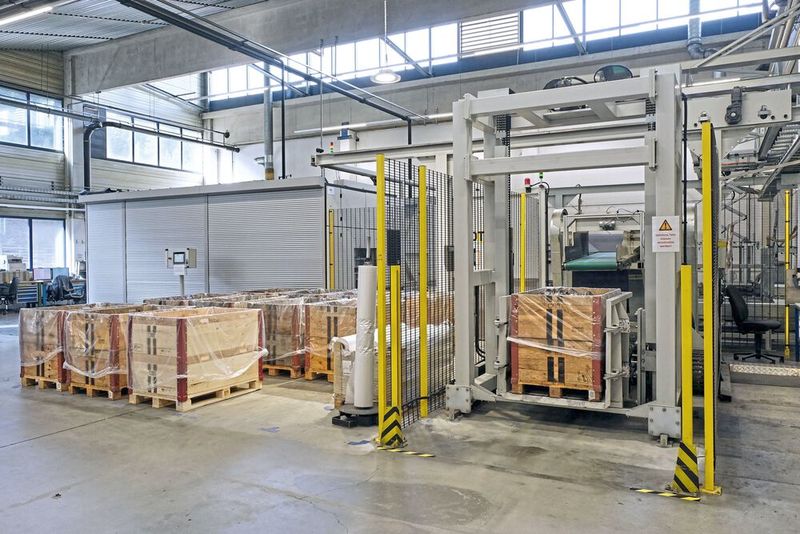
:quality(80)/p7i.vogel.de/wcms/8b/b5/8bb5f61522498bfdef369e1520e2e8eb/0120891478v1.jpeg "Around 300 wash baskets per shift go through the in-house degreasing process at Mark Metallwarenfabrik.(Image: Ingo Jensen/Richard Geiss)")
:quality(80)/p7i.vogel.de/wcms/c8/86/c886a14230372b728df64e26ae9ae9d0/0120891482v1.jpeg "CO2-reduced degreasing: In the cleaning system at Mark Metallwarenfabrik, PER recyclate is now used instead of fresh material.(Image: Ingo Jensen/Richard Geiss)")
:quality(80)/p7i.vogel.de/wcms/d3/9a/d39a8c9ff3198cb080e98890367f007d/0120891476v1.jpeg "Sustainable and stable degreasing process: The parts are freed from coolants and particles.(Image: Ingo Jensen/Richard Geiss)")
:quality(80)/p7i.vogel.de/wcms/5e/47/5e47efbcf1fcb05112b89b96157fb024/0123946657v1.jpeg "With its 75 meters in length and a production volume of 122,000 tons per year, the preservation line KON 47/3-HD is a powerhouse. (Image:Rösler)")
:quality(80)/p7i.vogel.de/wcms/0d/75/0d757e099f6f162dc8d687cd80f90c00/0126756536v1.jpeg "0126756536v1 (Image:acp systems)")