


:quality(80)/p7i.vogel.de/wcms/60/fd/60fd12ddfe1fb623568736f27d1cfe61/0128606899v1.jpeg "The future of supply chains: AI and dashboards to ensure optimal OTIF values (Picture: ©immimagery - stock.adobe.com)")
:quality(80)/p7i.vogel.de/wcms/eb/33/eb33b79b788b4a2697a44b0e0c4d6a88/0129183722v1.jpeg "Microsoft, Nvidia and Amazon probably want to pump 60 billion dollars into OpenAI. (Image:Apirak - stock.adobe.com)")
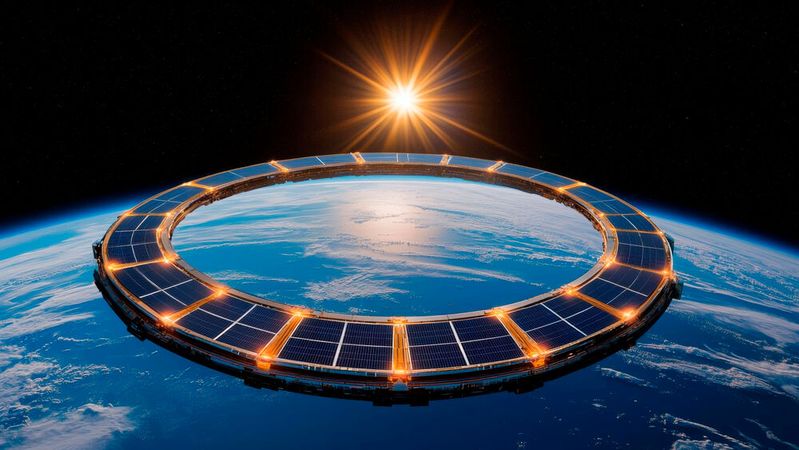
:quality(80)/p7i.vogel.de/wcms/be/4a/be4a354c2bff50bf23b706e8b0fb694f/0129240509v1.jpeg "Sky computer! Elon Musk wants to declare war on the energy crisis in terms of computing power for artificial intelligence. To this end, he is now pooling the expertise of Spacex and XAI. At the same time, robotaxi competitor Waymo is building up a financially strong cushion for its expansion on earth ... (Image:Tesla)")
:quality(80)/p7i.vogel.de/wcms/88/53/8853f7df2fe47a3d2c6f1879f6ac38e6/newsimage417073-1500x843v1v1.jpeg "Measuring setup for friction stir welding: Modular acoustic measuring system with flexibly positioned microphones for recording tool wear and process deviations in real time. (Image:Fraunhofer IDMT)")
:quality(80)/p7i.vogel.de/wcms/70/dc/70dc2fbc09e6958a72c63bd15e986e14/0129206156v1.jpeg "The global shoe machine manufacturer Desma relies on automation and has been revolutionizing shoe production—together with ABB Robotics for over 40 years. (Image:ABB Robotics)")
:quality(80)/p7i.vogel.de/wcms/ba/a0/baa0c49f17909b10766fb582d1f8b531/sandvik-olp-case-study-hero-1377x774v1v1.png "With Visual Components' offline programming software, Sandvik has more than halved robot programming time, improved welding quality and repeatability, and increased robot cell utilization. (Image:Visual Components)")
:quality(80)/p7i.vogel.de/wcms/29/1e/291eaf788c2befc4d71686cd260fef3b/0129214102v1.jpeg "RobCo's robots consist of flexibly combinable hardware modules and use AI software for learning. (Image:RobCo)")
:quality(80)/p7i.vogel.de/wcms/de/75/de750a367b39ed3167210c6941b067b6/0129059153v1.jpeg "Figure 1: Preparation for the Cyber Resilience Act. By December 2027, device manufacturers must have implemented a series of mandatory measures. (Image:Microchip)")
:quality(80)/p7i.vogel.de/wcms/0e/52/0e52ee794e7d24f8ddcb3e230f192e08/wscad-electrix-ai-2026-fill-cabinet-04-zoom-en-1720x967v1v1.png "The use of artificial intelligence makes it possible to systematically automate enclosure planning for the first time. This brings a number of advantages. (Image:WSCAD)")
:quality(80)/p7i.vogel.de/wcms/08/7e/087e5cbeb0039395c8759c8fdb54e24c/0129120874v1.jpeg "Digital consistency: Using Fresenius as an example, the article shows how companies benefit from integrated development processes. (Image:Fresenius Medical Care)")
:quality(80)/p7i.vogel.de/wcms/3d/63/3d637efb6dfefc529f08738bab2dc968/adobestock-1271004590--c2-a9-20the-20pixel-20store-20-e2-80-93-20stock-adobe-com-ki-generiert-2787x1568v1v1.jpeg "We present three innovations from the PLM and ALM world. (Image:The Pixel Store stock.adobe.com AI-generated)")
:quality(80)/p7i.vogel.de/wcms/59/37/5937b916a3d8bcbe2984391be7c18d8e/0129152959v1.jpeg "Mathworks and dSpace deepen their partnership: Road models created with RoadRunner can now be used directly in ASM OpenX. (Image:dSpac)")
:quality(80)/p7i.vogel.de/wcms/22/dd/22dd3f89e27950caea78d18b4a41766c/0129157014v1.jpeg "Volkswagen's first self-developed zonal electronics architecture goes into series production in China (Image:Volkswagen)")
:quality(80)/p7i.vogel.de/wcms/f5/22/f52293d339d8c952563eb00876da7cab/0129137154v1.jpeg "Joby Aviation is preparing for the first wave of pilot training for eVTOLs with CAE flight simulators. (Image:Joby Aviation)")
:quality(80)/p7i.vogel.de/wcms/36/c6/36c67f2e5e8fcb78c5a5b8d07673eec6/0129154312v1.jpeg "Yuchai intends to use its flywheel system - on the right-hand side of the engine - primarily in commercial vehicles. (Image:Yuchai)")
:quality(80)/p7i.vogel.de/wcms/2e/62/2e62e5977481169dd2a0301ab847dc2b/0129163687v1.jpeg "Increasing the voltage reduces the cable cross-sections and therefore the copper requirement considerably. (Image:Fraunhofer ISE)")
:quality(80)/p7i.vogel.de/wcms/5d/73/5d73b37d605e3d5f44de11d22447cedd/0129209328v1.jpeg "Agent BigEarth is based on a novel combination of several AI modules that work together as specialized sub-agents. (Image:BIFOLD)")
:quality(80)/p7i.vogel.de/wcms/d8/f8/d8f8fc64e23a1ed726fc8ac7ab697747/0129101600v1.jpeg "A new imaging technology makes it possible to detect early signs of heart disease through the skin. This opens up new markets for portable imaging systems. (Image:freely licensed)")
:quality(80)/p7i.vogel.de/wcms/95/e7/95e77e1c2ad5ee51222a6e287609643e/0129119186v1.jpeg "Photo of Micron's \"Site 3\" in Singapore, where NAND flash memory is manufactured. The memory manufacturer plans to invest a further 24 billion US dollars in the construction of an additional fab in Southeast Asia. The new plant is scheduled to go into operation by 2028. (Image:Micron)")
:fill(fff,0)/p7i.vogel.de/companies/67/eb/67eba621ef6ea/logo2.png "logo2 (Wuxi InfiMotion)")
:quality(80)/p7i.vogel.de/wcms/f9/c5/f9c57f443d3599505116ec78e053788d/0122046724v1.jpeg "Two Chinese satellites now operate without constant contact with a ground station. (Image:MRSUTIN—stock.adobe.com)")
Date: 08.12.2025
Naturally, we always handle your personal data responsibly. Any personal data we receive from you is processed in accordance with applicable data protection legislation. For detailed information please see our privacy policy.
Consent to the use of data for promotional purposes
I hereby consent to Vogel Communications Group GmbH & Co. KG, Max-Planck-Str. 7-9, 97082 Würzburg including any affiliated companies according to §§ 15 et seq. AktG (hereafter: Vogel Communications Group) using my e-mail address to send editorial newsletters. A list of all affiliated companies can be found here
Newsletter content may include all products and services of any companies mentioned above, including for example specialist journals and books, events and fairs as well as event-related products and services, print and digital media offers and services such as additional (editorial) newsletters, raffles, lead campaigns, market research both online and offline, specialist webportals and e-learning offers. In case my personal telephone number has also been collected, it may be used for offers of aforementioned products, for services of the companies mentioned above, and market research purposes.
Additionally, my consent also includes the processing of my email address and telephone number for data matching for marketing purposes with select advertising partners such as LinkedIn, Google, and Meta. For this, Vogel Communications Group may transmit said data in hashed form to the advertising partners who then use said data to determine whether I am also a member of the mentioned advertising partner portals. Vogel Communications Group uses this feature for the purposes of re-targeting (up-selling, cross-selling, and customer loyalty), generating so-called look-alike audiences for acquisition of new customers, and as basis for exclusion for on-going advertising campaigns. Further information can be found in section “data matching for marketing purposes”.
In case I access protected data on Internet portals of Vogel Communications Group including any affiliated companies according to §§ 15 et seq. AktG, I need to provide further data in order to register for the access to such content. In return for this free access to editorial content, my data may be used in accordance with this consent for the purposes stated here. This does not apply to data matching for marketing purposes.
Right of revocation
I understand that I can revoke my consent at will. My revocation does not change the lawfulness of data processing that was conducted based on my consent leading up to my revocation. One option to declare my revocation is to use the contact form found at https://contact.vogel.de. In case I no longer wish to receive certain newsletters, I have subscribed to, I can also click on the unsubscribe link included at the end of a newsletter. Further information regarding my right of revocation and the implementation of it as well as the consequences of my revocation can be found in the data protection declaration, section editorial newsletter.
:quality(80)/p7i.vogel.de/wcms/eb/92/eb9267f5522dd1664e0ee125a11c4c4b/adobestock-308282197--c2-a9-20malp-20-e2-80-93-20stock-adobe-com-4700x2643v1v1.jpeg "A new liquid air storage system is expected to generate 180 million kilowatt hours of electricity per year, enough to supply 30,000 households with electricity for a whole year. (Image:malp - stock.adobe.com.jpeg)")
:quality(80)/p7i.vogel.de/wcms/6e/ee/6eee6c2dc342c36f0553caf83dd5ded8/0126826472v1.jpeg "Like a Zeppelin, a floating high-altitude wind turbine is set to be tested in China soon. (Image: ©TJAYZ - stock.adobe.com / AI-generated)")