In the discourse surrounding sustainability and the circular economy, the focus is usually on consumer goods: recyclable packaging, bio-based materials and textile recycling dominate the debate. However, resource conservation starts much earlier—in the machinery. After all, those who maintain, modernize and use machines over the long term are making an effective contribution to the circular economy.
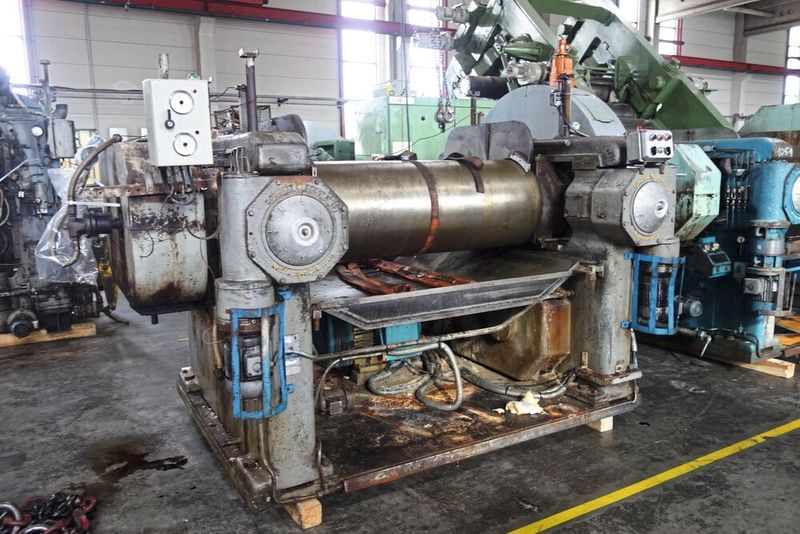
A rolling mill before modernization: downtimes, CO2 emissions and energy and maintenance costs are high.
(Image: Deguma)
Machines are the key levers for a more sustainable use of energy and raw materials: they are among the most resource-intensive capital goods in industry, both in terms of production and disposal—even though they are generally designed for decades of use. This is precisely where a rethink is needed: Extending the service life of machines not only makes economic sense, but is also an active contribution to conserving resources. After all, every machine that is used for longer saves valuable raw materials, energy and CO₂.
The 5R Strategy: Sustainability for Capital Goods
In the consumer sector, we often read about the 5Rs principle—Refuse, Reduce, Reuse, Repair, Recycle. It has long been applied there, but the principle can just as easily be applied to capital goods such as industrial machinery: the overriding aim is to minimize the consumption of resources and avoid waste by keeping products in the economic cycle for as long as possible. Instead of replacing machines (Refuse), the focus should be more on reducing the waste of resources (Reduce) through regular maintenance, repair and modernization (Repair). In this way, the machine can also be resold and reused (Reuse). Only irreparable machines should be professionally disposed of for recycling (Recycle).
Gallery
However, outdated systems are quickly considered economically unattractive: energy costs are too high, downtimes are too long and CO₂ emissions are too high. In practice, where economic arguments often take precedence over environmental ones, new purchases are therefore still considered more often than maintenance and modernization. However, even machines that are decades old can be brought up to the current state of the art and economic efficiency with little effort.
Appreciate Instead of Replace: Maintenance And Care Conserve Resources
Despite the high acquisition costs for new machines, the mistake is often made of replacing machines after a few years without considering the value of the existing infrastructure. In addition, the purchase of a new machine is seen as a one-off investment and service and maintenance contracts are dismissed as a cost trap. On the contrary: regular care, maintenance and modernization achieve long-term savings and increased service life at low cost. So if you want to invest, you should think ahead.
When purchasing a machine, certain aspects for the maintenance of the capital goods should therefore be taken into account. Modular designs, for example, enable subsequent expansions and needs-based adjustments without having to replace an entire system. This not only saves costs and resources, but also contributes to a flexible and future-proof machine park. Components such as filters or lubrication points that need to be checked regularly should be easily accessible so that maintenance and servicing work can be carried out efficiently. This avoids expensive repairs and breakdowns. The increased availability of the machine leads to higher productivity and therefore greater planning reliability.
Regular maintenance by experts also offers the advantage of becoming aware of modernization potential at an early stage and taking appropriate measures. If the machine no longer meets requirements, it can be resold in a well-maintained condition at a higher price. Used machines purchased by companies such as Deguma remain in the economic cycle thanks to targeted upgrades and are offered for sale again after being adapted to current standards.
The EU Machinery Regulation As A Driver for Modernization
By the time the new EU Machinery Regulation (2023/1230/EU) comes into force in January 2027 at the latest, companies will be forced to address the condition of their machinery. The regulation will create an important basis for Europe-wide safety standards for machinery. It replaces the previous Machinery Directive (2006/42/EC) and introduces new requirements for the safety and energy efficiency of machinery with regard to AI and digital technologies. The new regulation thus provides an additional incentive to not only focus on new purchases, but to consider maintenance and modernization as a long-term strategy; no longer just a question of cost reduction, but of operational capability and legal compliance.
The principle of the 5Rs—applied to capital goods
Refuse: Not every new purchase is necessary. It is often worthwhile continuing to use existing systems.
Reduce:Regular maintenance reduces downtime and avoids unnecessary replacement investments.
Repair: Defective components can be repaired in a targeted manner—more efficiently than a complete replacement.
Reuse: Well-maintained machines are easier to resell and remain in the economic cycle.
Recycle: Proper recycling only takes place at the end of the life cycle.
Practical Example: Energy Efficiency through Modernization
Those who invest in modernizing their machines and bringing them up to date can benefit from competitive advantages, long-term savings and increased efficiency. One example of such modernization solutions for rolling mills is the Deguma Efficiency Concept.
A central component of this modernization is the use of torque motors, which offer high energy efficiency, especially at low speeds. They reduce energy consumption by delivering constant torques and thus ensure particularly productive and optimized machine performance, which significantly reduces energy consumption. The reduction in oil consumption as an environmentally harmful operating material thanks to planetary gearboxes also minimizes maintenance costs enormously. In addition to the drives, the control and safety technologies play an equally important role in the modernization of machines for the circular economy, especially with regard to the new MVO. Modern drive controllers and systems such as frequency converters optimize ongoing operation by making adjustments to machine parameters as required and feeding excess energy back into the production process.
Date: 08.12.2025
Naturally, we always handle your personal data responsibly. Any personal data we receive from you is processed in accordance with applicable data protection legislation. For detailed information please see our privacy policy.
Consent to the use of data for promotional purposes
I hereby consent to Vogel Communications Group GmbH & Co. KG, Max-Planck-Str. 7-9, 97082 Würzburg including any affiliated companies according to §§ 15 et seq. AktG (hereafter: Vogel Communications Group) using my e-mail address to send editorial newsletters. A list of all affiliated companies can be found here
Newsletter content may include all products and services of any companies mentioned above, including for example specialist journals and books, events and fairs as well as event-related products and services, print and digital media offers and services such as additional (editorial) newsletters, raffles, lead campaigns, market research both online and offline, specialist webportals and e-learning offers. In case my personal telephone number has also been collected, it may be used for offers of aforementioned products, for services of the companies mentioned above, and market research purposes.
Additionally, my consent also includes the processing of my email address and telephone number for data matching for marketing purposes with select advertising partners such as LinkedIn, Google, and Meta. For this, Vogel Communications Group may transmit said data in hashed form to the advertising partners who then use said data to determine whether I am also a member of the mentioned advertising partner portals. Vogel Communications Group uses this feature for the purposes of re-targeting (up-selling, cross-selling, and customer loyalty), generating so-called look-alike audiences for acquisition of new customers, and as basis for exclusion for on-going advertising campaigns. Further information can be found in section “data matching for marketing purposes”.
In case I access protected data on Internet portals of Vogel Communications Group including any affiliated companies according to §§ 15 et seq. AktG, I need to provide further data in order to register for the access to such content. In return for this free access to editorial content, my data may be used in accordance with this consent for the purposes stated here. This does not apply to data matching for marketing purposes.
Right of revocation
I understand that I can revoke my consent at will. My revocation does not change the lawfulness of data processing that was conducted based on my consent leading up to my revocation. One option to declare my revocation is to use the contact form found at https://contact.vogel.de. In case I no longer wish to receive certain newsletters, I have subscribed to, I can also click on the unsubscribe link included at the end of a newsletter. Further information regarding my right of revocation and the implementation of it as well as the consequences of my revocation can be found in the data protection declaration, section editorial newsletter.
In combination with new safety technology, control systems and a general mechanical overhaul, CO₂ emissions, maintenance costs and downtime can be significantly reduced. Energy savings of up to 30 % and up to 80 % lower maintenance costs are realistic—with a service life extension of up to 40 years.
Conclusion: old Machines, New Responsibilities
The circular economy must start with the machines and production facilities—not just with the end products and consumers. Principles such as the 5Rs must be considered and applied universally in order to achieve truly sustainable production. New legislation and regulations such as the new EU Machinery Regulation support this rethink and are increasingly forcing operators to take action.
To achieve this, machines must be viewed as an investment worth preserving and maintained over the long term, regularly serviced and modernized in a targeted manner, otherwise operators are wasting enormous financial potential. This is because the energy efficiency and savings achieved through modernized drive systems, control systems and safety technology not only help to maintain the value of the sale and increase the efficiency and productivity of the systems. Companies that invest in modernization and regular maintenance at an early stage secure ecological and economic benefits and actively contribute to truly sustainable production and a holistic circular economy.
About Deguma
Deguma-Schütz GmbH is a family-run, medium-sized mechanical engineering company that specializes in machines for the rubber and plastics processing industry.
A key component of the portfolio is the construction of rolling mills for mixing rubber, plastic and silicone.
The company, based in Geisa, Thuringia, also overhauls and modernizes machines from other manufacturers in the industry and offers various services related to the machines. This means that systems can be used for longer and with greater energy savings.
The company was founded in 1990 and has been managed by Viktoria Schütz and Daniela Dingfelder in the second generation since 2019. The two women focus on modern forms of work, collaboration at eye level, cooperation and co-innovation. For this, they were awarded the Impact of Diversity Award in the "Diversity Game Changer Middlesized Industries" category, among others.



:quality(80)/p7i.vogel.de/wcms/9d/2b/9d2b802f800e5caf17b2831e74228cd3/screenshot-202026-03-03-20103822-609x343v1v1.png "Visual comparison: on the left, a clean, burr-free cut edge; on the right, typical burr formation with oxidation discoloration. This illustrates how strongly parameter control and gas management influence the quality of the result. (CO₂ laser, oxygen cutting gas, sheet thickness approx. 15 mm). (Image:Picture: Rime)")
:quality(80)/p7i.vogel.de/wcms/dd/08/dd086510d9ae7b50181f6070e4463b44/0129363730v1.jpeg "Typical application for ionizing devices: Wrapping films. (Picture: ©Adobe Stock/SMC)")
:quality(80)/p7i.vogel.de/wcms/35/57/3557c819943c53acec41a0ccba87da4f/0130049064v1.jpeg "Researchers at the Fraunhofer IWU in Chemnitz have long known that many typical sheet metal parts can be manufactured more cost-effectively using hollow embossing rollers. Now there is news to report ... (Image:Fraunhofer IWU)")
:quality(80)/p7i.vogel.de/wcms/59/02/590246e3b3f415c65edbee377c14ca77/26-06-pi-fraunhofer-iws-41450-direktplattieren-pic-01-7771x4369v1v1.jpeg "The Fraunhofer IWS has developed the new \"direct laser cladding\" process, which creates a functional layer directly on the base body by applying a strip-shaped metal to rotationally symmetrical components in a spiral and bonding it locally by laser. (Image:Christoph Wilsnack/Fraunhofer IWS)")
:quality(80)/p7i.vogel.de/wcms/78/e9/78e9188c25a8a94e67c34c9bf8ffe495/visual-agile-20robots-20and-20google-20deepmind-20partner-20to-20bring-20intelligence-20to-20robotics-2500x1406v1v1.jpeg "Together, the partners are developing adaptable, intelligent robots for a wide range of applications (Image:Agile Robots SE)")
:quality(80)/p7i.vogel.de/wcms/e7/66/e7669ecf0260ae8fc54c214e34e4902a/0130316817v1.jpeg "Siemens and Palo Alto Networks offer tested cybersecurity solution for industrial 5G. (Image:Siemens)")
:quality(80)/p7i.vogel.de/wcms/9f/55/9f55324832c4f426958031375124d9de/siemens-20ubtech-20hmnd-1920x1079v1v1.png "Ready for the factory floor: While Ubtech is planning mass production, Siemens is already testing humanoids in real factory applications in Erlangen. (Image:Siemens)")
:quality(80)/p7i.vogel.de/wcms/11/36/113695ed260e29c8c2d9d39dc5f9d869/0130213768v1.jpeg "AI can work cheaply in China and deliver the results rapidly all over the world. (Image:Dall-E / AI-generated)")
:quality(80)/p7i.vogel.de/wcms/62/5f/625f41e87ebfef156a98c8e6393e32fd/0130211654v1.jpeg "Axial flux motors have some advantages over radial flux motor—but their production is currently still expensive. (Image:RWTH Aachen University)")
:quality(80)/p7i.vogel.de/wcms/77/9b/779b0685d010dfe45c9c2cb1cfecd467/0128886425v1.jpeg "The BlueEye is the first \"real\" hyperspectral camera for the UV range and covers the wavelength range from 220 to 380nm. (Image:Inno-spec GmbH)")
:quality(80)/p7i.vogel.de/wcms/e4/51/e451d52ce0182fb0aaa46a5774f832ef/26-04-pi-fraunhofer-iws-21160-bioslide-pic-01-4128x2321v1v1.jpeg "With the BioSlide research project, the Fraunhofer IWS is investigating how sliding systems can be designed to be more sustainable and energy-efficient. New materials can be tested in a particularly application-oriented manner on this plain bearing test stand. (Image:Fraunhofer IWS)")
![Thanks to advanced 3D printing technology, a more efficient use of resources should contribute to lower-emission aviation—this is the goal of ['skai]-lab. (Image:Oleksandr Pashchenko - stock.adobe.com / AI-generated)](https://cdn1.vogel.de/nghHNSbySccfOjG3n1qCA-FVOjQ=/288x162/smart/filters:format(jpg):quality(80)/p7i.vogel.de/wcms/62/64/626424c97a16e69f871bf216c9629c2a/adobestock-1927043193--c2-a9-20oleksandr-20pashchenko-20-e2-80-93-20stock-adobe-com-ki-generiertv1v1.jpeg "Thanks to advanced 3D printing technology, a more efficient use of resources should contribute to lower-emission aviation—this is the goal of ['skai]-lab. (Image:Oleksandr Pashchenko - stock.adobe.com / AI-generated)")
:quality(80)/p7i.vogel.de/wcms/b0/43/b043b86899837532aad62d63368a917a/0130371361v1.jpeg "Skoda leaves the chinese market.
(Image:Skoda)")
:quality(80)/p7i.vogel.de/wcms/c3/c4/c3c4ce270b083eeac55654148611f064/0130237945v1.jpeg "China is not giving up on hydrogen, but is intensifying its efforts. (Image:freely licensed from Pixabay)")
:quality(80)/p7i.vogel.de/wcms/4e/c0/4ec0bd19390b169edfa23677373dcdf1/0130260089v1.jpeg "Renewable fuels can supply European road traffic, according to a study. (Image:Aral)")
:quality(80)/p7i.vogel.de/wcms/6f/c9/6fc9050301d745cad25585c6780f8f51/0130197341v1.jpeg "Production facilities are a worthwhile target and are therefore at risk. (Image:ABB Robotics)")
:quality(80)/p7i.vogel.de/wcms/4d/dd/4dddf438e91f394c04a095dbfd109d1c/0130236430v1.jpeg "Measurement modules: The 720301 module in combination with the SL2000 enables RMS and power calculations, among other things. (Image:Yokogawa)")
:quality(80)/p7i.vogel.de/wcms/61/fc/61fcf95f5cca15494ad18343901ae585/0130317237v1.jpeg "With the AGI CPU, Arm says it is taking a \"historic step\": With the processor aimed at AI in data centers, the company is presenting itself for the first time as a provider of its own chips, not just as a pure IP licensor. (Image:Arm)")
:quality(80)/p7i.vogel.de/wcms/82/90/8290dfe3595b6c6b33726ae8b76172c7/0130319587v1.jpeg "The concept image illustrates how the pattern of tiny protrusions and depressions created on the substrate (MgO, bottom) controls the arrangement of atoms in the superconducting material (YBCO, top). At the interface between the two layers, an electronic structure enables superconductivity to occur at higher temperatures than previously possible. (Image:Chalmers University of Technology / Riccardo Arpaia)")
:fill(fff,0)/images.vogel.de/vogelonline/companyimg/76800/76895/65.jpg "FAULHABER_120mm.jpg ()")
:fill(fff,0)/p7i.vogel.de/companies/69/88/69882c428938e/tmts2026-ticec-banner-en-2000px.png "tmts2026-ticec-banner-en-2000px (https://www.tmts.tw/en)")
:quality(80)/p7i.vogel.de/wcms/55/7f/557f2db6fd8f5183ecff7a2bc7f9e224/0129100331v1.jpeg "A rolling mill after being overhauled by Deguma: The Deguma Efficiency Concept significantly increases safety, energy efficiency and durability.(Image: Deguma)")
:quality(80)/p7i.vogel.de/wcms/16/04/160465debabb2ad685e99cc41f0e5587/0129100339v1.jpeg "Retrofitted torque motors deliver constant torque at low speeds and reduce energy consumption enormously.(Image: Deguma)")
:quality(80)/p7i.vogel.de/wcms/08/51/08511bb62509ddf00647f3aee23af3f4/0129100342v1.jpeg "Modern safety retrofits play an important role in the modernization of machines, especially with regard to the new MVO.(Image: Deguma)")
:quality(80)/p7i.vogel.de/wcms/74/59/745949c7d499f0bcd1a100e7982f471b/0129100456v1.jpeg "A rolling mill before modernization: downtimes, CO2 emissions and energy and maintenance costs are high.(Image: Deguma)")
:quality(80):fill(efefef,0)/p7i.vogel.de/wcms/67/ad/67adf4a647532/elatec-wp-machine-authentication.png "Elatec WP Machine Authentication")
:quality(80)/p7i.vogel.de/wcms/7f/ed/7fed884669e7341e2bd9664f69acc528/0127859665v1.jpeg "Data as a foundation: Continuous machine connectivity enables real-time analysis, increases OEE, and provides transparency about performance, availability, and quality. (Image: ©Gorodenkoff - stock.adobe.com)")
:quality(80)/p7i.vogel.de/wcms/8a/b9/8ab9046d3f5ff9e6bcfdb4f4209ab685/0128636600v1.jpeg "A Liebherr LCS 182 gear grinding machine is, after extensive retrofitting, virtually at the level of a new machine. (Image:Liebherr Gear Technology)")